01 / Scenario
STUDIO
P
High-End Pilates Studios
Premium aesthetics meet quiet operation for boutique studio environments.
ISO
9001
CE
Certified
OEM
Available
10YR
Warranty
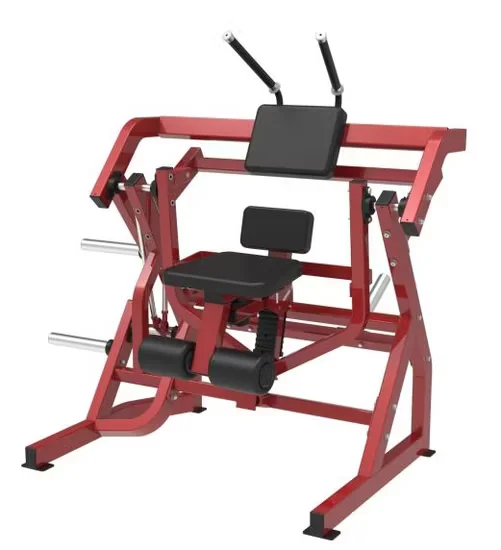
Commercial Plate Loaded Abdominal Oblique Crunch, 1670×1100×1600mm, 121kg — engineered with reinforced steel frame construction to withstand repetitive rotational torque during oblique crunch movements, featuring plate-loaded resistance for progressive overload in high-traffic commercial environments. Built for commercial gym strength zones, hotel fitness centers, and university athletic departments with ISO9001 and CE certification compliance. Every unit undergoes load testing before shipment, backed by a 10-year frame warranty and floor planning support for safe equipment spacing.
// Spec Highlights
• Direct from Manufacturer · No Middlemen · Worldwide Shipping
01
// Material
Imported Solid Wood
Premium hardwood frames sourced for density and visual warmth.
02
// Hardware
Medical-Grade Silent
Whisper-quiet pulleys and springs for clinical environments.
03
// Customization
Appearance OEM
Color, upholstery, and branding tailored to your studio.
04
// Service
Layout Design
Free venue planning for studios and rehab institutions.
Every component is selected for longevity, performance, and aesthetic harmony - from imported hardwood frames to silent medical-grade accessories.
// Features
Mill-Certified Frame Steel — Every tube in this commercial plate loaded abdominal oblique crunch traces back to its original Q235/Q345 steel coil with verifiable gauge documentation.
| Parameter | Value |
|---|---|
| Product Type | Selectorized Abdominal Trainer |
| Model NO. | OS-H5025 |
| Loading Type | Plate Loaded |
| Product Dimensions | 1670 × 1100 × 1600 mm |
| Net Weight | 121 kg |
| Frame Material | Steel |
| Exercise Target | Abdominal and Oblique Musculature |
| Color Options | Optional |
| OEM Availability | Available |
| Certification | ISO 9001, CE |
| Facility Type | Typical Use |
|---|---|
| Commercial gym strength floor | Dedicated core training station in high-traffic zones |
| Hotel and resort fitness center | Compact abdominal trainer for limited-space layouts |
| University athletic department | Rotational core conditioning for student athletes |
| Rehabilitation and performance center | Controlled oblique strengthening under supervised programs |
Rotational core machines concentrate stress exactly where spot welds fail.
A commercial plate loaded abdominal oblique crunch generates repetitive torsional force through the pivot axis every time a user drives into a crunch and returns under control. Spot-welded joints at the pivot column and base gussets appear solid during a showroom inspection, but under hundreds of daily cycles, micro-cracks propagate from the weld edges outward [NEED_CITE: weld classification and fatigue performance in structural steel]. We have seen equipment returned from the field with visible frame deformation after the weld zone gave way while the surrounding tube remained intact. Continuous robotic MIG welding eliminates these isolated failure points by distributing load across an unbroken weld line.
This machine targets the obliques through a fixed rotational crunch path, covering the transverse plane that free weights and standard cable systems address indirectly at best. On a commercial gym strength floor, it complements rotary torso machines and cable woodchop stations by providing a stabilized, seated alternative where users cannot cheat the movement pattern. The footprint fits standard spacing grids, and the seated configuration accommodates users across a wide torso and limb-length range without manual recalibration between sets.
Each repetition loads the pivot shaft eccentrically, meaning the bearing and weld zone absorb uneven force vectors rather than clean axial compression. In a facility running 12 or more hours daily, the commercial plate loaded abdominal oblique crunch accumulates thousands of these off-axis cycles per week [NEED_CITE: EN 957 structural requirements for stationary training equipment]. Sealed industrial bearings prevent sweat and chalk dust from infiltrating the pivot, which is where bushing-equipped machines develop noticeable play within their first year. The powder-coated contact surfaces also resist chipping from repeated plate loading and bumper contact at the horns.
Wall thickness and tube cross-section together determine how much torsional deflection occurs before the frame reaches its elastic limit — a thicker gauge with a larger section modulus simply resists twisting longer. Robotic MIG welding produces continuous bead profiles at the base gussets and pivot column, removing the cold-joint risk inherent in manual spot welding. A 200μm powder coating applied over sandblasted steel provides a scratch-resistant barrier that survives daily cleaning chemicals and salt-heavy sweat contact without exposing bare metal. Upholstery available in standard or high-density options lets operators match compression resistance to their expected usage volume.
Downgrading to thinner-wall tube on rotational equipment shows up as visible frame flex during loaded oblique crunches, and once that flex becomes permanent, the pivot geometry is compromised for good. Non-sealed bushings require scheduled teardowns and re-greasing, which most gym maintenance schedules skip until users complain about grinding noises. Thin powder coatings chip at the plate-loading horns within months, and exposed steel rusts fast in humid gym environments [NEED_CITE: powder coating durability standards for commercial fitness equipment]. Low-density upholstery pads compress flat and split at the seams, turning a minor maintenance item into a full reupholstery job.
The 11-gauge steel frame with mill-certified traceability ensures the tube wall thickness is verifiable, not just claimed as "commercial grade." Robotic continuous MIG welding at every pivot joint and gusset connection removes the single-point failure risk that spot welds carry under rotational loading. Every unit undergoes load testing before crating, so the pivot shaft and base frame are verified under stress, not just visual inspection. The 200μm industrial powder coating holds up against daily cleaner exposure and plate contact. A 10-year frame warranty backs the structural claims, and 2D-3D CAD floor planning support ensures this machine slots into your core zone with correct safety clearances on all sides.
Share your strength floor dimensions and current equipment list to receive a 2D-3D layout showing where this machine fits with proper clearance zones. Specify your expected daily user volume so we can confirm the structural grade matches your traffic. Let us know your target user demographic to verify the seated geometry covers the full torso range you need. Color, logo, and upholstery density are all configurable at the order stage.
Q: How do you separate true commercial-grade abdominal machines from light-commercial ones?
A: Request mill-certified steel documentation showing exact gauge and grade rather than accepting vague "commercial grade" labels. Inspect the weld pattern at pivot joints — continuous MIG welds indicate structural intent, while spot welds suggest cost-driven assembly. Ask whether the manufacturer load-tests every unit or only samples from a batch run.
Q: What frame specification matters most for rotational core equipment?
A: Wall thickness and tube cross-section together determine resistance to torsional deformation during oblique crunch movements. A thicker gauge with adequate section modulus prevents the frame from twisting under eccentric loads. Equally important is the weld method at the pivot column, since that joint absorbs the highest cyclic stress on the entire machine.
Q: Plate loaded or selectorized — which suits a high-traffic gym environment?
A: Plate loaded units have fewer moving parts and no cable-pulley system to maintain, making them reliable in facilities with limited maintenance staff. Selectorized machines offer faster weight changes for circuit-style training. The choice depends on whether your users load and strip plates between sets or prefer pin-select convenience during peak hours.
Q: What floor spacing does this machine require in a commercial layout?
A: The 1670 × 1100 mm footprint must be surrounded by clearance on all sides for safe plate loading and user passage. We provide 2D-3D CAD layouts that account for the swing radius of plates being loaded and removed, as well as adjacent equipment sightlines so trainers can monitor form across the core training zone.
Premium aesthetics meet quiet operation for boutique studio environments.
Medical-grade silence and precision for sports & postpartum recovery.
Furniture-grade craftsmanship for premium residential installations.
Compact premium setups for one-on-one and small-group training.
Aesthetic Pilates integration for hybrid wellness studio programming.
Multi-unit deployment with instructor-grade reliability for certification programs.
Tell us about your project. Our team will respond within 24 hours with pricing, customization options, and shipping details.
// Sales Director
William
+86 132 2531 1800
// Export Manager
Bella
+86 198 5412 8032
william@bickfit.com
![ISO-Lateral Reciprocating Left Equipment MTS-8014 Gym Machine [WARN] draft identifier mismatch](https://bickgym.com/wp-content/uploads/2026/08/hammer-strength-mts-8007-iso-lateral-high-row-gym-machine-2920f1.webp)