01 / Scenario
STUDIO
P
High-End Pilates Studios
Premium aesthetics meet quiet operation for boutique studio environments.
ISO
9001
CE
Certified
OEM
Available
10YR
Warranty
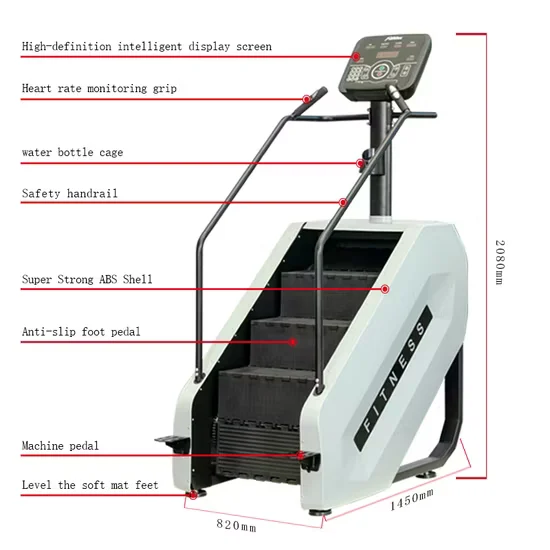
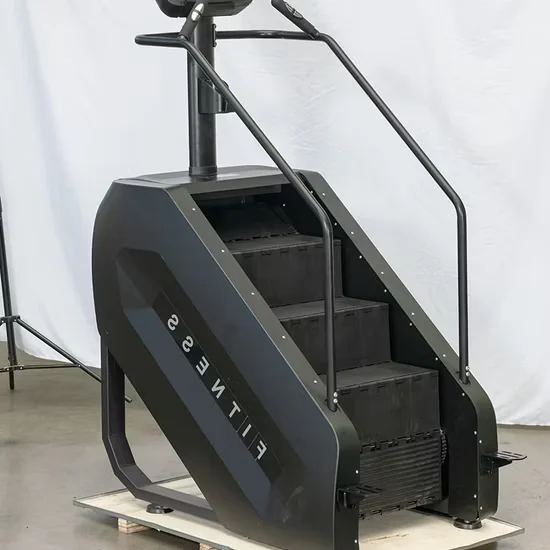
Commercial Stair Climber Machine, Motor Drive, 15–164 Steps/Min, 148kg Net Weight — engineered with steel pipe frame and PP step pedals for structural rigidity during continuous high-traffic use. Integrated console tracks time, steps, calories, and heart rate without external devices. Backed by CE certification and factory-direct load testing on every step mechanism before shipment.
// Spec Highlights
• Direct from Manufacturer · No Middlemen · Worldwide Shipping
01
// Material
Imported Solid Wood
Premium hardwood frames sourced for density and visual warmth.
02
// Hardware
Medical-Grade Silent
Whisper-quiet pulleys and springs for clinical environments.
03
// Customization
Appearance OEM
Color, upholstery, and branding tailored to your studio.
04
// Service
Layout Design
Free venue planning for studios and rehab institutions.
Every component is selected for longevity, performance, and aesthetic harmony - from imported hardwood frames to silent medical-grade accessories.
// Features
Motor-Driven Stability Under Repetitive Load — A 148kg steel frame footprint anchors the commercial stair climber machine for gym environments without requiring floor bolting during intense stepping sessions.
| Parameter | Value |
|---|---|
| Product Type | Commercial Stair Climber |
| Product Dimensions | 1450 × 820 × 2080 mm |
| Net Weight | 148 kg |
| Step Area | 560 × 235 × 220 mm |
| Frame Material | Steel Pipe + PP Plastic |
| Type of Drive | Motor Drive |
| Running Velocity | 15 – 164 steps/min |
| Mains Input | AC220V±10% / AC110V±10% |
| Console Display | Time, Climb, Calories, Steps, Heart Rate |
| Folded State | Unfolded |
| Certification | CE |
| Customized | Available |
| Facility Type | Typical Use |
|---|---|
| Commercial gym cardio zone | High-volume member traffic requiring continuous-duty motor operation |
| Hotel and resort fitness center | Premium member experience with consistent stepping performance |
| University athletic facility | Team conditioning and general student use across varied intensity levels |
| High-traffic fitness studio | Group-adjacent cardio placement for pre- and post-session conditioning |
Many cardio suppliers quote "commercial-grade" steel pipe without disclosing wall thickness or grade — leaving operators to discover flex and joint looseness only after months of member complaints.
A 148kg net weight and steel pipe frame provide the mass and rigidity needed to resist lateral sway during sustained climbing at maximum stepping velocity.
Without verifiable steel specifications, stair climber frames can develop micro-deflections at the pedal pivot junctions, translating into perceptible instability for users above average body weight. This is not a comfort issue — it accelerates bearing wear at the step mechanism and creates safety liability in unsupervised facility environments [NEED_CITE: EN 957 structural requirements for stationary training equipment].
The commercial stair climber machine for gym cardio floors occupies the vertical climbing movement plane, targeting lower-body endurance through continuous step repetition. It complements treadmills and rowers by offering a low-impact, high-calorie-burn alternative that does not require running mechanics. Facilities running 8+ hours of daily operation benefit from motor-driven consistency, while the wide 560mm step area accommodates a broad range of user stride comfort.
Motor-driven stair climbers face sustained torsional loading at the pedal pivot points with every revolution — a fatigue cycle fundamentally different from the linear belt stress on a treadmill. At 164 steps per minute, the step mechanism undergoes thousands of load-unload cycles per session, placing repeated shear forces on pivot bearings and the frame-to-pedal junction. The steel pipe frame must resist not only vertical user weight but also lateral forces generated during asymmetric stepping patterns. Console-mounted sensors and wiring harnesses experience vibration exposure that demands secure routing and strain relief. Sweat and cleaning chemicals attack exposed metal surfaces and pedal grip textures over time [NEED_CITE: weld classification and fatigue performance in structural steel].
The steel pipe frame construction determines the baseline rigidity of the entire unit — tube diameter and wall thickness together define the moment of inertia that resists bending under off-center pedal loading. The PP plastic step housing protects the internal mechanism while providing a non-slip contact surface that must withstand shoe abrasion and chemical cleaning without becoming brittle. Motor drive systems deliver consistent torque across the full 15–164 steps/min range, unlike self-powered alternatives where resistance scales unpredictably with user effort. The 148kg net weight serves a structural function: it lowers the center of gravity and eliminates the need for anchor bolting on standard gym flooring, while the 1450 × 820 mm footprint defines the minimum safety clearance zone around the unit.
Thin-wall steel pipe flexes visibly under heavier users, creating a wobble that erodes member confidence and triggers premature service calls. Non-sealed pivot bearings allow sweat and dust ingress, developing play that translates into grinding noise and eventual step mechanism failure — a repair that often requires full unit disassembly. Low-grade PP step covers crack under repeated impact, exposing sharp internal edges and creating slip hazards. Inadequate powder coating at contact points chips within months, revealing bare steel that corrodes under humid gym conditions and facility cleaning protocols.
Every unit ships with a steel pipe frame built to resist the torsional and lateral forces of continuous commercial stepping, and the 148kg mass ensures stable operation without floor anchoring. The motor drive system is engineered for 8+ hours of daily use, with adjustable velocity covering warm-up pacing through high-intensity interval protocols. We provide 2D-3D CAD layout support to position the commercial stair climber machine for gym cardio zones with proper safety clearance from adjacent equipment and traffic paths. CE certification confirms conformity with European safety standards, and customization options allow color and branding alignment with your facility identity.
Provide your cardio zone floor dimensions and existing equipment list to receive a 2D-3D layout plan showing optimal commercial stair climber machine for gym placement with safety clearances. Specify your estimated daily user volume so we can confirm the motor drive rating matches your operational intensity. Indicate any customization requirements for frame color or console branding to align with your facility identity.
Q: What defines a commercial-grade stair climber versus light commercial or home use?
A: Commercial stair climbers use steel pipe frames with verifiable wall thickness, motor drives rated for 8+ hours of continuous daily operation, and sealed pivot bearings designed to withstand thousands of load cycles per session. Home models typically rely on lighter frames and self-powered mechanisms that cannot sustain the same usage density without accelerated wear.
Q: How does motor drive compare to self-powered systems in terms of maintenance and user experience?
A: Motor drive delivers consistent stepping velocity regardless of user effort, providing predictable workout intensity and reducing mechanical stress on pivot components. Self-powered systems require users to generate all resistance, which creates variable loading patterns that accelerate bearing wear and produce inconsistent stepping feel across different users.
Q: What is the expected service life of step pedals and pivot bearings under daily commercial use?
A: PP plastic step covers and pivot bearings are engineered for sustained commercial cycling, but service life depends on daily usage hours, user weight range, and maintenance frequency. Quarterly bearing inspection and prompt replacement of worn step covers prevent cascading damage to the step mechanism assembly.
Q: How to plan floor space and safety clearance around stair climber placement?
A: The 1450 × 820 × 2080 mm footprint requires minimum 600mm clearance on all sides for safe mounting, dismounting, and emergency egress. Floor surface must be level and capable of supporting 148kg equipment weight plus dynamic user loading without deflection.
Q: What warranty coverage applies to motor, frame, and electronic console components?
A: Warranty terms vary by component category — the steel pipe frame carries extended structural coverage, while the motor drive and console electronics follow separate warranty schedules. Contact your supplier for specific warranty duration and coverage exclusions applicable to your purchase agreement.
Premium aesthetics meet quiet operation for boutique studio environments.
Medical-grade silence and precision for sports & postpartum recovery.
Furniture-grade craftsmanship for premium residential installations.
Compact premium setups for one-on-one and small-group training.
Aesthetic Pilates integration for hybrid wellness studio programming.
Multi-unit deployment with instructor-grade reliability for certification programs.
Tell us about your project. Our team will respond within 24 hours with pricing, customization options, and shipping details.
// Sales Director
William
+86 132 2531 1800
// Export Manager
Bella
+86 198 5412 8032
william@bickfit.com