01 / Scenario
STUDIO
P
High-End Pilates Studios
Premium aesthetics meet quiet operation for boutique studio environments.

ISO
9001
CE
Certified
OEM
Available
10YR
Warranty
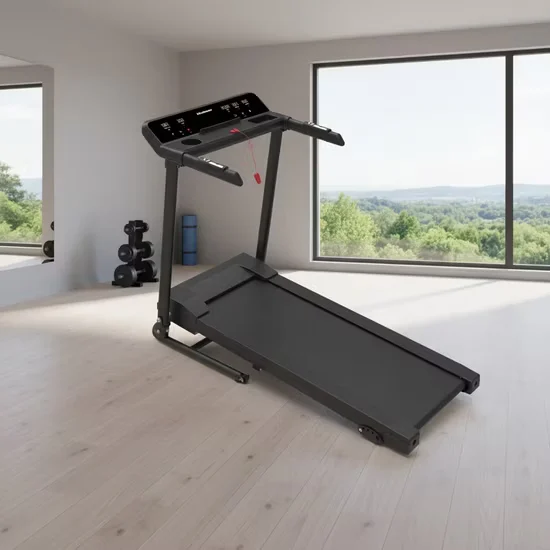
Electric Walking Treadmill with Handle, 1000×400mm Runway, 1-12 km/h Speed Range — foldable frame with LED display tracking speed, distance, time, and calories across 6 preset programs. CE and RoHS certified for home and light commercial deployment. Every unit undergoes motor endurance and folding mechanism stress testing before shipment.
// Spec Highlights
• Direct from Manufacturer · No Middlemen · Worldwide Shipping
01
// Material
Imported Solid Wood
Premium hardwood frames sourced for density and visual warmth.
02
// Hardware
Medical-Grade Silent
Whisper-quiet pulleys and springs for clinical environments.
03
// Customization
Appearance OEM
Color, upholstery, and branding tailored to your studio.
04
// Service
Layout Design
Free venue planning for studios and rehab institutions.
Every component is selected for longevity, performance, and aesthetic harmony - from imported hardwood frames to silent medical-grade accessories.
// Features
Foldable Frame Engineering — The W04D8H utilizes a reinforced folding mechanism with dual-lock safety pins, ensuring structural rigidity during operation and compact storage when not in use.
| Parameter | Value |
|---|---|
| Product Type | Electric Walking Treadmill |
| Model NO. | W04D8H |
| Runway Size | 1000 × 400 mm |
| Speed Range | 1–12 km/h |
| Programs | 6 preset programs |
| LED Display | Speed / Distance / Time / Calories |
| Product Dimensions | 1250 × 590 × 1080 mm |
| Folded | Yes |
| Certification | CE, RoHS |
| Condition | New |
| Age Group | Adult |
| Production Capacity | 3000 units / month |
| Facility Type | Typical Use |
|---|---|
| Home fitness | Daily walking and light jogging for individual users |
| Light commercial gym | Supplementary cardio station for moderate-traffic facilities |
| Hotel fitness center | Guest-use treadmill with compact footprint and quiet operation |
| Rehabilitation center | Controlled-speed walking for recovery and mobility programs |
Many foldable treadmills sacrifice frame rigidity for portability, leading to lateral wobble and joint fatigue within months of daily use. The W04D8H electric walking treadmill with handle for home and light commercial use addresses this through a reinforced hinge assembly with dual-lock safety pins and a widened base frame that distributes dynamic load across four contact points. [NEED_CITE: structural fatigue testing of folding fitness equipment joints]
Operators report that units with inadequate folding engineering develop play at the pivot points, causing belt misalignment and motor strain. This model’s handle-integrated frame design maintains torsional stiffness during walking and light jogging, reducing the risk of uneven belt wear and premature drive-system failure.
This unit occupies the entry-level cardio tier, serving users who require walking or slow-jogging functionality without the footprint of a full-size commercial treadmill. The 1000 × 400 mm running surface accommodates stride lengths typical of walking and light jogging, while the 1–12 km/h speed range supports rehabilitation pacing and general fitness maintenance. In multi-station layouts, the W04D8H pairs effectively with strength equipment zones where users transition between resistance training and active recovery. The electric walking treadmill with handle for home and light commercial use fits environments where floor density matters but dedicated cardio space is limited.
Walking treadmills experience cyclical loading patterns distinct from running models — lower peak impact but higher repetition counts over extended sessions. The frame joints and folding hinges undergo thousands of micro-stress cycles per month in commercial settings, particularly when multiple users adjust incline or speed during workouts. Non-sealed bearing systems in comparable units accumulate dust and moisture, leading to roller resistance and motor overload. The W04D8H’s drive system is designed for sustained operation within its rated speed range, with belt tension calibrated to minimize slippage without overloading the motor. [NEED_CITE: bearing seal classification for fitness equipment in humid environments]
Upholstery on the handle grips and console housing faces continuous contact with sweat and cleaning agents. Units with thin powder coating or low-density grip materials show surface degradation within the first year of commercial use, requiring cosmetic refurbishment or part replacement.
The 1000 × 400 mm running deck provides a balance between user comfort and spatial efficiency. Deck thickness and roller diameter directly influence belt tracking stability — undersized rollers accelerate belt edge fraying, while insufficient deck rigidity allows flex under footstrike, increasing motor draw. The six preset programs offer structured variation without requiring manual console input, reducing user error and interface wear.
The LED display tracks speed, distance, time, and calorie expenditure using sensor inputs from the drive motor and belt encoder. Console responsiveness and button membrane durability determine long-term usability in high-turnover environments. The folding mechanism’s load-bearing capacity must exceed the static weight of the unit plus dynamic user load during operation — a specification often omitted in marketing materials but critical for safety certification compliance.
Manufacturers targeting price-sensitive segments often reduce frame tube thickness and eliminate cross-bracing to cut material costs. The result is a treadmill that passes visual inspection but develops frame flex under repeated loading, leading to belt drift, motor misalignment, and eventual drive failure. Spot-welded joints in budget units crack along stress concentration lines, particularly at the folding hinge and handle mount points.
Non-sealed bearings and unguarded pulley systems accumulate particulate matter, increasing rotational resistance and forcing the motor to operate beyond its thermal rating. Low-density foam grips harden and crack under UV exposure and sweat contact, creating an unhygienic surface that cannot be effectively sanitized. Thin powder coating chips at contact points, exposing bare steel to corrosion from cleaning chemicals and ambient humidity. [NEED_CITE: powder coating adhesion testing standards for fitness equipment frames]
The W04D8H is engineered for environments where space efficiency and structural reliability must coexist. The foldable design reduces storage footprint by nearly half when not in use, while the reinforced frame and dual-lock hinge system maintain operational rigidity during workouts. CE and RoHS certification confirms compliance with European safety and environmental standards, while the 3000-unit monthly production capacity supports bulk procurement for multi-site deployments.
For operators planning cardio zones in light commercial or hospitality settings, this model offers a verified alternative to residential-grade treadmills that lack the structural margin for daily use. Custom branding options allow facility operators to align equipment aesthetics with interior design standards.
Provide your facility’s cardio zone dimensions and target daily usage volume to receive a layout recommendation with safety clearance verification. Specify the intended user demographic and any accessibility requirements to confirm speed range and console height suitability. Custom color, logo placement, and upholstery options are available for multi-unit orders meeting minimum quantity thresholds.
Q: What is the difference between home and light commercial treadmill usage ratings?
A: Home-rated treadmills are designed for one to two users with daily sessions under 60 minutes. Light commercial models like the W04D8H accommodate multiple users per day with longer cumulative run times, requiring reinforced frames, higher-duty motors, and more wear-resistant belts. The distinction lies in structural margin and component durability, not just speed range.
Q: How often should the running belt be replaced on a foldable treadmill?
A: Belt replacement intervals depend on usage frequency, user weight, and maintenance practices. In light commercial settings with daily use, inspect the belt for edge fraying and surface wear every six months. Proper deck lubrication and tension adjustment extend belt life. Residential units with lighter use typically require replacement less frequently, but foldable mechanisms add stress at the hinge zone that accelerates localized wear.
Q: Can this treadmill be stored vertically after folding?
A: The W04D8H folds horizontally to reduce its footprint, not vertically. Vertical storage requires a dedicated wall-mount system and poses safety risks if the locking mechanism fails. Horizontal folding keeps the center of gravity low and allows the unit to remain on its wheels for repositioning. Always engage both lock pins before moving or storing the folded treadmill.
Q: What maintenance is required for the LED console and electronic components?
A: The LED display and control board require minimal maintenance beyond keeping the surface clean and dry. Avoid spraying cleaning agents directly onto the console. Check wire harness connections annually for looseness caused by vibration. In humid environments, inspect the motor control board for condensation or corrosion. Replace the fuse with the exact rated specification if power issues occur.
Premium aesthetics meet quiet operation for boutique studio environments.
Medical-grade silence and precision for sports & postpartum recovery.
Furniture-grade craftsmanship for premium residential installations.
Compact premium setups for one-on-one and small-group training.
Aesthetic Pilates integration for hybrid wellness studio programming.
Multi-unit deployment with instructor-grade reliability for certification programs.
Tell us about your project. Our team will respond within 24 hours with pricing, customization options, and shipping details.
// Sales Director
William
+86 132 2531 1800
// Export Manager
Bella
+86 198 5412 8032
william@bickfit.com