01 / Scenario
STUDIO
P
High-End Pilates Studios
Premium aesthetics meet quiet operation for boutique studio environments.
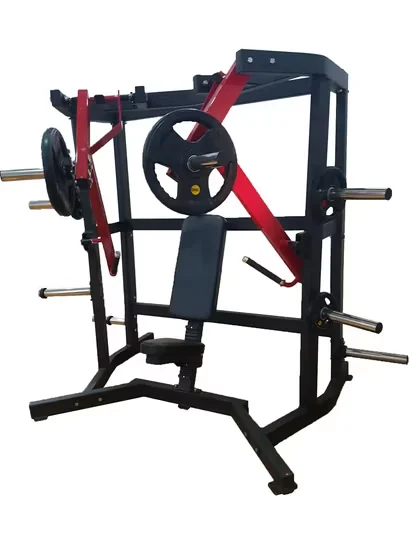
![ISO-Lateral Abdominal Crunch MTS-8009 Commercial Gym Machine [WARN] draft identifier mismatch](https://bickgym.com/wp-content/uploads/2026/08/iso-lateral-abdominal-crunch-mts-8009-commercial-gym-machine-warn-draft-identifier-mismatch-485c96.webp)
ISO
9001
CE
Certified
OEM
Available
10YR
Warranty
MTS-8009 Selectorized Abdominal Crunch Machine, 80kg Weight Stack, 241kg Unit Weight — constructed with 3×3 inch frame steel and robotic MIG continuous welding to eliminate spot-weld fatigue under repetitive torso flexion loading. Sealed bearing pivot assemblies and industrial-grade pulley systems maintain smooth pin-select operation across high-traffic commercial use cycles. Every unit undergoes three-stage QC inspection with load testing before shipment.
// Spec Highlights
• Direct from Manufacturer · No Middlemen · Worldwide Shipping
01
// Material
Imported Solid Wood
Premium hardwood frames sourced for density and visual warmth.
02
// Hardware
Medical-Grade Silent
Whisper-quiet pulleys and springs for clinical environments.
03
// Customization
Appearance OEM
Color, upholstery, and branding tailored to your studio.
04
// Service
Layout Design
Free venue planning for studios and rehab institutions.
Every component is selected for longevity, performance, and aesthetic harmony - from imported hardwood frames to silent medical-grade accessories.
// Features
Traceable Steel Coils — Every 11-gauge tube used in this selectorized abdominal crunch machine traces back to its original mill certification, not a secondary supplier receipt.
| Parameter | Value |
|---|---|
| Designation | MTS-8009 |
| Product Type | Selectorized Abdominal Crunch Machine |
| Frame Steel Gauge | 11-gauge |
| Frame Tube Size | 3×3 inch |
| Steel Grade | Q235 and Q345 industrial steel, mill-certified |
| Welding Type | Robotic MIG, continuous weld lines |
| Weight Stack | 80 kg |
| Loading Type | Pin select |
| Bearing Type | Sealed industrial bearings |
| Pulley System | Aircraft-cable pulley system |
| Upholstery | Standard or high-density options available |
| Powder Coating | 200μm scratch-resistant, sandblast pre-treated |
| Product Dimensions (L × W × H) | 112 cm × 99 cm × 142 cm |
| Net Weight | 241 kg |
| Machine Grade | Commercial use |
| Certification | CE, ISO 9001, SGS |
| Warranty | 10-year frame warranty |
| Facility Type | Typical Use |
|---|---|
| Commercial gym strength floor | Dedicated abdominal and core training zone within the selectorized machine circuit |
| Hotel and resort fitness center | High-durability core station for mixed-ability guests with minimal supervision |
| University athletic department | Strength and conditioning room supporting varsity athlete core development programs |
| Rehabilitation and performance center | Controlled-resistance torso flexion work under sports medicine staff guidance |
A commercial selectorized abdominal crunch machine fails at the weld before the steel ever yields.
I have pulled apart machines that looked solid on the showroom floor. The pivot bracket was held by four spot welds — each one a tiny stress concentrator that cracks after thousands of flexion cycles. When a gym runs 200 members through a core station daily, those spot welds fatigue in months, not years. [NEED_CITE: weld classification and fatigue performance in structural steel] That is why every junction on this unit carries a continuous robotic MIG weld bead, distributing load across the entire seam rather than pinning it to discrete points. The 11-gauge, 3×3 inch tube section resists torsional flex during heavy stack selections, keeping the pivot axis aligned even when users load the full 80 kg and drive through explosive repetitions.
A selectorized abdominal crunch machine occupies a specific role in the core training zone: controlled sagittal-plane torso flexion against a fixed resistance curve. It complements rotary torso machines and back extension stations by covering the anterior trunk without requiring users to stabilize their own body weight on the floor. In high-traffic commercial gyms, this commercial selectorized abdominal crunch machine serves members who prefer guided movement over free-weight or cable alternatives, and its pin-select stack accommodates everyone from first-time users selecting 10 kg to advanced athletes loading the full 80 kg.
Torso flexion machines experience repetitive eccentric-to-concentric loading at the pivot axis with every repetition — hundreds of cycles per hour during peak usage. The highest stress concentrates where the seat carriage meets the main frame upright, and where the pivot bolt passes through the load arm. Unsealed bushings at these points develop radial play as sweat and chalk dust infiltrate the contact surface, leading to wobble and noise within the first year. [NEED_CITE: bearing degradation patterns under cyclic loading in fitness equipment] Sealed industrial bearings on this unit prevent that contamination path, maintaining tight pivot tolerance through extended daily use. The 200μm powder coating resists chipping at contact points where users grip, step, and adjust, and it tolerates repeated cleaning with commercial disinfectants without blistering or fading.
Frame deformation under load is a function of wall thickness, tube cross-section, and steel grade. An 11-gauge wall inside a 3×3 inch tube provides a section modulus that resists bending when a heavy user loads the full 80 kg stack and leans back into the starting position. Robotic MIG welding produces consistent penetration depth along every seam, eliminating the cold joints and porosity that hand-welding introduces at high-stress corners. Sealed bearings at the pivot eliminate the greasing schedule that bushings demand, cutting preventive maintenance visits. On the guide rods, precision alignment prevents the weight stack from binding when users pin off-center loads — a problem that frays cables and accelerates pulley wear on poorly aligned machines. The sandblast-plus-powder sequence at 200μm creates a coating thick enough to survive bumper plate contact and dumbbell drops nearby, not just finger-smudge wiping.
Thin-wall tubing bends gradually — you do not notice it until the seat carriage starts dragging on the guide rod and the stack no longer returns smoothly. Spot welds at the load arm junction fail without warning; one day the pivot bracket separates mid-set and a member is injured. Non-sealed bushings require quarterly teardowns for re-greasing, pulling the machine off the floor and frustrating members. Low-density upholstery compresses permanently within months under daily use, exposing the plywood backing and forcing a full pad replacement. Coatings below industrial thickness chip at footplate edges and handle contact points, exposing bare steel to humidity and sweat until rust staining appears on members’ clothing. [NEED_CITE: EN 957 structural requirements for stationary training equipment]
The 11-gauge steel used here arrives with mill certification traceable to the coil — not a generic "commercial grade" claim with no paperwork behind it. Robotic MIG welding lays continuous beads at every structural junction, which we verify visually and with load testing on every single unit before it ships, not on a sample basis. The 200μm powder coating over sandblast prep is measured per batch, ensuring the finish survives years of high-traffic gym conditions. Floor planning CAD support covers this machine’s 112 cm × 99 cm footprint along with required safety clearances, so your layout does not leave unusable gaps or pinch points between the crunch station and adjacent equipment. A 10-year frame warranty backs the structural package, and OEM private label options allow branding alignment for chain operators.
Provide your core training zone dimensions and adjacent equipment list so we can return a 2D or 3D layout confirming clearances around this unit. Specify your expected daily member volume so we can confirm the structural grade matches your traffic level. Communicate target user demographics — competitive athletes versus general population — to verify the 80 kg stack range and upholstery selection fit your facility. Mention any color, logo, or pad customization requirements early in the conversation.
Q: How do I verify that a selectorized crunch machine is truly commercial grade?
A: Request the mill certificate showing steel grade, wall thickness, and tube dimensions — not just a "commercial grade" label. Ask whether welding is continuous robotic MIG or spot-welded at junctions. Confirm that every unit receives a load test before shipment, not just sample batches. True commercial construction means verifiable material traceability and consistent manufacturing processes, not marketing language.
Q: What frame specification does an abdominal machine need for daily commercial use?
A: An 11-gauge steel frame with a 3×3 inch tube cross-section provides the section modulus required to resist deformation under repetitive torso flexion loading. Continuous weld lines at stress junctions prevent fatigue cracking that spot welds develop over thousands of cycles. Sealed bearings at the pivot maintain alignment without scheduled re-greasing, which is critical when the machine runs eight or more hours per day.
Q: Pin-select versus plate-loaded for a crunch machine — which suits high-traffic gyms?
A: Pin-select systems allow rapid weight changes between users without loading and unloading plates, keeping throughput high in busy training zones. A sealed guide rod and aircraft-cable pulley system prevent binding under repeated pin selections. Plate-loaded crunch machines serve niche preference but slow down circuit flow in commercial environments where time-per-station matters.
Q: What floor space and clearance does this crunch machine require in a gym layout?
A: The machine occupies a 112 cm × 99 cm footprint, with a minimum 60 cm clearance recommended on all sides for safe user mounting, dismounting, and passage of other members. Floor planning CAD support accounts for these clearances alongside adjacent equipment spacing, preventing unusable gaps or pinch points in the core training zone layout.
Q: How long does commercial upholstery last on a crunch machine before it needs replacement?
A: Standard-density pads compress and lose support under daily commercial use within a typical replacement cycle. High-density options resist permanent compression meaningfully longer. When selecting upholstery, consider your daily user volume and whether replacement pads are available as spare parts — proprietary pad shapes without aftermarket support force expensive full assembly swaps.
Premium aesthetics meet quiet operation for boutique studio environments.
Medical-grade silence and precision for sports & postpartum recovery.
Furniture-grade craftsmanship for premium residential installations.
Compact premium setups for one-on-one and small-group training.
Aesthetic Pilates integration for hybrid wellness studio programming.
Multi-unit deployment with instructor-grade reliability for certification programs.
Tell us about your project. Our team will respond within 24 hours with pricing, customization options, and shipping details.
// Sales Director
William
+86 132 2531 1800
// Export Manager
Bella
+86 198 5412 8032
william@bickfit.com