01 / Scenario
STUDIO
P
High-End Pilates Studios
Premium aesthetics meet quiet operation for boutique studio environments.
ISO
9001
CE
Certified
OEM
Available
10YR
Warranty
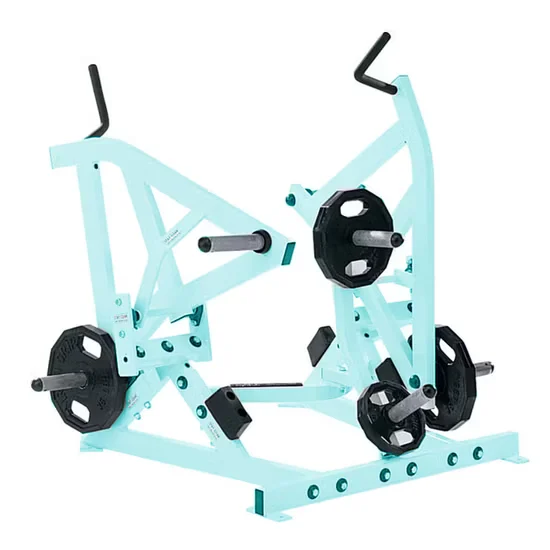
Plate Loaded Combo Twist Machine, Steel Frame, Plate Loaded, 1510×1660×1365mm — engineered with 11-gauge industrial steel and robotic MIG continuous welding to withstand repetitive torsional stress without frame fatigue. Sealed bearings maintain rotational precision under high-traffic use, while 200μm powder coating resists chipping at contact points. Every unit undergoes individual load testing before shipment, backed by a 10-year frame warranty.
// Spec Highlights
• Direct from Manufacturer · No Middlemen · Worldwide Shipping
01
// Material
Imported Solid Wood
Premium hardwood frames sourced for density and visual warmth.
02
// Hardware
Medical-Grade Silent
Whisper-quiet pulleys and springs for clinical environments.
03
// Customization
Appearance OEM
Color, upholstery, and branding tailored to your studio.
04
// Service
Layout Design
Free venue planning for studios and rehab institutions.
Every component is selected for longevity, performance, and aesthetic harmony - from imported hardwood frames to silent medical-grade accessories.
// Features
Traceable Mill Steel — every frame tube on this Plate Loaded Combo Twist Machine traces back to the certified coil, with 11-gauge thickness verified before cutting begins.
| Parameter | Value |
|---|---|
| Product Type | Plate Loaded Combo Twist Machine |
| Loading Type | Plate loaded |
| Frame Steel | 11-gauge, 3×3 inch tube |
| Steel Grade | Q235 / Q345 industrial steel, mill-certified |
| Welding Type | Robotic MIG continuous weld |
| Load Capacity | Tested beyond 500kg |
| Bearing Type | Sealed industrial bearings |
| Powder Coating | 200μm scratch-resistant, sandblast pre-treated |
| Product Dimensions | 1510×1660×1365mm |
| Net Weight | 100kg |
| Upholstery | Available in standard or high-density commercial options |
| Main Frame Color | Available per customer specification |
| Cushion Color | Available per customer specification |
| Certification | ISO 9001, CE |
| Warranty | 10-year frame |
| Facility Type | Typical Use |
|---|---|
| Commercial gym strength floor | High-traffic rotational core training station in the plate loaded zone |
| University strength and conditioning room | Athlete rotational strength and core stability development |
| CrossFit box functional zone | Supplemental torso rotation work alongside rig-based training |
| Hotel fitness center | Durable core training option for varied guest usage patterns |
| Rehabilitation and performance center | Controlled rotational loading for return-to-sport protocols |
A combo twist machine lives or dies at the junction where rotational force transfers into the main frame.
When a user loads plates and drives through a full rotational arc, the frame absorbs multidirectional shear that a simple linear press machine never encounters. Many units marketed as commercial grade rely on spot-welded joints at these exact stress junctions. Under repeated twist cycles, those discrete weld points develop micro-cracks that spread unseen until the connection gives way during a loaded set. I have seen this pattern enough times to treat any twist-axis machine with skepticism until I verify continuous weld lines and actual steel gauge documentation. [NEED_CITE: EN 957 structural requirements for stationary training equipment]
The commercial plate loaded combo twist machine occupies the rotational movement plane that most linear press and pull stations leave uncovered. It pairs naturally with lateral raises, T-bar rows, and leg press stations to give members a complete torso and lower-body training circuit without redundant movement patterns. Facilities running moderate to high member density benefit from placing it at the end of a plate loaded row where plate storage is already within reach. The frame footprint accommodates users across a wide range of torso lengths and hip widths without requiring adjustment between sets.
Every twist cycle sends eccentric force through the pivot axis and into the base welds in a pattern that differs from standard compressive loading. The sealed bearings at the rotation point must handle this off-axis stress without developing play over thousands of cycles per week in a busy facility. Sweat and cleaning chemicals accelerate corrosion at any exposed steel, which is why the 200μm powder coat matters most at grip contact points and the base plate junction. [NEED_CITE: weld classification and fatigue performance in structural steel]
The 11-gauge, 3×3 inch tube section provides a wall thickness and cross-sectional area that resist torsional deflection far better than thinner alternatives, keeping the movement path consistent even under heavy plate loads. Robotic MIG continuous welding eliminates the intermittent bond pattern of spot welds, distributing rotational stress across the full joint length rather than concentrating it at discrete points. Sealed industrial bearings at the twist axis prevent dust and moisture ingress that causes bushing-style pivots to develop wobble and require frequent replacement. The sandblast pre-treatment before powder coating creates a mechanical bond profile that keeps the finish intact at high-contact zones where plates are loaded and unloaded daily.
Thinner frame tubing on a rotational machine deforms progressively under twist loads, and that deformation shows up first as uneven resistance through the arc rather than visible bending. Spot-welded pivot joints on twist machines fail without warning because the crack propagates internally before any surface sign appears. Non-sealed bushings at the rotation point require lubrication schedules that most gym maintenance routines skip, leading to grinding noise and then complete seizure. Low-grade powder coating chips where plates contact the horns, exposing bare steel to sweat corrosion that spreads beneath adjacent coating within months. [NEED_CITE: comparative fatigue life of spot weld versus continuous weld in cyclic loading applications]
The 11-gauge Q235 and Q345 steel on this combo twist unit carries mill certification traceable to the originating coil, so you can verify exactly what is in the frame. Robotic MIG welding runs continuous beads along every structural joint, including the high-torque pivot connection that spot welding cannot reliably hold. Each unit undergoes individual load testing before crating, not batch sampling that leaves untested machines in the shipment. The 200μm powder coating over sandblast prep keeps the frame intact through years of plate contact and commercial cleaning agents. Floor planning CAD support includes the exact clearance envelope this twist machine requires for safe rotational arc and plate loading access on all sides.
Share your strength floor dimensions and current equipment list to receive a 2D or 3D layout showing how this twist machine integrates with existing plate loaded units and traffic flow. Specify your expected daily user volume so the structural rating matches the duty cycle. Provide the torso height and hip width range of your primary user population to confirm the pad geometry fits without modification. Note any frame color, logo placement, or cushion density preferences for OEM production.
Q: How do I confirm a twist machine actually meets commercial structural standards?
A: Request the mill certification for the steel used in the frame and pivot assembly, and verify the wall thickness matches what is quoted. Ask whether welding at the rotation axis is continuous MIG or spot weld, and request load test documentation for the specific unit rather than a generic batch certificate.
Q: Why does steel gauge matter more on rotational machines than on linear press stations?
A: Rotational movement generates torsional shear that stresses frame joints from multiple angles simultaneously, unlike the primarily compressive loads on a chest press. Thinner gauge steel deflects under this multidirectional force, gradually altering the resistance arc and accelerating fatigue at welded connections until failure occurs.
Q: What maintenance do sealed bearings require compared to bushing-style pivots?
A: Sealed industrial bearings keep contaminants out and lubrication in, typically requiring only periodic inspection for play or noise rather than scheduled relubrication. Bushing-style pivots expose the friction surface to dust and sweat, demanding regular lubrication intervals that most facility maintenance schedules overlook until grinding develops.
Q: How should a commercial gym plan floor spacing around a combo twist machine?
A: Allow full clearance for the rotational arc on both sides plus plate loading access at the horns, typically requiring more lateral space than a standard linear station. Factor in user queue space and safe passage behind the machine so loaded plates do not extend into traffic lanes.
Premium aesthetics meet quiet operation for boutique studio environments.
Medical-grade silence and precision for sports & postpartum recovery.
Furniture-grade craftsmanship for premium residential installations.
Compact premium setups for one-on-one and small-group training.
Aesthetic Pilates integration for hybrid wellness studio programming.
Multi-unit deployment with instructor-grade reliability for certification programs.
Tell us about your project. Our team will respond within 24 hours with pricing, customization options, and shipping details.
// Sales Director
William
+86 132 2531 1800
// Export Manager
Bella
+86 198 5412 8032
william@bickfit.com