01 / Scenario
STUDIO
P
High-End Pilates Studios
Premium aesthetics meet quiet operation for boutique studio environments.
ISO
9001
CE
Certified
OEM
Available
10YR
Warranty
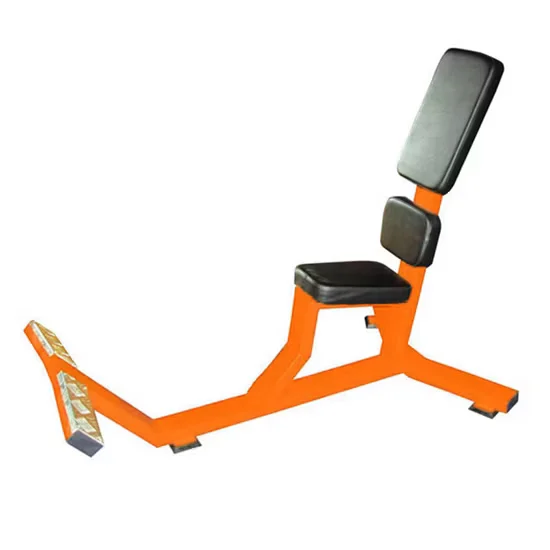
Plate Loaded Utility Bench, 75-Degree Fixed Incline, 1120×640×1145mm — engineered with industrial steel frame and robotic MIG continuous welding to eliminate spot-weld fatigue under repetitive heavy pressing. Sandblast pre-treatment plus 200μm powder coating resists chipping at plate contact points. Every unit undergoes three-stage load testing before shipment, backed by a 10-year frame warranty for high-traffic commercial environments.
// Spec Highlights
• Direct from Manufacturer · No Middlemen · Worldwide Shipping
01
// Material
Imported Solid Wood
Premium hardwood frames sourced for density and visual warmth.
02
// Hardware
Medical-Grade Silent
Whisper-quiet pulleys and springs for clinical environments.
03
// Customization
Appearance OEM
Color, upholstery, and branding tailored to your studio.
04
// Service
Layout Design
Free venue planning for studios and rehab institutions.
Every component is selected for longevity, performance, and aesthetic harmony - from imported hardwood frames to silent medical-grade accessories.
// Features
Mill-Certified Frame Steel — Every tube in this plate loaded utility bench traces back to a verified Q235/Q345 coil origin, eliminating the guesswork behind vague "commercial grade" claims.
| Parameter | Value |
|---|---|
| Product Type | Plate Loaded Utility Bench |
| Frame Steel Gauge | 11-gauge |
| Frame Tube Size | 3×3 inch |
| Steel Grade | Q235 / Q345 industrial steel, mill-certified |
| Welding Type | Robotic MIG, continuous weld lines |
| Loading Type | Plate loaded |
| Adjustment Positions | 75-degree fixed incline |
| Powder Coating | 200μm scratch-resistant, sandblast pre-treated |
| Upholstery | Standard or high-density options, replaceable covers |
| Product Dimensions | 1120 × 640 × 1145 mm |
| Certification | ISO 9001, CE |
| Warranty | 10-year frame |
| Facility Type | Typical Use |
|---|---|
| Commercial gym strength floor | Incline pressing station paired with free weight racks |
| Hotel and resort fitness center | Durable pressing option for unsupervised guest use |
| University strength and conditioning room | Incline dumbbell and barbell work for athletic programs |
| CrossFit box functional zone | Supplemental pressing alongside rig-based training |
| Rehabilitation and performance center | Controlled incline pressing during late-stage return-to-load phases |
A continuous robotic MIG weld outlasts the steel it joins — spot welds cannot make that claim.
On a 75-degree incline bench under plate-loaded pressing, the junction between the upright support and the base frame absorbs repeated eccentric stress each time a user racks or unracks weight. Spot-welded joints on thinner-gauge frames often develop micro-cracks at these stress concentration points within the first year of high-traffic use. The crack propagates silently until the joint shifts under load, creating an uneven pressing surface that users notice only after the frame has already moved. This commercial plate loaded utility bench 75 degree addresses that failure mode through full-penetration continuous weld lines executed by robotic MIG systems, removing the inconsistent heat input and cold-joint risk inherent in manual spot welding. [NEED_CITE: weld classification and fatigue performance in structural steel]
A fixed 75-degree plate loaded utility bench occupies a specific niche on the strength floor: incline pressing movements targeting the upper pectorals, anterior deltoids, and triceps through a converging barbell path. It complements flat benches and adjustable FID stations by offering a dedicated, structurally rigid incline option that does not require pin-lock adjustments between users. In high-density commercial layouts, this fixed-angle design reduces transition time and eliminates the adjustment-pin wear common on multi-position benches. The bench footprint accommodates users across a broad range of torso lengths, and its plate-loaded nature keeps it compatible with existing bumper plate inventories.
Every incline press repetition delivers an impact load to the upright-to-base junction when the barbell contacts the rack hooks, followed by sustained static loading during the press itself. In a commercial gym running eight or more hours daily, that cycle repeats thousands of times per week across dozens of users with varying press mechanics and rack techniques. The weld at the upright base experiences the highest stress concentration, particularly when users drop the bar rather than lowering it with control. Powder coating at these contact zones faces abrasion from barbell knurling and plate edges, combined with corrosive exposure from sweat residue and cleaning chemicals applied between sessions. [NEED_CITE: EN 957 structural requirements for stationary training equipment] Upholstery compression under the upper back and shoulder contact area undergoes repeated loading that exposes low-density foam within months if the cushion core lacks adequate support rating.
Frame gauge and tube cross-section together determine how much a bench deflects under load — 11-gauge steel in a 3×3 inch square tube provides a stiffness threshold that resists visible flex even under heavy plate stacks combined with user bodyweight. Robotic MIG welding produces consistent bead geometry along the entire joint length, avoiding the undercut and porosity defects that manual welders introduce during high-volume production runs. The 200μm powder coating thickness, applied after sandblast surface preparation, creates a film build that withstands barbell contact abrasion and resists chipping at the impact zones where plates meet the frame during loading. Upholstery with replaceable covers extends the bench service life by allowing cushion replacement without discarding the entire pad assembly, a meaningful cost control in facilities that rotate equipment across multiple zones.
Downsizing frame tubes to thinner-wall alternatives saves material cost at the factory but transfers the real expense to the gym floor: a flexing bench frame shifts the user’s pressing mechanics, creating uneven shoulder loading that trainers trace back to equipment instability rather than technique. Spot-welded joints that pass visual inspection at shipment develop fatigue cracks under repetitive eccentric loading, turning a structural liability into a potential injury event and the associated insurance implications. Low-density upholstery foam compresses permanently within the first season of commercial use, forcing facility operators to order replacement pads or pull the bench from the floor entirely. Thin powder coatings chip at plate contact points within months, exposing bare steel to sweat-driven corrosion that accelerates in humid climates and unventilated basement gyms. [NEED_CITE: powder coating adhesion failure modes in fitness equipment applications]
The 11-gauge frame steel carries mill certification traceable to the originating coil, giving procurement teams a verifiable material pedigree rather than a generic grade claim. Robotic MIG continuous welding on every joint eliminates the spot-weld variability that causes field failures in comparable plate loaded benches. Each unit undergoes load testing before shipment, not sample-based testing on a production batch. The 200μm industrial powder coating with sandblast pre-treatment resists the chipping and corrosion cycle that forces premature refinishing. A 10-year frame warranty backs the structural components, and 2D-3D CAD layout support helps place this bench within the strength zone with correct safety clearances between adjacent pressing stations and rack equipment. OEM customization for frame color and upholstery allows brand alignment without compromising the underlying structural specification.
Provide the total strength floor area and planned equipment list to receive a 2D-3D layout that positions this commercial plate loaded utility bench 75 degree with verified safety clearances and user flow paths. Specify expected daily user volume so the structural grade and upholstery density can be matched to actual traffic patterns rather than assumed usage. Communicate any branding requirements including frame color, upholstery color, and logo placement to ensure the OEM customization aligns with facility identity standards.
Q: How can I verify the frame steel gauge matches what is quoted?
A: Request the mill certificate that traces the steel coil origin for your production batch. This document lists the exact gauge, grade, and chemical composition of the raw material. Compare the certified gauge against the frame tube measurement on a sample unit using calipers at a cut end or weld preparation edge. Any discrepancy between the certificate and the physical measurement indicates a material substitution.
Q: What distinguishes continuous MIG welding from spot welding on a bench frame?
A: Continuous MIG welding produces an unbroken weld bead along the entire joint length, distributing stress evenly across the connection. Spot welding creates discrete fusion points with unwelded gaps between them, concentrating stress at each spot and creating crack initiation sites under repetitive loading. On an incline bench subjected to repeated barbell impact, continuous welds maintain joint integrity through far more load cycles before fatigue appears.
Q: Why does powder coating thickness matter at plate contact points?
A: Plate contact zones experience repeated abrasion from steel plate edges and barbell knurling during loading and unloading. A 200μm coating applied over sandblast-prepared steel maintains adhesion and film integrity through this abrasion, while thinner coatings chip through to bare metal, initiating corrosion that spreads under the surrounding coating layer. The sandblast pre-treatment creates the surface profile necessary for the powder to mechanically bond to the steel substrate.
Q: How should I plan spacing between this bench and adjacent pressing stations?
A: Account for the full bench footprint plus the lateral space a user needs to load and unload plates safely, plus the barbell overhang if Olympic-length bars are used. Inadequate spacing forces users to load plates while standing in the travel path of adjacent equipment, creating collision risk during heavy sets. Submit your floor dimensions for a CAD layout that verifies clearances before equipment ships.
Premium aesthetics meet quiet operation for boutique studio environments.
Medical-grade silence and precision for sports & postpartum recovery.
Furniture-grade craftsmanship for premium residential installations.
Compact premium setups for one-on-one and small-group training.
Aesthetic Pilates integration for hybrid wellness studio programming.
Multi-unit deployment with instructor-grade reliability for certification programs.
Tell us about your project. Our team will respond within 24 hours with pricing, customization options, and shipping details.
// Sales Director
William
+86 132 2531 1800
// Export Manager
Bella
+86 198 5412 8032
william@bickfit.com