01 / Scenario
STUDIO
P
High-End Pilates Studios
Premium aesthetics meet quiet operation for boutique studio environments.

ISO
9001
CE
Certified
OEM
Available
10YR
Warranty
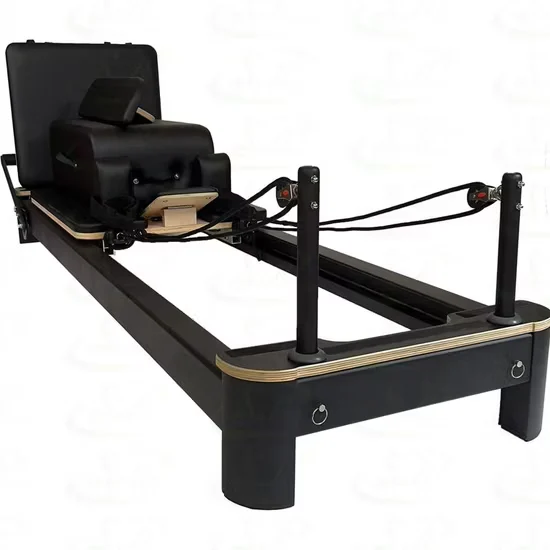
Portable Oak Wood Pilates Reformer, 2400×600×350mm, 100kg Net Weight — solid oak carriage frame minimizes rail flex under repeated spring tension cycles, while the foldable chassis maintains structural alignment of the wheel-rail interface during compact storage. Equipped with long box, jump board, and platform for full-spectrum studio or rehabilitation use. 32-point inspection with 100% load testing ensures glide consistency and hinge durability before shipment.
// Spec Highlights
• Direct from Manufacturer · No Middlemen · Worldwide Shipping
01
// Material
Imported Solid Wood
Premium hardwood frames sourced for density and visual warmth.
02
// Hardware
Medical-Grade Silent
Whisper-quiet pulleys and springs for clinical environments.
03
// Customization
Appearance OEM
Color, upholstery, and branding tailored to your studio.
04
// Service
Layout Design
Free venue planning for studios and rehab institutions.
Every component is selected for longevity, performance, and aesthetic harmony - from imported hardwood frames to silent medical-grade accessories.
// Features
Oak Frame Rigidity — Solid oak wood carriage resists rail warping under repeated spring tension cycles, maintaining alignment where plywood flexes and drifts.
| Parameter | Value |
|---|---|
| Product Type | Pilates Reformer |
| Frame Material | Solid Oak Wood |
| Product Dimensions | 2400×600×350mm |
| Net Weight | 100kgs |
| Foldable Design | Yes |
| Included Accessories | Long Box, Jump Board, Platform |
| Color Options | Solid color, customization available |
| Customization | Logo and color available upon request |
| Warranty | 3 Years |
| Target User | Adult, Unisex |
| Facility Type | Typical Use |
|---|---|
| Boutique Pilates Studio | Group reformer classes with daily folding and storage between sessions |
| Home Pilates Practice Space | Dedicated practice area with foldable storage when room serves multiple purposes |
| Rehabilitation & Physiotherapy Clinic | Controlled resistance exercises for joint recovery and post-injury conditioning |
| Personal Training Studio | One-on-one instruction with accessory transitions during sessions |
Solid oak resists the rail deformation that turns a portable reformer into a binding, uneven machine within months.
Most portable reformers on the market use laminated plywood or MDF for the carriage and rail bed. Under heavy spring tension and repeated loading cycles, these composite boards compress at the wheel contact points, creating micro-channels that pull the carriage off its true path. The result is uneven resistance, lateral drift, and a glide that degrades noticeably within the first year of studio-level use. [NEED_CITE: structural performance of hardwood versus engineered wood under cyclic loading]
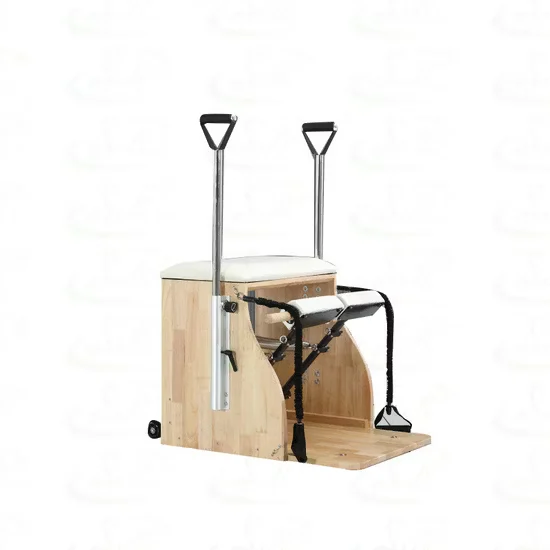
A portable oak wood pilates reformer serves as the primary apparatus in boutique studios and home practice spaces where floor area is limited. It covers the full sagittal plane for supine, prone, and seated movements targeting the core stabilizers, hip flexors, and posterior chain. In a multi-apparatus studio, it pairs with a Cadillac or Wunda Chair for standing balance work and upper body isolation. The foldable chassis means a two-reformer setup can collapse into a single wall footprint after evening classes.
The folding mechanism introduces a concentrated stress point at the hinge where the two frame halves meet. Under heavy spring loads — particularly during jump board plyometrics — that joint absorbs both vertical impact and lateral torsion. Sealed bearings at the carriage wheels resist sweat ingress and dust accumulation common in shared studio environments, while unsealed bushings develop play and require replacement far sooner. The oak frame itself handles cyclic fatigue well, but the metal-to-wood fasteners at the hinge demand periodic torque verification to prevent loosening. [NEED_CITE: fatigue behavior of wood-metal fastener joints under dynamic loading]
Solid oak’s density gives the rail bed a structural rigidity that composite boards cannot match under the same cross-sectional dimensions. The carriage wheels ride on a surface that resists the compressive wear responsible for tracking drift. At 2400mm in length, the rail span is long enough for full-range carriage travel during leg press and long stretch series without the end-stop feeling abrupt. The 100kg net weight anchors the frame during jump board work, preventing the base shift that lighter portable units exhibit under plyometric loading. The 350mm platform height positions the user at an ergonomic working level for instructors assisting with alignment corrections.
Plywood and MDF carriages are lighter and cheaper to produce, but they absorb moisture from studio humidity and cleaning solutions, swelling at the edges and altering the wheel-to-rail clearance. Once the rail surface compresses unevenly, the carriage develops lateral play that no amount of adjustment corrects — the frame itself must be replaced. Non-reinforced spring anchor points screwed directly into end grain loosen over hundreds of tension cycles, and replacement springs are often proprietary, leaving operators with no aftermarket supply. These failures compound in high-traffic studios where reformers see multiple sessions daily. [NEED_CITE: moisture absorption and dimensional stability of engineered wood panels]
The solid oak frame provides dimensional stability traceable through material declarations, not vague "commercial grade" labels. The foldable hinge is engineered to maintain rail alignment across repeated open-close cycles, meaning the carriage path does not develop a dead spot at the fold line. The 3-year warranty covers structural components, reflecting confidence in the frame’s fatigue life under daily studio use. OEM customization for studio branding and color matching integrates the reformer into facility design without requiring aftermarket modification. Each unit ships with its accessory set — long box, jump board, and platform — ensuring full programming capability from day one without separate procurement.
Provide your studio floor dimensions and current apparatus list so we can confirm layout spacing and storage planning for the foldable units. Specify daily session volume to verify the structural grade matches your traffic pattern. Indicate any color or logo customization requirements for brand consistency across your reformer fleet. Share your primary user population — rehabilitation clients versus athletic conditioning — so spring tension configuration aligns with your programming needs.
Q: How does solid oak compare to plywood for reformer rail longevity?
A: Solid oak maintains rail straightness under repeated spring tension because its density resists the compressive wear at wheel contact points. Plywood compresses unevenly over months of daily use, creating channels that cause carriage drift and lateral play. Once a plywood rail deforms, the entire frame typically requires replacement since the wear is structural, not adjustable.
Q: What should I check when evaluating carriage wheel and rail glide quality?
A: Ask the supplier for the bearing type at the carriage wheels — sealed bearings resist sweat and dust intrusion that causes bushings to develop play prematurely. Verify the wheel material specification, as hard plastic wheels on wood rails create different wear patterns than urethane. Request the recommended maintenance interval and replacement part availability for your region.
Q: Does a foldable reformer sacrifice rigidity compared to a fixed frame?
A: A well-engineered foldable hinge maintains rail alignment if the joint hardware is rated for the cyclic load and fastened with through-bolts rather than wood screws. The trade-off is a maintenance requirement: hinge bolts need periodic torque verification. Fixed frames eliminate this variable but demand permanent floor space, which is impractical for multi-use home studios or boutique facilities that reconfigure between classes.
Q: How should spring tension be configured for different training goals?
A: Lighter spring configurations suit rehabilitation and controlled mobility work where joint loading must remain minimal. Medium tension supports general conditioning and core stability programming typical in group studio classes. Heavy spring settings accommodate athletic strength training and advanced practitioners. Confirm with the supplier which spring ratings ship standard and whether additional tension levels are available as accessories.
Q: Are accessories like jump boards and long boxes interchangeable between reformer models?
A: Accessory mounting standards vary across manufacturers — bracket spacing, attachment hardware, and platform dimensions are rarely universal. When evaluating a portable oak wood pilates reformer, verify that the long box, jump board, and platform are specified for that exact frame model. Aftermarket accessories that require adapter brackets introduce flex points and may void the structural warranty.
Premium aesthetics meet quiet operation for boutique studio environments.
Medical-grade silence and precision for sports & postpartum recovery.
Furniture-grade craftsmanship for premium residential installations.
Compact premium setups for one-on-one and small-group training.
Aesthetic Pilates integration for hybrid wellness studio programming.
Multi-unit deployment with instructor-grade reliability for certification programs.
Tell us about your project. Our team will respond within 24 hours with pricing, customization options, and shipping details.
// Sales Director
William
+86 132 2531 1800
// Export Manager
Bella
+86 198 5412 8032
william@bickfit.com