01 / Scenario
STUDIO
P
High-End Pilates Studios
Premium aesthetics meet quiet operation for boutique studio environments.
ISO
9001
CE
Certified
OEM
Available
10YR
Warranty
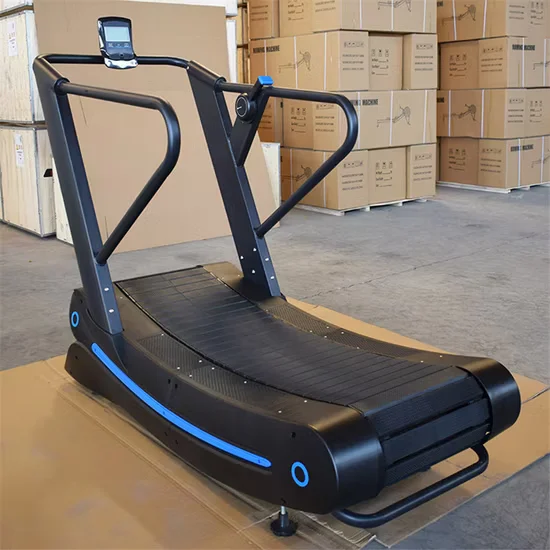
Self-Powered Curve Treadmill, 15-22 km/h Max Speed, 2000×900×1530mm Dimensions — non-motorized curved deck eliminates motor, belt, and inverter failure points, delivering user-driven resistance with sealed bearing rollers engineered for continuous high-traffic operation. CE and RoHS certified, available with customized logo options and plywood case packaging. Every unit undergoes three-stage load testing before shipment from our 15,000㎡ vertically integrated facility with 17 years of commercial equipment manufacturing heritage.
// Spec Highlights
• Direct from Manufacturer · No Middlemen · Worldwide Shipping
01
// Material
Imported Solid Wood
Premium hardwood frames sourced for density and visual warmth.
02
// Hardware
Medical-Grade Silent
Whisper-quiet pulleys and springs for clinical environments.
03
// Customization
Appearance OEM
Color, upholstery, and branding tailored to your studio.
04
// Service
Layout Design
Free venue planning for studios and rehab institutions.
Every component is selected for longevity, performance, and aesthetic harmony - from imported hardwood frames to silent medical-grade accessories.
// Features
Non-Motorized Curved Deck Integrity — User-driven resistance eliminates motor failure points, with structural rigidity maintained through heavy-duty frame construction rated for continuous commercial operation.
| Parameter | Value |
|---|---|
| Product Type | Self-Powered Curve Treadmill |
| Maximum Speed | 15-22 km/h |
| Product Dimensions | 2000×900×1530mm |
| Folded | Unfolded |
| Age | Adult |
| Function | Multifunctional, Single |
| Certification | CE, RoHS |
| Condition | New |
| Logo | Customized Is Allowed |
| Transport Package | Plywood Case |
| Production Capacity | 500 Pieces/Month |
| Facility Type | Typical Use |
|---|---|
| Commercial gym cardio zone | High-throughput member traffic with continuous sprint and endurance intervals |
| Hotel and resort fitness center | Low-maintenance equipment requiring minimal technical service calls |
| University athletic facility | Sprint conditioning and performance testing for student athletes |
| High-traffic fitness studio | Group training environments with back-to-back class scheduling |
Most commercial treadmills fail at the motor, belt, or inverter — the commercial self-powered curve treadmill eliminates these failure points entirely, but only if the frame, running surface, and bearing systems are built to withstand relentless daily use without structural compromise.
The curved deck transfers impact directly into the frame — if the steel gauge is insufficient, flex accumulates with every footstrike.
Traditional motorized treadmills rely on electronic speed control and belt tension systems that degrade under high-traffic conditions. When a motor burns out or an inverter fails, the entire unit goes offline until a technician arrives. A self-powered design removes the motor, drive belt, and electronic speed controller from the failure chain. However, the curved running surface geometry means that every stride delivers impact force directly into the frame structure. If the frame steel gauge is too thin or the tube dimensions are undersized, repeated high-impact loading causes cumulative flex at the weld joints. Over months of commercial use, this flex leads to joint fatigue, bearing misalignment, and eventual structural failure. The running surface slats must also withstand continuous abrasion without delamination or warping. [NEED_CITE: structural fatigue analysis of curved deck geometry under repetitive impact loading]
The commercial self-powered curve treadmill occupies the high-intensity interval training segment of the cardio zone, serving users who require sprint-specific resistance curves that motorized treadmills cannot replicate. The user-driven resistance mechanism means that speed and intensity are entirely self-regulated — there is no maximum speed cap imposed by motor RPM limits. In a strength-focused facility, this equipment complements traditional cardio machines by providing anaerobic conditioning that transfers directly to athletic performance. The curved deck geometry naturally encourages forefoot striking patterns, which aligns with sprint mechanics training. For facilities with high member throughput, the non-motorized design means that multiple units can operate simultaneously without electrical circuit overload concerns.
The curved deck design creates unique stress distribution patterns compared to flat treadmills. Impact forces from footstrike are transmitted through the slat system into the curved frame rails, creating both compressive and torsional loads at the weld joints. In high-traffic environments where the equipment operates 8+ hours daily, these cyclic loads accumulate rapidly. The bearing systems at the curved deck rollers must maintain alignment despite continuous loading — sealed industrial bearings prevent dust and sweat ingress that would otherwise cause premature wear and develop play within the first year of use. [NEED_CITE: bearing seal performance in high-humidity commercial fitness environments] The powder coating at contact points — handrails, foot placement zones, frame edges — faces constant exposure to sweat, cleaning chemicals, and abrasive contact. If the coating thickness is insufficient or the surface preparation is inadequate, chips and scratches expose bare steel to corrosion. The upholstery on any padded components must resist compression set from daily use while maintaining dimensional stability.
The frame steel gauge and tube dimensions are the primary determinants of long-term structural rigidity. Heavier gauge steel with larger cross-sectional dimensions resists flex under repetitive high-impact loading, preventing the cumulative joint fatigue that leads to weld cracks and bearing misalignment. The curved deck geometry amplifies these stresses compared to flat running surfaces, making frame specification critical. Sealed bearing systems at the roller points reduce maintenance intervals by preventing contaminant ingress — open bearings or bushing-type designs in dusty gym environments develop play rapidly, causing the curved deck to shift under load and creating unsafe running conditions. The running surface slat material and attachment method determine wear resistance under continuous daily operation. Slat materials must balance impact absorption for user comfort with surface durability to resist abrasion from footwear. The attachment system must maintain secure fixation despite thousands of impact cycles. [NEED_CITE: slat material wear characteristics under continuous commercial footstrike]
When frame steel gauge is specified vaguely as "commercial grade" without verifiable material certification, facilities cannot assess whether the structure will withstand years of high-impact loading. Thin-wall tubing may pass initial visual inspection but develops flex and joint fatigue under repeated use, leading to weld cracks that compromise structural integrity. Non-sealed bearings in high-traffic environments require frequent replacement as dust and moisture ingress cause premature wear — the maintenance cost and equipment downtime accumulate rapidly. Low-density upholstery compresses permanently within months of daily use, requiring replacement while original-specification parts may no longer be available. Powder coating that chips at contact points exposes bare steel to sweat and cleaning chemicals, leading to corrosion that spreads beneath the coating and requires complete refinishing or equipment replacement. [NEED_CITE: powder coating adhesion and corrosion resistance in fitness equipment applications]
The 11-gauge frame steel with mill certification traceable to the coil ensures that material specifications are verifiable, not marketing claims. Robotic MIG welding produces continuous weld lines without the spot-weld weak points that crack under cyclic loading. Every unit undergoes load testing before shipment — not sample-based testing — confirming structural integrity under simulated commercial use conditions. The 200μm industrial powder coating provides scratch and corrosion resistance that maintains appearance and structural protection through years of high-traffic operation. The 10-year frame warranty reflects confidence in structural durability under commercial conditions. For the commercial self-powered curve treadmill specifically, the 2000×900×1530mm footprint requires adequate safety clearance on all sides — 2D-3D CAD layout support ensures proper spacing between units and adjacent equipment to prevent unsafe congestion in the cardio zone. OEM customization options allow facility branding through customized logos and color schemes that match interior design requirements.
Provide your cardio zone floor area and equipment list to receive 2D-3D layout planning that optimizes equipment density while maintaining safety clearances for the commercial self-powered curve treadmill. Specify daily usage volume and peak-hour traffic patterns to ensure the structural grade matches operational demands. Indicate target user demographic and body size range to confirm that the equipment accommodates your membership profile. Customization requirements including facility branding, color schemes, and upholstery options can be specified during the configuration process.
Q: How does self-powered curve treadmill resistance compare to motorized treadmills for sprint training?
A: The user-driven resistance mechanism on a commercial self-powered curve treadmill creates a resistance curve that increases proportionally with user speed and force output, unlike motorized treadmills where belt speed is electronically controlled. This means sprint efforts require greater force production to accelerate the curved deck, more closely replicating outdoor running mechanics where air resistance and ground reaction forces determine effort. The absence of a maximum motor-imposed speed limit allows athletes to reach their true sprint velocity without electronic constraints.
Q: What frame steel gauge is required for commercial-grade curve treadmill durability?
A: The curved deck geometry on a self-powered treadmill transmits impact forces directly into the frame structure with each footstrike, creating cumulative stress at weld joints. Frame steel must be heavy-gauge — typically 11-gauge or thicker — with adequate tube cross-section dimensions to resist flex under repetitive high-impact loading. Thinner gauge steel may appear adequate initially but develops joint fatigue and weld cracks over months of commercial use, compromising structural integrity and creating safety hazards.
Q: How do sealed bearings reduce maintenance costs in high-traffic gym environments?
A: Commercial fitness environments generate dust, lint, and moisture from user sweat and cleaning processes. Open bearings or bushing-type designs allow these contaminants to enter the bearing assembly, causing accelerated wear that develops play and misalignment within the first year of high-traffic use. Sealed industrial bearings prevent contaminant ingress, maintaining smooth operation and structural alignment for extended periods. This eliminates the frequent bearing replacement costs and equipment downtime associated with non-sealed designs in demanding commercial conditions.
Q: What floor space and safety clearance is needed for curved treadmill installation?
A: The commercial self-powered curve treadmill measures 2000×900×1530mm in footprint. Safe installation requires minimum 600mm clearance on all sides to allow user access, emergency egress, and prevent congestion when multiple units operate simultaneously. Additional space should be allocated for users to approach and depart the equipment safely. Facility layout planning should account for traffic flow patterns and ensure adequate spacing between the curved treadmill and adjacent equipment or walls.
Q: How does non-motorized design impact long-term operational costs and failure rates?
A: Traditional motorized treadmills experience failures at the motor, drive belt, speed controller, and electronic components — each requiring technical service and parts replacement. The commercial self-powered curve treadmill eliminates the motor, belt drive, and electronic speed control from the failure chain entirely. This removes the most common failure points and their associated repair costs. Maintenance focuses on structural components — bearings, running surface slats, and frame integrity — which have longer service intervals and lower replacement costs compared to motor and electronic component failures.
Premium aesthetics meet quiet operation for boutique studio environments.
Medical-grade silence and precision for sports & postpartum recovery.
Furniture-grade craftsmanship for premium residential installations.
Compact premium setups for one-on-one and small-group training.
Aesthetic Pilates integration for hybrid wellness studio programming.
Multi-unit deployment with instructor-grade reliability for certification programs.
Tell us about your project. Our team will respond within 24 hours with pricing, customization options, and shipping details.
// Sales Director
William
+86 132 2531 1800
// Export Manager
Bella
+86 198 5412 8032
william@bickfit.com