
Buy Commercial Gym Equipment with CE Certificate | Factory Direct Supplier
Having a CE certificate copy in your email inbox does not mean your shipment will clear customs. The real gatekeeper is whether the model numbers on that certificate match every character on your equipment nameplates and your customs declaration documents—letter for letter.
When you buy gym equipment with CE certificate documentation from a Chinese manufacturer, customs clearance depends on three verifiable elements: exact model-level match between certificate and nameplate, complete directive coverage for your product configuration, and a valid notified body behind the declaration. Missing any one of these turns a smooth port release into weeks of detention fees that can dwarf whatever you saved on the purchase price.
I learned this the hard way on a Dubai gym project. A client bundled cardio and strength machines into one container order. The contract mentioned CE certification in passing but never specified which models were covered or which directives applied. When the container hit Jebel Ali, customs flagged the treadmill CE certificate—the model prefix on the document didn’t match the nameplate suffix by a single digit. The entire shipment sat in the port for weeks. Storage charges alone ended up costing several times the price difference the client thought they’d negotiated. Since then, my first move on any commercial fitness export order is pulling the CE certificate, the nameplate photo, and the draft customs declaration side by side and checking them character by character. [NEED_CITE: root causes of customs detention for fitness equipment imports in MENA region]

Let me walk you through what actually matters when you buy gym equipment with CE certificate paperwork, and where most importers get trapped.
What Does CE Certification Actually Cover for Gym Equipment?
CE marking is a safety compliance self-declaration, not a quality seal or a performance guarantee—it confirms the equipment meets specific EU safety directives, nothing more. Many buyers treat CE as a universal "good product" stamp, which leads to nasty surprises when customs asks which directives the machine complies with and the certificate only covers one.
Commercial gym equipment typically falls under multiple directive scopes depending on its configuration:
| Directive | Applies To | Typical Coverage |
|---|---|---|
| Machinery Directive (MD) | All motorized and mechanical gym equipment | Essential health and safety requirements for moving parts, guards, emergency stops |
| Low Voltage Directive (LVD) | Electrically powered cardio machines | Electrical safety for equipment operating within specific voltage ranges |
| Electromagnetic Compatibility (EMC) | Any equipment with electronic controls | Ensures the machine neither emits nor succumbs to electromagnetic interference |
| RoHS | All electrical/electronic components | Restriction of hazardous substances in materials |
A plate-loaded strength machine with no electronics might only need MD coverage. A commercial treadmill with an AC motor, digital console, and incline mechanism needs MD + LVD + EMC at minimum. A hotel fitness center ordering a mix of both types needs certificates that reflect each product’s actual directive scope—not a single blanket document the factory grabbed from a similar product line. [NEED_CITE: EU directive applicability matrix for fitness and gym machinery categories]
When you buy gym equipment with CE certificate files from a Shandong-based manufacturer like Bick, the first question to ask is not "do you have CE?" but "which directives does this specific model’s CE cover?" The factory’s compliance team checks each SKU against its applicable directive combination before production, so the certificate scope matches the shipped configuration exactly. This matters enormously when your order includes both powered cardio units and non-powered strength stations in the same container.

Why Do CE-Certified Gym Equipment Shipments Still Get Stuck at Customs?
The single largest cause of port detention for fitness equipment is a model mismatch between the CE certificate, the physical nameplate, and the shipping documents—not the absence of certification itself.
Here is how it typically plays out. A distributor in West Africa orders a container of commercial equipment. The supplier sends a CE certificate that looks complete. The goods arrive at the port. Customs officers pull the paperwork and compare the model code on the certificate against the nameplate riveted to the machine. If the certificate says "BK-T900A" and the nameplate reads "BK-T900B"—even if the machines are functionally identical—the shipment gets flagged. The officer cannot verify compliance because the document does not cover what is physically in front of them.
The mismatch happens in several common ways:
- Product upgrades mid-production: The factory modifies a component (a different motor supplier, an updated console board) and assigns a new model suffix, but the CE certificate was issued under the old suffix.
- OEM rebranding: The distributor requests custom branding, and the factory changes the model prefix for the private-label version without updating the certificate.
- Configuration variations: The base model is certified, but the shipped unit includes optional accessories—extra weight stacks, different upholstery, upgraded consoles—that push it into a different compliance scope.
- Certificate borrowing: The factory provides a CE certificate from a similar but different product to fill a documentation gap, hoping the model difference is small enough to go unnoticed.
[NEED_CITE: common documentation discrepancy patterns in fitness equipment customs clearance]
An importer in the Middle East once received a full container of spin bikes and ellipticals. The CE certificate covered the spin bikes perfectly, but the elliptical model listed on the certificate was a previous-generation design. The current production version had a redesigned flywheel housing with a different model code. Customs held the entire container—both the ellipticals and the compliant spin bikes—because the shipping manifest listed mixed goods under one CE reference. Demurrage accumulated daily until the factory could issue a supplemental declaration, which took weeks of back-and-forth communication across time zones.
When you buy gym equipment with CE certificate documentation from Bick, every unit leaving the Shandong production facility goes through a pre-shipment verification where the compliance team physically matches the nameplate data against the certificate model code and the commercial invoice description. If there is any deviation—even a letter or number difference—the shipment does not leave until the documentation is corrected. This internal checkpoint exists precisely because the cost of getting it wrong at the destination port is never just the certificate fee; it is weeks of storage, potential re-inspection charges, and damaged buyer-supplier trust.

How to Verify a Gym Equipment Supplier’s CE Certificate Before Ordering?
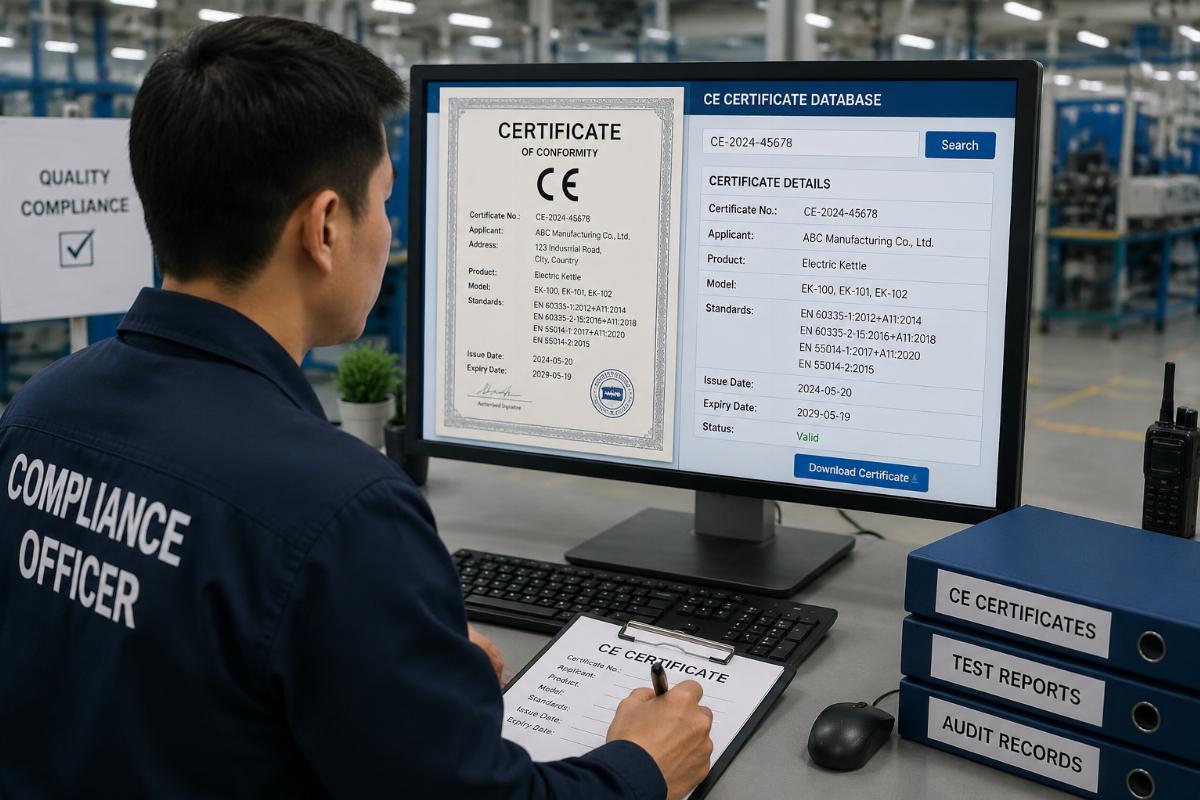
Use a three-point verification checklist before you place a deposit: confirm model-level match, validate directive scope completeness, and check notified body legitimacy.
Most buyers only look at whether a certificate exists. Professional importers look at whether the certificate is actually valid for the exact product they are ordering. Here is the verification process I run on every new supplier relationship:
Step 1: Model-Level Match Verification
Request the CE certificate and compare the exact model number listed against the product specification sheet and the nameplate design the factory will use. The model code must be identical—not similar, not a "series" reference, but the exact alphanumeric string. If the certificate covers a product family, confirm your specific SKU is explicitly listed within that family scope. [NEED_CITE: best practices for verifying CE certificate model number accuracy in imported machinery]
Step 2: Directive Scope Completeness Check
Identify which directives apply to your specific product configuration. For a motorized treadmill, you need documented compliance with MD, LVD, and EMC at minimum. Ask the supplier to show you the Declaration of Conformity and confirm it lists all applicable directives. A certificate that only references the Machinery Directive is incomplete for any electrically powered cardio equipment.
Step 3: Notified Body and Certificate Authenticity
If the CE certificate claims involvement of a notified body (required for certain higher-risk equipment categories), verify the notified body’s name and four-digit identification number against the official EU NANDO database. Self-declared CE for low-risk categories is legitimate, but if a supplier claims third-party testing, that claim must be independently verifiable. [NEED_CITE: how to verify notified body credentials in the EU NANDO database for machinery imports]
| Verification Point | What to Check | Red Flag |
|---|---|---|
| Model Match | Exact model code on certificate vs. nameplate vs. invoice | Certificate lists a product family without specifying your SKU |
| Directive Scope | All applicable directives listed on Declaration of Conformity | Only MD listed for electrically powered cardio equipment |
| Notified Body | ID number matches EU NANDO database entry | Notified body number does not exist or belongs to a different company |
A distributor in Southeast Asia once shared a CE certificate they received from a new supplier. The certificate looked professional—proper formatting, official-looking stamps. But the notified body number printed at the bottom did not return any results in the NANDO database. Further investigation revealed the "notified body" was a trading company with no testing accreditation. The distributor switched to a supplier who could provide verifiable documentation and avoided what would have been a guaranteed customs rejection at multiple destination ports.
When you buy gym equipment with CE certificate files from Bick, the compliance documentation package includes the certificate, the Declaration of Conformity, and test reports—all cross-referenced to the exact model you ordered. The factory maintains an internal database linking each production model to its specific certification file, so when a customer requests documentation for a particular SKU, the matching certificate is pulled directly from that database rather than generated from a template.
What Documents Should You Request Alongside the CE Certificate?
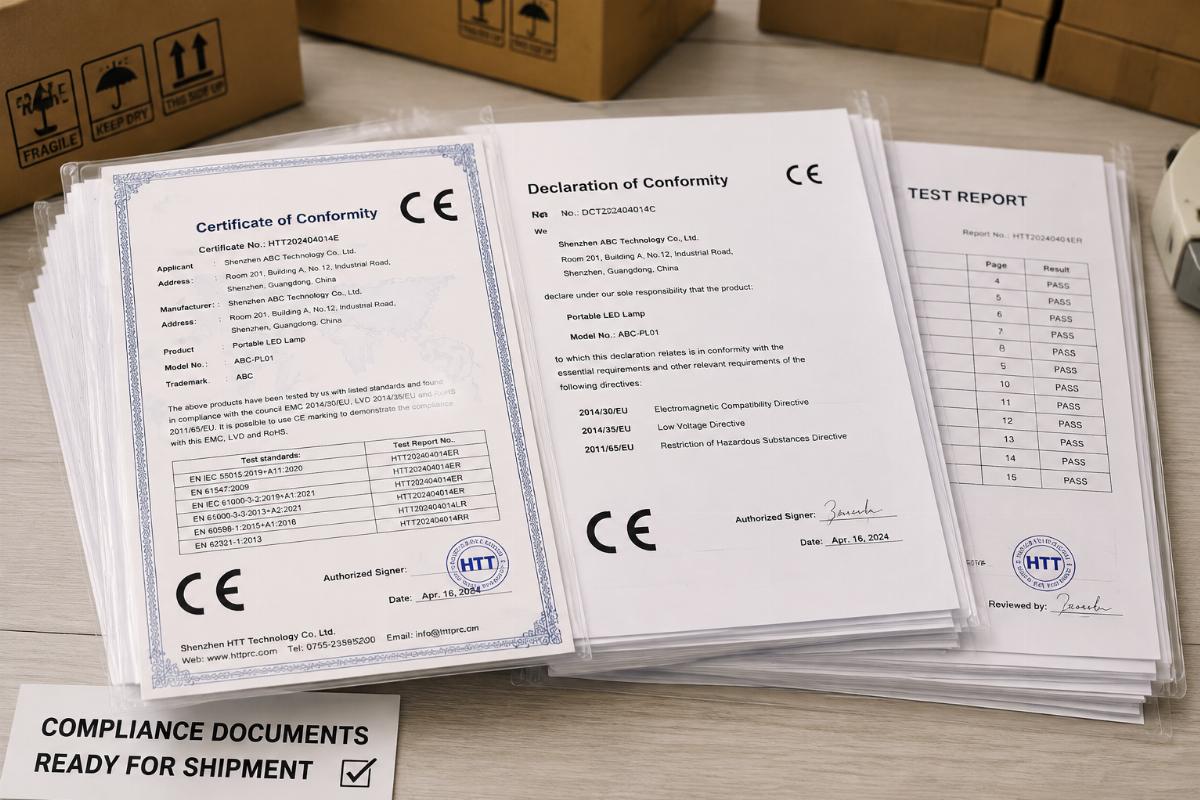
The CE certificate alone is not enough—you need a complete compliance documentation package: the certificate itself, the Declaration of Conformity, technical file summary, nameplate photos, and test reports.
Customs authorities in many destination countries do not just want to see a certificate. They want to see a coherent documentation set that tells a complete compliance story. Here is what each document does and why you need it:
- CE Certificate: Issued by the manufacturer or notified body, confirms the product meets applicable directive requirements. This is the headline document but often insufficient on its own.
- Declaration of Conformity (DoC): A legally binding statement from the manufacturer declaring the product complies with specific directives. Must list the directives, harmonized standards applied, and the responsible entity. [NEED_CITE: required elements of a valid Declaration of Conformity for gym machinery under EU law]
- Technical File Summary: While you do not need to request the full technical construction file (that stays with the manufacturer for regulatory inspection purposes), a summary showing test scope, standards applied, and key compliance parameters helps customs officers understand what was tested.
- Nameplate Photos: Actual photographs of the nameplate on the production unit. This is the simplest way to prove the physical product matches the documentation. Request these before shipment, not after arrival.
- Test Reports: Third-party or in-house lab reports demonstrating compliance with specific standards referenced in the DoC. These provide the evidentiary backbone for the declaration.
| Document | Purpose | Who Issues It |
|---|---|---|
| CE Certificate | Confirms compliance with applicable directives | Manufacturer or notified body |
| Declaration of Conformity | Legal declaration of compliance with specific standards | Manufacturer (authorized signatory) |
| Technical File Summary | Overview of test scope and standards applied | Manufacturer |
| Nameplate Photos | Visual proof of model match to documentation | Manufacturer (pre-shipment) |
| Test Reports | Evidentiary support for compliance claims | Testing laboratory or manufacturer |
An African distributor’s first order from a new supplier arrived with a CE certificate but no Declaration of Conformity and no nameplate photos. The destination country’s customs authority required all five documents for fitness equipment imports. The distributor spent weeks requesting the missing documents from the factory, during which the container accumulated daily port charges. By the time the paperwork was assembled, the detention costs had erased the margin on the entire order.
When you buy gym equipment with CE certificate documentation from Bick, every shipment includes a pre-assembled compliance package. The factory’s export documentation team prepares the certificate, DoC, nameplate photos, and relevant test reports together before the container is sealed. This package travels with the shipping documents, so customs clearance at the destination port has everything needed in one bundle. The team also keeps digital copies on file, so if a customs authority requests additional verification months after delivery, the documentation is retrievable.
How to Structure Your Purchase Order to Avoid CE-Related Delays?
Specify certificate scope, exact model numbers, and documentation requirements in your purchase contract before production begins—not after the goods are already on the water.
The most effective way to avoid CE-related customs problems is to build compliance requirements into the commercial terms from day one. Most purchase orders for gym equipment focus on price, quantity, and delivery timeline. The compliance documentation gets treated as an afterthought—something to "sort out later." This approach guarantees problems.
Here is what your purchase order should explicitly include:
- Exact model numbers for every SKU: Not product family names or series references, but the specific model codes that will appear on the nameplate and the CE certificate. If the factory plans to assign a different model code for your private-label version, that code must be documented and covered by the CE certificate before production starts.
- Directive scope confirmation: A written statement from the supplier confirming which directives each model’s CE certification covers. For electrically powered equipment, this must include MD, LVD, and EMC at minimum.
- Documentation deliverables list: Specify exactly which documents will accompany the shipment—CE certificate, DoC, nameplate photos, test reports—and confirm these will be provided before the container departs, not after arrival.
- Nameplate approval process: Request a nameplate design proof for approval before production. This is the simplest way to catch model code mismatches before they become physical products.
- Pre-shipment documentation review: Build in a checkpoint where the supplier sends scanned copies of all compliance documents for your review before the container is sealed. If there are discrepancies, they can be corrected while the goods are still at the factory.
[NEED_CITE: contractual clauses for CE compliance documentation in international fitness equipment purchase agreements]
A hotel developer in the Gulf region was outfitting multiple properties with fitness equipment. The purchase order specified "CE-certified equipment" but did not list individual model numbers or directive requirements. When the first shipment arrived, customs at the destination port noted that the CE certificate covered the Machinery Directive but did not explicitly reference EMC compliance for the cardio equipment’s electronic consoles. The shipment was held pending clarification. The factory had to issue a supplemental declaration confirming EMC compliance, which required coordinating with their testing laboratory—a process that took weeks and delayed the hotel’s fitness center opening.
When you buy gym equipment with CE certificate documentation from Bick, the commercial team works with buyers to build these compliance specifications directly into the purchase order. Before production begins, the factory provides a documentation preview package showing the exact model numbers, directive coverage, and document format that will accompany the shipment. This preview goes through the buyer’s approval before any manufacturing starts, eliminating the documentation surprises that cause port detention. The factory’s Shandong facility handles full container-load consolidation for multi-property projects, and the compliance documentation is organized by SKU so each product’s certification file is clearly separated and easy to present to customs authorities.

Conclusion
CE compliance for gym equipment is a documentation precision game, not a checkbox exercise. Every character on the certificate must match the nameplate, every applicable directive must be listed, and every document must be prepared before the container leaves the factory—not scrambled together after it arrives at the port. Build these requirements into your purchase order, verify them before production, and treat the compliance documentation package as seriously as you treat the product specifications. The cost of getting it right at the factory is always less than the cost of fixing it at the port.


