Kettlebell Customs Clearance in Kenya | Bulk OEM Supplier
Most importers treat kettlebells as "just cast iron" and file them under generic metal articles—this single classification error can double your duty rate and strand your container at Mombasa for weeks.
Kettlebell customs clearance in Kenya hinges on three pillars: correct HS code classification under heading 9506 as fitness equipment rather than 7326 as iron articles, pre-shipment PVOC/COC conformity certification from KEBS-recognized bodies, and complete documentation alignment with Kenya Revenue Authority requirements. Misclassification triggers not only higher tariffs but also physical inspections that cascade into demurrage charges exceeding the cargo value itself.
I still remember a shipment that left our workshop in Shandong bound for Mombasa—a full container of rubber-coated kettlebells destined for a gym chain in Nairobi. The buyer’s forwarding agent, unfamiliar with East African fitness equipment protocols, declared the goods under a generic cast iron heading. When the container hit the Kenyan customs system, the assessing officer immediately flagged it: kettlebells are fitness equipment by function, not raw metal by composition. The reclassification shifted the duty structure entirely. The container sat at the port for nearly three weeks. By the time the paperwork was corrected and the PVOC gap was addressed, the accumulated demurrage and storage fees had ballooned to a sum that made the buyer wince every time he opened his inbox [NEED_CITE: Kenya Revenue Authority tariff classification principles for functional goods vs. material-based goods]. That case reshaped how I approach every kettlebell customs clearance in Kenya shipment to this day.
Getting kettlebell customs clearance in Kenya right starts long before the container reaches the Indian Ocean coast. Let me walk you through the classification logic, the tax structure, the conformity certification maze, the document checklist, and the practical steps that keep your cargo moving instead of rotting at the port.
What HS Code Should Kettlebells Use for Kenya Customs?
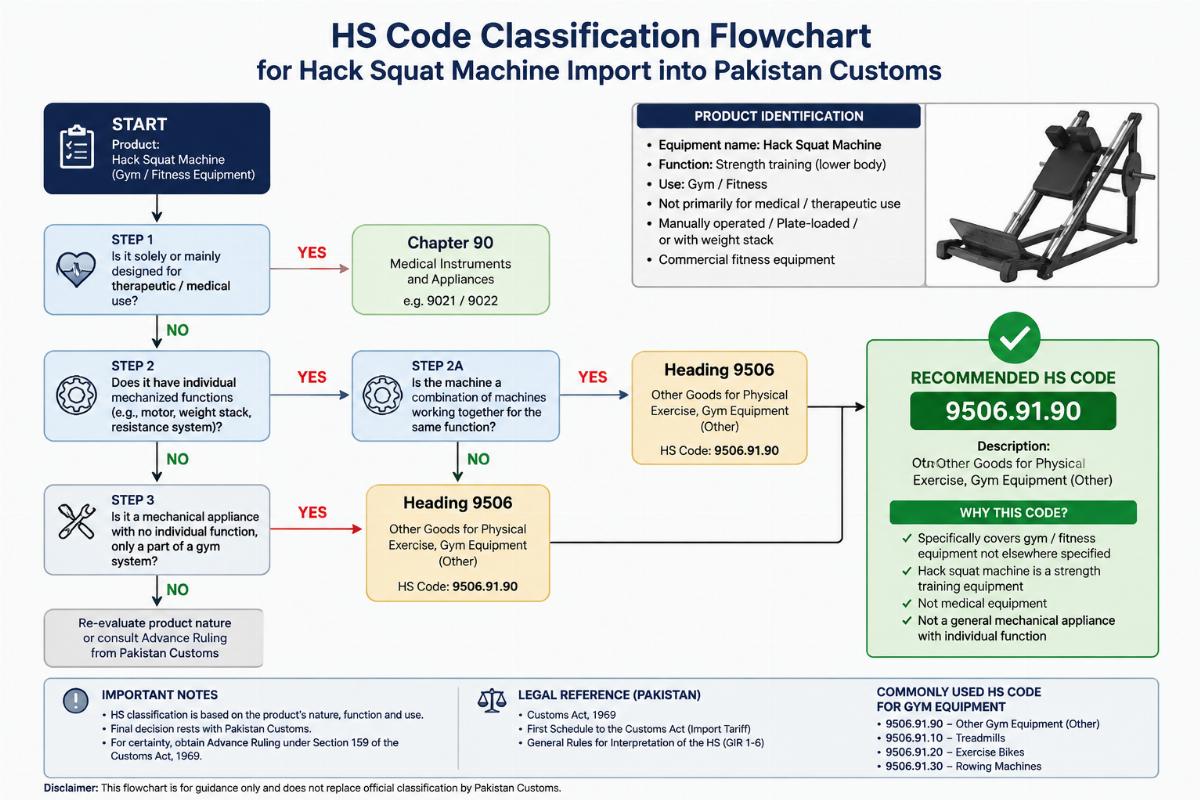
Kettlebells must be classified under HS heading 9506 as articles and equipment for general physical exercise, not under 7326 as other articles of iron or steel.
This distinction is the single most consequential decision in the entire clearance process. The World Customs Organization’s classification framework directs that goods designed exclusively or principally for a specific function should be classified by that function rather than by their constituent material [NEED_CITE: WCO General Rules of Interpretation Rule 3(a) regarding specific heading preference over general material classification]. Kettlebells have no use other than physical training. They are not structural iron components, not machinery parts, not decorative metalware. They are fitness equipment, full stop.
Yet a surprising number of importers—and even some customs brokers in East Africa—default to 7326 out of habit or ignorance. The logic seems practical: kettlebells are literally chunks of metal, so why not declare them as metal articles? The problem is that Kenyan customs officers at Mombasa are trained to look at intended use. When they see a product with a molded handle, a marked weight designation, and a rubber or neoprene coating, the fitness equipment classification becomes unavoidable.
The practical consequence is a tariff differential that directly affects landed cost. Under 9506, kettlebells attract the standard import duty rate applicable to sports and fitness goods. Under 7326, the rate can shift to a different bracket entirely, and the assessing officer has discretion to apply the higher of the two if ambiguity exists. I have seen cases where the duty gap between the two headings represented a meaningful percentage of the cargo’s CIF value—enough to erase the margin on an entire container load [NEED_CITE: Kenya Revenue Authority customs tariff schedule comparison between heading 9506 and 7326 for iron-based fitness articles].
For importers combining kettlebells with other free-weight items like barbells, dumbbells, and weight plates in a single container, the classification question becomes more nuanced. The Kenya customs framework allows consolidated classification for goods that form a functional set intended for the same end use. A mixed free-weight container declared entirely under 9506 as fitness equipment is defensible and operationally cleaner than splitting the declaration across multiple headings. However, if the container also carries non-fitness items—say, rubber flooring rolls or metal storage racks—those must be declared separately under their respective headings. Mixing categories within a single line item is a fast track to a physical examination and a delay that compounds daily.
What Duties and Taxes Apply to Kettlebell Imports in Kenya?
The total tax burden on kettlebell imports into Kenya comprises import duty, value-added tax, and potentially the Railway Development Levy and Import Declaration Fee, all calculated sequentially on the cumulative CIF-based value.
Understanding the stacking structure is essential because each layer applies to the sum of the previous layers, not to the base CIF value alone. The import duty applies first to the customs value, which is the CIF price—cost of goods, insurance, and freight to Mombasa port. Then VAT applies to the CIF value plus the import duty already added. The Railway Development Levy calculates on the CIF value independently, and the Import Declaration Fee adds a further percentage on top [NEED_CITE: Kenya Revenue Authority import tax computation methodology for fitness equipment under heading 9506].
This cascading structure means that even a seemingly modest import duty rate translates into a significantly higher effective tax rate once all components are combined. Importers who only budget for the headline duty percentage routinely find their actual landed cost running substantially higher than projected.
Kenya does not currently impose excise duty on fitness equipment, which is a relative advantage compared to categories like alcohol, tobacco, or certain motor vehicle parts. However, the tax landscape is subject to annual adjustments through the Finance Act, and rates that apply today may shift in the next fiscal cycle. Importers planning multi-year procurement programs should build in contingency for tax changes rather than locking in assumptions based on current rates.
One often-overlooked element is the customs valuation methodology. If the declaring officer considers the declared invoice value to be below market reference levels, they may invoke a higher assessed value for duty computation purposes. This is not uncommon with fitness equipment, where pricing varies significantly based on coating type, manufacturing process, and brand positioning. Having a well-documented commercial invoice with clear product specifications, unit pricing breakdowns, and evidence of the actual transaction price helps defend the declared value against upward adjustment [NEED_CITE: World Customs Organization Valuation Agreement Article 1 transaction value principles as applied by Kenya Revenue Authority].
For buyers sourcing kettlebells as part of a broader gym equipment package—including racks, cables, cardio machines—the consolidated container approach can simplify duty computation but requires careful packing list preparation. Each product category must be identifiable and separable in the documentation even if they travel in the same container.
Is PVOC/COC Certification Required for Kettlebells Entering Kenya?
Yes, kettlebells fall within the Kenya Bureau of Standards product scope for the Programme for Verified Quality Compliance, and a Certificate of Conformity must be obtained before shipment from the exporting country.
Many importers assume PVOC applies only to electronics, electrical appliances, or children’s toys. This assumption is dangerously wrong. Kenya’s conformity assessment programme extends to a broad range of product categories, and fitness equipment—including free-weight items like kettlebells, dumbbells, and weight plates—is within the regulated scope [NEED_CITE: Kenya Bureau of Standards PVOC regulated product list covering sports and fitness equipment categories].
The PVOC process requires that the goods be tested and verified for compliance with applicable Kenyan standards—or recognized international equivalents—before they leave the country of origin. The testing typically covers material safety, structural integrity, surface coating compliance, and labeling accuracy. For kettlebells, this means verifying that the coating material meets safety thresholds, the handle geometry does not present injury hazards, the weight marking is accurate within tolerance, and the product carries appropriate identification.
The Certificate of Conformity is issued by a KEBS-authorized inspection and certification body operating in the exporting country. Without a valid CoC tied to the specific shipment, Kenyan customs will not release the goods. The alternatives at the port—destination-based testing and verification—are far more expensive, time-consuming, and uncertain. A destination assessment can add weeks to the clearance timeline and carries the risk of rejection and forced re-export if the goods fail to meet standards upon testing in Kenya [NEED_CITE: Kenya Bureau of Standards PVOC route selection options including Route A, B, and C for different export frequency levels].
From a practical standpoint, the most efficient approach is to work with a manufacturer who has established familiarity with the PVOC process for the Kenyan market. The testing protocols and documentation requirements are specific enough that experience matters. A factory that has repeatedly shipped fitness equipment to East Africa will have the test reports, material certifications, and product specifications pre-aligned with KEBS expectations, reducing the lead time for CoC issuance to a matter of days rather than weeks.
For first-time importers, the critical mistake is treating PVOC as an afterthought—something to handle once the goods are already produced or even in transit. The certification must be initiated before shipment, and the testing requires physical access to the production batch. Leaving it until the last moment virtually guarantees a delay that ripples through the entire supply chain.
What Documents Are Needed for Kettlebell Clearance at Mombasa Port?
Complete kettlebell customs clearance in Kenya requires a coordinated document package including the commercial invoice, packing list, bill of lading, Certificate of Conformity, Import Declaration Form, and supporting product specifications, with any single missing document triggering physical examination and delay.
The Kenya customs clearance system operates on document precision. The assessing officer reviews the submission line by line, and inconsistencies between documents—mismatched weights, conflicting product descriptions, missing certification references—will flag the shipment for closer scrutiny.
The commercial invoice must clearly state the product description as kettlebells or fitness kettlebells, specify the HS code as 9506, indicate the unit price and total CIF value, and include the Incoterms reference. Vague descriptions like "iron goods" or "metal products" are red flags that invite reclassification and inspection.
The packing list must reconcile exactly with the invoice in terms of quantities, weights, and package counts. For kettlebells shipped in cartons on pallets, the list should specify the number of units per carton, cartons per pallet, and total pallets in the container. Discrepancies between the packing list and the physical container contents during examination are among the most common causes of clearance delays at Mombasa [NEED_CITE: Kenya Revenue Authority customs documentation requirements for import clearance at Mombasa port including invoice, packing list, and bill of lading specifications].
The bill of lading must match the consignee details on the Import Declaration Form. The IDF is a mandatory pre-import document that the Kenyan buyer must obtain from the Kenya Revenue Authority before the goods arrive. Without a valid IDF linked to the shipment, the cargo cannot be assessed or released, regardless of how complete the other documents may be.
The Certificate of Conformity is the PVOC document that proves the goods have been verified against Kenyan standards before shipment. It must reference the specific shipment, match the product description on the invoice, and be issued by a KEBS-authorized body. A CoC from a previous shipment or a generic product certificate will not be accepted.
Supporting documentation such as product photographs, material test reports, and weight calibration certificates may be requested during examination. Having these readily available—even if not initially submitted—can accelerate the process if the assessing officer raises questions about product compliance.
A buyer I worked with in East Africa once received a container of kettlebells where the CoC listed the product as "cast iron balls" instead of "fitness kettlebells." The description mismatch with the invoice triggered a full physical examination. The container was held for inspection, the CoC had to be reissued by the certification body in China, and the delay cost the buyer dearly in port charges. The lesson: document consistency is not optional—it is the foundation of smooth clearance.
How to Avoid Demurrage and Delays When Importing Kettlebells to Kenya?
The most effective strategy to avoid demurrage and delays in kettlebell customs clearance in Kenya is to resolve classification, certification, and documentation issues before the cargo departs the factory floor—not after it arrives at the port.
Demurrage at Mombasa accumulates daily, and the free storage window at the port is short. A container that sits for even a few days beyond the free period incurs charges that compound rapidly. I have seen demurrage bills for fitness equipment shipments reach sums that represented a painful fraction of the total cargo value—entirely preventable with upfront preparation.
The first line of defense is HS code confirmation before production begins. The importer and the manufacturer should agree on the classification as 9506 fitness equipment and document this agreement in the proforma invoice and commercial invoice from the outset. If the manufacturer’s export documentation team routinely handles Kenyan shipments, they will already have this classification embedded in their standard paperwork for the market.
The second line is PVOC initiation concurrent with production. Rather than waiting until goods are finished and packed, the conformity certification body should be engaged while production is underway. Sample testing can proceed against the running batch, and the CoC can be issued in parallel with final packing. This overlap shaves days—sometimes weeks—off the pre-shipment timeline.
The third line is document pre-review before vessel departure. A complete draft set of all clearance documents—invoice, packing list, BL draft, CoC draft—should be sent to the Kenyan clearing agent for review before the container is loaded. The clearing agent can identify potential issues, flag inconsistencies, and request corrections while the goods are still accessible at the factory. Once the container is sealed and on the water, corrections become exponentially more difficult and expensive.
The fourth line is choosing a clearing agent with specific experience in fitness equipment imports. General clearing agents handle thousands of product categories and may not be familiar with the nuances of PVOC requirements for sports goods or the classification logic for free-weight equipment. An agent who regularly clears gym equipment understands the documentation expectations, knows the assessing officers’ common queries, and can pre-empt issues before they become delays.
At Bick, we have refined this pre-shipment alignment process through years of supplying free-weight equipment to the East African market. Our production facility in Shandong coordinates PVOC testing with authorized certification bodies as a standard part of the order workflow for Kenya-bound shipments. The HS code classification, document drafting, and CoC preparation are integrated into our export process so that when the container doors close, the paperwork is already validated and ready. This is not an add-on service—it is how we operate for every kettlebell customs clearance in Kenya order that leaves our floor.
Conclusion
Kettlebell customs clearance in Kenya is a process that rewards preparation and punishes assumptions. Correct HS code classification under 9506, proactive PVOC certification, and meticulous document alignment form the three non-negotiable pillars. Importers who address these elements before shipment—rather than reacting to problems at Mombasa—protect their margins, avoid demurrage, and build a repeatable supply chain for the East African fitness market.