01 / Scenario
STUDIO
P
High-End Pilates Studios
Premium aesthetics meet quiet operation for boutique studio environments.
ISO
9001
CE
Certified
OEM
Available
10YR
Warranty
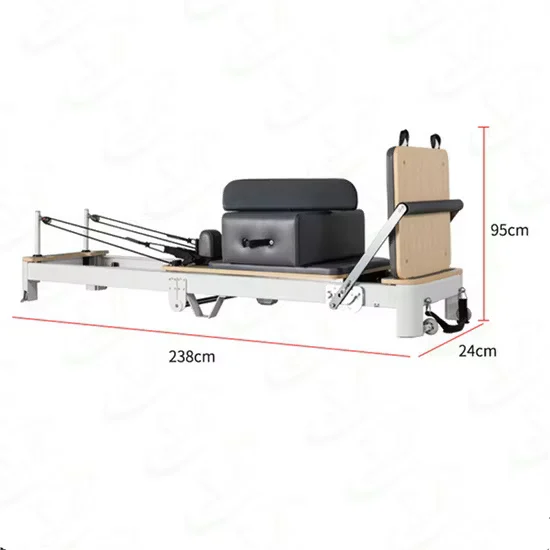
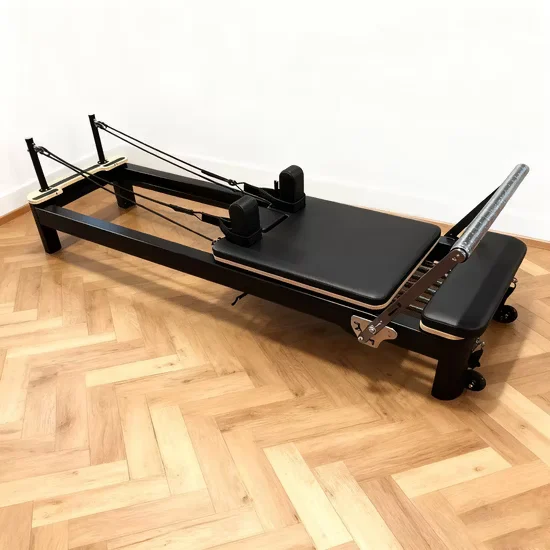
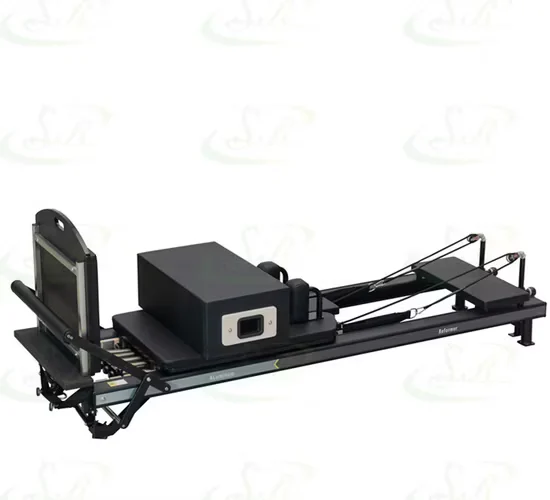
Commercial Aluminum Pilates Reformer, Aluminium Alloy Frame, 2570×730×890mm — engineered with sealed carriage rails and reinforced frame structure for high-traffic group class environments. Includes long box, jump board, and platform accessories with 90kg net weight for stable operation. Every unit undergoes dynamic load testing before shipment, backed by a 3-year frame warranty and full customization for logo and color.
// Spec Highlights
• Direct from Manufacturer · No Middlemen · Worldwide Shipping
01
// Material
Imported Solid Wood
Premium hardwood frames sourced for density and visual warmth.
02
// Hardware
Medical-Grade Silent
Whisper-quiet pulleys and springs for clinical environments.
03
// Customization
Appearance OEM
Color, upholstery, and branding tailored to your studio.
04
// Service
Layout Design
Free venue planning for studios and rehab institutions.
Every component is selected for longevity, performance, and aesthetic harmony - from imported hardwood frames to silent medical-grade accessories.
// Features
Every Unit Load-Tested Before Shipping — each commercial aluminum pilates reformer undergoes dynamic load validation on the carriage and spring assembly prior to crating, not sample-based batch testing.
| Parameter | Value |
|---|---|
| Product Type | Pilates Reformer |
| Frame Material | Aluminium Alloy |
| Specification | 2570×730×890mm |
| Net Weight | 90kgs |
| Color | Black (customization available) |
| Included Accessories | Long Box / Jump Board / Platform |
| Logo | Customized is allowed |
| Warranty | 3 Years |
| Facility Type | Typical Use |
|---|---|
| Commercial Pilates studio | Group reformer classes with back-to-back scheduling |
| Boutique wellness facility | Semi-private and one-on-one Pilates sessions |
| Rehabilitation and physiotherapy clinic | Controlled movement therapy and post-injury conditioning |
| Hotel fitness and mind-body studio | Guest-access reformer sessions with varied user profiles |
Wall thickness and alloy certification separate studio furniture from equipment that survives daily class rotation.
I pulled a reformer out of a studio in Guangzhou after six months — the aluminum carriage rails had worn unevenly because the extrusion walls were undersized for the lateral forces generated during jump board work. The studio owner had purchased based on a "commercial grade" label with no supporting mill certificate or wall thickness specification. When aluminum extrusions lack verifiable gauge data, there is no way to predict when the carriage will develop lateral play or when the rail surface will score under repeated eccentric loading. This is the specification gap that causes the most expensive downtime in a fully booked studio [NEED_CITE: structural requirements for aluminum extrusions in fitness equipment applications].
The commercial aluminum pilates reformer occupies the primary movement station in a group class layout, covering supine, prone, seated, and standing movement planes against spring-loaded resistance. It pairs with cadillacs and chair units to create a complete apparatus circuit, and its 2570mm length requires clear space at both ends for jump board deployment and long box sliding. Studios running six or more reformers in parallel need consistent aisle widths for instructor circulation during peak class blocks.
Each reformer in a group studio may cycle through eight or more classes daily, with every class subjecting the carriage to hundreds of reciprocating passes under variable loads. The impact forces during jump board sequences concentrate at the rail endpoints, while eccentric control during footwork patterns generates sustained lateral pressure on the carriage wheels. Spring attachment points experience cyclic tension loading that fatigues connection hardware over time. Upholstery contact zones — particularly the shoulder rest and headrest — compress and recover thousands of times weekly, and sweat exposure accelerates surface degradation on any material not rated for commercial contact frequency [NEED_CITE: fatigue cycling standards for carriage bearing systems].
The aluminum alloy frame must resist torsional deflection when a user pushes asymmetrically through one leg during single-leg footwork — undersized tube walls allow the frame to twist, which transfers that twist into the carriage track and creates uneven wear. Rail surface finish and hardness determine whether the carriage wheels track cleanly or develop chatter marks that compound over months of use. Spring groups with multiple resistance gradients allow instructors to scale loading across beginner and advanced clients on the same unit, while quick-change spring hardware reduces the dead time between class segments. The 90kg net weight of this reformer reflects the mass required to keep the unit stable during explosive jump board work without floor anchoring.
Thin-wall aluminum extrusions save weight and material cost upfront but introduce frame flex that users feel immediately as instability during advanced movements. Non-sealed carriage bearings ingest chalk dust, hair, and skin particles from the studio floor, developing audible grinding within months that requires full bearing replacement. Low-density foam padding compresses permanently under commercial use cycles, creating visible depressions that clients associate with poor equipment quality. Springs that lack standardized resistance ratings make it impossible for instructors to replicate programming across multiple reformers in the same class [NEED_CITE: maintenance intervals for sealed versus open bearing carriage systems].
The aluminum frame on this commercial aluminum pilates reformer uses alloy extrusions sized to resist the torsional loads generated during unilateral exercises, with wall thickness documented against mill certification rather than marketed as a vague commercial label. The carriage system runs on sealed tracks that limit particulate ingress from studio environments, extending the interval between bearing service. Each unit ships with the long box, jump board, and platform as standard accessories, eliminating the need to source compatible add-ons separately. The three-year warranty covers frame and structural components, and customization options including color and logo application are available for studios building a consistent visual identity across their apparatus fleet. Floor planning support is available to map unit spacing against class size and instructor sightline requirements.
Provide your studio floor dimensions and planned class capacity to receive a 2D-3D layout showing reformer spacing, instructor circulation paths, and storage zones for accessories. Specify your daily class volume and average user profile so we can confirm the spring configuration and accessory package match your programming demands. Custom color and logo options are available for studios standardizing their apparatus appearance across multiple locations.
Q: How do I verify whether a Pilates reformer meets commercial durability standards?
A: Request the aluminum extrusion mill certificate showing wall thickness and alloy grade, not just a commercial label. Confirm the carriage uses sealed bearings rather than open bushings, and ask whether each unit undergoes individual load testing before shipment. Documentation like ISO 9001 certificates and per-unit inspection reports indicate a manufacturer that tracks quality at the unit level rather than relying on batch sampling.
Q: What is the difference between aluminum and steel frames for studio reformers?
A: Aluminum frames offer lower weight for easier repositioning during studio layout changes while maintaining adequate rigidity for reformer-specific loading patterns. Steel frames provide higher absolute stiffness but add significant mass that complicates floor cleaning and space reconfiguration. For most group class environments, properly specified aluminum extrusions deliver the structural performance required without the handling penalty of steel construction.
Q: How does carriage sealing affect long-term maintenance frequency?
A: Sealed carriage tracks prevent chalk dust, hair, and floor debris from entering the bearing surfaces, which is the primary cause of carriage chatter and lateral play in studio environments. Open systems require bearing inspection and cleaning on a monthly cycle under commercial use, while sealed designs extend that interval substantially. The difference compounds across a fleet of reformers where maintenance labor represents a recurring operational cost.
Q: What should I consider when planning spacing between multiple reformers?
A: Account for the full 2570mm frame length plus clearance at both ends for jump board deployment and long extension exercises. Instructor walkways between rows need sufficient width for real-time cueing and hands-on adjustment during group classes. Provide your floor dimensions and target class size to receive a layout that balances unit density against safe operating clearances.
Premium aesthetics meet quiet operation for boutique studio environments.
Medical-grade silence and precision for sports & postpartum recovery.
Furniture-grade craftsmanship for premium residential installations.
Compact premium setups for one-on-one and small-group training.
Aesthetic Pilates integration for hybrid wellness studio programming.
Multi-unit deployment with instructor-grade reliability for certification programs.
Tell us about your project. Our team will respond within 24 hours with pricing, customization options, and shipping details.
// Sales Director
William
+86 132 2531 1800
// Export Manager
Bella
+86 198 5412 8032
william@bickfit.com