01 / Scenario
STUDIO
P
High-End Pilates Studios
Premium aesthetics meet quiet operation for boutique studio environments.

ISO
9001
CE
Certified
OEM
Available
10YR
Warranty
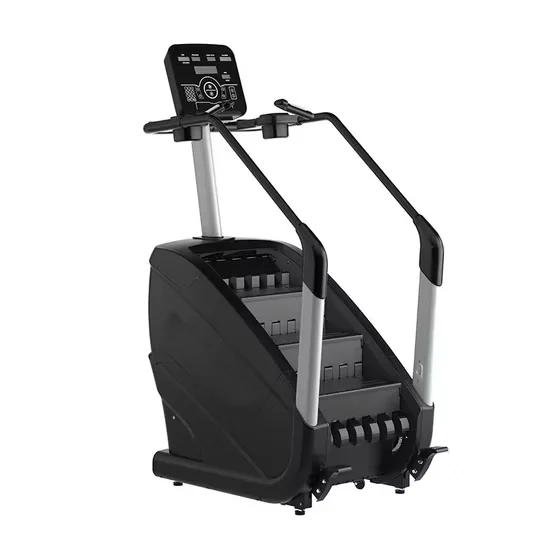
Commercial Electric Stair Climber, Motor Drive, 15–164 Steps/Min, 148kg Net Weight — steel pipe frame with PP plastic step pads ensures structural rigidity during high-intensity climbing sessions, while motor-driven mechanism delivers consistent speed range without thermal degradation under continuous operation. CE certified with AC220V/AC110V dual voltage compatibility for global installation. Every unit undergoes load testing before shipment to guarantee frame integrity and motor performance.
// Spec Highlights
• Direct from Manufacturer · No Middlemen · Worldwide Shipping
01
// Material
Imported Solid Wood
Premium hardwood frames sourced for density and visual warmth.
02
// Hardware
Medical-Grade Silent
Whisper-quiet pulleys and springs for clinical environments.
03
// Customization
Appearance OEM
Color, upholstery, and branding tailored to your studio.
04
// Service
Layout Design
Free venue planning for studios and rehab institutions.
Every component is selected for longevity, performance, and aesthetic harmony - from imported hardwood frames to silent medical-grade accessories.
// Features
Motor-Driven Step Consistency — The 148kg net weight and steel pipe frame eliminate vibration at maximum stepping velocity, keeping each stride mechanically identical from first to last rep.
| Parameter | Value |
|---|---|
| Product Type | Electric Stair Climber |
| Model NO. | 1017 |
| Drive Type | Motor Drive |
| Running Velocity | 15 – 164 steps/minute |
| Step Area | 560 × 235 × 220 mm |
| Mains Input | AC220V±10% / AC110V±10% |
| Console Display | Time, Climb, Calories, Steps, Heart Rate |
| Net Weight | 148 kg |
| Product Dimensions | 1450 × 820 × 2080 mm |
| Frame Material | Steel Pipe |
| Step Surface | PP Plastic |
| Folded State | Unfolded |
| Certification | CE |
| Condition | New |
| Customization | Available (color, branding) |
| Facility Type | Typical Use |
|---|---|
| Commercial gym cardio zone | High-traffic daily stepper sessions for members |
| Hotel fitness center | Guest-use cardiovascular conditioning |
| University athletic facility | Pre-training warm-up and endurance blocks |
| High-traffic home gym | Dedicated daily climbing without space compromise |
| Rehabilitation and performance center | Low-impact graded stepping under controlled speed |
A commercial electric stair climber must carry its own mass plus dynamic user force through thousands of step cycles — and most "commercial" labels hide thin-wall tubing that cannot.
Many stepper machines marketed for gym environments use light-gauge steel pipe that flexes visibly within the first year of peak-hour operation. The frame vibrates at higher stepping velocities, step pads develop lateral play, and the motor mount loosens as bolt holes elongate in soft steel. Operators notice the noise first, then the warranty calls. The root cause is never the motor — it is the structure beneath it. [NEED_CITE: structural rigidity requirements for stationary cardio equipment under cyclic loading]
This commercial electric stair climber occupies the vertical-gradient training plane, targeting sustained lower-body endurance through continuous stepping against motor-controlled resistance. On a mixed-use gym floor, it pairs naturally with rowers and air bikes to cover all three cardinal movement patterns — vertical climb, horizontal pull, and full-body drive. The 1450 × 820 mm footprint fits standard cardio row spacing, and the 148kg self-weight anchors the unit without floor bolting on level surfaces. The 15–164 steps/minute range accommodates both warm-up pace and high-intensity interval work across a wide user body-mass spectrum.
A stepper in a commercial gym accumulates loading cycles far faster than most strength equipment. Each step delivers a vertical impact force combined with slight lateral and eccentric components as users shift weight during fatigue. The steel pipe frame must resist these multi-directional loads without developing resonance at the motor mount or step pivot points. Bearing interfaces at the step mechanism experience continuous rotation under load, making seal integrity critical — open or bushing-type bearings draw in sweat dust and develop play within months. The PP plastic step surface and steel pipe junction must hold without cracking under repeated foot strike, and the powder coating at handgrip contact zones faces daily abrasion from grip friction and chemical cleaning agents. [NEED_CITE: bearing service life under contaminated indoor fitness environments]
The steel pipe frame gauge and cross-section determine how much the unit deflects under a 120kg user at maximum stepping speed. Heavier-gauge pipe with a larger cross-section raises the natural frequency of the frame above the stepping cadence range, eliminating the harmonic vibration that makes lighter units feel unstable. The motor drive system must deliver consistent torque across the full 15–164 steps/minute range without thermal throttling during extended sessions — undersized motors lose speed under load and trigger overheating shutoffs. Step mechanism bearing type separates long-service units from high-maintenance ones: sealed bearings exclude contaminants and retain lubrication, while bushings degrade rapidly in humid, high-use gym conditions. The 148kg net weight is not arbitrary — it reflects sufficient steel mass to dampen vibration and resist lateral shift during aggressive stepping, eliminating the need for floor anchoring in most installations.
Reducing steel pipe wall thickness saves material cost at the factory but creates a unit that vibrates, walks across the floor, and develops loose fasteners within months of commercial use. Point-welded joints at the motor mount and step pivot crack under cyclic loading, requiring full disassembly for repair — or full replacement if the frame tube itself splits. Non-sealed step mechanism bearings generate increasing noise and eventually seize, forcing complete bearing replacement rather than simple lubrication. Thin powder coating at handgrip and step-edge contact points chips quickly, exposing bare steel to sweat corrosion that spreads beneath the coating. These are not cosmetic issues — they are structural degradation paths that shorten equipment life and increase per-year ownership cost well beyond the initial savings. [NEED_CITE: corrosion progression under powder coating in high-sweat fitness environments]
Every unit is built on a steel pipe frame using mill-certified material with traceable sourcing, ensuring the wall thickness and grade match what is specified — not what is cheapest on the day of purchase. Robotic continuous welding at all structural joints eliminates the spot-weld failure points that plague lighter stepper frames. Each commercial electric stair climber undergoes individual load testing before shipment, verifying frame rigidity and motor performance under simulated use conditions. The 200μm industrial powder coating resists chipping at high-contact zones and withstands daily cleaning with gym-grade disinfectants. BICKFIT Gym provides 2D-3D CAD layout support to position this stepper within your cardio zone with correct safety clearances and traffic flow, and offers OEM customization for color, branding, and console language to match your facility identity.
Provide your cardio zone dimensions and existing equipment list to receive a 2D-3D floor plan showing optimal commercial electric stair climber placement with safety clearances and traffic flow. Specify your average daily user count so we can confirm the structural grade matches your usage density. Share your target user body-mass range to verify step mechanism and motor capacity alignment. Custom color, branding, and console language options are available for facility-specific integration.
Q: How do I distinguish a true commercial-grade stair climber from a light-commercial model?
A: Check the net weight relative to footprint — a 148kg unit in a 1450 × 820 mm footprint indicates substantial steel pipe frame mass that resists vibration. Light-commercial models typically weigh significantly less and use thinner tubing. Motor drive type matters: a motor-driven system with sealed bearings maintains consistent speed under load, while self-powered or bushing-driven units degrade quickly in high-traffic settings. Frame weld quality is visible: continuous weld lines at all structural joints indicate commercial construction, while spot welds signal cost reduction that leads to cracking.
Q: What is the difference between motor-driven and self-powered stepper performance?
A: A motor-driven commercial electric stair climber delivers consistent stepping speed regardless of user effort, allowing precise intensity control from 15 to 164 steps per minute. Self-powered units require the user to generate all movement force, which creates speed variability and places higher impact loads on the step mechanism bearings. Motor-driven systems also maintain a fixed step path geometry, while self-powered units can develop uneven resistance as the belt or chain stretches. For commercial gyms with diverse user fitness levels, motor drive provides more predictable and controllable training conditions.
Q: How does frame steel specification affect vibration and noise during operation?
A: Steel pipe wall thickness and cross-section size determine the frame’s natural frequency. A heavier-gauge frame with adequate cross-section vibrates at a frequency above the stepping cadence range, preventing resonance that causes noise and perceived instability. Thinner tubing flexes at stepping frequency, creating harmonic vibration that amplifies noise at the motor mount and step pivot points. The 148kg net weight of this unit reflects sufficient steel mass to dampen vibration across the full speed range, keeping operation quiet even at maximum stepping velocity in a shared gym environment.
Q: What maintenance does the step mechanism require in a commercial setting?
A: Sealed bearings at the step mechanism are the primary maintenance consideration. Sealed units exclude sweat dust and retain factory lubrication, typically requiring inspection rather than replacement during normal commercial service life. Bushing-type alternatives need periodic lubrication and replacement as contaminants degrade the bearing surface. Step pad surface condition should be checked for cracking or delamination from the steel pipe mounting points. Motor drive components require thermal performance monitoring — any speed reduction under load indicates potential winding degradation that should be addressed before failure.
Q: What footprint and clearance does this stepper need in a gym layout?
A: The product dimensions are 1450 × 820 × 2080 mm, requiring a floor footprint of approximately 1.19 square meters. Add minimum 600 mm rear clearance for motor ventilation and service access, plus 450 mm on each side for user entry and exit. Total installation envelope is roughly 1450 × 1920 mm. The 148kg self-weight means no floor anchoring is needed on level surfaces. Position away from high-traffic walkways to avoid user collision, and ensure the electrical supply matches the unit requirement of AC220V±10% or AC110V±10% with dedicated circuit protection.
Premium aesthetics meet quiet operation for boutique studio environments.
Medical-grade silence and precision for sports & postpartum recovery.
Furniture-grade craftsmanship for premium residential installations.
Compact premium setups for one-on-one and small-group training.
Aesthetic Pilates integration for hybrid wellness studio programming.
Multi-unit deployment with instructor-grade reliability for certification programs.
Tell us about your project. Our team will respond within 24 hours with pricing, customization options, and shipping details.
// Sales Director
William
+86 132 2531 1800
// Export Manager
Bella
+86 198 5412 8032
william@bickfit.com