01 / Scenario
STUDIO
P
High-End Pilates Studios
Premium aesthetics meet quiet operation for boutique studio environments.

ISO
9001
CE
Certified
OEM
Available
10YR
Warranty
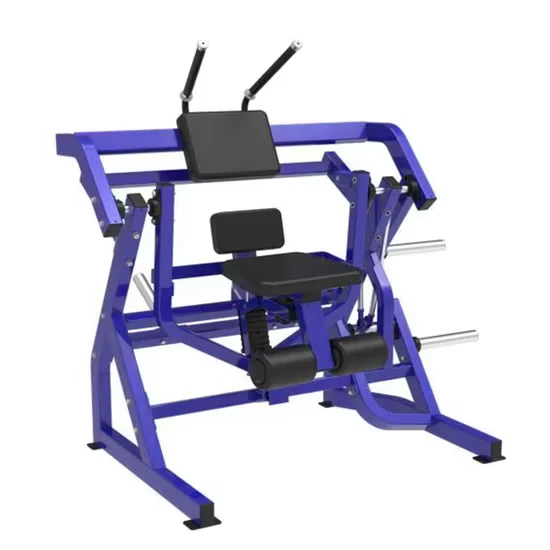
Commercial Iso Lateral Incline Press, Plate Loaded, 139kg Net Weight — engineered with 11-gauge steel frames and robotic MIG continuous welding to eliminate spot-weld fatigue under repeated heavy loading. Sealed industrial bearings ensure long-term smooth operation in high-traffic environments. Every unit undergoes full load testing before shipment, backed by a 10-year frame warranty and factory-direct floor planning support.
// Spec Highlights
• Direct from Manufacturer · No Middlemen · Worldwide Shipping
01
// Material
Imported Solid Wood
Premium hardwood frames sourced for density and visual warmth.
02
// Hardware
Medical-Grade Silent
Whisper-quiet pulleys and springs for clinical environments.
03
// Customization
Appearance OEM
Color, upholstery, and branding tailored to your studio.
04
// Service
Layout Design
Free venue planning for studios and rehab institutions.
Every component is selected for longevity, performance, and aesthetic harmony - from imported hardwood frames to silent medical-grade accessories.
// Features
11-Gauge Traceable Steel — every tube in this Commercial ISO Lateral Incline Press Machine traces back to the originating steel coil, with mill certification verifying Q235 or Q345 grade and wall thickness before fabrication begins.
| Parameter | Value |
|---|---|
| Product Type | Plate Loaded Incline Chest Press |
| Frame Steel Gauge | 11-gauge |
| Frame Tube Size | 3×3 inch |
| Steel Grade | Q235 / Q345 industrial steel, mill-certified |
| Welding Type | Robotic MIG, continuous weld lines |
| Loading Type | Plate loaded |
| Bearing Type | Sealed industrial bearings |
| Pulley System | Aircraft-cable pulley system |
| Upholstery | Standard or high-density options available |
| Powder Coating | 200μm scratch-resistant, sandblast pre-treated |
| Product Dimensions | 1435 × 1666 × 1970 mm |
| Net Weight | 139 kg |
| Certification | ISO 9001, CE |
| Warranty | 10-year frame warranty |
| Facility Type | Typical Use |
|---|---|
| Commercial gym strength floor | Primary incline pressing station in the plate-loaded zone |
| CrossFit box functional zone | Heavy pressing work alongside squat racks and rigs |
| Hotel fitness center | Durable chest press for unsupervised high-turnover use |
| University strength and conditioning room | Athletic development pressing for field and court sports |
| Rehabilitation and performance center | Controlled incline pressing during late-stage return-to-play protocols |
A continuous MIG weld distributes load across the entire joint, eliminating the stress concentrations that cause spot welds to crack under repeated heavy loading.
When a supplier quotes "commercial grade" without specifying gauge or weld process, the frame may pass a static showroom test yet develop hairline fractures within months of real-world use. On an incline press, the convergence point where the lever arms meet the upright absorbs both the downward plate load and the lateral force vector from the iso-lateral movement. Spot welds at this junction create discrete failure points; each rep cycles the stress through a few millimeters of fused metal rather than spreading it along a continuous seam [NEED_CITE: weld classification and fatigue performance in structural steel]. I have seen entire batches pulled from gym floors because the welds cracked before the steel itself showed any deformation. That failure mode is preventable when the weld process is designed for fatigue life rather than visual pass on the production line.
This Commercial ISO Lateral Incline Press Machine targets the upper pectoral and anterior deltoid through a converging incline path, filling the gap between flat bench pressing and overhead work. In a plate-loaded zone, it pairs naturally with a flat iso-lateral press and a decline variant to cover the full pressing plane, or with a chest-supported row to balance push-pull volume. The footprint suits medium-to-high density floors where every square meter must justify its presence. The fixed movement path accommodates users across a broad range of body sizes without requiring spotters, making it practical for facilities running high daily throughput with limited staff oversight.
Every rep on an incline press subjects the frame to a combination of static plate load and dynamic impact as plates are loaded and unloaded, with eccentric forces amplified when users control the negative portion of the lift. On a busy commercial floor, a single station may see hundreds of sets daily, accumulating fatigue cycles at the lever arm pivot and the upright-to-base junction. Continuous robotic MIG welding addresses this*length, removing the start-stop inconsistencies typical of manual welding. The sealed industrial bearings at the pivot resist dust and sweat infiltration that would otherwise generate play and noise within the first year [NEED_CITE: EN 957 structural requirements for stationary training equipment]. Upholstery contact points and grip surfaces absorb the most abrasion, requiring periodic inspection in high-traffic environments. The 200μm powder coating, applied over sandblast pre-treatment, resists chipping at plate contact zones where bare steel exposure would initiate corrosion.
The 11-gauge, 3×3 inch frame tube defines the deformation threshold: under heavy plate loads, a thicker-walled tube resists bending deflection that would otherwise introduce lateral wobble into the pressing path. The Q235 or Q345 steel grade, verified by mill certificate, determines the yield behavior of that tube under sustained load. Robotic MIG welding with continuous passes ensures every joint receives consistent heat input and penetration depth, directly influencing fatigue life at stress-concentrated nodes. Sealed industrial bearings eliminate the maintenance interval associated with open bushings, keeping the iso-lateral pivot smooth despite the dust and particulate common in gym environments. The aircraft-cable pulley system provides predictable resistance transmission when the design incorporates plate-loaded lever arms rather than weight stacks. Finally, the 200μm powder coating thickness, measured after sandblast preparation, defines how well the finish withstands impact and chemical exposure over years of daily commercial use.
A thinner-walled tube may hold up under light recreational use, but under repeated commercial loading it deflects enough to alter the pressing feel and accelerate wear at the pivot bearings. Spot-welded joints that pass initial visual inspection can propagate cracks silently, creating a liability exposure long before the failure becomes visible. Non-sealed bearings develop radial play as dust and sweat penetrate the race, generating noise and uneven movement that prompts member complaints and eventually requires full bearing replacement. Low-density upholstery compresses permanently within months under constant body contact, forcing reupholstery cycles that cost more over time than specifying higher-density material upfront. Undersized powder coating chips at impact points, exposing bare steel to moisture and sweat, accelerating corrosion that compromises both appearance and structural integrity [NEED_CITE: powder coating thickness standards for commercial fitness equipment].
The 11-gauge steel frame with mill-traceable certification means you can verify the structural claim rather than relying on a supplier’s generic "commercial grade" label. Robotic MIG continuous welding on every joint removes the welder-to-welder variability that plagues manual fabrication. Each unit undergoes load testing before shipment, so the inspection record covers the specific machine on your floor, not a sample from the production batch. The 200μm industrial powder coating over sandblast pre-treatment holds up at plate contact zones and high-touch areas without early chipping. A 10-year frame warranty provides contractual backing for the structural specification. For facility planning, 2D and 3D CAD layout support ensures this press integrates with proper safety clearances and user circulation paths around adjacent stations. OEM customization options allow color, logo, and upholstery specification to match facility branding requirements.
Provide your strength zone floor area and current equipment list to receive a 2D or 3D layout showing this press integrated with proper safety clearances and traffic flow. Specify your expected daily user volume so the structural grade and finish specification can be confirmed against your operational demand. Indicate the body size range of your target membership to verify that the fixed geometry accommodates your population without supplemental adjustment. Detail any customization requirements including frame color, logo placement, or upholstery grade to align the equipment with your facility identity.
Q: How do you distinguish genuine commercial-grade framing from light commercial on a plate-loaded incline press?
A: Request the steel mill certificate that specifies the exact gauge, tube dimension, and steel grade rather than accepting a generic "commercial grade" claim. Verify the welding process documentation shows continuous robotic MIG rather than manual spot welding. Confirm that load testing is performed on every unit, not on a sample basis. These three documents separate equipment engineered for high-traffic daily use from equipment built to a lower structural threshold.
Q: What is the relationship between 11-gauge steel and load capacity on this type of press?
A: The 11-gauge wall thickness, combined with the 3×3 inch tube profile, determines how much the frame resists bending deflection under plate load. A thicker gauge maintains structural rigidity across thousands of loading cycles without the progressive wobble that thinner tubes develop over time. This rigidity keeps the converging movement path consistent and prevents off-axis forces from transferring into the pivot bearings.
Q: How should a facility decide between plate-loaded and selectorized incline presses?
A: Plate-loaded stations suit environments where users prefer incremental loading with standard plates and where floor space allows dedicated stations per exercise. Selectorized stations offer faster weight changes and a smaller footprint, fitting facilities that prioritize turnover speed and member convenience. The choice depends on your membership profile, training culture, and the operational rhythm of your strength floor.
Q: What safety clearances are required around a plate-loaded incline press in a commercial layout?
A: Adequate clearance must account for the full range of plate loading on both sides, user entry and exit paths, and emergency access. The CAD layout planning should position the press so that loaded plates do not encroach on adjacent station zones or walkways. Specific clearance dimensions depend on the maximum plate diameter in use and the traffic pattern of the surrounding equipment configuration.
Q: What is the expected replacement cycle for upholstery and grips in high-traffic commercial use?
A: Upholstery lifespan depends on foam density, cover material grade, and daily contact volume. Higher-density foam resists permanent compression longer under continuous use. Grips and contact surfaces should be inspected monthly for abrasion, with replacement scheduled before the underlying structure is exposed. Specifying replaceable upholstery components ensures that worn surfaces can be renewed without removing the machine from the floor.
Premium aesthetics meet quiet operation for boutique studio environments.
Medical-grade silence and precision for sports & postpartum recovery.
Furniture-grade craftsmanship for premium residential installations.
Compact premium setups for one-on-one and small-group training.
Aesthetic Pilates integration for hybrid wellness studio programming.
Multi-unit deployment with instructor-grade reliability for certification programs.
Tell us about your project. Our team will respond within 24 hours with pricing, customization options, and shipping details.
// Sales Director
William
+86 132 2531 1800
// Export Manager
Bella
+86 198 5412 8032
william@bickfit.com