01 / Scenario
STUDIO
P
High-End Pilates Studios
Premium aesthetics meet quiet operation for boutique studio environments.
ISO
9001
CE
Certified
OEM
Available
10YR
Warranty
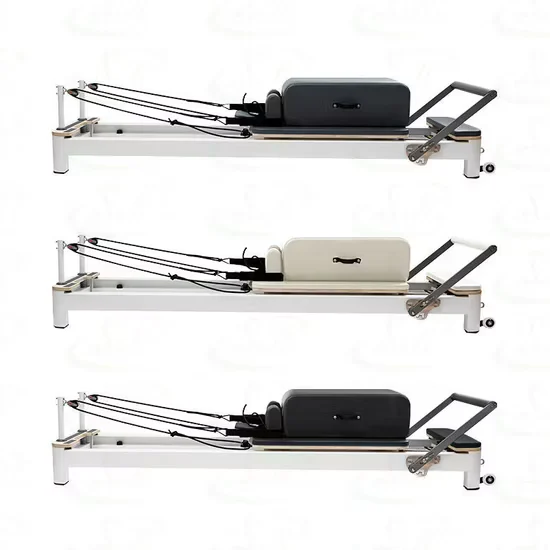
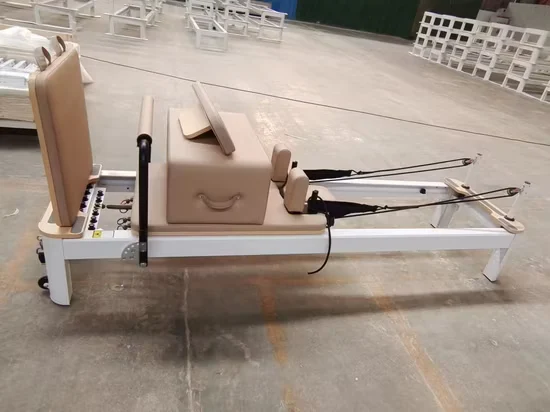
Commercial Pilates Reformer, White Aluminum Alloy Frame, 2400×820×380mm — engineered with corrosion-resistant aluminum construction and integrated accessory mounting points for long box, jump board, and platform to support full-spectrum studio programming. The 110kg net weight and 3-year warranty ensure structural stability under high-frequency commercial use. Every unit undergoes 32-point inspection and 100% load testing before dispatch.
// Spec Highlights
• Direct from Manufacturer · No Middlemen · Worldwide Shipping
01
// Material
Imported Solid Wood
Premium hardwood frames sourced for density and visual warmth.
02
// Hardware
Medical-Grade Silent
Whisper-quiet pulleys and springs for clinical environments.
03
// Customization
Appearance OEM
Color, upholstery, and branding tailored to your studio.
04
// Service
Layout Design
Free venue planning for studios and rehab institutions.
Every component is selected for longevity, performance, and aesthetic harmony - from imported hardwood frames to silent medical-grade accessories.
// Features
Alloy Frame Integrity — Aluminum extrusion resists the torsional deflection that causes thin-gauge steel carriages to bind under repetitive spring loading cycles.
| Parameter | Value |
|---|---|
| Product Type | Pilates Reformer |
| Frame Material | Aluminum Alloy |
| Product Dimensions | 2400 × 820 × 380 mm |
| Net Weight | 110 kgs |
| Accessories Included | Long Box, Jump Board, Platform |
| Logo Customization | Available upon request |
| Warranty | 3 Years |
| Facility Type | Typical Use |
|---|---|
| Commercial Pilates Studio | Group reformer classes and private instruction |
| Boutique Fitness Facility | Hybrid functional training and mind-body programming |
| Home Pilates Setup | Dedicated residential training space for daily practice |
| Pilates Training Facility | Instructor certification courses and rehabilitation protocols |
The carriage rail alignment holds or fails based entirely on what sits beneath it.
Many commercial Pilates reformers are marketed with vague "commercial grade" descriptors while relying on thin-wall steel tubing that begins to warp after months of repetitive spring tension [NEED_CITE: EN 957 structural requirements for stationary training equipment]. When the frame deflects even slightly, the carriage wheels lose parallel tracking against the rail, creating friction hotspots and uneven resistance. A white aluminum alloy reformer built for daily studio rotation sidesteps this failure mode because aluminum extrusion maintains torsional rigidity under the asymmetric loads that jump board drills and long box exercises impose. The commercial pilates reformer white aluminum alloy configuration eliminates the rust vulnerability that plagues steel frames in humid studio environments where sweat and cleaning agents are constant.
A reformer of this footprint occupies a central role in dedicated Pilates facilities, covering the full spectrum of supine, prone, seated, and standing movement patterns. It pairs logically with a Pilates chair and cadillac to complete a comprehensive apparatus-based program. The 2400 mm length accommodates users across a wide height range when paired with the adjustable accessories, making the commercial pilates reformer white aluminum alloy a practical anchor for studios serving diverse clientele.
Reformer frames endure a combination of static loads from the carriage and occupant, plus impact forces during jump board sequences where the carriage reverses direction abruptly [NEED_CITE: dynamic loading classifications for spring-loaded exercise equipment]. These cycles concentrate stress at the rail mounting points and the cross-member joints. The aluminum alloy frame distributes these forces along the extrusion profile rather than at discrete weld points, which reduces the localized fatigue that causes cracking in steel tube construction. Coating durability matters here as well, since cleaning chemicals applied after every class session attack finishes that lack adequate thickness.
Aluminum extrusion produces a continuous grain structure along the profile length, giving the frame predictable deflection characteristics under load. Unlike welded steel tubing where joint quality varies, the alloy frame relies on mechanical fasteners at structural connections, creating consistent load paths. The accessory mounting points — for the long box, jump board, and platform — integrate directly into the extrusion geometry, so the attachment hardware bears against solid material rather than hollow tube walls. This matters when instructors load the jump board for plyometric sequences or when the long box supports full-body exercises at the carriage extremes.
Studios that accept reformers with underspecified frames face a predictable failure sequence: carriage binding, uneven spring resistance, and eventual rail misalignment that no amount of maintenance corrects [NEED_CITE: equipment depreciation patterns in commercial fitness environments]. Non-sealed wheel bearings accumulate dust and cleaning residue, degrading travel smoothness within months. When accessory mounting points rely on thin-wall tubing, the jump board and platform develop play that creates audible noise and unsafe movement during dynamic exercises. Replacement parts for non-standard hardware configurations become unavailable once the original supplier moves on, leaving the studio with an irreparable asset.
The aluminum alloy frame on this commercial pilates reformer white aluminum alloy is selected for corrosion resistance and consistent structural behavior in humid studio conditions. Every frame undergoes load testing before shipment, verifying carriage travel and spring tension under occupied conditions rather than sampling from production batches. The 200μm powder coating protects against cleaning agents and perspiration that degrade thinner finishes within the first year of commercial use. Facility layout support includes equipment spacing recommendations that account for the full carriage travel plus instructor circulation paths around each station.
Provide your studio square footage and target class size to receive equipment spacing recommendations that maintain safe circulation paths. Define your expected daily usage frequency so the structural grade aligns with your operational demands. Specify logo placement and color preferences during the inquiry to ensure production slot alignment.
Q: How does aluminum alloy compare to steel for commercial reformer frames?
A: Aluminum alloy resists corrosion in humid studio environments where steel frames require coating integrity to prevent rust. The extrusion process creates consistent structural properties along the frame length, while steel tube construction depends on weld quality at every joint. Both materials can perform adequately when properly specified, but aluminum eliminates the rust failure mode entirely for studios with aggressive cleaning protocols.
Q: What determines spring replacement intervals in a commercial setting?
A: Spring fatigue depends on usage volume and the tension range that classes typically demand. Studios running multiple daily sessions should inspect springs quarterly for length deviation and resistance inconsistency. Maintaining a spring rotation schedule across all reformers in the facility prevents individual units from accumulating disproportionate wear before the next inspection cycle.
Q: Which accessories are necessary for a full reformer program?
A: The long box enables supine and seated exercises that the standard carriage cannot support, while the jump board introduces cardiovascular and plyometric elements. The platform extends the working surface for standing exercises at the reformer end. Facilities offering comprehensive group classes typically require all three to deliver complete programming without supplementary equipment.
Q: What maintenance signs indicate carriage rail issues?
A: Uneven carriage travel, audible grinding during movement, or visible wear patterns on the wheel surfaces all suggest rail misalignment or bearing degradation. If the carriage binds at specific travel points rather than moving smoothly throughout the full range, the frame may have deflected or the rail mounting hardware requires adjustment to restore parallel tracking.
Premium aesthetics meet quiet operation for boutique studio environments.
Medical-grade silence and precision for sports & postpartum recovery.
Furniture-grade craftsmanship for premium residential installations.
Compact premium setups for one-on-one and small-group training.
Aesthetic Pilates integration for hybrid wellness studio programming.
Multi-unit deployment with instructor-grade reliability for certification programs.
Tell us about your project. Our team will respond within 24 hours with pricing, customization options, and shipping details.
// Sales Director
William
+86 132 2531 1800
// Export Manager
Bella
+86 198 5412 8032
william@bickfit.com