01 / Scenario
STUDIO
P
High-End Pilates Studios
Premium aesthetics meet quiet operation for boutique studio environments.

ISO
9001
CE
Certified
OEM
Available
10YR
Warranty
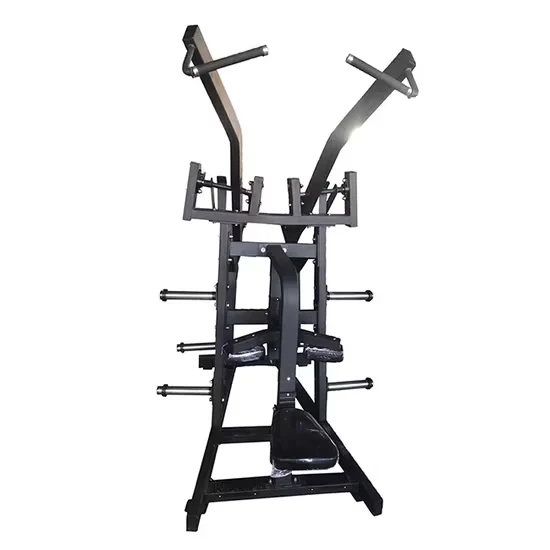
Plate Loaded Decline Bench Press, 3×3 inch Q235 Steel Frame, 1500×1150×1280mm — robotic MIG welding delivers continuous seams that resist fatigue cracking under repeated heavy loading, while 200μm powder coating with sandblast pre-treatment prevents chipping at high-contact zones. Every unit undergoes three-stage QC including load testing before shipment, backed by 10-year frame warranty and floor planning support.
// Spec Highlights
• Direct from Manufacturer · No Middlemen · Worldwide Shipping
01
// Material
Imported Solid Wood
Premium hardwood frames sourced for density and visual warmth.
02
// Hardware
Medical-Grade Silent
Whisper-quiet pulleys and springs for clinical environments.
03
// Customization
Appearance OEM
Color, upholstery, and branding tailored to your studio.
04
// Service
Layout Design
Free venue planning for studios and rehab institutions.
Every component is selected for longevity, performance, and aesthetic harmony - from imported hardwood frames to silent medical-grade accessories.
// Features
Structural Traceability — Every frame tube ships with mill certification traceable to the steel coil, eliminating vague commercial-grade claims.
| Parameter | Value |
|---|---|
| Product Type | Plate Loaded Chest Press |
| Frame Tube Size | 3×3 inch |
| Steel Grade | Q235 |
| Welding Type | Robotic MIG continuous weld |
| Loading Type | Plate loaded |
| Upholstery | Standard or high-density options available |
| Powder Coating | 200μm scratch-resistant finish |
| Product Dimensions | 1500×1150×1280mm |
| Net Weight | 65kg |
| Certification | ISO 9001, CE |
| Color Options | Main frame and cushion color available per customer requirements |
| OEM/ODM | Acceptable |
| Assembly State | Unfolded |
| Facility Type | Typical Use |
|---|---|
| Commercial gym strength floor | Dedicated pressing zone for chest hypertrophy and strength cycles |
| Hotel and resort fitness center | Low-maintenance pressing station for guest use across varied fitness levels |
| University athletic department strength room | Foundational decline pressing movement for off-season conditioning programs |
| Community fitness center | Durable plate loaded station for open-access member training |
Continuous MIG weld lines outlast the frame tube itself under repeated heavy barbell loading.
Walk through most commercial pressing zones and you will find decline benches with spot-welded joints at the angle adjustment bracket. After months of loaded repetitions, those discrete weld points concentrate stress until microfractures propagate through the heat-affected zone. A plate loaded decline bench press built with robotic MIG continuous welds distributes that same load across an unbroken seam, removing the failure origin entirely. [NEED_CITE: weld classification and fatigue performance in structural steel] The difference is not theoretical — it is the reason some gym operators replace pressing stations annually while others run the same frames for a decade.
This unit targets the sternal and costal fibers of the pectoralis major through a fixed decline trajectory, complementing flat and incline pressing stations already on the floor. In a commercial gym chest zone, the commercial plate loaded decline bench press occupies a dedicated station between cable crossovers and free weight benches, serving members who need loaded pressing without spotter dependency. The 1500×1150mm footprint fits standard commercial spacing grids, and the fixed-angle design suits facilities with high member turnover where adjustment simplicity reduces equipment downtime between users of varying torso lengths.
Every decline press repetition generates a compound load path: static weight from the loaded horns, impact force when plates contact the stops, and eccentric drag during the controlled lowering phase. Over thousands of weekly cycles across multiple users, these forces concentrate at the junction where the backrest support meets the main base rail. Continuous robotic MIG welds at this junction prevent the localized fatigue cracking that spot welds develop under identical loading patterns. [NEED_CITE: EN 957 structural requirements for stationary training equipment] The 200μm powder coating with sandblast pre-treatment further protects these high-stress zones from sweat-induced corrosion that accelerates crack propagation in thinly coated frames.
The 3×3 inch frame tube cross-section provides a moment of inertia that resists lateral flex when users load unevenly or shift during heavy sets. Q235 steel at this gauge maintains dimensional stability through the loading range without the deflection visible in thinner-walled alternatives. Robotic MIG welding ensures each seam achieves full penetration along the joint, eliminating the incomplete fusion zones where manual spot welds fail under cyclic loading. The 200μm powder coating thickness, applied over sandblasted surfaces, creates a mechanical bond that withstands contact abrasion from plate loading and unloading — a critical wear zone on any plate loaded station. Upholstery is offered in standard or high-density options, allowing operators to match cushion firmness to their member demographic and expected daily use volume.
Thin-wall tubing on a decline bench flexes visibly under barbell loads, transferring vibration into the user’s grip and destabilizing the pressing path. Spot-welded angle brackets eventually crack, creating a liability event when a loaded backrest shifts mid-set. Non-industrial powder coatings chip within months at plate contact points, exposing bare steel to humidity and sweat that accelerate oxidation. [NEED_CITE: powder coating adhesion and corrosion resistance in fitness equipment environments] Low-density upholstery compresses permanently under daily commercial use, forcing operators into frequent reupholstery contracts. Each of these compromises shifts cost from the initial purchase into ongoing maintenance and replacement budgets.
The 11-gauge frame steel arrives with mill certification traceable to the originating coil, so the tube specification on this commercial plate loaded decline bench press is verifiable rather than claimed. Robotic MIG welding on every unit produces continuous weld lines inspected before powder coating, not sample-checked from a production batch. Each completed unit undergoes load testing as part of a three-stage QC protocol before crating, confirming structural performance under conditions exceeding normal commercial use. The 200μm industrial powder coating resists chipping at plate contact zones, extending the service interval between cosmetic refurbishment. A 10-year frame warranty backs the structural assembly, and 2D-3D CAD floor planning support ensures the 1500×1150mm footprint integrates with safe clearance zones around adjacent pressing and rack stations. OEM customization covers frame color, cushion color, and branding to match facility identity.
Provide your pressing zone square footage and existing equipment list to receive a 2D-3D layout showing this decline bench integrated with proper safety clearances and traffic flow. Specify your average daily member volume so we can confirm the structural grade matches your usage intensity. Share your target member demographic and body type range to verify the fixed decline angle and pad dimensions accommodate your user base. Communicate any custom requirements including frame color, cushion color, or facility logo placement for OEM production.
Q: How do I verify that a decline bench uses genuine commercial-grade construction rather than light-commercial specifications?
A: Request the mill certification for the frame steel, which traces the tube material back to the producing coil and confirms gauge and grade. Inspect the weld pattern — continuous MIG seams indicate structural welding while intermittent spot welds signal cost-reduced assembly. Check the powder coating thickness specification, as commercial environments require industrial-grade finishes to resist chipping at plate contact zones.
Q: What frame tube specification should a commercial plate loaded decline bench press have to handle heavy daily use?
A: A 3×3 inch tube cross-section in 11-gauge steel provides the sectional rigidity needed to resist flex under loaded barbell pressing. The steel grade should be documented through mill certification rather than described with generic commercial-grade labels. This gauge and dimension combination maintains frame stability through thousands of loading cycles without the visible deflection seen in thinner-walled alternatives.
Q: How does robotic MIG welding compare to manual spot welding for long-term durability on pressing equipment?
A: Robotic MIG welding produces continuous seam penetration along the entire joint, distributing operational stress evenly across the weld line. Spot welding creates discrete attachment points where stress concentrates, leading to fatigue cracking under repeated eccentric and impact loading. Continuous welds eliminate these failure origin points, extending the structural service life of the frame assembly significantly in high-traffic commercial environments.
Q: What powder coating thickness prevents chipping and corrosion on gym equipment in high-traffic environments?
A: A 200μm coating applied over sandblast pre-treatment creates sufficient film thickness to resist mechanical abrasion from plate contact and chemical attack from sweat and cleaning agents. Thinner coatings chip at high-wear contact points, exposing bare steel to oxidation. The sandblast preparation ensures mechanical adhesion between the coating and substrate, preventing the delamination that undermines thinner or poorly prepared finishes.
Premium aesthetics meet quiet operation for boutique studio environments.
Medical-grade silence and precision for sports & postpartum recovery.
Furniture-grade craftsmanship for premium residential installations.
Compact premium setups for one-on-one and small-group training.
Aesthetic Pilates integration for hybrid wellness studio programming.
Multi-unit deployment with instructor-grade reliability for certification programs.
Tell us about your project. Our team will respond within 24 hours with pricing, customization options, and shipping details.
// Sales Director
William
+86 132 2531 1800
// Export Manager
Bella
+86 198 5412 8032
william@bickfit.com