01 / Scenario
STUDIO
P
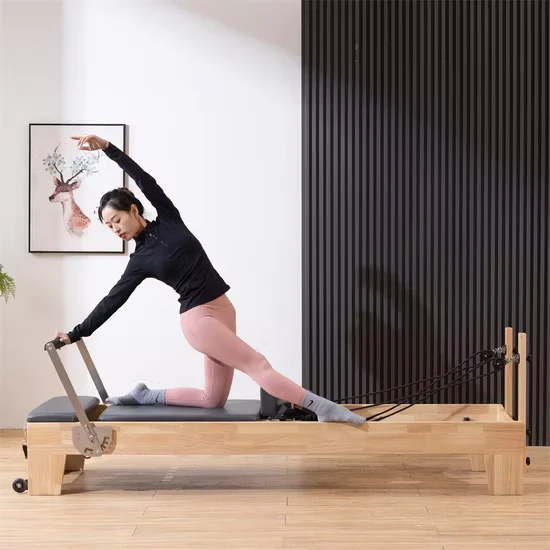
High-End Pilates Studios
Premium aesthetics meet quiet operation for boutique studio environments.

ISO
9001
CE
Certified
OEM
Available
10YR
Warranty
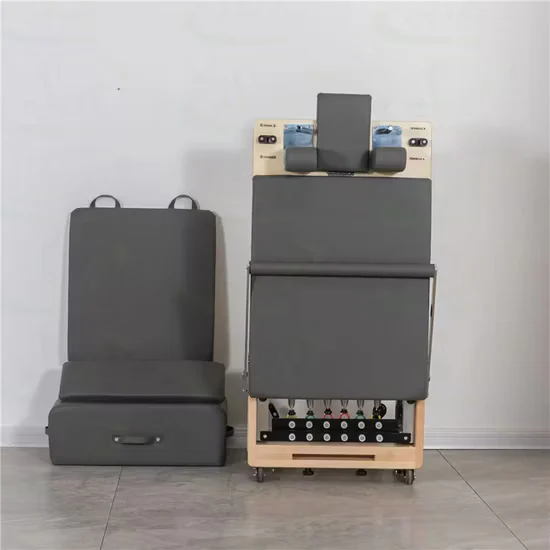
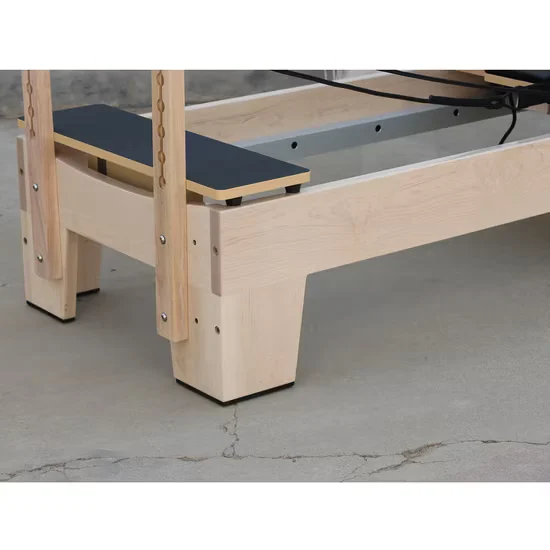
Wooden Folding Pilates Reformer, Maple Wood Frame, 2400×600mm Dimensions — engineered with solid maple rail and carriage system for low-friction glide under repetitive studio loading. Reinforced folding joint with locking pins maintains structural rigidity across thousands of cycles, while integrated mount points secure long box, jump board, and platform without loosening. Every unit undergoes full load testing before shipment to verify carriage alignment and folding mechanism integrity.
// Spec Highlights
• Direct from Manufacturer · No Middlemen · Worldwide Shipping
01
// Material
Imported Solid Wood
Premium hardwood frames sourced for density and visual warmth.
02
// Hardware
Medical-Grade Silent
Whisper-quiet pulleys and springs for clinical environments.
03
// Customization
Appearance OEM
Color, upholstery, and branding tailored to your studio.
04
// Service
Layout Design
Free venue planning for studios and rehab institutions.
Every component is selected for longevity, performance, and aesthetic harmony - from imported hardwood frames to silent medical-grade accessories.
// Features
Solid Maple Integrity — verified grain orientation on every load-bearing rail, sourced as solid maple rather than veneer or laminated composite.
| Parameter | Value |
|---|---|
| Product Type | Pilates Reformer |
| Model NO. | SRY-20C |
| Frame Material | Solid Maple Wood |
| Folding Mechanism | Yes, reinforced pivot locks |
| Carriage Rail | Solid maple, precision-matched tolerance |
| Product Dimensions | 2400 × 600 × 350 mm |
| Net Weight | 100 kg |
| Included Accessories | Long Box, Jump Board, Platform |
| Color Options | Solid color finish, customized options available |
| Logo | Customized logo allowed |
| Warranty | 3 Years |
| Target User | Adult, Unisex |
| Production Capacity | 80 Pieces / Month |
| Facility Type | Typical Use |
|---|---|
| Commercial Pilates Studio | Daily group and private reformer sessions on high-traffic floors |
| Rehabilitation and Physical Therapy Center | Controlled movement therapy with stable carriage glide and accessory support |
| Boutique Fitness and Wellness Facility | Premium studio environments where wood aesthetics align with interior design |
| Hotel and Resort Wellness Center | Guest-accessible Pilates programming with durable folding storage |
| Home Studio | Space-efficient folding footprint for dedicated residential training areas |
Solid maple rails resist the delamination and warping that destroy studio reformers within months.
The problem we see repeatedly in commercial Pilates studios: a reformer arrives looking premium, but the frame is laminated plywood with a thin veneer skin. Under the repetitive loading of carriage travel — hundreds of cycles daily across multiple users — the adhesive layers begin separating. The rail surface develops irregularities, the carriage starts binding, and the smooth glide that defines a quality commercial wooden folding pilates reformer disappears. Studio owners end up replacing units or paying for constant rail resurfacing [NEED_CITE: material fatigue and delamination in laminated wood structures under cyclic loading].
I worked on a project years ago where a buyer insisted on swapping a solid maple frame for thin-walled steel tubing to cut costs. The rail deformed within half a year. The sliding feel — the core experience of any reformer — was gone. That failure shaped how I evaluate every material decision on these units now.
This unit covers the full sagittal and frontal movement planes central to Pilates methodology — supine, prone, seated, and standing positions all accessible on the 2400 mm carriage travel. In a studio configuration, the reformer anchors the primary equipment zone and pairs with cadillacs, chairs, and barrels for comprehensive programming. The folding capability matters in studios running high class density, where floor space must convert between group reformer sessions and mat-based work. The unisex frame and carriage load rating accommodate the broad anthropometric range of commercial studio clientele, from first-time participants to advanced practitioners.
A reformer in a busy commercial Pilates studio endures a specific fatigue profile. The loading is rarely static — users generate eccentric and concentric forces through springs and straps, creating cyclic stress at the carriage-to-rail interface and the folding pivot points. The rail surface must maintain consistent friction characteristics across thousands of carriage passes, meaning the maple density and grain orientation directly determine service life. Accessory mounting points — the long box, jump board, and platform — experience impact and shear forces during dynamic exercises, which is why these integrate into the frame structure rather than surface-mounting with brackets that work loose over time [NEED_CITE: cyclic loading effects on wood-to-hardware joints in fitness equipment].
Solid maple as a frame and rail material offers density and grain consistency that plywood-core alternatives cannot match. The grain orientation along the rail length resists warping from humidity fluctuations — a constant concern in studios where temperature and moisture shift between occupied and unoccupied hours. The folding mechanism uses engineered pivot points with reinforced locking pins designed to eliminate play. A folding joint that develops even minor lateral movement compromises carriage alignment and creates the wobble that users feel immediately. The carriage wheel-to-rail tolerance is precision-matched, meaning the wheel tracks without lateral drift or binding across the full travel range. This tolerance is what separates a commercial wooden folding pilates reformer from units that require frequent adjustment. The accessory mount points are reinforced into the frame during construction, not added as bolt-on afterthoughts that loosen under repeated jump board impact or long box loading.
A maple-veneer frame over a particle core may pass a visual inspection but fails structurally within months of studio use. The veneer chips at stress points, exposing the composite underneath to moisture absorption and swelling. Thin-wall hardware substitutions at folding joints create the play that ruins carriage alignment. Non-reinforced accessory mounts require constant re-tightening and eventually strip their mounting holes. Studios then face the choice of operating degraded equipment or replacing entire units — a cost that dwarfs the initial savings on material substitutions [NEED_CITE: total cost of ownership for commercial fitness equipment with substituted materials].
The solid maple specification is non-negotiable for load-bearing rails — verified grain orientation, not laminated composite. Every folding mechanism undergoes load testing under dynamic carriage conditions, not just static weight, to confirm locking integrity through repeated fold and unfold cycles. The 200μm industrial coating standard from our strength equipment line informs how we approach surface finishing on wood frames as well — protection that holds up to daily contact and cleaning. The three-year warranty on this unit reflects confidence in the structural choices. For studio build-outs, we provide layout planning that accounts for reformer footprints in both deployed and folded positions, maintaining safe clearance between stations and walls. Custom logo integration is available for studios and facility chains requiring brand consistency across equipment.
Provide your studio floor dimensions and target station count to receive layout planning that positions the commercial wooden folding pilates reformer with proper clearance in both deployed and stored configurations. Specify your expected daily session volume so we can confirm the structural grade matches your traffic profile. Detail any custom requirements including finish color, logo placement, or accessory configuration so we align production to your facility standards.
Q: How can I confirm a reformer uses solid maple rather than veneer or laminate construction?
A: Inspect the end grain on frame and rail sections — solid maple shows continuous grain through the full cross-section, while veneer reveals a thin surface layer over a different core material. Request species and grade documentation from the manufacturer. Solid maple carries consistent density throughout, which you can verify by checking weight against the stated 100 kg specification. Veneer and composite cores are noticeably lighter and structurally weaker at mounting and joint points.
Q: What should the folding mechanism specifications indicate for commercial durability?
A: Commercial-grade folding joints use reinforced locking pins that engage positively with no lateral play when locked. The pivot hardware should be integrated into the frame structure, not surface-mounted. Load testing should verify integrity under dynamic carriage movement, not only static weight. Ask the manufacturer for folding cycle test documentation showing the mechanism maintains alignment after repeated use without developing wobble at the carriage interface.
Q: How do rail tolerance and carriage wheel material affect glide quality over time?
A: Precision-matched tolerance between the solid maple rail and carriage wheels ensures silent, smooth travel without lateral drift or binding. Hardened wheels on a properly finished maple rail maintain consistent friction characteristics across thousands of cycles. When tolerance is loose, the carriage develops side-to-side movement that accelerates wear on both wheel and rail surfaces, requiring earlier replacement and creating an inconsistent feel that practitioners notice immediately.
Q: What maintenance does a solid maple reformer require in a high-traffic studio?
A: Regular cleaning with wood-safe products prevents sweat and moisture from penetrating the finish. Inspect rail surfaces monthly for any irregularities that affect carriage glide. Check all hardware — especially folding mechanism pins and accessory mount bolts — at scheduled intervals for proper torque. Maintain stable humidity levels in the studio environment to minimize wood expansion and contraction cycles that can affect rail straightness and joint tightness over time.
Premium aesthetics meet quiet operation for boutique studio environments.
Medical-grade silence and precision for sports & postpartum recovery.
Furniture-grade craftsmanship for premium residential installations.
Compact premium setups for one-on-one and small-group training.
Aesthetic Pilates integration for hybrid wellness studio programming.
Multi-unit deployment with instructor-grade reliability for certification programs.
Tell us about your project. Our team will respond within 24 hours with pricing, customization options, and shipping details.
// Sales Director
William
+86 132 2531 1800
// Export Manager
Bella
+86 198 5412 8032
william@bickfit.com