01 / Scenario
STUDIO
P
High-End Pilates Studios
Premium aesthetics meet quiet operation for boutique studio environments.

ISO
9001
CE
Certified
OEM
Available
10YR
Warranty
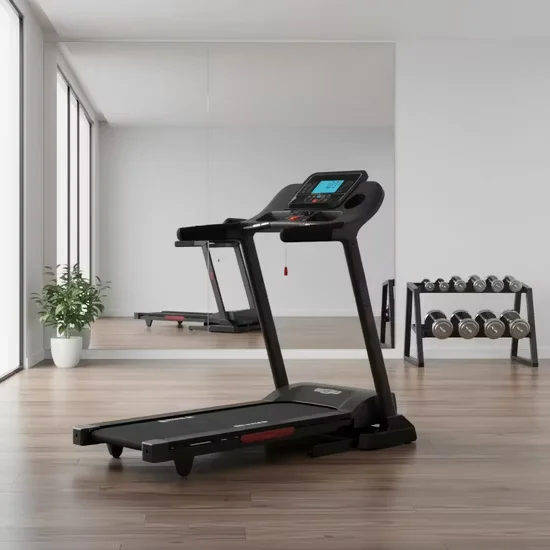
MT296 Motorized Treadmill, DC2.0HP, 1200×520mm Running Surface — foldable frame with reinforced hinge joints maintains structural rigidity during sustained running while reducing footprint for storage. DC motor delivers consistent belt drive across 1-20 km/h speeds with 16 pre-set programs. ABS console housing resists impact and UV degradation over extended use. - Each unit undergoes motor thermal protection verification and folding mechanism load cycle testing before shipment.
// Spec Highlights
• Direct from Manufacturer · No Middlemen · Worldwide Shipping
01
// Material
Imported Solid Wood
Premium hardwood frames sourced for density and visual warmth.
02
// Hardware
Medical-Grade Silent
Whisper-quiet pulleys and springs for clinical environments.
03
// Customization
Appearance OEM
Color, upholstery, and branding tailored to your studio.
04
// Service
Layout Design
Free venue planning for studios and rehab institutions.
Every component is selected for longevity, performance, and aesthetic harmony - from imported hardwood frames to silent medical-grade accessories.
// Features
Reinforced Folding Joints — the hinge mechanism on the MT296 motorized home treadmill undergoes repeated load cycling to ensure locking integrity remains consistent through daily fold-and-unfold operations.
| Parameter | Value |
|---|---|
| Designation | MT296 |
| Product Type | Motorized Treadmill |
| Motor | DC 2.0HP |
| Speed Range | 1–20 km/h |
| Running Surface | 1200 × 520 mm |
| Unfolded Dimensions | 1580 × 865 × 1300 mm |
| Folded Dimensions | 910 × 865 × 1345 mm |
| Net Weight | 64.0 kg |
| Console Display | LCD (Speed / Distance / Time / Calories / Pulse) |
| Preset Programs | 16 |
| Foldable | Yes |
| Console Housing Material | ABS |
| Certification | CE, RoHS |
| OEM/ODM Custom | Yes |
| Facility Type | Typical Use |
|---|---|
| Home gym | Primary cardio station for daily running and walking sessions |
| Apartment fitness room | Compact, foldable unit for shared residential amenity floors |
| Hotel guest room fitness area | Space-saving cardio option for boutique and mid-scale properties |
| Light commercial fitness facility | Supplementary treadmill for low-to-moderate traffic zones |
The MT296 motorized home treadmill addresses folding mechanism integrity with reinforced hinge joints and verified locking hardware.
Most foldable treadmills on the market advertise compact storage as their primary advantage while leaving the hinge joint — the single most stressed connection point — under-specified. Thin-gauge pivot brackets develop lateral play after months of repeated folding, and locking pins that rely on spring tension alone can loosen under vibration during running. The result is a frame that wobbles at higher speeds and produces noise that makes apartment installations impractical. On this unit, the folding assembly uses a reinforced hinge design with positive-lock engagement, and the frame structure maintains rigidity consistent with its 64 kg net mass during operation [NEED_CITE: structural fatigue performance of hinged steel joints under cyclic loading].
The MT296 motorized home treadmill occupies a 1200 × 520 mm running surface, which provides adequate lateral margin for users across a broad height range while keeping the overall footprint manageable for residential and boutique environments. The 1–20 km/h speed range covers walking rehabilitation through sustained running paces, and the 16 preset programs offer structured variation without requiring manual adjustment mid-session. In a multi-equipment home gym, this unit pairs with strength stations and functional accessories to create a complete training zone. The foldable frame reduces the stored footprint to 910 × 865 × 1345 mm, allowing the space to serve other purposes when cardio is not in use.
A foldable treadmill endures two distinct stress regimes: the impact loading of foot strikes during running and the mechanical cycling of the hinge joint during fold and unfold operations. The DC 2.0HP motor sustains belt drive under continuous load, while the 1200 × 520 mm running surface distributes stride impact across a sufficient area to reduce concentrated force on the deck. The folding hinge experiences shear and torsional stress each time the frame is raised or lowered, and the locking mechanism must resist vibration-induced loosening during operation. The ABS console housing provides impact resistance against accidental contact, though prolonged UV exposure in sunlit rooms may affect surface appearance over time [NEED_CITE: polymer degradation under sustained ultraviolet exposure in indoor environments]. The powder-coated frame surface resists汗液 corrosion from hand contact during speed adjustment.
The DC 2.0HP motor rating determines the continuous torque output available to maintain belt speed under varying user weights — a parameter that directly influences whether the treadmill can sustain 20 km/h without thermal shutdown during extended sessions. The 1200 × 520 mm running surface width provides a lateral safety margin that accommodates natural stride deviation, reducing the risk of foot contact with the side rails during fatigued running. The 64 kg net weight reflects frame mass sufficient to resist vibration at higher speeds, though buyers should verify that the motor duty cycle documentation confirms continuous — not peak — rating. The foldable mechanism’s hinge geometry and locking pin diameter determine long-term play resistance; specifications that omit these details leave the critical structural joint unverified. The ABS console housing is selected for its balance of impact strength and molding precision, though buyers operating in high-UV environments should confirm whether UV-stabilized ABS grades are available as an option.
When a foldable treadmill hinge develops play, the consequences extend beyond noise. Lateral frame movement at speed compromises belt tracking alignment, accelerating wear on the deck surface and drive roller bearings. A locking pin that loosens under vibration creates an inconsistent running platform, which increases user fatigue and injury risk during prolonged sessions. Non-standard hinge hardware means replacement parts become unavailable once the original manufacturer discontinues the model, effectively ending the equipment’s service life. Thin-gauge pivot brackets that deform under repeated cycling cannot be straightened without compromising structural integrity, forcing full frame replacement rather than a simple component swap [NEED_CITE: maintenance cost escalation in fitness equipment with non-standard fastener specifications].
The MT296 motorized home treadmill is manufactured within a vertically integrated production system where motor duty cycle ratings are documented and traceable, and each unit undergoes functional testing before shipment. The folded dimensions of 910 × 865 × 1345 mm allow facility planners to allocate cardio zones with accurate storage footprint data, while the unfolded dimensions of 1580 × 865 × 1300 mm define the required safety clearance around the running surface. OEM and ODM customization is available for console language, branding, and color options, allowing operators to maintain visual consistency across a multi-equipment fleet. The CE and RoHS certifications confirm compliance with European safety and environmental standards, and the 16 preset programs provide structured training variety without requiring third-party software integration.
Operators planning cardio zones for residential, hospitality, or light commercial environments should provide the available floor area and target equipment count to receive a 2D-3D layout with safety clearance verification. Specifying the expected daily usage hours and typical user weight range allows the engineering team to confirm whether the DC 2.0HP motor duty cycle aligns with the operational demand. Customization requests for console language, frame color, or branding should be submitted with the inquiry to confirm lead time and minimum order alignment.
Q: How should buyers evaluate whether a DC motor rating is suitable for continuous daily use?
A: The DC 2.0HP rating on the MT296 motorized home treadmill indicates the motor’s continuous output capacity. Buyers should request documentation confirming the duty cycle classification — whether the rating reflects continuous or peak output — and verify that thermal protection mechanisms are specified. Motors rated only for peak output may overheat during sustained running sessions, particularly under heavier user loads or at higher speed settings.
Q: What running surface dimensions are appropriate for users of different heights?
A: The 1200 × 520 mm running surface on this unit provides sufficient length for most adult stride lengths and enough lateral width to accommodate natural foot placement deviation during fatigued running. Taller users with longer stride lengths benefit from the 1200 mm deck length, while the 520 mm width offers a safety margin that reduces the likelihood of lateral foot contact with the side rails during unsteady paces.
Q: What should buyers verify about the folding mechanism before procurement?
A: The hinge joint design and locking pin specification determine long-term structural integrity of the folding frame. Buyers should request load test records for the folding mechanism, confirm the locking engagement type — spring-loaded pins versus positive mechanical lock — and verify that replacement hinge components are available through the manufacturer’s parts program to avoid premature equipment retirement.
Q: How does the MT296 motorized home treadmill address noise concerns in multi-story residential installations?
A: The 64 kg net weight provides sufficient frame mass to resist vibration transmission at higher speeds, and the running surface dimensions distribute impact loading across the deck structure. Buyers installing in apartment or hotel environments should verify floor vibration isolation requirements and consider supplemental rubber matting beneath the unit to further reduce structure-borne noise transmission to adjacent spaces.
Q: What OEM customization options are available for this treadmill?
A: The MT296 motorized home treadmill supports OEM and ODM customization including console language options, frame color selection, and private-label branding. Buyers should submit customization specifications with the initial inquiry to confirm feasibility, lead time implications, and any minimum order quantity requirements that apply to non-standard configurations.
Premium aesthetics meet quiet operation for boutique studio environments.
Medical-grade silence and precision for sports & postpartum recovery.
Furniture-grade craftsmanship for premium residential installations.
Compact premium setups for one-on-one and small-group training.
Aesthetic Pilates integration for hybrid wellness studio programming.
Multi-unit deployment with instructor-grade reliability for certification programs.
Tell us about your project. Our team will respond within 24 hours with pricing, customization options, and shipping details.
// Sales Director
William
+86 132 2531 1800
// Export Manager
Bella
+86 198 5412 8032
william@bickfit.com