
01 / Scenario
STUDIO
P
High-End Pilates Studios
Premium aesthetics meet quiet operation for boutique studio environments.
ISO
9001
CE
Certified
OEM
Available
10YR
Warranty
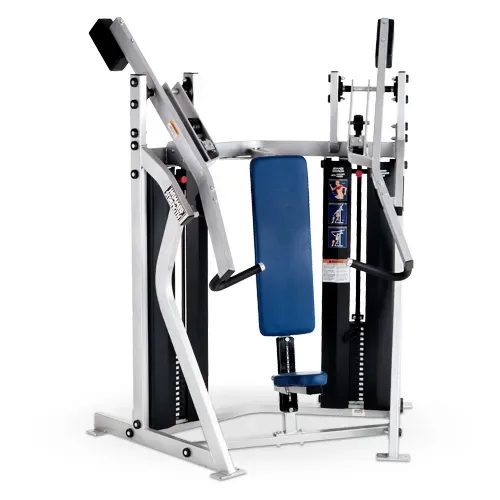
MTS-8002 ISO-Lateral Decline Press, Dual 90 kg Selectorized Stacks, 342 kg Frame Weight — engineered with sealed bearing pulley systems and pin-select loading for smooth, independent arm movement under heavy commercial use. Each unit undergoes full load testing before shipment, backed by a 10-year frame warranty and factory-direct pricing with no middlemen.
// Spec Highlights
• Direct from Manufacturer · No Middlemen · Worldwide Shipping
01
// Material
Imported Solid Wood
Premium hardwood frames sourced for density and visual warmth.
02
// Hardware
Medical-Grade Silent
Whisper-quiet pulleys and springs for clinical environments.
03
// Customization
Appearance OEM
Color, upholstery, and branding tailored to your studio.
04
// Service
Layout Design
Free venue planning for studios and rehab institutions.
Every component is selected for longevity, performance, and aesthetic harmony - from imported hardwood frames to silent medical-grade accessories.
// Features
11-Gauge Traceable Steel — Every tube on the MTS-8002 frame traces back to a certified Q235 or Q345 coil with documented mill origin.
| Parameter | Value |
|---|---|
| Designation | MTS-8002 |
| Product Type | ISO-Lateral Decline Press |
| Frame Steel Gauge | 11-gauge |
| Frame Tube Size | 3×3 inch |
| Steel Grade | Q235 / Q345 mill-certified |
| Welding Type | Robotic MIG continuous weld |
| Loading Type | Pin select |
| Weight Stack | 90 kg × 2 stacks |
| Bearing Type | Sealed industrial bearings |
| Pulley System | Aircraft-cable |
| Upholstery | Standard or high-density options |
| Powder Coating | 200 μm scratch-resistant |
| Product Dimensions (L × W × H) | 99 cm × 163 cm × 168 cm |
| Net Weight | 342 kg |
| Certification | CE, ISO 9001, RoHS, SGS |
| Warranty | 10-year frame |
| Facility Type | Typical Use |
|---|---|
| Commercial gym strength floor | Primary selectorized chest station in high-traffic zones |
| Hotel and resort fitness center | Low-maintenance decline press for guest and member use |
| University strength and conditioning room | Independent arm training for balanced athletic development |
| Rehabilitation and performance center | Controlled iso-lateral pressing for return-to-play protocols |
Robotic MIG welds run the full joint length on the MTS-8002, eliminating the cold-start weak points that crack under repeated decline pressing loads.
Most selectorized machines marketed as commercial grade use spot welds at high-stress junctions — the base gussets, the stack guide mounts, the pivot brackets. Under daily loading cycles in a busy gym, those spot welds develop micro-fractures that spread along the heat-affected zone until the joint fails outright [NEED_CITE: weld classification and fatigue performance in structural steel]. The commercial ISO-lateral decline press machine market is full of frames that pass visual inspection at delivery but show hairline cracks within the first year of heavy use. I have seen entire batches recalled because a cost-saving switch from continuous to spot welding compromised a cross-member that was never meant to carry eccentric load in short bursts.
The MTS-8002 targets the decline pressing plane — lower pectoral and anterior deltoid emphasis — filling a gap that flat and incline stations leave open. In a well-planned strength floor, it sits alongside an iso-lateral flat press and an incline press to give members full-angle chest coverage without relying on free-weight benches alone. The dual independent stacks make this commercial ISO-lateral decline press machine suitable for facilities serving athletes who need to correct side-to-side strength differences. Its footprint fits standard commercial spacing grids, and the 342 kg net weight keeps it stable without floor anchoring in most installations.
Every decline press cycle generates both concentric drive force and eccentric deceleration load at the bottom of the stroke. In a facility running eight or more hours daily, those cycles accumulate into millions of load reversals per year on the pivot brackets and stack guide mounts. The continuous MIG welds distribute stress across the full joint rather than concentrating it at discrete spots. Sealed industrial bearings at the pivot points resist sweat and chalk ingress that would accelerate wear in open bushing designs. The 200 μm powder coat on contact surfaces holds up against repeated cleaning chemicals and member hand placement [NEED_CITE: powder coating durability standards for commercial fitness equipment]. Upholstery in high-density options resists the compression set that flattens cheaper pads within months of commercial use.
An 11-gauge steel wall on a 3×3 inch tube provides a bending resistance threshold that keeps the MTS-8002 frame from flexing under maximum stack loading from both sides simultaneously. The rectangular tube profile resists torsional twist better than round tube at the same weight, which matters at the uprights where the weight stacks mount. Robotic MIG welding maintains consistent penetration depth across every joint — a variable that manual welding cannot guarantee across hundreds of units. Sealed bearings with aircraft-cable pulleys keep the cable path true, preventing the off-center binding that frays cables prematurely in poorly guided systems. The pin-select mechanism rides on guide rods machined to tight clearance tolerances, so the stack tracks straight even when loaded from one side only. Sandblast pre-treatment before powder coating ensures adhesion that survives years of contact-point abrasion.
Thin-wall tubing bends under heavy eccentric loads, shifting the pressing geometry and placing shear force on pivot hardware not rated for angular stress. Spot welds at load-bearing joints crack without visible warning, creating a liability event the moment a member notices frame movement mid-set. Non-sealed bearings require frequent replacement in high-humidity gym environments where sweat and cleaning solution penetrate the race. Low-density upholstery compresses within weeks, exposing the pad board to direct contact and accelerating its deterioration. Powder coating applied below 200 μm chips at cable contact points and handle mounts, exposing bare steel to corrosion that spreads under the remaining coat [NEED_CITE: corrosion progression under thin powder coatings in humid environments]. When non-standard fasteners and proprietary hardware are used, sourcing replacement parts after the initial production run becomes difficult or impossible.
The MTS-8002 frame uses 11-gauge Q235 or Q345 steel traceable to the mill coil, so you can verify material certification rather than accepting a vague commercial grade claim. Robotic MIG continuous welding is applied to every structural joint, not just the visible ones. Each unit undergoes individual load testing before shipment — not sample-based batch testing that leaves uninspected units in the field. The 200 μm industrial powder coating is sandblast-prepped for adhesion that lasts through years of commercial cleaning cycles. A 10-year frame warranty backs the structural components. For the MTS-8002 specifically, the 99 cm × 163 cm footprint and required safety clearance spacing are factored into 2D and 3D CAD layout plans so the decline press integrates cleanly with adjacent stations. OEM customization for color, logo, and upholstery is available for operators building a branded environment.
Provide your strength zone dimensions and current equipment list to receive a 2D or 3D layout showing where the MTS-8002 fits within your pressing station cluster. Specify your facility’s daily traffic volume so the structural grade matches your usage intensity. Share your member demographic profile to confirm the seat and pad geometry covers your user base. Indicate any custom requirements for frame color, logo placement, or upholstery material to align with your facility branding.
Q: How do I verify that a selectorized machine is truly commercial grade beyond the marketing label?
A: Request the frame steel gauge, tube dimensions, and mill certification. Ask whether welding is continuous MIG or spot weld at structural joints. Confirm that bearings are sealed industrial type, not open bushings. Require per-unit load test documentation rather than accepting sample-based batch reports. These verifiable specifications separate genuine commercial construction from machines built to a price point [NEED_CITE: EN 957 structural requirements for stationary training equipment].
Q: What does frame steel gauge mean for long-term durability in a high-traffic gym?
A: Gauge number indicates wall thickness — 11-gauge is substantially thicker than 12 or 14-gauge tubing. Thicker walls resist bending and torsional flex under heavy repeated loads, keeping the pressing geometry stable over years of use. Combined with a 3×3 inch rectangular profile, the tube resists twist at weld junctions where stress concentrates, extending the fatigue life of the entire frame structure.
Q: Selectorized versus plate loaded — which loading system fits a commercial facility better?
A: Selectorized machines like the MTS-8002 suit high-traffic environments where rapid weight changes and minimal setup time keep member flow moving. Plate loaded units serve facilities where users prefer incremental loading beyond fixed stack increments and do not mind handling plates. Selectorized systems also reduce loose plate inventory management and floor clutter around the pressing station.
Q: What maintenance schedule should I plan for sealed bearings and pulley systems?
A: Sealed industrial bearings require minimal routine maintenance compared to open bushing designs, since the seal prevents chalk dust and sweat from entering the race. Inspect cable condition and pulley alignment every six months, and replace cables when individual strands show fraying. The aircraft-cable system on the MTS-8002 is rated for extended daily use intervals between replacements.
Q: How should I plan equipment spacing around an iso-lateral decline press in a commercial layout?
A: Account for the machine footprint plus member entry and exit clearance on both sides, stack access space behind the unit, and safe passage width between adjacent stations. The MTS-8002 measures 99 cm by 163 cm, and a professional CAD layout will integrate these clearances with surrounding equipment to prevent congestion during peak hours and maintain safe operating conditions.
Premium aesthetics meet quiet operation for boutique studio environments.
Medical-grade silence and precision for sports & postpartum recovery.
Furniture-grade craftsmanship for premium residential installations.
Compact premium setups for one-on-one and small-group training.
Aesthetic Pilates integration for hybrid wellness studio programming.
Multi-unit deployment with instructor-grade reliability for certification programs.
Tell us about your project. Our team will respond within 24 hours with pricing, customization options, and shipping details.
// Sales Director
William
+86 132 2531 1800
// Export Manager
Bella
+86 198 5412 8032
william@bickfit.com


