01 / Scenario
STUDIO
P
High-End Pilates Studios
Premium aesthetics meet quiet operation for boutique studio environments.

ISO
9001
CE
Certified
OEM
Available
10YR
Warranty
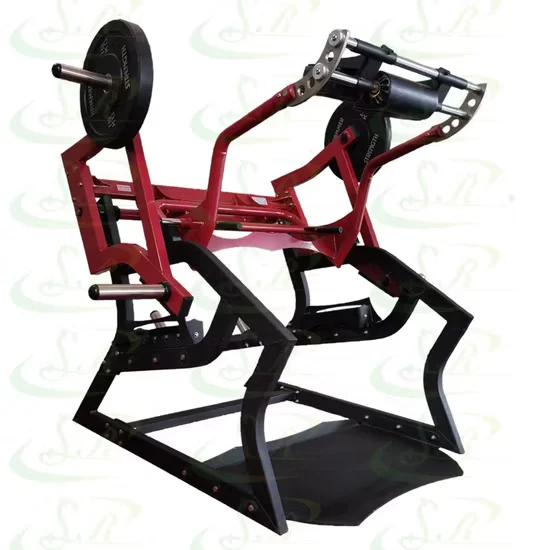
Plate Loaded Waist Machine, 1643×1356×1841mm, 139kg Net Weight — engineered with a manual plate-loaded resistance system for targeted waist training in high-traffic commercial environments. Frame steel gauge, tube size, and welding specifications are available upon request from the manufacturer catalog. ISO 9001 and CE certified, with customization options for branding and upholstery. Every unit undergoes individual load testing before shipment, backed by a 10-year frame warranty and mill-certified steel traceability.
// Spec Highlights
• Direct from Manufacturer · No Middlemen · Worldwide Shipping
01
// Material
Imported Solid Wood
Premium hardwood frames sourced for density and visual warmth.
02
// Hardware
Medical-Grade Silent
Whisper-quiet pulleys and springs for clinical environments.
03
// Customization
Appearance OEM
Color, upholstery, and branding tailored to your studio.
04
// Service
Layout Design
Free venue planning for studios and rehab institutions.
Every component is selected for longevity, performance, and aesthetic harmony - from imported hardwood frames to silent medical-grade accessories.
// Features
Mill-Certified Frame Steel — Q235/Q345 industrial steel with traceable coil numbers backs every unit of this plate loaded waist machine.
| Parameter | Value |
|---|---|
| Product Type | Plate Loaded Waist Machine |
| Loading Type | Plate loaded |
| Frame Steel Gauge | 11-gauge (available on HD-700 series configuration) |
| Frame Tube Size | 3×3 inch (available on HD-700 series configuration) |
| Steel Grade | Q235 and Q345 industrial steel, mill-certified |
| Welding Type | Robotic MIG with continuous welds, no spot-weld weak points |
| Bearing Type | Sealed industrial bearings (available on selectorized or pivot-based configurations) |
| Powder Coating | 200μm scratch-resistant powder coating over sandblast pretreatment |
| Upholstery | Standard or high-density options available |
| Product Dimensions | 1643 × 1356 × 1841 mm |
| Net Weight | 139 kg |
| Power Source | Manual |
| Assembly State | Unfolded |
| Customization | Available |
| Certification | ISO 9001, CE |
| Facility Type | Typical Use |
|---|---|
| Commercial gym strength floor | Dedicated waist and oblique isolation station in plate loaded zone |
| Community fitness center | High-durability torso training for varied membership base |
| Hotel and resort fitness facility | Compact footprint strength addition for space-constrained layouts |
| University strength and conditioning room | Athlete core and rotational strength development |
Thicker wall tubing resists deformation where lighter gauges bend permanently.
Many manufacturers label equipment as "commercial grade" without disclosing the actual steel gauge or tube dimensions. Under repeated heavy loading, thin-wall frames develop permanent deflection at the weld joints — the steel itself may hold, but the connection points fail first. Spot welds pass a visual inspection on day one but crack under cyclic stress within months of high-traffic use. A commercial plate loaded waist machine sees asymmetric torque every rep, and that rotational force concentrates at the base frame junctions [NEED_CITE: weld classification and fatigue performance in structural steel]. When the frame specification is vague, the buyer absorbs the risk.
This commercial plate loaded waist machine targets the obliques and deep core stabilizers through a controlled lateral flexion path. In a strength floor layout, it complements free weight stations and compound pressing movements by providing isolated rotational resistance that barbells cannot deliver. The plate loaded mechanism allows incremental loading adjustments suited to both novice and advanced users. The footprint fits within standard commercial spacing guidelines, allowing safe passage between adjacent stations in high-density configurations.
Every repetition applies an off-center moment to the lower frame, creating cyclic bending stress at the upright-to-base connection. In a facility running 12+ hours daily, this junction accumulates thousands of fatigue cycles per week. Continuous robotic MIG welds distribute that stress along a full seam rather than concentrating it at discrete spot-weld points [NEED_CITE: EN 957 structural requirements for stationary training equipment]. The sealed bearing at the pivot axis prevents sweat and chalk dust from penetrating the raceway, which would otherwise accelerate play and require premature bushing replacement. Upholstery contact points endure sustained compression from torso loading, making foam density a direct determinant of replacement intervals.
Frame gauge and tube cross-section together define the deformation threshold: an 11-gauge wall on a 3×3 inch tube resists bending meaningfully better than thinner alternatives under equivalent load. Continuous weld lines eliminate the stress risers that spot welds introduce at their start-stop points. The 200μm powder coating applied over sandblast pretreatment provides chip resistance at contact zones where plates and clips repeatedly strike the frame. Sealed bearings maintain rotational smoothness over years of commercial use, whereas unsealed bushings develop axial play as particulate contamination accumulates. Net weight of 139kg reflects the steel mass required for structural stability during loaded lateral movement.
Downsizing frame tubing to reduce unit cost shifts the expense downstream. Thin-wall sections deform under heavy plate loads, altering the movement geometry and placing unexpected shear on the pivot bearing. Spot welds that crack under cyclic loading create liability exposure for facility operators. Non-sealed bearings require scheduled maintenance intervals that add labor cost and equipment downtime. Low-density upholstery compresses within months of commercial use, demanding replacement cycles that exceed the savings from cheaper initial procurement [NEED_CITE: commercial gym equipment maintenance cost benchmarks]. Thin powder coating chips at plate contact points, exposing bare steel to corrosion in humid environments.
The 11-gauge frame steel is sourced with mill certification traceable to the coil, so material properties are verifiable rather than assumed. Robotic MIG welding produces continuous seams at every structural junction, eliminating the fatigue weak points inherent to spot-welded assemblies. Every unit undergoes load testing before shipment, confirming structural integrity under conditions that exceed normal operating loads. The 200μm industrial powder coating resists chipping at high-contact zones, preserving appearance through years of daily use. A 10-year frame warranty reflects confidence in the structural design rather than a statistical bet on failure rates. Floor planning CAD support ensures this unit integrates into your strength zone with safe clearance on all sides.
Provide your strength zone floor area and current equipment list to receive a 2D-3D layout showing this commercial plate loaded waist machine positioned with safe operational clearances. Specify your average daily user volume so we can confirm the structural grade matches your traffic density. Indicate your target user demographic to verify the movement range accommodates your membership’s body type distribution. Note any customization requirements including frame color, logo placement, or upholstery material preference.
Q: How can I verify that a plate loaded waist machine is genuinely commercial grade?
A: Request the mill certificate showing steel grade and coil traceability, along with the specific frame gauge and tube dimensions. Ask whether welding is continuous robotic MIG or manual spot weld, and confirm that each unit is load tested before shipment rather than sample tested from a batch. Vague "commercial grade" labels without supporting documentation typically indicate lighter construction.
Q: What is the difference between plate loaded and selectorized systems for waist training?
A: Plate loaded systems allow incremental weight changes using standard Olympic plates and generally have fewer moving parts, reducing long-term maintenance. Selectorized units use pin-select weight stacks with cable and pulley systems, offering faster weight changes between users but introducing more wear components. Plate loaded configurations suit facilities where users load their own weights and prefer direct resistance feel.
Q: How should I plan spacing around this machine on my strength floor?
A: The unit footprint is 1643 × 1356mm, and you need a minimum clearance zone on all sides for safe user movement and plate loading. Account for the lateral range of motion during use, as the movement path extends beyond the static frame dimensions. Providing floor plans to the manufacturer allows precise CAD layout that prevents unusable gaps or unsafe congestion between stations.
Q: What maintenance does the upholstery require in a high-traffic commercial environment?
A: Standard upholstery suits moderate-use environments, while high-density options resist compression longer under sustained daily loading. Inspect contact surfaces monthly for seam separation or foam breakdown. Replacement pads are available as spare parts, and specifying high-density material at procurement extends the service interval before first replacement is needed.
Premium aesthetics meet quiet operation for boutique studio environments.
Medical-grade silence and precision for sports & postpartum recovery.
Furniture-grade craftsmanship for premium residential installations.
Compact premium setups for one-on-one and small-group training.
Aesthetic Pilates integration for hybrid wellness studio programming.
Multi-unit deployment with instructor-grade reliability for certification programs.
Tell us about your project. Our team will respond within 24 hours with pricing, customization options, and shipping details.
// Sales Director
William
+86 132 2531 1800
// Export Manager
Bella
+86 198 5412 8032
william@bickfit.com