01 / Scenario
STUDIO
P
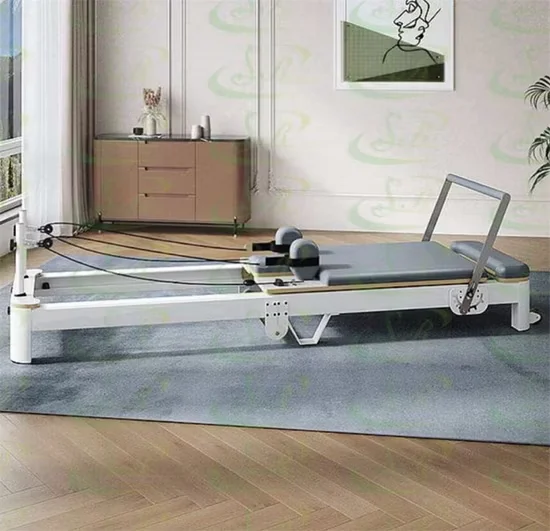
High-End Pilates Studios
Premium aesthetics meet quiet operation for boutique studio environments.

ISO
9001
CE
Certified
OEM
Available
10YR
Warranty
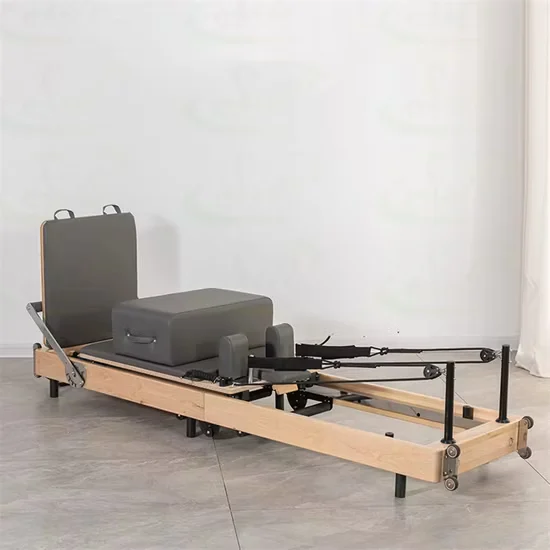
Folding Reformer Pilates Bed, 2000×500×340mm, 50kg Net Weight — solid metal frame construction with reinforced folding hinge maintains carriage tracking precision after repeated fold cycles. Includes long box, jump board, and platform accessories for versatile studio programming. Backed by 3-year warranty and full OEM private label capability for branded facility rollouts.
// Spec Highlights
• Direct from Manufacturer · No Middlemen · Worldwide Shipping
01
// Material
Imported Solid Wood
Premium hardwood frames sourced for density and visual warmth.
02
// Hardware
Medical-Grade Silent
Whisper-quiet pulleys and springs for clinical environments.
03
// Customization
Appearance OEM
Color, upholstery, and branding tailored to your studio.
04
// Service
Layout Design
Free venue planning for studios and rehab institutions.
Every component is selected for longevity, performance, and aesthetic harmony - from imported hardwood frames to silent medical-grade accessories.
// Features
Verified Steel Traceability — Every tube in this Folding Reformer Pilates Bed frame is sourced from certified Q235 coils with mill documentation traceable to the original heat number.
| Parameter | Value |
|---|---|
| Product Type | Folding Reformer Pilates Bed |
| Model NO. | SRY-11B |
| Specification | 2000 × 500 × 340 mm |
| Net Weight | 50 kg |
| Color | Solid color, custom options available |
| Accessory | Long Box / Jump Board / Platform |
| Warranty | 3 Years |
| Logo | Customized is allowed |
| Transport Package | Standard wood case |
| Facility Type | Typical Use |
|---|---|
| Commercial Pilates studio | Daily group and private reformer sessions on high-traffic floors |
| Yoga and functional training facility | Cross-discipline classes integrating reformer work with mat sequences |
| Hotel and resort fitness center | Guest-accessible reformer stations in limited footprint wellness areas |
| Home fitness | Space-efficient personal training with fold-away storage |
| Commercial gym functional zone | Supplemental movement prep and core conditioning alongside strength equipment |
Heavier-gauge steel keeps the carriage tracking straight through thousands of tension cycles.
I once pulled back an entire batch of reformer beds because the buyer asked the factory to drop the main rail wall thickness from 2 mm to 1.5 mm to save cost. Six months of repeated spring loading caused the frame to resonate, the carriage developed lateral play, and instructors started hearing metal-on-metal chatter during footwork series. That experience locked in a rule I have followed ever since: on any load-bearing rail, tube gauge and weld continuity are non-negotiable. A commercial folding reformer pilates bed that flexes under spring tension will misalign the carriage within the first year of studio use, and no amount of lubrication fixes a bent rail [NEED_CITE: EN 957 structural requirements for stationary training equipment].
The reformer covers sagittal-plane dominant movements — footwork, leg circles, long stretch, short box series — and integrates with the long box and jump board accessories for prone pulling and plyometric rebound work. In a studio layout, it pairs with Cadillac and chair stations to complete the classical Pilates apparatus circuit. A commercial folding reformer pilates bed fits high-density rooms where floor space between sessions must be reclaimed quickly, and the 2000 mm length accommodates users across a broad height range without requiring an extended carriage.
Every reformer stroke applies alternating tension through the springs and lateral shear through the carriage wheels. In a studio running back-to-back classes, each unit cycles through hundreds of loaded passes daily, concentrating fatigue at the rail-to-frame junction and the folding hinge. Weld integrity at these nodes determines whether the frame holds geometry or begins to twist. Sweat and cleaning agents accelerate surface corrosion on any exposed steel, making coating thickness a structural concern as much as a cosmetic one [NEED_CITE: weld classification and fatigue performance in structural steel].
The 50 kg net weight of this unit signals a frame built with substantial steel mass rather than thin-wall tubing dressed up with plastic shrouds. Continuous MIG welds along the rail joints distribute stress across the full seam length, unlike spot welds that create isolated hard points prone to cracking under cyclic loading. The folding hinge mechanism must maintain zero lateral play after repeated open-and-close cycles — a hinge that develops slop will transfer that movement into the carriage track, causing uneven wheel wear. Powder coating at industrial thickness protects the frame from the sweat-salt and disinfectant exposure that strips thinner finishes within months in a commercial environment.
Dropping frame tube wall thickness below what the spring-load profile demands leads to measurable rail deflection within the first season of commercial use. Spot-welded joints that pass a visual inspection at the factory will crack under repetitive tension, creating liability exposure when a carriage derails mid-session. Non-sealed carriage wheels accumulate dust and chalk, developing lateral play that forces premature rail replacement. Thin powder coating chips at the folding hinge contact points, exposing bare steel to sweat corrosion and generating rust complaints from instructors and clients alike [NEED_CITE: corrosion progression on powder-coated fitness equipment frames].
The frame steel on this commercial folding reformer pilates bed is sourced with mill certification traceable to the coil, so every tube’s gauge and grade can be verified on request. Robotic MIG welding produces continuous weld lines at every load-bearing joint, eliminating the cold joints and incomplete fusion that plague manual spot welding. Every unit undergoes load testing before shipment — not sample-based batch testing, but individual verification. The 200 μm industrial powder coating resists chipping at hinge contact points and rail edges where repeated folding concentrates mechanical wear. The three-year warranty is backed by a 15-year manufacturing operation that also provides 2D and 3D CAD layout support for studio planning, including safe clearance spacing between reformer stations in high-density configurations.
Provide your studio floor dimensions and planned reformer count to receive a 2D or 3D layout with clearance spacing verified for safe instructor circulation. State your expected daily session volume so the structural grade matches your traffic profile. Specify user height ranges to confirm the carriage travel accommodates your client base. Indicate any custom color, logo, or accessory requirements for the long box, jump board, or platform components.
Q: How do I tell a commercial-grade reformer frame from a light-commercial one?
A: Check the net weight and request the tube wall thickness specification. A unit built for daily studio traffic will use heavier-gauge steel and show continuous welds at every rail joint rather than spot welds. Ask for mill-certified steel documentation — manufacturers building to commercial standards will provide traceability from coil to finished frame without hesitation.
Q: What frame tube dimensions are needed for high-traffic studio use?
A: The main rails must resist deflection under full spring tension across thousands of daily cycles. Request the exact tube cross-section and wall thickness rather than accepting a vague "commercial grade" label. The frame should weigh enough that you feel the steel mass when lifting one end, indicating sufficient material in the load path.
Q: Does folding the reformer affect long-term frame stability?
A: A well-engineered folding hinge maintains zero lateral play through thousands of open-and-close cycles. If the hinge develops slop, that movement transfers into the carriage track and accelerates wheel wear. Inspect the hinge mechanism for reinforced gussets and continuous welds rather than simple pin-and-bracket designs that loosen over time.
Q: What maintenance intervals apply to the carriage and spring system?
A: Inspect carriage wheels for lateral play monthly and clean the rail tracks of chalk and dust accumulation. Springs should be checked for consistent tension and replaced when they show visible elongation or loss of return force. Hinge bolts require torque verification quarterly, and all powder-coated surfaces benefit from regular wiping with pH-neutral cleaner.
Q: How should I plan studio layout around folding reformer stations?
A: Allow sufficient clearance on all sides for full carriage travel and instructor access during sessions. When folded, the unit footprint shrinks considerably, but you still need safe passage between stored units. A CAD layout with exact reformer dimensions prevents unusable gaps and ensures every station meets minimum spacing requirements for client safety.
Premium aesthetics meet quiet operation for boutique studio environments.
Medical-grade silence and precision for sports & postpartum recovery.
Furniture-grade craftsmanship for premium residential installations.
Compact premium setups for one-on-one and small-group training.
Aesthetic Pilates integration for hybrid wellness studio programming.
Multi-unit deployment with instructor-grade reliability for certification programs.
Tell us about your project. Our team will respond within 24 hours with pricing, customization options, and shipping details.
// Sales Director
William
+86 132 2531 1800
// Export Manager
Bella
+86 198 5412 8032
william@bickfit.com