01 / Scenario
STUDIO
P
High-End Pilates Studios
Premium aesthetics meet quiet operation for boutique studio environments.
ISO
9001
CE
Certified
OEM
Available
10YR
Warranty
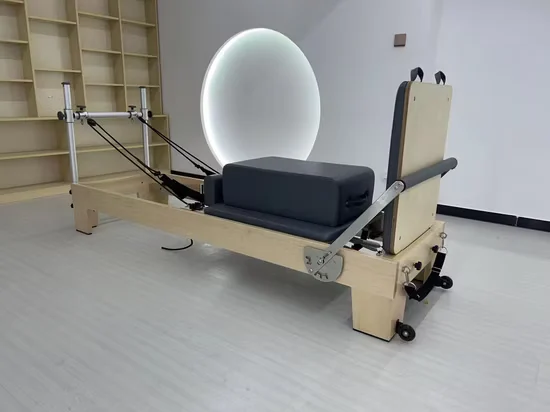
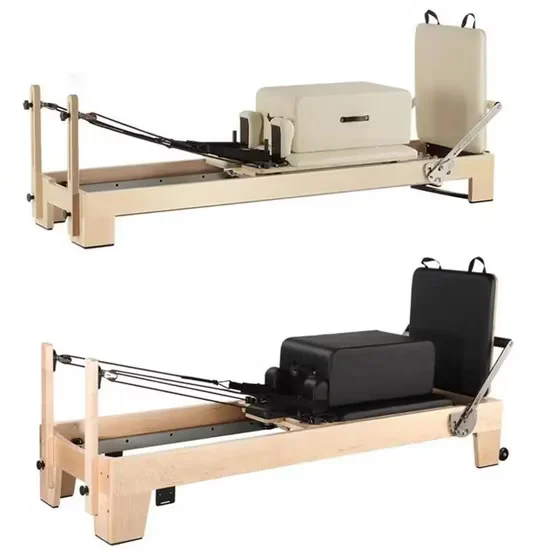
Wood Pilates Reformer, Solid White Oak / Maple Frame, 2460×730×680mm — built with solid hardwood rails and carriage system engineered for stable glide under daily studio traffic. Includes long box, jump board, and platform to support full reformer curriculum on a single footprint; 100kg net weight ensures floor stability during dynamic plyometric work. Each unit undergoes 32-point inspection and 100% load testing before dispatch from our vertically integrated facility.
// Spec Highlights
• Direct from Manufacturer · No Middlemen · Worldwide Shipping
01
// Material
Imported Solid Wood
Premium hardwood frames sourced for density and visual warmth.
02
// Hardware
Medical-Grade Silent
Whisper-quiet pulleys and springs for clinical environments.
03
// Customization
Appearance OEM
Color, upholstery, and branding tailored to your studio.
04
// Service
Layout Design
Free venue planning for studios and rehab institutions.
Every component is selected for longevity, performance, and aesthetic harmony - from imported hardwood frames to silent medical-grade accessories.
// Features
Hardwood Frame Traceability — Solid white oak and maple carriage rails with mill-verified moisture content reports, preventing warp under repeated studio traffic.
| Parameter | Value |
|---|---|
| Product Type | Pilates Reformer |
| Model NO. | SRY-02 |
| Frame Material | Solid Wood (White Oak / Maple) |
| Color | Solid Color |
| Accessories Included | Long Box / Jump Board / Platform |
| Product Dimensions | 2460×730×680mm |
| Net Weight | 100kgs |
| Warranty | 3 Years |
| Logo | Customized |
| Target User | Adult, Unisex |
| Facility Type | Typical Use |
|---|---|
| Boutique Pilates Studio | Group class reformer floors running multiple daily sessions |
| Yoga Studio | Reformer-based flexibility and core conditioning programming |
| Rehabilitation and Physiotherapy Center | Low-impact resistance training with controlled spring progression |
| Hotel Wellness Facility | Guest-accessible reformer sessions and private instruction |
| Functional Training Facility | Athletic conditioning and dynamic plyometric work on jump board |
Most studio reformer failures originate at the rail-to-frame joint, not in the wood itself.
When a Pilates studio pulls a reformer off the floor, it rarely happens because the wood cracked in the middle of the carriage rail. The failure point is almost always where the rail mounts to the frame body. Laminated plywood rails or thin veneer constructions may look dimensionally stable on day one, but under the repeated lateral loading of hundreds of carriage cycles per week, the mounting hardware begins to work against layers that were never designed to handle that shear direction. The joint loosens, the rail chatters, and the carriage glide becomes inconsistent across the stroke. This is why verifying solid hardwood species and rail mounting method matters more than the visual finish of the wood [NEED_CITE: EN 957 structural requirements for stationary training equipment].
The SRY-02 operates as the primary movement station in a group-class reformer room, covering supine, prone, seated, and standing movement planes across a single footprint. It pairs with mat stations for warm-up sequences and pairs with tower or chair units when a studio expands its equipment roster for advanced programming. At 2460mm length, the frame accommodates users across a wide height range without requiring a separate long-format variant, which matters when a single floor hosts rotating clientele. The included long box, jump board, and platform allow instructors to progress from foundational spring work to dynamic plyometric sequences without swapping equipment between classes. This commercial wood pilates reformer suits facilities running eight or more class sessions daily where equipment turnover between bookings must be fast.
Every carriage stroke generates lateral force against the rail mounting points, and that force multiplies during jump board work where the user leaves the carriage entirely and returns with impact load. The solid hardwood frame absorbs these cyclic loads differently than steel — wood has natural damping properties that reduce vibration transmission, but it also means the mounting hardware and rail alignment carry the full burden of maintaining glide consistency over thousands of cycles. The carriage wheel and bearing interface is the highest-wear junction on the unit, followed by the spring attachment points where repeated tension cycling can fatigue lower-grade hardware. Sweat and cleaning solutions applied after each class session introduce moisture and chemical exposure to the wood surface and all metal contact points [NEED_CITE: fatigue performance in structural wood and hardware joints under cyclic loading].
Frame material listed as solid wood requires further specification. White oak is a ring-porous hardwood with higher density than maple, which translates to greater resistance to rail deformation under sustained carriage load and better long-term warp resistance in environments with fluctuating humidity. Maple is lighter in tone and slightly less dense, making it a viable option for climate-controlled studios where humidity remains stable. The net weight of 100kgs signals substantial mass in the frame body, which contributes to stability during dynamic exercises — a lighter reformer will shift on the floor during jump board sequences. Product dimensions at 2460×730×680mm define the floor footprint, and when planning a group room, the 730mm width plus required clearance on each side determines how many units fit safely across a given wall length. The three-year warranty applies to the structural frame, which should be verified against the expected daily session count of the facility.
A reformer built on laminated plywood or MDF core with a hardwood veneer may pass a visual inspection and look identical to a solid wood frame in a showroom photograph. Under repeated carriage cycling, however, the internal layers of a laminated core compress unevenly, causing the rail mounting points to drift out of alignment. Once the rails are no longer parallel, the carriage develops lateral play, the wheels wear asymmetrically, and the glide degrades progressively. Facilities that purchase on price without verifying solid wood species typically replace these units within a timeframe that negates the initial savings. Non-standard hardware on the spring system and carriage wheels compounds the problem — when a component fails, replacement parts are unavailable, and the unit is pulled from the floor permanently [NEED_CITE: comparative service life of solid hardwood versus laminated wood in fitness equipment frames].
Solid hardwood species selection with moisture content documentation ensures the frame arrives stable and stays stable across seasonal humidity shifts. The rail mounting method and carriage wheel specification are verified against the expected daily traffic of a commercial studio environment. Every unit undergoes load-cycle testing before shipment — the same testing protocol applied to our plate loaded and selectorized strength lines — confirming carriage glide consistency and structural integrity under repeated use. The 200μm industrial powder coating on all metal hardware resists sweat corrosion and cleaning chemical exposure across years of daily class sessions. Our engineering team provides 2D-3D floor planning CAD support, calculating the safe clearance zones around each SRY-02 to ensure instructors and clients move through the studio without collision risk. OEM customization for logo and finish allows operators to align equipment branding with studio identity.
Provide your studio floor dimensions and target reformer count to receive a 2D-3D layout with safe clearance zones calculated for instructor circulation and client access. Specify your expected daily class schedule and average session count to confirm the structural grade matches your traffic volume. Confirm the user height and weight range your clientele represents so we verify the carriage travel and spring resistance progression covers your full population. State any customization requirements including logo placement, frame finish, and upholstery color to align the order with your studio design.
Q: How do I verify a Pilates reformer uses solid hardwood rather than laminated or veneer construction?
A: Request the wood species certification and a cross-section photograph of the rail material. Solid hardwood shows continuous grain through the full thickness, while laminated constructions reveal alternating layer lines and veneer builds show a thin surface layer over a different core material. Moisture content reports further confirm the wood was properly kiln-dried for dimensional stability.
Q: What rail and wheel specifications determine glide smoothness over time?
A: Rail straightness tolerance and carriage wheel material are the primary factors. Hardwood rails must be machined flat within tight tolerances, and wheels should run on sealed bearings to prevent dust and sweat from entering the rotation surface. Unsealed wheels develop lateral play as contamination builds up, causing the carriage to chatter and the rail surface to wear unevenly.
Q: How should I configure spring resistance for a mixed-use studio serving rehab and athletic clients?
A: A full spring set with progressive resistance levels allows instructors to scale from very light tension for rehabilitation protocols to heavier loading for athletic conditioning. Confirm the spring configuration includes at least four resistance options so the commercial wood pilates reformer serves your complete client range without requiring equipment swaps between sessions.
Q: What are the load limits for the jump board and platform during dynamic exercises?
A: The jump board must withstand repeated impact loading when users perform plyometric sequences, and the platform supports standing work with lateral force. Request the specific load rating for both accessories, as these components experience higher peak forces than the carriage during standard spring exercises. Verify the mounting interface is rated for dynamic rather than static load only.
Q: What maintenance cycle should I expect for rails, wheels, and springs in a commercial studio?
A: In a high-traffic studio running multiple daily classes, inspect carriage wheels and rail surfaces quarterly for wear and contamination buildup. Springs should be checked monthly for tension consistency and replaced when any unit shows measurable resistance loss. Wood frame surfaces require regular cleaning with pH-neutral products to prevent sweat and moisture from degrading the finish over time.
Premium aesthetics meet quiet operation for boutique studio environments.
Medical-grade silence and precision for sports & postpartum recovery.
Furniture-grade craftsmanship for premium residential installations.
Compact premium setups for one-on-one and small-group training.
Aesthetic Pilates integration for hybrid wellness studio programming.
Multi-unit deployment with instructor-grade reliability for certification programs.
Tell us about your project. Our team will respond within 24 hours with pricing, customization options, and shipping details.
// Sales Director
William
+86 132 2531 1800
// Export Manager
Bella
+86 198 5412 8032
william@bickfit.com