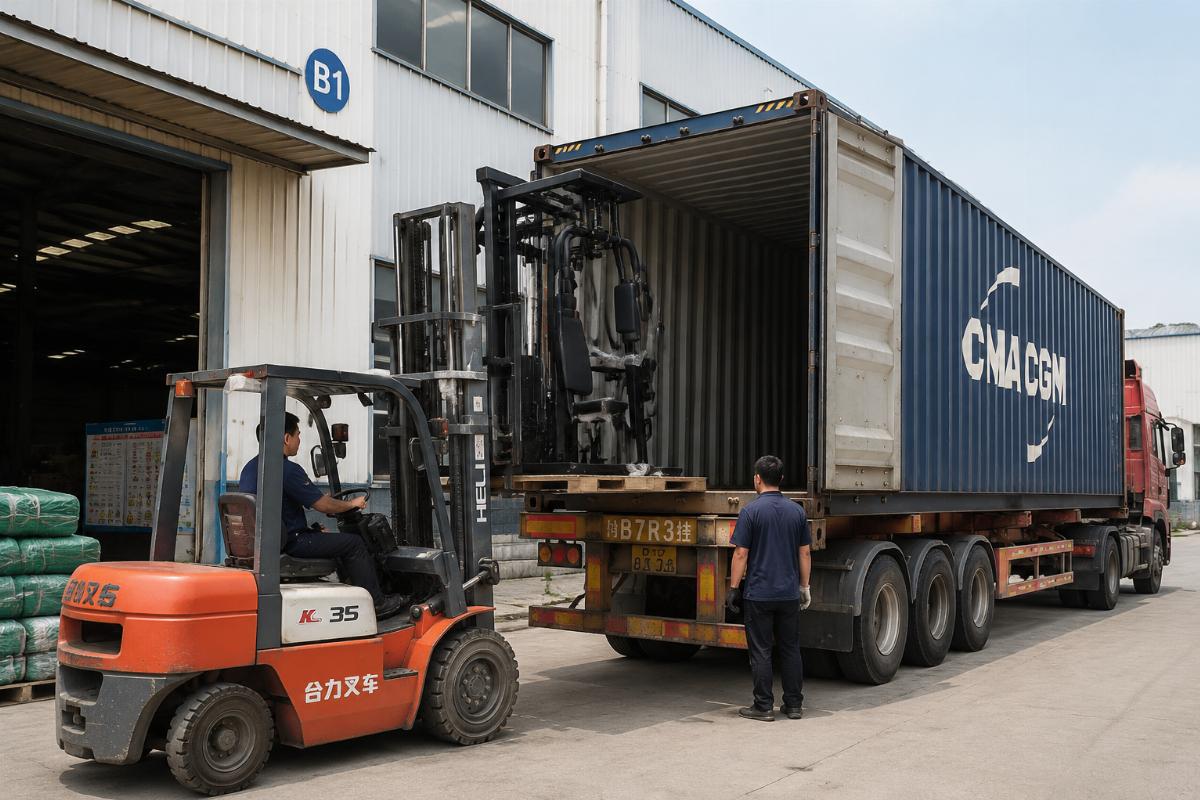
Selectorized Weight Stack Bulk Orders: Bick OEM Factory Direct
Tighter packing does not save money; it destroys precision.
Efficient container loading for selectorized machines is not merely about stacking boxes to maximize cubic meters. It is a critical engineering process designed to protect precision-machined guide rods and weight stacks from transit-induced misalignment while optimizing space usage. Failure to implement proper bracing and disassembly protocols results in bent guide rods, sticky weight stacks, and assembly failures upon arrival, negating any initial freight savings.
I still remember the silence in the workshop after that call from the Middle East. Fifty selectorized machines had arrived at the distributor’s warehouse, and within months, the complaints started pouring in. The pin holes on the weight stacks were misaligned by a couple of millimeters. The guide rods, which should have allowed the weights to glide smoothly, were bent just enough to cause friction. The entire batch was practically unusable for a commercial gym environment. We had to air-freight replacement parts at a cost that wiped out the profit from the entire order. That incident changed how I view logistics. It wasn’t a manufacturing defect; the molds were precise, and the steel was high-grade. The failure happened in the dark, inside a sealed container, bouncing across the ocean. Since then, I have focused intensely on what happens after the machine leaves the assembly line. The factory-direct advantage is not just about lower prices; it is about having direct control over the production and shipping process to prevent these costly errors. [NEED_CITE: common causes of fitness equipment damage during international shipping]
Understanding the physics of transit is the first step. Ocean freight involves constant vibration and shifting forces. A fully assembled selectorized machine is top-heavy and fragile. The weight stack acts as a massive pendulum. If it is not secured independently from the frame, every wave impact transfers stress directly to the guide rods. This is why standard palletizing is often insufficient for bulk orders of strength equipment.
Why Does Poor Loading Ruin Selectorized Machines?
Transit vibration causes microscopic misalignment in guide rods and pulley systems that accumulates into functional failure.
Many buyers assume that if the crate looks intact, the machine inside is safe. This is a dangerous misconception. The external packaging may survive the journey, but the internal components can suffer from "internal bruising." For selectorized equipment, the most vulnerable components are the chrome-plated guide rods and the pulley alignment systems. When a container is loaded without proper internal bracing, the weight stacks shift during transit. Even a shift of a few millimeters can bend a guide rod or distort the mounting brackets. [NEED_CITE: effects of vibration on precision mechanical assemblies during transport]
Consider the case of a European hotel chain that ordered a mixed container of cardio and strength equipment. They initially opted for a standard loading method to save on crating costs. Upon arrival, while the frames were undamaged, several selectorized shrouds had cosmetic cracks, and the cable tension was uneven. The issue was not the quality of the steel but the lack of custom foam blocking between the heavy frames and the delicate pulley systems. After implementing a revised loading strategy with dedicated foam supports and separated weight stacks, their damage claims dropped noticeably. This highlights that protecting the cosmetic and functional integrity of selectorized machines requires more than just bubble wrap. It requires a strategic approach to optimize container space fitness equipment that prioritizes protection over pure density.
The root cause often lies in the assumption that factory-loaded containers are inherently safe. Without proper internal bracing, ocean vibration shifts weight stacks, leading to tolerance errors in pin holes. This is particularly critical for selectorized machines where the user experience depends on the smooth insertion of the selection pin. A bent guide rod creates a "sticky" stack, frustrating users and increasing maintenance costs for gym owners. Therefore, the loading configuration must account for the dynamic forces experienced during sea freight, not just the static weight of the equipment.
How to Calculate Optimal CBM for Mixed Strength Orders?
Balance frame density with bulky shrouds to maximize container utilization without compromising structural integrity.
Calculating the cubic meter (CBM) usage for irregularly shaped strength frames is complex. Unlike box-shaped items, selectorized machines have protruding arms, weight horns, and pulley towers. A naive approach might suggest disassembling every component to minimize volume. However, excessive disassembly increases assembly time for the end-user and raises the risk of losing small hardware. The goal is to find the sweet spot where selectorized machine shipping volume is minimized while keeping the core structure intact.
For a recent full container load (FCL) destined for a Latin American distributor, we optimized the stack height against container door clearance. By removing only the weight stacks and securing the guide rods separately, we increased the number of units per 40HQ container significantly. The frames were nested where possible, with protective padding between contact points. This strategy required precise CBM calculations that accounted for the irregular shapes of the strength frames. [NEED_CITE: methods for calculating volumetric weight of irregular industrial goods]
| Loading Strategy | Space Efficiency | Risk of Damage | Assembly Complexity |
|---|---|---|---|
| Fully Assembled | Low | High | Low |
| Partial Disassembly (Weights Removed) | High | Low | Medium |
| Full Disassembly | Highest | Medium | High |
This table illustrates the trade-offs. Fully assembled units take up too much space and are prone to damage. Full disassembly saves space but makes assembly tedious and risky for missing parts. Partial disassembly, specifically removing the weight stacks, offers the best balance. It allows for tighter packing of the frames while protecting the most vulnerable components. This approach is central to effective gym equipment logistics planning, ensuring that the container is filled efficiently without creating pressure points that could deform the frames.
What Are the Critical Disassembly Points for Shipping?
Remove weight stacks and secure guide rods separately to prevent bending and misalignment.
The most critical decision in preparing selectorized machines for export is determining what to disassemble. The weight stack is the heaviest and most dynamic part of the machine. Leaving it attached during transit is a recipe for disaster. The inertia of the moving weights can exert significant force on the guide rods, causing them to bend or the mounting holes to elongate. Therefore, the standard operating procedure for bulk orders involves removing the weight stacks entirely.
The guide rods themselves must be protected. Chrome plating is durable but susceptible to scratching and bending if subjected to lateral forces. In our bulk order loading strategy, we wrap each guide rod in protective foam and secure them vertically or horizontally in a way that prevents movement. The weight stacks are then packed separately, often in their own crates or secured tightly against the container wall with dunnage bags to prevent shifting. This separation ensures that the precision-machined surfaces remain untouched and the structural integrity of the frame is maintained.
A common mistake is to leave the weight horns attached if they are bolted on. While this might seem convenient, it adds width and creates leverage points that can catch on other cargo. Removing them reduces the overall footprint and eliminates potential stress points. This level of detail is crucial for optimize container space fitness equipment because it allows for tighter nesting of the main frames. The key is to ensure that all hardware is bagged and labeled clearly to facilitate easy reassembly at the destination.
How to Verify Loading Quality Before Shipment?
Require photo evidence of bracing and load distribution before container sealing.
Trust but verify. This principle is essential when dealing with overseas shipments. Many buyers assume that once the goods leave the factory, they are out of their hands. However, the loading process is the last line of defense against transit damage. At Bick, we implement a strict pre-shipment verification process. Before the container doors are sealed, we require detailed photographic evidence of the loading configuration. This includes photos of the bracing, the placement of dunnage bags, and the overall distribution of weight within the container.
This practice was adopted after analyzing several cases where poor loading led to significant losses. For instance, a distributor in Southeast Asia received a container where the heavier machines were placed on top of lighter ones, causing crushing damage. By requiring photo verification, we ensure that the load is distributed evenly and that fragile components are protected. This step is part of our commitment to providing reliable gym equipment logistics planning services to our partners. It allows us to catch potential issues before they become costly problems for the buyer.
The verification process also includes checking the security of the weight stacks and guide rods. We ensure that all loose parts are secured and that there is no empty space that could allow cargo to shift during transit. This attention to detail is what separates a professional manufacturer from a mere supplier. It reflects our understanding that the value of the equipment is not just in its manufacture but in its safe delivery to the end-user. By maintaining high standards in loading configuration, we help our clients avoid the hidden costs of damaged goods and delayed projects.
Conclusion
Protecting precision is more valuable than maximizing density.
Efficient container loading for selectorized weight stacks requires a balance between space optimization and component protection. By removing weight stacks, securing guide rods, and verifying load distribution, buyers can ensure their equipment arrives in perfect condition. This approach minimizes the risk of transit damage and ensures a smooth installation process for gym owners. Implementing these strategies is essential for anyone looking to optimize container space fitness equipment while maintaining the highest standards of quality and reliability.