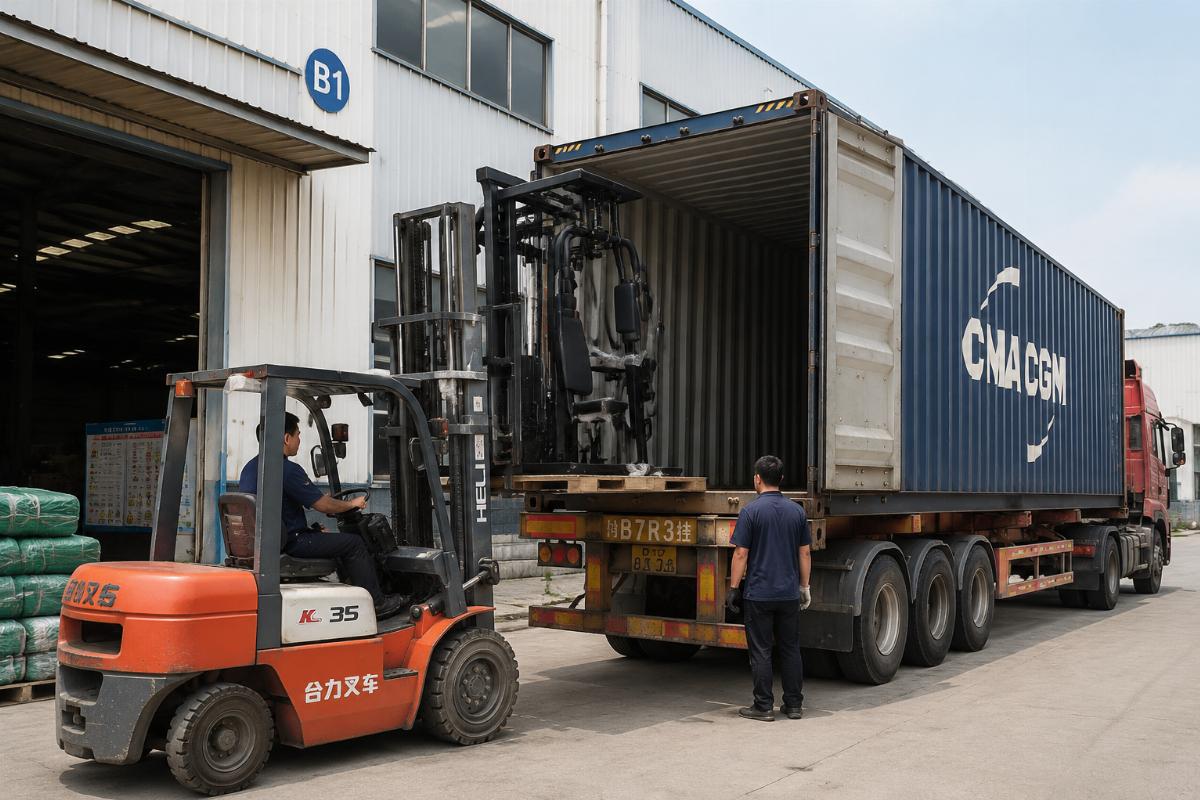
Warranty Policy for Hack Squat Machine Bulk Purchase Orders
A "one-year warranty" on a hack squat machine is not a single promise — it is a stack of separate commitments, and treating it as a blanket guarantee is the single most common reason bulk procurement deals turn into disputes.
For bulk hack squat machine orders, a compliant warranty policy must separate structural frame coverage from commercial wear-part replacement terms, define usage benchmarks that distinguish defect from degradation, and lock in spare parts SLAs before the container is sealed. Anything less leaves gym operators exposed to downtime and manufacturers exposed to unpriced claims.
I still remember the video call that changed how I write contracts. A buyer in the Middle East had taken delivery of a full container of plate-loaded strength equipment, including a batch of hack squat machines destined for a high-traffic commercial gym. Within months, the cables on the hack squat units were fraying, the guide rod bearings were showing play, and the upholstery on the thigh pads was splitting. The buyer’s message was blunt: "Your warranty says one year. Fix it." What the contract actually said was far less clear, and the argument that followed cost both sides more than the replacement parts ever should have. That conversation is the reason I now treat every hack squat machine warranty policy as a document that must be engineered, not copied from a template.
Let me walk you through how a properly structured hack squat machine warranty policy actually works in bulk procurement, and where the traps hide.
What Does a Standard Hack Squat Machine Warranty Cover?
A standard warranty on a hack squat machine is never uniform across the entire unit — it is tiered by component category, and the tiers reflect fundamentally different failure mechanisms. [NEED_CITE: warranty tier structures in commercial strength equipment per ISO 20957]
The frame and structural welds sit at the top tier. These are the load-bearing elements — the main chassis, the sled rail assembly, the foot plate mounting bracket. Failures here are almost always manufacturing defects: incomplete weld penetration, material flaws in the steel tubing, or stress concentrations from poor jig alignment. A well-drafted hack squat machine warranty policy typically covers these components for an extended period, often measured in multiple years, because the manufacturer has high confidence in the metallurgy and fabrication process.
The moving mechanical components occupy the middle tier. This includes the linear bearings on the sled rail, the pivot bushings, the adjustment pins, and the cable routing pulleys. These parts experience genuine mechanical wear under commercial use, but they should not fail prematurely if the tolerances and lubrication specifications are correct. Warranty coverage here is usually measured in a shorter but still meaningful window, and the key question is whether the failure is a defect in material or a consequence of usage intensity.
The wear parts sit at the bottom tier. Cables, upholstery, foam padding, grip sleeves, and adjustment knob rubber — these degrade under any commercial environment. A hack squat machine warranty policy that honestly addresses this reality will either exclude them entirely or offer a separate, shorter coverage window with a defined replacement ratio.
| Component Category | Typical Coverage Tier | Failure Mode | Coverage Nature |
|---|---|---|---|
| Main frame and welds | Extended structural | Manufacturing defect | Full replacement |
| Sled rail and bearings | Mid-term mechanical | Tolerance drift or defect | Conditional coverage |
| Cables and pulleys | Short-term wear | Fraying and groove wear | Usage-benchmarked |
| Upholstery and foam | Shortest or excluded | Compression and tearing | Replacement ratio cap |
| Adjustment pins and knobs | Mid-term mechanical | Loosening or cracking | Conditional coverage |
A distributor in Southeast Asia once received a batch of hack squat units where the sled rail bearings developed noticeable play within a short period. The manufacturer’s initial response was to classify it as wear. An independent inspection revealed that the bearing seats had been machined slightly out of specification, causing uneven load distribution. [NEED_CITE: bearing seat machining tolerance standards per ISO 1132] The hack squat machine warranty policy should have a clear clause for this exact scenario — when a wear-part failure is traceable to a manufacturing tolerance issue, the coverage tier shifts upward. Without that clause, the buyer absorbs the cost of a defect disguised as wear.
How to Define Commercial Wear-and-Tear?
Commercial wear-and-tear is not a vague concept — it is a function of daily cycle count, load intensity, and maintenance compliance, and a serious hack squat machine warranty policy must anchor its definitions to measurable benchmarks. [NEED_CITE: commercial gym equipment usage intensity benchmarks per IHRSA facility reports]
A hack squat machine in a boutique studio with limited membership might see a few dozen cycles per day. The same model in a high-traffic commercial gym operating extended hours can easily multiply that figure several times over. The physical degradation of cables, bearing surfaces, and upholstery scales directly with this usage intensity. A warranty policy that ignores the distinction is either pricing risk into every unit or setting itself up for disputes.
The practical approach is to define a commercial usage benchmark — a daily cycle count threshold that separates "normal commercial use" from "high-intensity use." Below the threshold, wear-part claims are covered under standard terms. Above it, the buyer accepts that replacement intervals will compress, and the warranty shifts to a cost-sharing or discounted-parts model. This is not the manufacturer avoiding responsibility; it is honest engineering acknowledging that physics does not respect warranty language.
Maintenance compliance is the other axis. Linear bearings on a hack squat sled rail require periodic lubrication. Cables require inspection for fraying at routing points. If the buyer’s maintenance log shows gaps, the manufacturer has legitimate grounds to classify a failure as maintenance-related rather than defect-related. A well-structured hack squat machine warranty policy will specify the maintenance schedule that must be followed for coverage to remain valid, and will require the buyer to retain logs as a condition of claim eligibility.
A hotel fitness center operator once filed a warranty claim on a batch of hack squat machines where the upholstery was splitting along the stitch lines. The units were installed in a resort property where guest usage patterns are highly variable and maintenance staffing is often lean. Investigation showed that the foam density specification was appropriate for the application, but the stitching pattern was not rated for the combination of UV exposure from a sunlit facility and the frequency of guest turnover. The hack squat machine warranty policy in that contract had no clause addressing environmental factors. The resolution required a goodwill gesture from the manufacturer because the contract language was silent.
The risk清单 for buyers on this point is straightforward:
- Usage benchmark undefined leaves every wear claim open to argument
- Maintenance requirements unspecified means the manufacturer cannot fairly deny a claim, but also cannot fairly honor one
- Environmental factors ignored create gray zones where neither side has clear contractual ground
What Is the Defect Claim Process?
A hack squat machine warranty policy without a defined claim process is a promise without an enforcement mechanism — and gym downtime is measured in lost membership revenue, not shipping days. [NEED_CITE: commercial gym equipment downtime cost models per facility management studies]
The claim process must answer five questions with precision: who initiates, what evidence is required, how the defect is verified, who bears freight, and what the replacement timeline is. When any of these is ambiguous, the relationship between buyer and manufacturer deteriorates quickly, especially across time zones and languages.
Initiation starts with the buyer’s facility manager documenting the failure. This means photographs of the defective component, the machine serial number, the installation date, and a description of the usage pattern. A serious hack squat machine warranty policy will specify the exact format and channel for this submission — typically a dedicated after-sales portal or email address with a defined acknowledgment window.
Evidence verification is where disputes most often stall. The manufacturer needs enough information to determine whether the failure is a defect or a wear event. This may require the buyer to ship the failed component back for inspection, or it may be resolvable through high-resolution photographs and video. The policy should state clearly which party bears the cost of return shipping for inspection, and under what conditions that cost is refunded if the defect is confirmed. [NEED_CITE: warranty claim evidence standards per international consumer protection frameworks]
Freight absorption is the single most contentious line item. If a defective bearing seat is confirmed on a hack squat sled rail, who pays to ship the replacement? Who pays for the customs clearance at the destination? A mature hack squat machine warranty policy will differentiate: for confirmed manufacturing defects, the manufacturer absorbs outbound freight for the replacement part; for wear-part claims falling within coverage, the buyer typically absorbs freight. This distinction must be written explicitly, not assumed.
Replacement timeline is the operational heartbeat. A gym with a down hack squat machine is losing member satisfaction every day it sits idle. The policy should commit to a defined dispatch window from the date the claim is approved — not from the date the claim is filed, because investigation takes time, but the investigation window itself should be capped.
A fitness chain operator in Europe once experienced a situation where a batch of hack squat machines developed cable fraying at the pulley routing points. The claim process in their contract required the buyer to return the failed cables for inspection before any replacement would ship. The return shipping, customs clearance, and inspection cycle stretched across many weeks. During that period, multiple units in the chain were operating with degraded cables, creating both a safety concern and a member complaint wave. The hack squat machine warranty policy had no provision for provisional replacement shipment while inspection was pending. The lesson was clear: the claim process must include a mechanism for urgent safety-related failures that allows provisional dispatch against a deposit or guarantee.
How to Negotiate Spare Parts in Bulk Contracts?
Spare parts negotiation is not an afterthought — it is the operational insurance that determines whether a hack squat machine warranty policy delivers real protection or merely legal language. [NEED_CITE: spare parts availability standards for commercial fitness equipment per industry association guidelines]
When a buyer commits to a bulk order of hack squat machines, the conversation about spare parts should happen before the purchase order is signed, not after the first failure. The reason is simple: the leverage to negotiate favorable spare parts terms is highest at the point of the equipment order, and the cost of retrofitting a spare parts agreement later is always higher.
The first element is the spare parts package composition. A bulk order should include a pre-agreed package of high-wear components — cables, pulleys, bearing kits, upholstery sets, adjustment pin assemblies — sized proportionally to the total unit count. The ratio matters. A hack squat machine warranty policy that promises coverage but does not guarantee parts availability is hollow. The buyer needs physical inventory on hand or a committed dispatch pipeline, not a promise to manufacture on demand.
The second element is pricing lock. Wear parts will need replacement regardless of warranty coverage, because commercial use degrades them. The bulk contract should lock spare parts pricing for an extended period, indexed to a defined baseline. Without this, the buyer faces the risk that replacement part prices rise independently of the original equipment cost, effectively eroding the warranty’s value.
The third element is the supply commitment. A serious manufacturer will commit to spare parts availability for a defined period after the equipment model’s production run ends. This is critical for gym operators who may be running the same hack squat machines for an extended service life. A hack squat machine warranty policy that covers the equipment but allows the manufacturer to discontinue spare parts support shortly after delivery creates a stranded-asset risk.
Our approach with bulk hack squat machine orders has been to build standardized spare parts packages directly into the procurement proposal. For a full-container order, the package includes a defined ratio of cables, pulleys, bearing kits, and upholstery sets — enough to keep the buyer’s fleet operational through the initial high-deployment period without emergency air-freight requests. The pricing is locked at the time of the equipment order, and the supply commitment extends well beyond the warranty period. This is not a concession; it is a recognition that the buyer’s operational continuity is the manufacturer’s long-term reputation.
A distributor in Latin America once placed a bulk order for a regional gym chain without negotiating a spare parts package. The equipment performed well, but when the first wave of cable replacements was needed, the distributor had to place small individual orders, each incurring international shipping costs and customs clearance fees that multiplied the per-unit part cost substantially. The hack squat machine warranty policy covered the cables as a wear item, but the logistics cost of obtaining them was not covered. The total expenditure on parts acquisition logistics ended up being a significant fraction of what a pre-negotiated spare parts package would have cost for the entire fleet.
Conclusion
A hack squat machine warranty policy that separates structural coverage from wear-part terms, defines usage benchmarks, specifies a claim process with freight rules, and locks in spare parts supply is not a document that favors the manufacturer — it is a document that protects both sides from the ambiguity that destroys business relationships. Bulk buyers who treat warranty as a single number will learn its limits the hard way. Buyers who engineer the warranty clause by clause will find that their suppliers respect the precision, because precision is the foundation of long-term commercial trust.