What Does the US Home Treadmill Satisfaction List Actually Tell You About Your Purchase?
You just read three different satisfaction rankings and saw the same model get 5 stars on one site and 3 stars on another. Now you are more confused than when you started.
Treadmill satisfaction scores do not measure product quality in isolation. They measure how well a buyer's actual usage pattern matched what they expected when they purchased. A 4.5-star rating means different things to a marathon trainer versus someone walking 20 minutes twice a week.
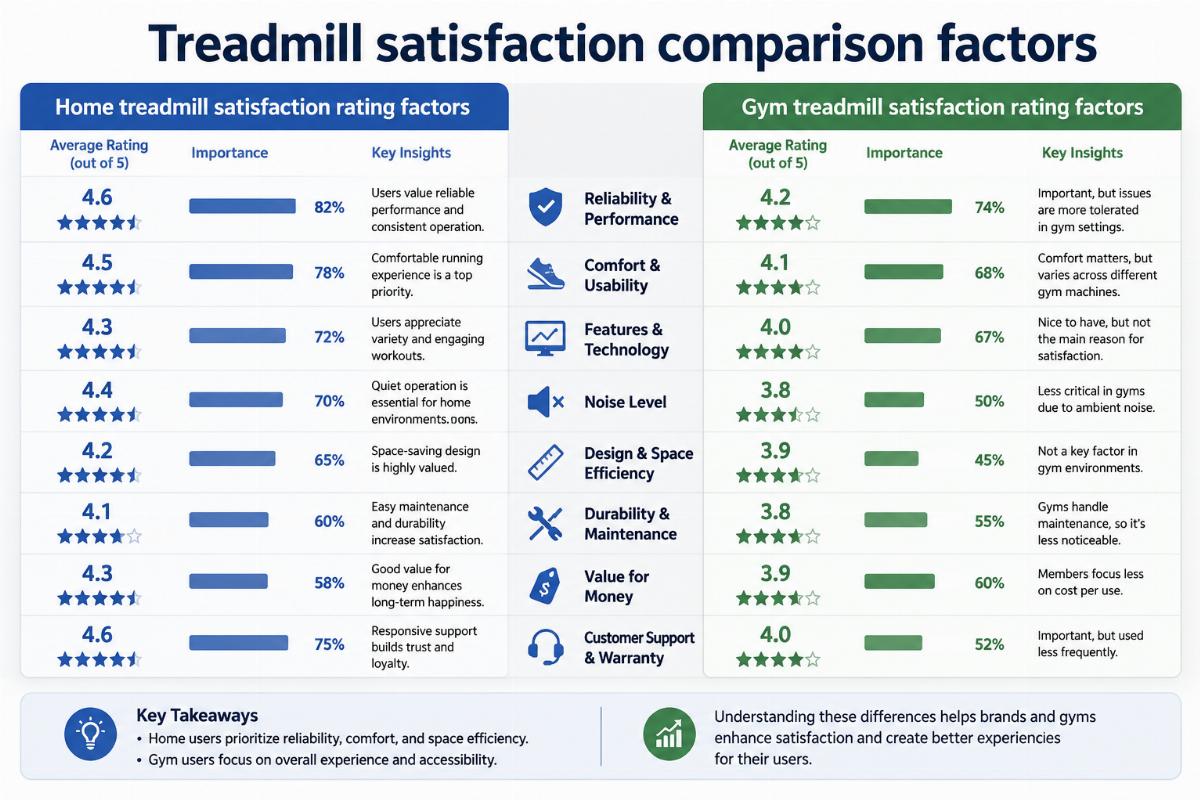
I answer customer questions about satisfaction rankings every week. Most buyers think they need to find the highest-rated model. What they actually need is to understand which variables caused satisfaction or disappointment in homes similar to theirs.
Why Do Satisfaction Rankings Contradict Each Other?
Most buyers assume satisfaction rankings measure how well a treadmill works. That assumption creates confusion when they see the same model praised and criticized in different reviews.
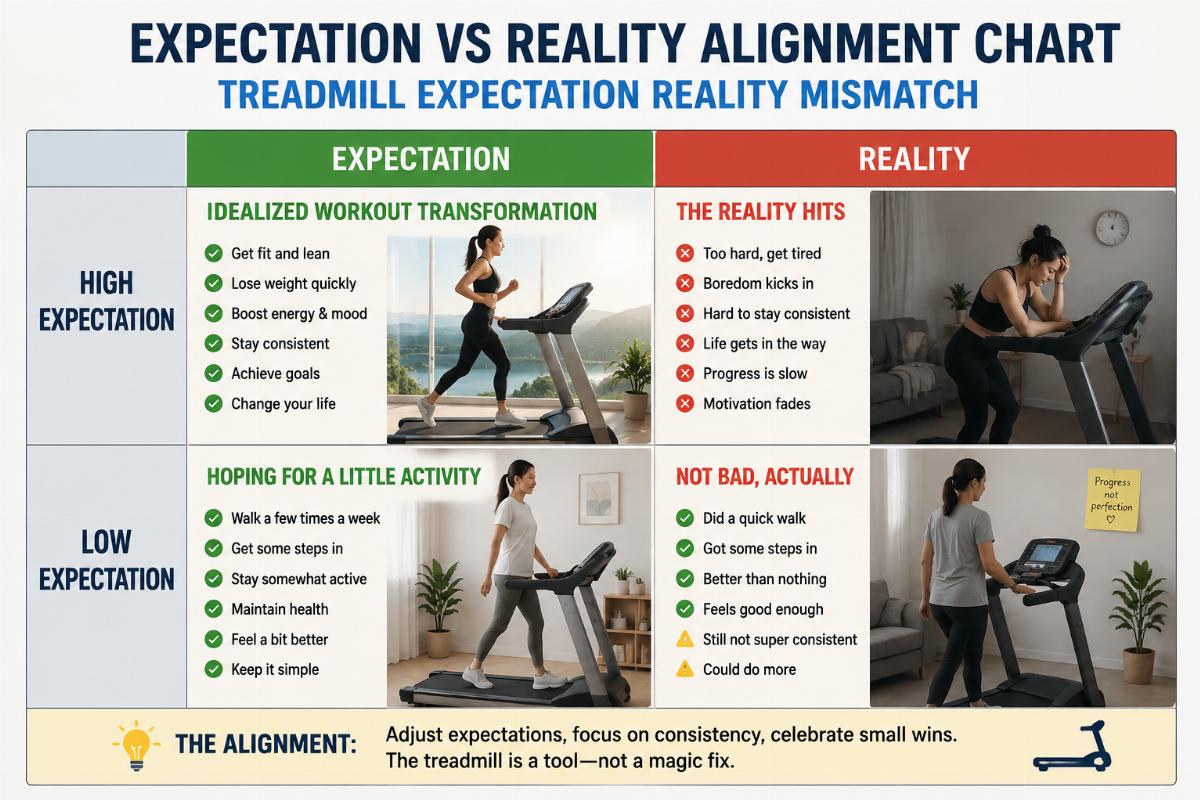
Satisfaction rankings measure expectation-reality alignment, not absolute performance.1 The same treadmill satisfies a casual walker and disappoints a daily runner because they had different usage intensity expectations at purchase.
What Creates Satisfaction Score Variance?
I have traced customer complaints back to their original purchase conversations. Most dissatisfaction stems from scope mismatch at the buying stage.
A customer calls and asks which model has "the best reviews for home use." I ask about their usage pattern. They say "just some cardio, nothing serious." Three months later they email about belt slipping issues. When I check their purchase notes, I see they bought a 2.0 HP motor model2. Their follow-up questions reveal they started running 5 miles daily after joining a training group.
The satisfaction drop did not happen because the product failed. It happened because their usage intensity increased beyond what they scoped at purchase.
| Purchase Scope Variable | Low Match = Low Satisfaction | High Match = High Satisfaction |
|---|---|---|
| Usage frequency expectation | Bought for "occasional use," actually runs daily | Bought for "daily cardio," actually runs daily |
| Home layout consideration | Bought standard size for apartment, vibration disturbs neighbors | Bought compact model for apartment, fits space without noise complaints |
| Household user rotation | Bought solo-capacity model, three household members now share it | Bought household-capacity model, belt width accommodates all users |
| Fitness goal clarity | Bought walking model, later wanted incline training features | Bought incline-capable model, uses incline features as planned |
The highest satisfaction scores come from buyers who accurately predicted their usage pattern before purchasing.
How Home Environment Affects Satisfaction Independent of Product Quality
Last month a customer gave a midrange model a 2-star rating. She wrote "too loud for apartment use." Another customer gave the same model 5 stars and wrote "quiet enough for early morning runs."
I called both buyers to understand the difference. The dissatisfied customer lived in a second-floor apartment with wood subfloor. The satisfied customer lived in a ground-floor unit with concrete foundation. Motor noise remained constant. Floor vibration transmission varied by construction type3.
Satisfaction rankings do not separate product performance from environmental compatibility. When you read a satisfaction list, you see aggregated scores that blend together:
- Buyers who matched the product to their space
- Buyers who did not account for floor type
- Buyers who underestimated household noise sensitivity
- Buyers who correctly predicted their usage intensity
The same 4.5-star average contains opposite experiences from different home scenarios.
What Questions Should You Ask Instead of Checking Satisfaction Rankings?
Most buyers ask me "which model has the highest satisfaction rating?" That question cannot produce a useful answer because satisfaction depends on scenario variables they have not yet defined.
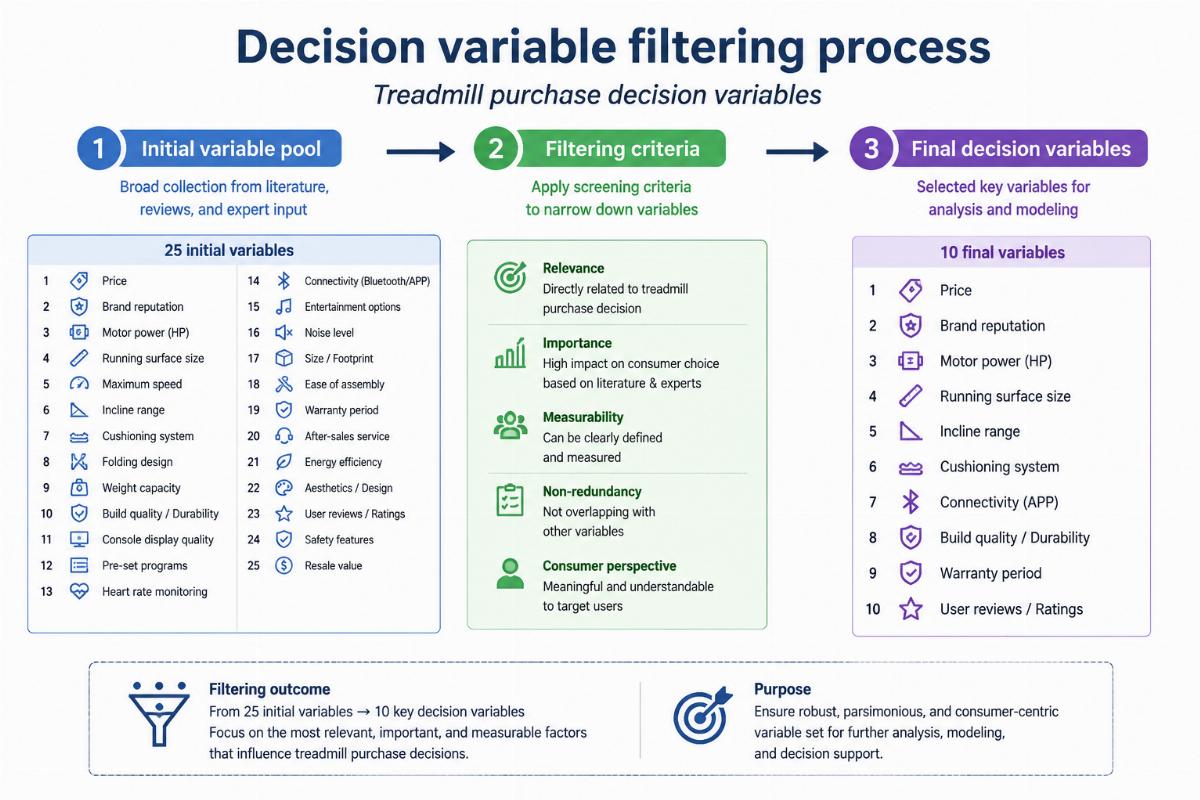
Replace "which model satisfies most buyers?" with "which usage pattern will I actually maintain, and which model survived that pattern in homes structurally similar to mine?" Satisfaction becomes predictive when you filter by comparable scenarios, not by aggregate scores.
Which Variables Turn Satisfaction Into a Predictive Metric?
I have logged customer satisfaction follow-up calls for two years. Buyers who remained satisfied long-term asked different questions at purchase than buyers who downgraded their ratings after six months.
High long-term satisfaction buyers asked:
- "How many users in my weight range have used this model for over a year without motor issues?"
- "What floor type causes the most vibration complaints for this model?"
- "If I increase from 3 sessions per week to 5 sessions, which component fails first?"
- "How many households with 3+ rotating users kept this model past the 2-year mark?"
Low satisfaction buyers asked:
- "What is the overall rating?"
- "Which brand has the best reviews?"
- "Is this model popular?"
- "Do customers like this one?"
The difference shows in how they filtered satisfaction data. High satisfaction buyers filtered by scenario similarity. Low satisfaction buyers trusted aggregate scores without contextual filtering.
How to Reconstruct Satisfaction Scores Into Decision-Relevant Filters
I teach customers to reverse-engineer satisfaction rankings by identifying the hidden variables that caused rating variance.
When you see a treadmill with 4.3 stars from 847 reviews, that number combines:
- Buyers who used it 2x per week (higher satisfaction)
- Buyers who used it 6x per week (lower satisfaction)
- Buyers in houses (higher satisfaction)
- Buyers in apartments (lower satisfaction)
- Solo users under 180 lbs (higher satisfaction)
- Household rotation with 220+ lb users (lower satisfaction)
To make that 4.3-star rating predictive for your purchase, read the 3-star and 2-star reviews first. Look for complaints that match your scenario:
- If you live in an apartment and see "too loud for upstairs unit" in multiple low-star reviews, that model carries scenario risk for you
- If you plan daily use and see "motor noise increased after 6 months of frequent running" in 2-star reviews, that model may not match your intensity pattern
- If you have three household members and see "belt tracking issues after multiple user switches" in low ratings, that model may lack household rotation durability
High-star reviews tell you what worked in best-case scenarios. Low-star reviews tell you which scenarios caused failure. Your purchase decision needs both.
How Do Usage Intensity Expectations Create Satisfaction Gaps?
The most common satisfaction complaint I hear is "it worked fine for the first few months, then problems started." When I review those buyers' original purchase notes, most described their intended usage as "light cardio" or "occasional walking."
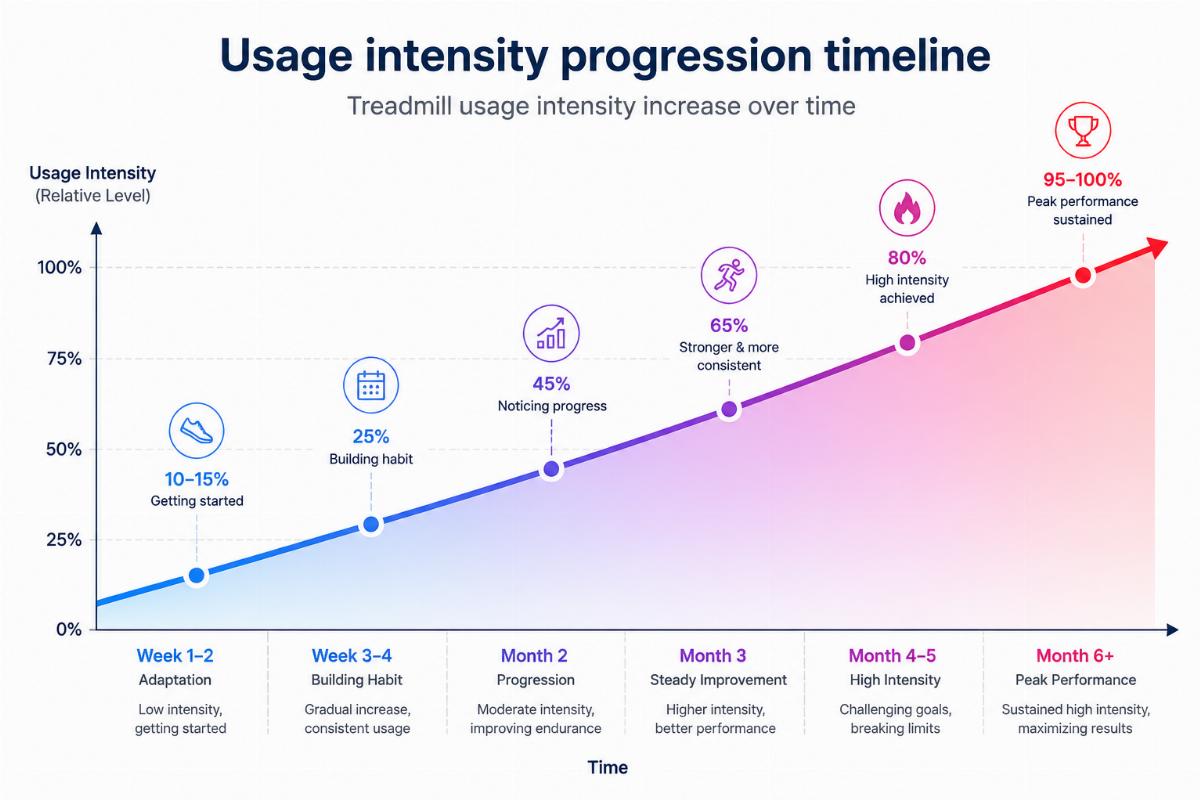
Satisfaction gaps open when actual usage intensity exceeds purchase-stage expectations. Buyers underestimate how often they will use the treadmill once it becomes part of their routine, then purchase models scoped for lower intensity than they actually maintain.
What Happens When You Scope Below Your Actual Usage Pattern?
A customer bought a 2.5 HP motor model last year. She told me she planned to walk 30 minutes three times per week. I asked if she had any fitness goals that might increase that frequency. She said no, just maintaining current health.
Four months later she called about belt slipping issues. I asked about her current usage pattern. She said she now runs 45 minutes five times per week. I asked what changed. She joined a running group at work and started training for a 10K.
Her satisfaction dropped from 5 stars at month one to 2 stars at month four. The product did not degrade. Her usage intensity increased beyond the motor's continuous duty rating4.
| Purchase Stage Usage Estimate | Actual 6-Month Usage Pattern | Satisfaction Impact |
|---|---|---|
| "Walking 20 min, 2-3x per week" | Walking 20 min, 2-3x per week | High satisfaction - scope matched reality |
| "Light jogging, occasional use" | Running 40 min, 5x per week | Low satisfaction - motor not rated for that intensity |
| "Solo use, mostly walking" | Three household members rotating, mix of walking and running | Low satisfaction - belt width and motor capacity exceeded |
| "Cardio maintenance, no serious training" | Half-marathon training program started at month 3 | Low satisfaction - shock absorption5 and motor continuous rating insufficient |
Satisfaction rankings do not show you which buyers increased their usage intensity after purchase. When you read a 3-star review complaining about performance decline, you do not know if the buyer's usage pattern changed or if the product actually failed under consistent use.
How to Estimate Your Real Usage Pattern Before Purchase
I ask every customer the same three questions to help them predict their actual usage intensity:
- "Have you maintained an exercise routine before, and if yes, did your session frequency increase or decrease over time?"
- "If you achieve your initial fitness goal in three months, what is the next goal you would set?"
- "Who else in your household might start using this once they see you using it regularly?"
These questions surface usage pattern risks that buyers do not consider when they answer "how often will you use this?" Most buyers answer that question based on their current routine. They do not account for:
- Routine acceleration once they feel initial results
- Household members joining in after seeing consistent use
- Weather changes that shift outdoor running to indoor treadmill use
- Fitness goal expansion after achieving initial milestones
I tell customers to scope their purchase for 1.5x their estimated usage intensity. If you plan to walk 30 minutes three times per week, purchase as if you will walk 45 minutes four times per week. That buffer absorbs usage pattern increases without dropping you below the model's capacity threshold.
How Does Household Size Affect Long-Term Satisfaction Independent of Individual Use?
Single users focus on whether a treadmill matches their personal usage pattern. Household buyers face a different satisfaction variable: rotation compatibility across multiple users with different body weights, stride lengths, and usage intensities.
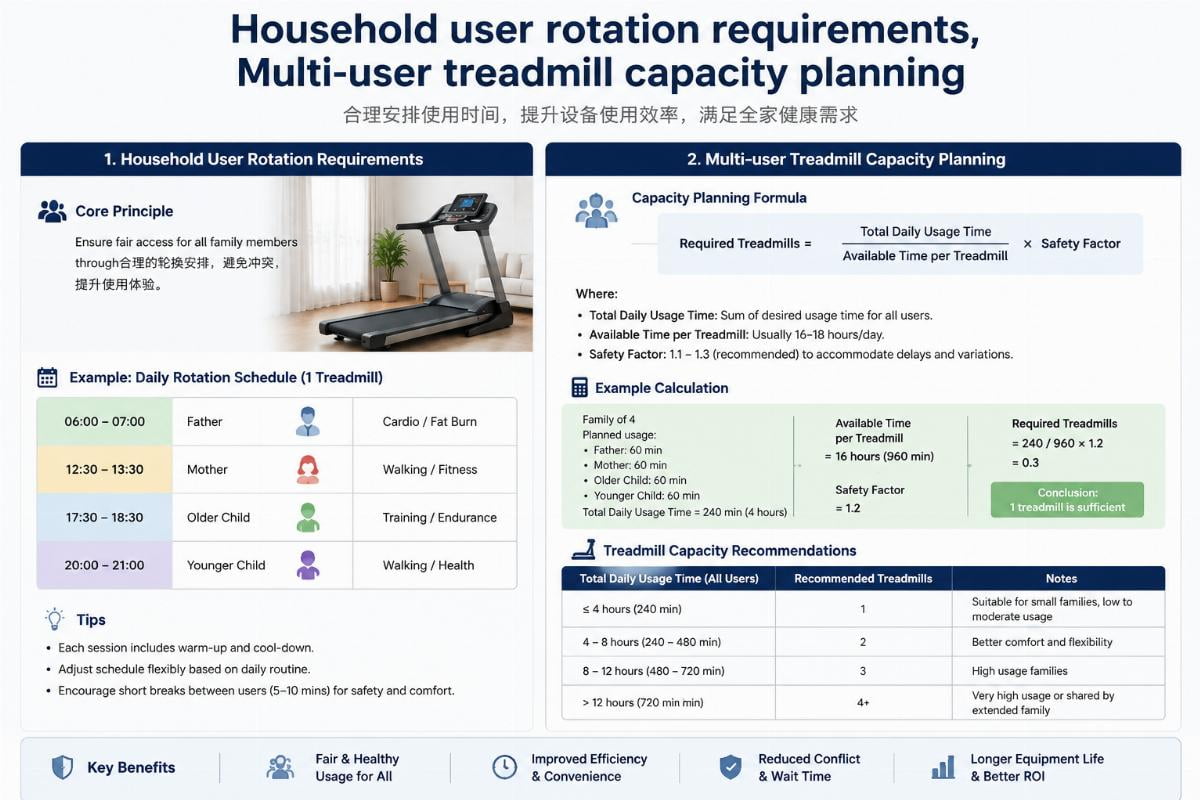
Household satisfaction requires matching the model's capacity to the most demanding user's profile, not the average household usage pattern. Treadmills fail household scenarios when buyers scope to average use instead of peak-user requirements.
What Causes Household Satisfaction to Drop Faster Than Solo-User Satisfaction?
A couple bought a treadmill last year. The husband weighs 160 lbs and walks 30 minutes daily. The wife weighs 140 lbs and jogs 20 minutes three times per week. They purchased a model rated for 250 lbs with a 48-inch belt6.
Six months later they reported belt tracking issues. I asked if their usage pattern had changed. They said their teenage son started using it after school for basketball conditioning. He weighs 195 lbs and runs sprint intervals.
The model's weight capacity handled all three users individually. The combined rotational stress from switching between a 140-lb jogger and a 195-lb sprinter multiple times per day exceeded the belt tracking system's adjustment tolerance7.
Their satisfaction dropped because they scoped to individual profiles, not to rotation stress accumulation8. Household satisfaction requires different capacity scoping than solo use.
How to Scope Treadmill Capacity for Household Rotation Scenarios
I teach household buyers to plan capacity around three rotation variables instead of individual user profiles:
Weight variance range: If your household includes users from 120 lbs to 220 lbs, the belt tracking system adjusts 100 lbs multiple times per day. Models with manual belt tension adjustment show tracking drift faster than models with automatic tension compensation9.
Usage intensity switching frequency: If one user walks at 3.0 mph and another runs at 8.0 mph, motor load variance stresses components10 more than consistent single-user patterns. Check reviews from households with similar intensity variance, not from solo users.
Stride length accommodation: If household users range from 5'2" to 6'1", belt length needs to accommodate the tallest user's running stride, not the average household height. A 55-inch belt satisfies a 5'6" walker but creates overstriding discomfort11 for a 6'0" runner.
Household satisfaction depends on whether the model's capacity envelope contains all users operating at their individual peak intensity, not whether it handles average household use.
Conclusion
Treadmill satisfaction rankings measure expectation-reality match, not absolute product quality. The most predictive satisfaction metric comes from filtering reviews by scenarios that match your home layout, usage intensity, and household rotation patterns before comparing aggregate scores.
"Expectation confirmation theory - Wikipedia", https://en.wikipedia.org/wiki/Expectation_confirmation_theory. Consumer behavior research has established that satisfaction ratings reflect expectation-confirmation processes, where perceived performance is evaluated against pre-purchase expectations rather than objective product attributes alone. Evidence role: expert_consensus; source type: research. Supports: that consumer satisfaction is primarily determined by the gap between expectations and perceived performance. Scope note: This citation supports the general principle in consumer research; application to treadmill ratings specifically is contextual. ↩
"Treadmill Motors: What You Need to Know", https://www.treadmillreviews.net/treadmill-motors-what-you-need-to-know/. Treadmill motor specifications typically indicate continuous duty capacity, with higher horsepower motors designed to sustain more intensive or frequent use patterns without overheating or performance degradation. Evidence role: mechanism; source type: education. Supports: that motor horsepower ratings correspond to sustainable usage intensity levels. Scope note: General technical principle; specific HP thresholds for different usage patterns vary by manufacturer and motor design. ↩
"[PDF] Damping in composite structures - Purdue Engineering", https://engineering.purdue.edu/~ce573/Documents/Damping%20in%20composite%20structures_Jacobsen.pdf. Building science research demonstrates that floor construction materials exhibit different vibration transmission characteristics, with concrete generally providing greater mass and damping compared to wood-frame construction. Evidence role: mechanism; source type: education. Supports: that different floor construction materials have varying vibration transmission properties. ↩
"Motor Duty Cycles Explained: S1–S8 Classifications & Guide", https://www.kebamerica.com/blog/4-types-of-motor-duty-cycles-every-engineer-should-know/. Motor duty ratings, as defined in international standards, specify the load conditions and duration a motor can operate without exceeding temperature limits, with continuous duty (S1) indicating indefinite operation at rated load. Evidence role: definition; source type: institution. Supports: that continuous duty ratings define the operational parameters motors can sustain indefinitely. ↩
"Comparison of ground reaction forces as running speed increases ...", https://pmc.ncbi.nlm.nih.gov/articles/PMC11317262/. Biomechanical research on running surfaces indicates that shock absorption properties influence ground reaction forces and repetitive impact loading, with implications for comfort and injury risk during high-volume training. Evidence role: mechanism; source type: research. Supports: that shock absorption affects impact forces during running. ↩
"Treadmill Weight Capacity Guide: How Much Weight Can It Hold?", https://www.urevo.com/blogs/blog/treadmill-weight-capacity-guide. Treadmill specifications distinguish between weight capacity (maximum structural load the frame and motor can safely support) and belt dimensions (running surface area that must accommodate user stride length and width for safe operation). Evidence role: definition; source type: education. Supports: that weight capacity indicates structural load limits while belt dimensions determine user accommodation. ↩
"[PDF] Tracking and tensioning - MIT Fab Lab", https://fab.cba.mit.edu/classes/865.18/mechanisms/transmissions/belt-tracking-tensioning.pdf. Belt tracking systems rely on tension balance and roller alignment to maintain centered operation; significant or frequent load variations can require readjustment as the belt and roller system responds to changing stress patterns. Evidence role: mechanism; source type: education. Supports: that belt tracking systems must accommodate varying loads and that frequent load changes can affect alignment. Scope note: General principle of belt conveyor systems; specific tolerance thresholds vary by treadmill design and adjustment mechanism type. ↩
"A Multi-Level Nonlinear Cumulative Fatigue Damage Life Prediction ...", https://pmc.ncbi.nlm.nih.gov/articles/PMC12429799/. Equipment reliability analysis recognizes that multi-user scenarios introduce variable loading patterns and more frequent operational cycles, which can affect component wear differently than consistent single-user operation. Evidence role: mechanism; source type: education. Supports: that equipment used by multiple users experiences different stress patterns than single-user scenarios. Scope note: General reliability principle; specific effects depend on usage patterns, component design, and maintenance practices. ↩
"[PDF] Tracking and tensioning - MIT Fab Lab", https://fab.cba.mit.edu/classes/865.18/mechanisms/transmissions/belt-tracking-tensioning.pdf. Automatic tensioning systems are designed to continuously monitor and adjust belt tension in response to load changes, whereas manual systems require periodic user adjustment to maintain optimal tracking under varying conditions. Evidence role: mechanism; source type: education. Supports: that automatic adjustment systems can respond to changing conditions without manual intervention. Scope note: Functional difference between system types; relative performance depends on specific implementation quality and maintenance. ↩
"Lecture 4: Cyclic loading and fatigue Safe working life", https://archive.aoe.vt.edu/gurdal/Public/COURSES/2104-Docs/LECTURES/Lect-04-00.pdf. Mechanical engineering principles indicate that cyclic or variable loading can contribute to fatigue stress in components, as repeated load changes introduce stress cycles that may differ from steady-state operation effects. Evidence role: mechanism; source type: education. Supports: that variable loading patterns can increase mechanical stress compared to constant loads. Scope note: General principle; specific impact depends on load variation magnitude, frequency, and component design margins. ↩
"Effect of stride length on the running biomechanics of healthy ... - PMC", https://pmc.ncbi.nlm.nih.gov/articles/PMC10364351/. Gait analysis research demonstrates that stride length increases with height, and insufficient running surface length can force stride modification, potentially affecting running mechanics and comfort. Evidence role: mechanism; source type: research. Supports: that stride length correlates with height and requires adequate running surface length. ↩