01 / Scenario
STUDIO
P
High-End Pilates Studios
Premium aesthetics meet quiet operation for boutique studio environments.

ISO
9001
CE
Certified
OEM
Available
10YR
Warranty
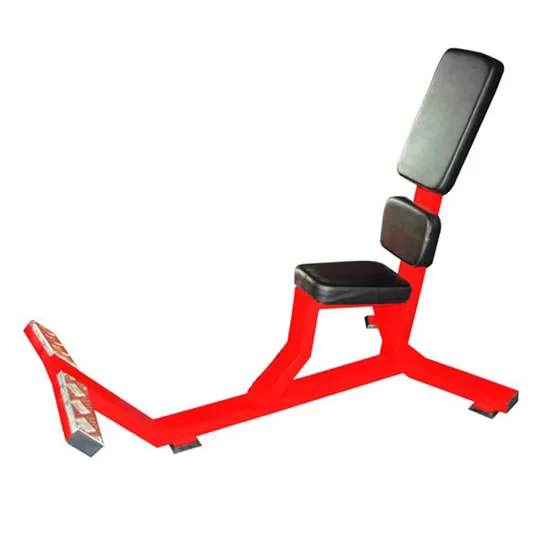
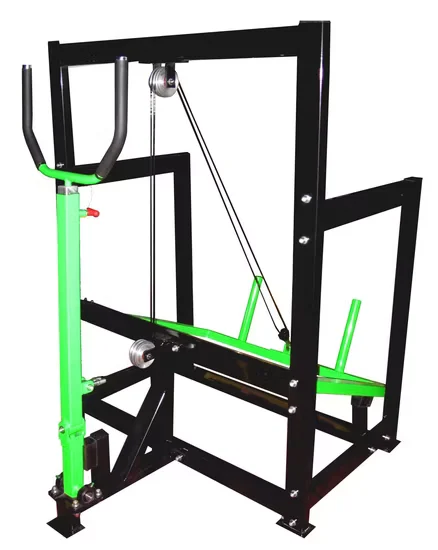
Commercial Abdominal Work Station, Steel Frame, 2165×1020×1815mm, 98kg — engineered with manual resistance loading for continuous core training in high-traffic environments. Frame construction supports integrated multi-functional exercise capability with OEM/ODM color customization for frame and cushion. Every unit undergoes individual load testing before shipment to verify structural integrity under commercial use.
// Spec Highlights
• Direct from Manufacturer · No Middlemen · Worldwide Shipping
01
// Material
Imported Solid Wood
Premium hardwood frames sourced for density and visual warmth.
02
// Hardware
Medical-Grade Silent
Whisper-quiet pulleys and springs for clinical environments.
03
// Customization
Appearance OEM
Color, upholstery, and branding tailored to your studio.
04
// Service
Layout Design
Free venue planning for studios and rehab institutions.
Every component is selected for longevity, performance, and aesthetic harmony - from imported hardwood frames to silent medical-grade accessories.
// Features
Traceable Mill Steel — Every tube in this abdominal work station traces back to certified Q235/Q345 coils with verifiable 11-gauge wall thickness.
| Parameter | Value |
|---|---|
| Product Type | Abdominal Trainer |
| Frame Material | 11-gauge steel, 3×3 inch tube |
| Steel Grade | Q235 / Q345 industrial steel, mill-certified |
| Welding Type | Robotic MIG, continuous weld lines |
| Powder Coating | 200μm scratch-resistant, sandblast pre-treatment |
| Product Dimensions | 2165 × 1020 × 1815 mm |
| Net Weight | 98 kg |
| Loading Type | Integrated Gym Trainer |
| Power Source | Manual |
| Upholstery | Standard or high-density options, color customizable |
| Main Frame Color | Customizable per buyer specification |
| Certification | ISO 9001, CE |
| OEM/ODM | Acceptable |
| Facility Type | Typical Use |
|---|---|
| Commercial gym strength floor | Dedicated core training zone alongside plate-loaded and selectorized lines |
| Community fitness center | High-traffic abdominal station for general membership use |
| Hotel and resort fitness room | Low-maintenance core equipment for guest self-service environments |
| University strength and conditioning room | Athletic core conditioning integrated with free weight and rig areas |
| Rehabilitation and performance center | Controlled-range abdominal work for supervised conditioning protocols |
Real commercial duty means a verifiable steel gauge, not a marketing phrase on a spec sheet.
When facility operators source abdominal equipment, they frequently encounter the term "commercial grade" with no underlying material documentation. We have seen frames on core trainers begin to flex within months when the tube wall was thinner than what repeated loading demands. The failure rarely happens all at once — it shows up as slight wobble during use, then visible weld cracking at stress points, then a unit pulled off the floor for safety. A commercial abdominal work station gym fitness equipment purchase should come with mill certificates that name the steel grade and gauge. [NEED_CITE: EN 957 structural requirements for stationary training equipment]
This commercial abdominal work station gym fitness equipment targets the core musculature through a controlled, fixed-path movement pattern that complements the free weight and plate-loaded sections of a strength floor. It occupies a defined footprint of 2165 × 1020 mm, making it suitable for facilities that allocate dedicated core training bays between selectorized machines and functional rig zones. The station accommodates a broad range of user body sizes through its fixed ergonomic geometry, reducing the need for manual adjustments during high-turnover periods. It pairs well with adjacent lower-back and rotary torso units to form a complete core training cluster.
Core training stations endure repetitive eccentric loading as users control their descent through the full range of motion, creating cyclic stress at the base frame joints and the pivot connection between the movement arm and the main upright. In a high-traffic commercial gym, this station may see continuous use throughout operating hours, accumulating fatigue cycles that expose any weakness in the weld pattern or tube wall. The continuous robotic MIG welds on this unit eliminate the cold joints and incomplete penetration that characterize spot-welded alternatives. Sweat and cleaning chemicals concentrate around the upholstery contact points and the lower frame, where the 200μm powder coating provides resistance against corrosion that would otherwise degrade the finish. [NEED_CITE: weld classification and fatigue performance in structural steel]
The 11-gauge steel frame with 3×3 inch tubing establishes a deformation threshold well above what abdominal training loads produce, meaning the frame holds its geometry through years of daily use without developing flex or rattle. Robotic MIG welding produces continuous weld beads at every joint, distributing stress across a longer bond line rather than concentrating it at isolated spots. The sandblast pre-treatment before powder coating ensures the 200μm finish bonds directly to clean, profiled steel rather than sitting on mill scale, which prevents the peeling and chipping common in poorly prepped frames. Upholstery is offered in standard or high-density options, allowing buyers to match the cushion specification to their expected traffic volume and replacement cycle preferences.
When manufacturers reduce frame wall thickness to lower unit cost, the abdominal station may pass initial inspection but begins to show deformation at the pivot joints within the first year of heavy use. Spot-welded connections at the base gussets crack under cyclic loading, creating liability exposure for the facility operator. Low-density upholstery compresses permanently within months, requiring replacement cushions that may not be available from the original supplier. Thin powder coating chips at the foot contact areas and where users grip the frame during entry and exit, exposing bare steel to sweat-induced corrosion. Non-standard fasteners and proprietary hardware mean that when a component fails, the entire unit sits idle waiting for parts that may never arrive. [NEED_CITE: commercial fitness equipment maintenance cost analysis]
The 11-gauge steel used in this abdominal work station is sourced from certified mills with traceable coil documentation, so buyers can verify material grade before installation. Robotic MIG welding runs continuous beads at every structural joint, eliminating the weak points inherent to manual spot welding. Each unit undergoes load testing before shipment, confirming structural performance on individual machines rather than relying on sample-based batch testing. The 200μm industrial powder coating is applied over sandblasted surfaces for adhesion that withstands daily sweat exposure and chemical cleaning. A 10-year frame warranty backs the structural components, and OEM customization covers frame color, cushion color, and branding to match facility identity.
Provide your strength floor dimensions and existing equipment list to receive a 2D or 3D placement plan that accounts for this station’s footprint and required safety clearances. Specify your expected daily user volume so we can confirm the structural grade and upholstery density match your traffic pattern. Share any branding, color, or cushion customization requirements to receive a specification sheet tailored to your facility identity.
Q: How do I tell a genuine commercial abdominal station from a light-commercial unit?
A: Request the frame steel gauge and tube dimensions along with mill test certificates. True commercial units specify verifiable numbers like 11-gauge wall thickness with traceable steel grade documentation. Light-commercial equipment typically lists only "commercial grade" without underlying material proof. Inspect the welding pattern — continuous weld lines indicate production built for repetitive loading, while spot welds suggest lower-duty construction.
Q: What steel gauge and tube size should an abdominal trainer frame have?
A: For sustained commercial use, the frame should be constructed from 11-gauge steel with a minimum 3×3 inch tube profile. This combination provides sufficient wall thickness and cross-section to resist deformation under cyclic core training loads. Thinner gauges or smaller tube profiles may perform adequately in low-traffic settings but develop flex and joint fatigue when exposed to continuous daily use in a commercial gym environment.
Q: How can I verify welding quality before accepting delivery?
A: Examine every joint for continuous weld beads rather than isolated spot welds. Continuous MIG welds distribute load across the full joint length and resist crack propagation under repetitive stress. Request the manufacturer’s weld inspection records and load testing documentation for your specific unit. Visual inspection should show uniform bead width with no porosity, undercut, or cold lap at the connection points.
Q: What spacing should I allow around an abdominal station in a gym layout?
A: Plan a minimum clearance zone around the full 2165 × 1020 mm footprint to allow safe user entry, exit, and full range of motion without interference from adjacent equipment. Consider traffic flow patterns during peak hours — core training zones often see users rotating between stations. A detailed floor plan helps position the unit so that clearance zones do not overlap with walkways or the movement envelopes of neighboring machines.
Q: What OEM customization is available for frame and cushion appearance?
A: Frame color and cushion color are fully customizable to match your facility branding. Upholstery is offered in standard or high-density options depending on your expected usage volume. OEM and ODM specifications are accepted, including logo placement and custom color matching. Request material samples for both powder coating and upholstery before finalizing your order to confirm appearance and texture meet your standards.
Premium aesthetics meet quiet operation for boutique studio environments.
Medical-grade silence and precision for sports & postpartum recovery.
Furniture-grade craftsmanship for premium residential installations.
Compact premium setups for one-on-one and small-group training.
Aesthetic Pilates integration for hybrid wellness studio programming.
Multi-unit deployment with instructor-grade reliability for certification programs.
Tell us about your project. Our team will respond within 24 hours with pricing, customization options, and shipping details.
// Sales Director
William
+86 132 2531 1800
// Export Manager
Bella
+86 198 5412 8032
william@bickfit.com