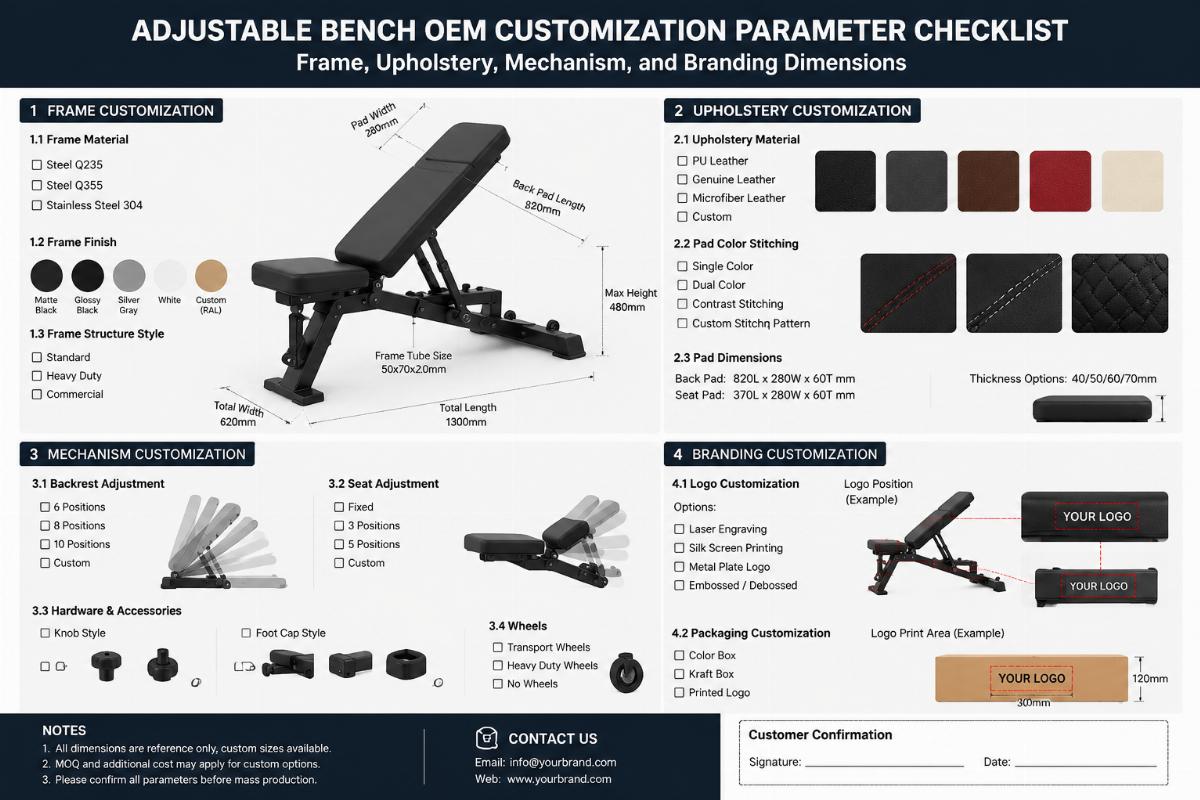
BP-Bench Press Sub-Series Technical Data Sheet – Wholesale Supplier
The weight capacity printed on a spec sheet is almost never the number your end users will see in real-world use.
A BP Bench Press Technical Data Sheet is the single most important document for verifying frame dimensions, seat adjustment range, weight capacity, and steel gauge before placing an order. Buyers who treat it as a marketing brochure instead of a verification tool routinely face container-level disputes upon arrival.
I still remember the morning a shipment of thirty-plus flat and incline benches arrived at a warehouse in Ho Chi Minh City. The gym owner stood next to an open crate, tape measure in hand, staring at a seat pad that refused to reach the position his trainer needed. The listed adjustment travel looked fine on paper. The physical product told a different story. That entire order sat in a bonded warehouse for weeks while lawyers, translators, and freight agents tried to figure out who was responsible. The root cause was not fraud. It was a gap between what the BP Bench Press Technical Data Sheet declared and what the factory actually produced — a gap that nobody had bothered to close before the container was sealed.
This is not an isolated incident. Across Southeast Asia, the Middle East, and Latin America, I have watched importers lose mid-six-figure sums over discrepancies that a properly cross-referenced BP Bench Press Technical Data Sheet would have caught at the sampling stage. The purpose of this guide is to walk you through what a real technical data sheet should contain, how to read it critically, and how to use it as a verification instrument rather than a piece of sales collateral [NEED_CITE: ISO 20957 series safety requirements for stationary training equipment].

If you are sourcing commercial strength equipment for a gym project, a hotel fitness center, or a distribution network, the rest of this document will show you exactly which parameters matter, which ones are routinely misrepresented, and how to protect your margin before the goods leave the port.
What Models Does the BP Series Include and How Are They Positioned?
The BP sub-series is segmented by usage intensity, not by aesthetic variation, and each tier carries a different set of structural expectations.
When buyers first open a BP Bench Press Technical Data Sheet, they often scan for the model name and skip the classification code. This is a mistake. The classification determines the steel gauge, the welding standard, the foam density, and ultimately the warranty exposure you will carry as an importer.
The BP lineup typically spans three tiers. The commercial tier is engineered for high-traffic fitness centers where the equipment will see continuous use across multiple shifts. The frame uses heavier gauge steel, reinforced gussets at high-stress junctions, and upholstery rated for extended salt-spray endurance [NEED_CITE: commercial fitness equipment durability standards per ISO 20957-1]. The light-commercial tier targets hotel gyms, apartment complexes, and boutique studios where daily usage is moderate but aesthetic finish still matters. The entry tier serves home users and small retail channels where cost sensitivity outweighs longevity requirements.
Each tier has a distinct BP Bench Press Technical Data Sheet. Mixing them up during procurement is one of the most common errors I see in container-load orders. A distributor in the Middle East once placed a bulk order expecting commercial-tier benches across the entire range, only to discover that nearly half the SKUs shipped were light-commercial grade. The steel thickness difference was subtle enough to pass visual inspection but significant enough to trigger warranty claims within the first year of deployment.
| Tier | Frame Construction | Upholstery Grade | Intended Environment |
|---|---|---|---|
| Commercial | Heavy-gauge reinforced | High-density, sweat-resistant | High-traffic gyms |
| Light-Commercial | Standard-gauge welded | Medium-density, vinyl-wrapped | Hotels, studios |
| Entry | Light-gauge bolted | Basic vinyl | Home, light retail |
The lesson is straightforward: always confirm which tier each SKU belongs to in the BP Bench Press Technical Data Sheet before you commit to a purchase order.

What Are the Core Specifications and How Do You Separate Listed Values from Verified Ones?
A BP Bench Press Technical Data Sheet contains two categories of data: values the factory certifies through testing, and values the factory simply declares based on design intent.
Understanding the difference is the entire game. Let me break down the parameters that appear on every credible BP Bench Press Technical Data Sheet and explain which ones you must independently verify.
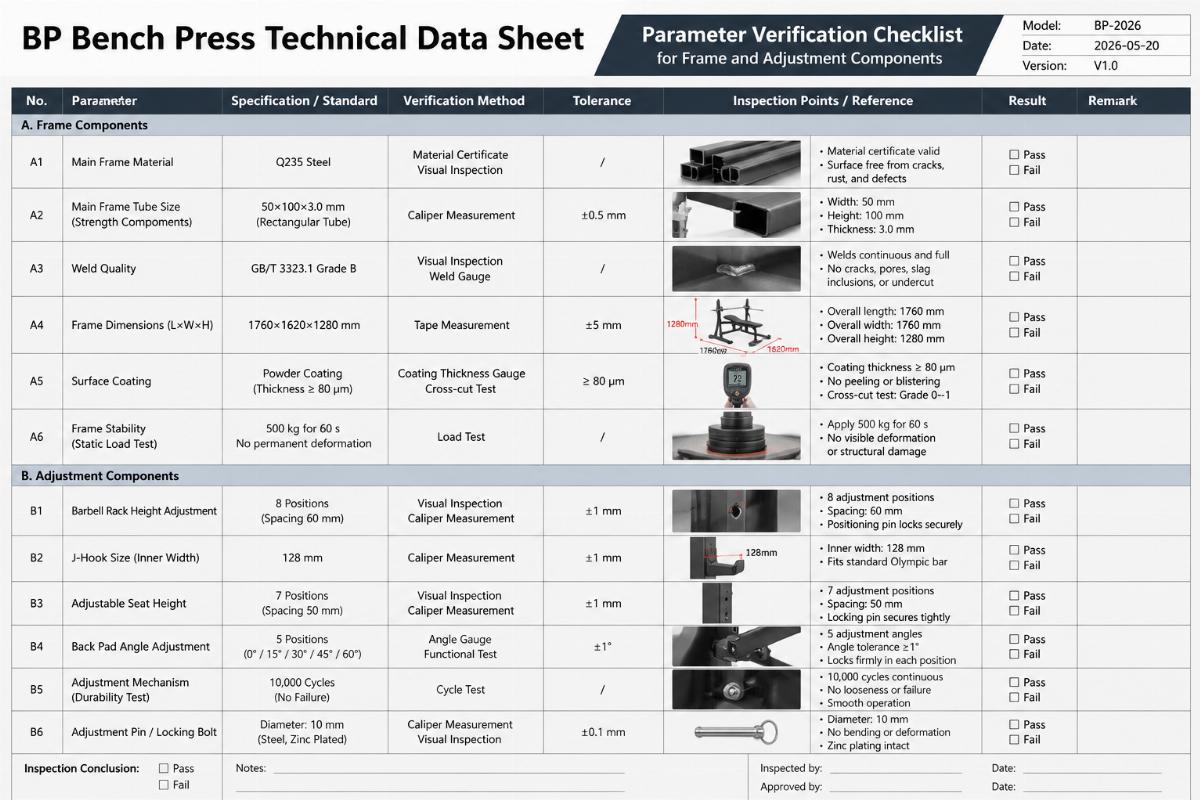
Frame tube dimensions and wall thickness. This is the structural backbone. The spec sheet will list outer diameter and wall thickness for the main frame members. What it rarely discloses is whether those measurements come from a certified third-party mill test report or from the factory’s own internal gauge. In my experience, the wall thickness variance between the documented value and the physical product can be meaningful enough to affect load-bearing performance [NEED_CITE: steel tube tolerance standards per EN 10210]. Always request mill certificates for the steel used in your production batch.
Seat adjustment range and increment count. This is the parameter that caused the Ho Chi Minh City incident I mentioned earlier. The BP Bench Press Technical Data Sheet will state total travel distance and the number of adjustment holes or ladder positions. What it will not tell you is how much of that travel is consumed by the seat pad mounting bracket and the mechanical limit stops. In practice, the usable adjustment range is often noticeably shorter than the listed figure. If your end users include tall athletes or specific rehabilitation protocols, you need to know the effective range, not just the theoretical one.
Weight capacity: static versus dynamic. Here is where most buyers get into trouble. The BP Bench Press Technical Data Sheet typically advertises a maximum weight capacity. What it does not always clarify is whether that number represents a static load test (weight placed slowly and held) or a dynamic load test (weight moved through a full range of motion with acceleration and deceleration). The real-world usable capacity for dynamic lifting is substantially lower than the static rating. If your spec sheet does not distinguish between the two, ask for clarification in writing before you ship [NEED_CITE: dynamic versus static load testing methodology in fitness equipment standards].
Pulley ratio and cable specification. For adjustable benches with integrated cable systems, the BP Bench Press Technical Data Sheet will list the pulley ratio and cable material. The ratio directly affects the feel of the resistance. A mismatch between the listed ratio and the actual mechanical advantage is one of the most common complaints from personal trainers who notice that the weight stack feels lighter or heavier than expected. Cable diameter and strand count should also be verified against the documentation.
| Parameter | What the Sheet Lists | What You Must Verify |
|---|---|---|
| Frame tube size | Outer diameter × wall thickness | Mill certificate, batch sampling |
| Seat travel | Total declared range | Effective usable range after bracket deduction |
| Weight capacity | Single maximum figure | Static versus dynamic distinction |
| Pulley ratio | Nominal ratio | Actual mechanical advantage under load |
| Surface treatment | Coating type | Salt-spray test hours per batch |
How Do You Verify Each Parameter When the Goods Arrive?
Verification is not a single inspection event. It is a structured sequence that begins at the factory and ends at the point of installation.
When I work with importers on large gym equipment orders, I recommend a five-step verification protocol anchored to the BP Bench Press Technical Data Sheet. Each step targets a specific category of discrepancy.
Step one: document review before production. Before the factory cuts a single piece of steel, obtain the complete BP Bench Press Technical Data Sheet for every SKU in your order. Cross-reference the frame dimensions, weight capacity claims, and material specifications against your project requirements. If anything is ambiguous, request clarification in writing. This is also the stage where you should ask for steel mill certificates and coating test reports [NEED_CITE: pre-shipment documentation requirements for imported fitness equipment].
Step two: pre-shipment sampling. If your order volume justifies it, arrange for a third-party inspection agency to visit the factory before the container is loaded. The inspector should pull random units from the production line and measure frame tube dimensions with calibrated calipers, check weld quality at stress points, and test seat adjustment mechanisms through their full range. Any deviation from the BP Bench Press Technical Data Sheet beyond acceptable tolerance should be flagged before the goods are packed.
Step three: arrival inspection at the port or warehouse. When the container arrives, open a statistically significant sample of crates — not just the top layer. Measure frame dimensions again. Check for shipping damage that may not be visible from the outside. Test the adjustment mechanisms. Compare the physical product against the BP Bench Press Technical Data Sheet line by line.
Step four: assembly and functional testing. Assemble a representative sample of each model. Load the benches to the stated dynamic capacity and observe for frame flex, upholstery compression, or mechanical failure. Test the seat adjustment through its full effective range. If the equipment includes a cable system, measure the actual resistance at multiple points in the stack.
Step five: documentation and discrepancy logging. Create a formal inspection report that compares the BP Bench Press Technical Data Sheet values against your measured values. Photograph every discrepancy. This report becomes your evidence if you need to file a claim or negotiate a resolution with the supplier.
A distributor in South America once received a full container of adjustable benches where the pulley ratio on the cable system did not match the BP Bench Press Technical Data Sheet. The resistance felt wrong to every trainer who used it. Because they had followed a structured verification protocol and documented everything against the original spec sheet, they were able to negotiate a partial replacement and a discount on the next order. Without that documentation, they would have absorbed the entire loss.

What Are the Most Common Parameter Traps and How Do You Avoid Them?
The three most frequent sources of dispute in commercial bench press procurement are weight capacity misrepresentation, seat adjustment overstatement, and steel thickness variance.
Let me address each one with the kind of detail that only comes from watching these problems unfold in real time.
Weight capacity misrepresentation. As I noted earlier, many BP Bench Press Technical Data Sheets list a single weight capacity figure without specifying whether it is static or dynamic. Some suppliers use the static test value as the marketing number because it is higher and looks more impressive. The problem is that your end users will load the bench dynamically — pressing, lowering, accelerating. The actual safe working load under those conditions is noticeably lower. If the BP Bench Press Technical Data Sheet does not clearly distinguish between static and dynamic capacity, treat the listed number with skepticism and request written clarification.
Seat adjustment overstatement. The total travel distance listed in the BP Bench Press Technical Data Sheet is measured from the lowest mechanical stop to the highest. It does not account for the space consumed by the seat pad mounting hardware, the adjustment pin mechanism, or the ergonomic limits of the pad itself. In practice, the usable range is often noticeably shorter than the declared figure. For gym projects where you serve a diverse membership including taller athletes, this discrepancy can render the equipment unusable for a meaningful portion of your users. Always ask for the effective adjustment range, not just the total mechanical travel.
Steel thickness variance. This is the hardest discrepancy to catch without measurement tools. The BP Bench Press Technical Data Sheet will state a wall thickness for the frame tubes. The actual product may be thinner due to manufacturing tolerance, material substitution, or cost-cutting during production. A difference of even a fraction of a millimeter can affect the rigidity and long-term durability of the frame, particularly at welded joints. The only reliable way to verify this is through physical measurement with calibrated instruments during the pre-shipment or arrival inspection phase [NEED_CITE: steel tube wall thickness measurement methods per ASTM standards].
A buyer in the Middle East learned this the hard way when end users began reporting frame flex on incline benches within months of installation. The BP Bench Press Technical Data Sheet had listed a specific wall thickness. The actual product was thinner. The supplier argued that the variance was within "acceptable manufacturing tolerance." The buyer had no independent measurement data from the pre-shipment stage to prove otherwise. The dispute dragged on for months and cost the buyer a significant portion of their margin.

What Should You Do When the Physical Product Does Not Match the Data Sheet?
A discrepancy between the BP Bench Press Technical Data Sheet and the physical product is not automatically a deal-breaker, but it must be handled with documentation, discipline, and clear communication.
The first step is to determine the severity of the deviation. Minor cosmetic differences or tolerances that fall within recognized industry standards may not warrant a formal claim. Structural discrepancies — frame dimensions, weight capacity, steel thickness, adjustment range — are a different matter entirely. These affect safety, usability, and your liability as an importer.
Once you have established that a material discrepancy exists, compile your evidence. This includes the original BP Bench Press Technical Data Sheet, your inspection report with photographs and measurements, and any written correspondence with the supplier where specifications were confirmed. Present the evidence clearly and professionally. Avoid emotional language. Focus on the factual gap between what was documented and what was delivered.
Negotiation options typically include partial refund, replacement of non-conforming units, discounted pricing on the current or future orders, or a combination of these. The specific resolution will depend on the severity of the discrepancy, your relationship with the supplier, and the commercial impact on your business.
The key takeaway is this: the BP Bench Press Technical Data Sheet is not just a piece of paper. It is a contractual reference document. Treat it with the same seriousness you would give to a purchase order or a shipping contract. Verify it before production. Verify it at arrival. And if the product does not match, use the documentation to protect your position.

Conclusion
A BP Bench Press Technical Data Sheet is only as valuable as your willingness to verify every number on it against the physical product. The gap between listed specifications and actual performance is where importers lose money, reputation, and sleep. Frame dimensions, seat adjustment range, weight capacity classification, and steel thickness are not abstract engineering details. They are the difference between a successful gym project and a warehouse full of unusable inventory. Read the sheet critically. Measure the product independently. Document everything. The suppliers who welcome verification are the ones worth doing business with.