
Buy Hack Squat Machine Wholesale Supplier Price 2026
The cheapest quote on a hack squat machine is almost never the best price — it is the most expensive lesson a gym owner will pay for.
The best price on a hack squat machines comes from understanding what separates a frame that lasts a decade from one that warps within months: tube wall thickness, guide rail machining tolerance, bearing grade, and weld penetration depth — not the number on a quotation sheet.
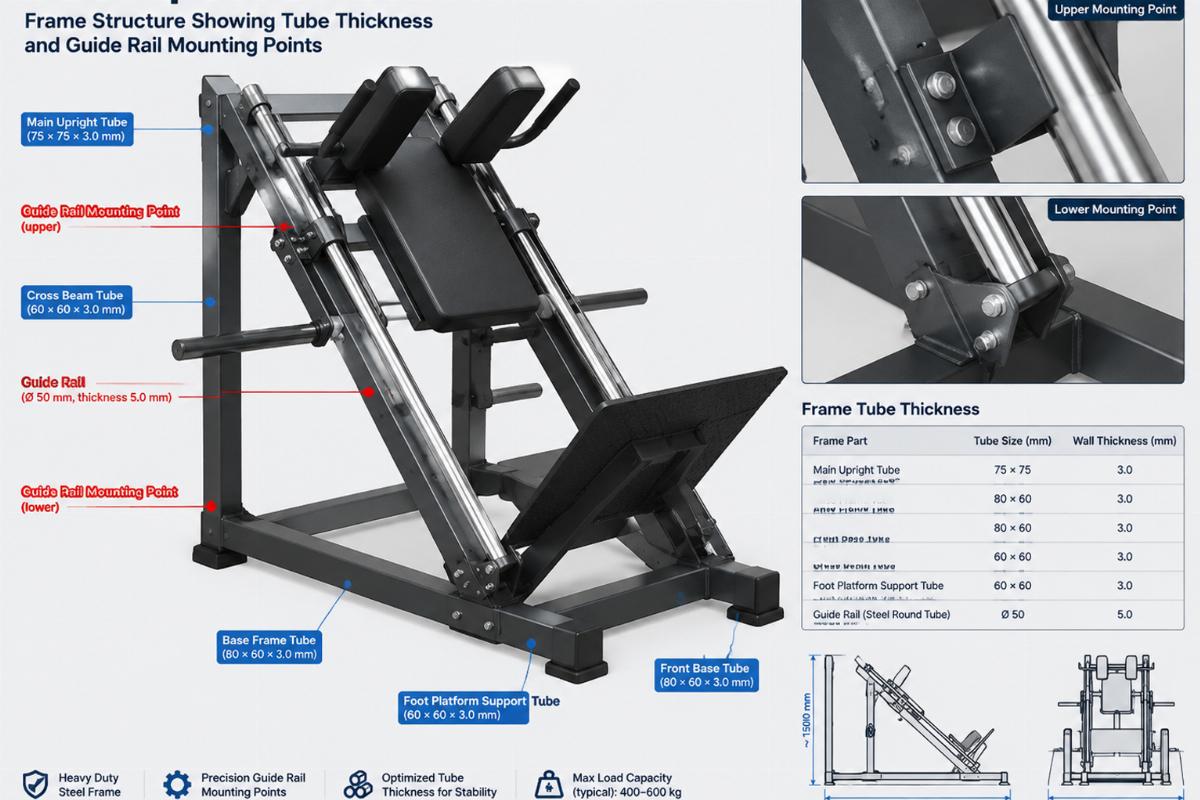
I spent years on the factory floor in the Yangtze River Delta welding frames before moving into export coordination. Early on, a Middle East buyer placed a full container order at the lowest quote available. The supplier used thin-wall rectangular tubing with no gusset reinforcement at the rail mounting points. Within months, the guide rails warped under daily commercial loading, and the carriage seized mid-rep. Replacement parts and emergency air freight cost several times the original savings. That order taught me to read every quotation the same way I used to read a weld seam — looking for what is hidden underneath. [NEED_CITE: structural failure root causes in plate-loaded strength equipment per ISO 20957 testing frameworks]
If you are comparing a hack squat machine wholesale supplier price across multiple factories, the real conversation starts below the surface finish.
What Actually Determines Hack Squat Machine Price?
Three engineering variables create the measurable gap between a budget unit and a commercial-grade workhorse: frame steel specification, guide rail system design, and bearing quality.
Every factory will tell you their machine is "heavy-duty." The difference lives in the rectangular tube dimensions multiplied by wall thickness, the type of linear motion system, and whether the bearings are rated for continuous commercial cycling or occasional home use. [NEED_CITE: commercial strength equipment durability testing parameters and load cycle standards]
A distributor I worked with once compared five supplier quotes with a price spread that looked like pure profit margin variation. After requesting cross-section photos and rail tolerance documentation, the gap turned out to be seat adjustment mechanism construction, upholstery foam density, and whether the guide rails used linear bearings or simple bushing systems. The lowest quote used bushings rated for light duty — adequate for a home garage, inadequate for a gym running twelve-hour days.
The frame itself tells the same story. Budget-tier machines typically use rectangular tubing at the minimum wall thickness that still passes visual inspection. Commercial-grade frames step up to heavier gauge steel with reinforced gussets at every high-stress junction — particularly where the guide rails mount to the main frame, because that is where cyclic loading concentrates over thousands of repetitions. [NEED_CITE: fatigue stress concentration points in strength equipment frame joints]

When you evaluate a hack squat machine wholesale supplier price, ask for the specific tube dimensions and wall thickness in millimeters, the bearing type and load rating, and whether the guide rails are machined or formed. These are not optional details — they are the entire price story.
Budget vs. Mid-Range vs. Commercial-Grade: Spec-by-Spec Comparison
The price tiers in hack squat machines map directly to measurable specification differences — and the gap between mid-range and commercial-grade is where most buyers make costly mistakes.
Below is a specification-level breakdown across three common price bands. The differences are not cosmetic — they determine whether the machine survives its first year in a high-traffic facility. [NEED_CITE: commercial gym equipment classification standards and minimum durability requirements]
| Specification | Budget Tier | Mid-Range | Commercial-Grade |
|---|---|---|---|
| Frame tube wall thickness | Minimum gauge, no reinforcement | Standard gauge with selective reinforcement | Heavy gauge with full gusset reinforcement at stress points |
| Guide rail system | Formed rail with bushing | Machined rail with standard linear bearing | Precision-machined rail with high-load linear bearing |
| Weld quality | Intermittent tack welds, visible spatter | Continuous weld on primary joints, basic grinding | Full continuous weld, ground flush, inspected for penetration |
| Seat adjustment range | Limited positions, pin-type | Multiple positions with indexed adjustment | Wide range with quick-release or micro-adjust mechanism |
| Weight capacity rating | Light commercial | Standard commercial | Heavy commercial with verified load testing |
| Upholstery foam density | Low density, compresses quickly | Medium density | High density, slow-recovery commercial grade |
| Certification coverage | Self-declared compliance | Selective certification | Full CE or ASTM certification with test reports |
A boutique studio operator once shared a comparison of five quotes where the price spread was substantial. The two lowest quotes both used bushing-type rail systems and low-density foam — adequate for a home user, but the foam would flatten within months under daily commercial use, and the bushings would develop play that causes carriage wobble. The mid-range options used proper linear bearings but varied in adjustment mechanism quality. The commercial-grade quote included full certification documentation and high-density upholstery that would hold its shape through years of use.
The key insight: the jump from budget to mid-range buys you a functional linear motion system. The jump from mid-range to commercial-grade buys you the frame integrity and weld quality that prevent structural failure under sustained heavy loading. [NEED_CITE: linear bearing load rating and service life comparison in strength equipment applications]
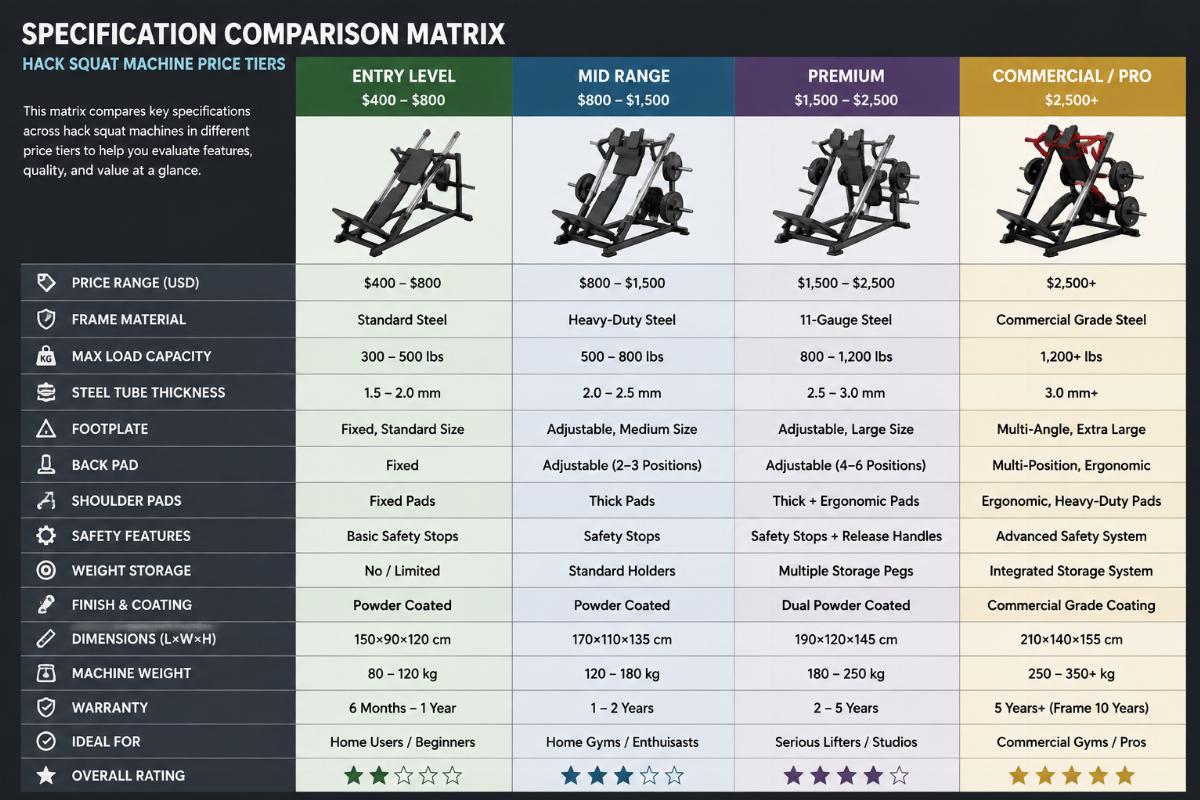
When sourcing a hack squat machine wholesale supplier price, request this level of specification detail before comparing numbers. A quote without these details is not a price — it is a guess.
Hidden Costs That Make Cheap Machines Expensive
The true cost of a hack squat machine is not the purchase price — it is the total cost of ownership, including failure rate, warranty gaps, and shipping damage from inadequate packaging.
A hotel gym buyer once chose a mid-range option with full certification over a budget alternative that appeared significantly cheaper. Over a multi-year cycle, the certified machine generated zero warranty claims. The budget option at a competing property experienced a noticeable failure rate — guide rail misalignment, carriage binding, and upholstery deterioration — requiring repeated service calls and partial replacements. The cumulative cost of downtime, technician visits, and member complaints far exceeded the initial price difference. [NEED_CITE: total cost of ownership analysis methodology for commercial fitness equipment]
Shipping damage is another hidden cost that rarely appears in initial quotes. Budget suppliers often minimize packaging to reduce container loading costs — meaning machines arrive with bent frames, scratched finishes, or damaged rail surfaces that require on-site repair or replacement. Commercial-grade manufacturers invest in proper crating and protective packaging because they understand that a damaged machine is a total loss, not a repairable incident.
Warranty coverage also varies dramatically. Budget quotes often come with warranty language that is technically present but practically unenforceable — requiring the buyer to ship defective parts back at their own expense, or excluding the most common failure points. A legitimate commercial-grade warranty covers the frame, rail system, and bearings with clear terms and local spare parts availability. [NEED_CITE: commercial fitness equipment warranty standards and enforcement mechanisms]
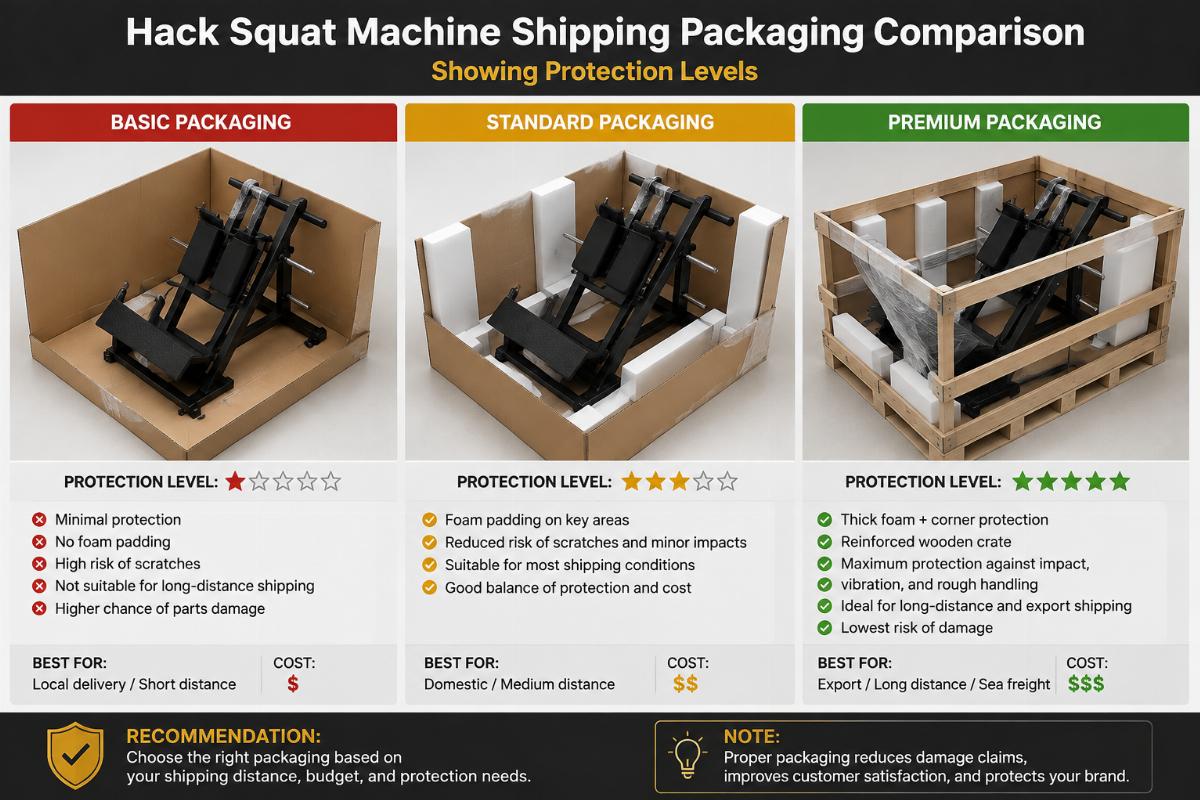
When you see a hack squat machine wholesale supplier price that seems too good, calculate the failure rate risk, the warranty enforceability, and the packaging quality before accepting the number.
How to Verify Quality Before Placing a Bulk Order
Requesting documentation and visual evidence before committing to a bulk order separates informed buyers from those who discover quality gaps after the container arrives.
The verification process should cover four critical areas: weld quality, rail precision, bearing specification, and structural load testing. [NEED_CITE: pre-shipment quality verification checklist for imported strength equipment]
First, request cross-section photos of the frame tubing at the welding joints. A proper commercial-grade frame shows full penetration welds that are ground flush — not intermittent tack welds with visible spatter. The photos should reveal whether gusset reinforcement is present at high-stress junctions, particularly where the guide rails mount to the main frame.
Second, ask for the guide rail machining tolerance specification. Precision-machined rails maintain consistent carriage movement throughout the full range of motion. Formed or poorly machined rails develop binding points and uneven wear that accelerate bearing failure. [NEED_CITE: linear motion system tolerance standards in strength equipment manufacturing]
Third, confirm the bearing type and load rating. Linear bearings rated for commercial use handle continuous cycling under heavy loads without developing play. Bushing systems or light-duty bearings develop wobble that transfers stress to the rail and frame, accelerating wear across the entire system.
Fourth, request load test video documentation showing the machine under maximum rated capacity. A legitimate manufacturer will have test footage demonstrating smooth carriage movement, stable frame behavior, and no deflection or flexing under load. If a supplier cannot provide this evidence, they have not performed the testing.
A distributor once avoided a costly mistake by requesting weld cross-section photos before placing a full container order. The images revealed inadequate penetration and missing gussets at critical joints — problems that would have manifested as frame cracking within months of commercial use. The distributor switched to a supplier with verifiable quality documentation and avoided what would have been a significant loss.
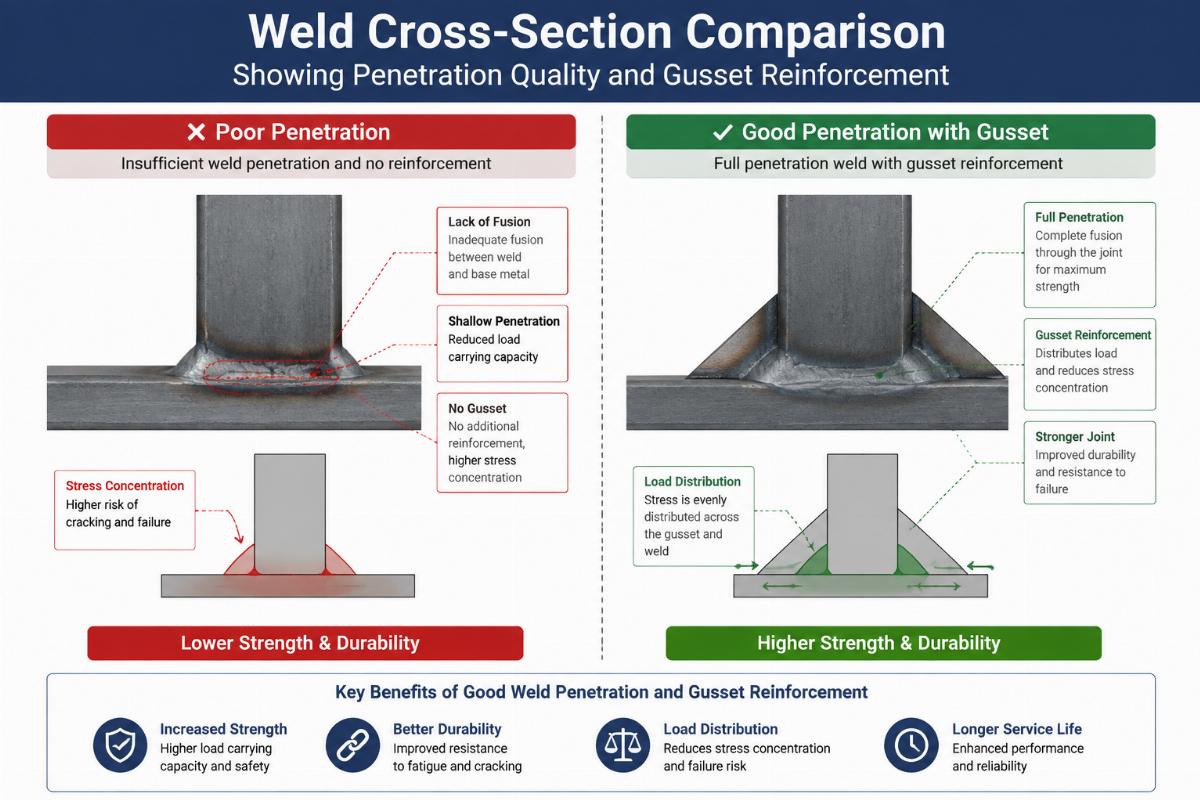
When evaluating a hack squat machine wholesale supplier price, make documentation requests part of your standard process. Suppliers with genuine quality will provide evidence without hesitation.
Factory-Direct Pricing: What Fair Looks Like
Understanding the real cost structure of hack squat machine manufacturing allows you to identify inflated trading-company quotes and negotiate with confidence.
The factory-direct pricing model eliminates the markup layers that trading companies add — typically multiple margin steps for sourcing, quality control, logistics coordination, and profit. When you work directly with a manufacturer, you pay for the machine and the legitimate cost of certification, quality control, and proper packaging — not for an intermediary’s overhead. [NEED_CITE: fitness equipment supply chain cost structure analysis for direct vs. trading company sourcing]
A fair factory-direct price reflects the actual material costs — steel tubing at commercial gauge, linear bearings rated for the application, high-density upholstery foam — plus the labor for proper welding, machining, and assembly. It also includes the cost of certification testing and documentation, which is a fixed expense that budget suppliers often skip entirely.
Manufacturers with in-house production capabilities can offer OEM branding flexibility without the premium that trading companies charge for the same service. A buyer ordering under their own brand name through a direct manufacturer pays for the branding work — logo application, custom color matching, packaging design — at cost, not at a reseller’s markup.
The pricing gap between factory-direct and trading-company quotes can be substantial, particularly for bulk orders. A gym chain outfitting multiple locations found that working directly with a certified manufacturer reduced their per-unit cost significantly compared to trading-company quotes — while actually improving quality because they could specify requirements directly to the production team and verify compliance through factory audits. [NEED_CITE: OEM fitness equipment manufacturing cost comparison between direct and intermediary sourcing models]
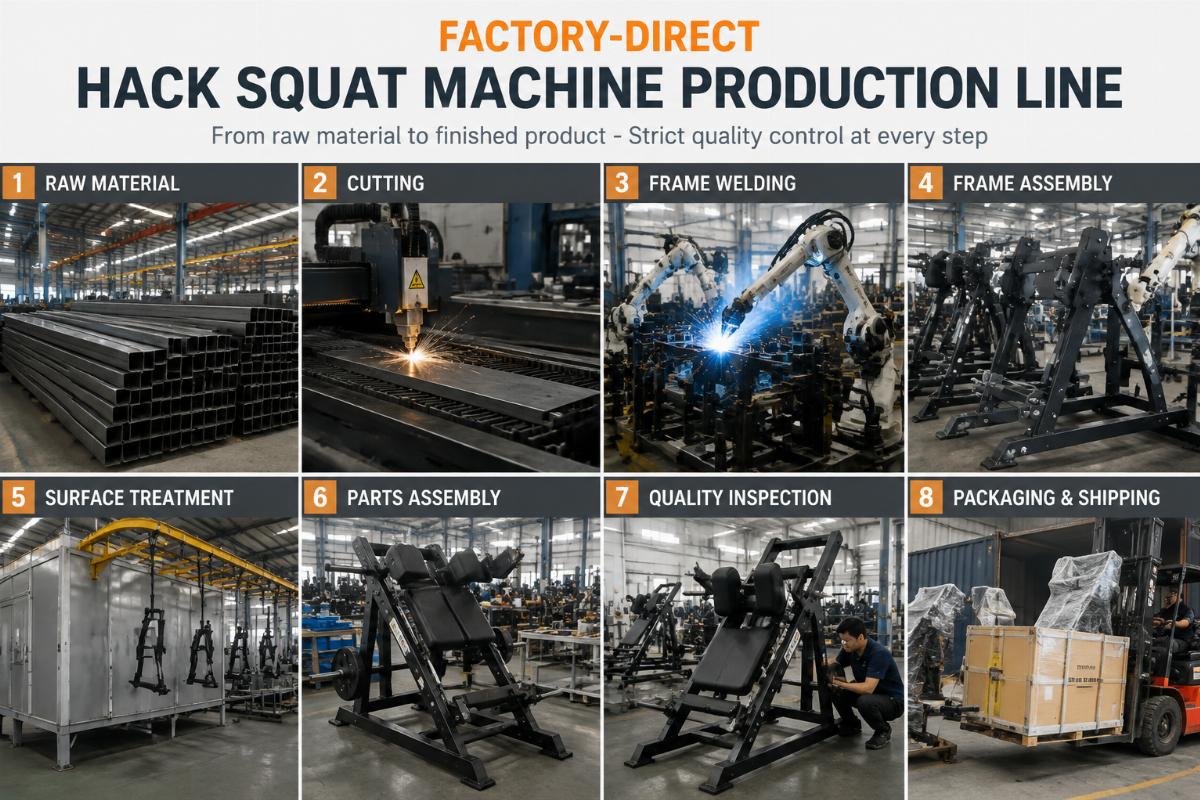
When comparing a hack squat machine wholesale supplier price, understand what you are paying for. If the quote comes from a trading company, ask what portion goes to the actual manufacturer and what portion covers intermediary services. If the quote comes directly from a factory, verify that the price includes proper certification, quality control, and packaging — because a low price that excludes these elements will cost more in the long run.
Conclusion
The best price on a hack squat machine is the one that delivers commercial-grade durability at a fair factory-direct cost — not the lowest number on a quotation sheet.
Total cost of ownership depends on frame integrity, rail system quality, bearing specification, and proper packaging — all of which separate sustainable equipment from expensive failures. Verify these elements through documentation and visual evidence before committing to any bulk purchase.


