China Factory-Direct Smith Machine Supplier | OEM & Bulk Pricing for Gyms
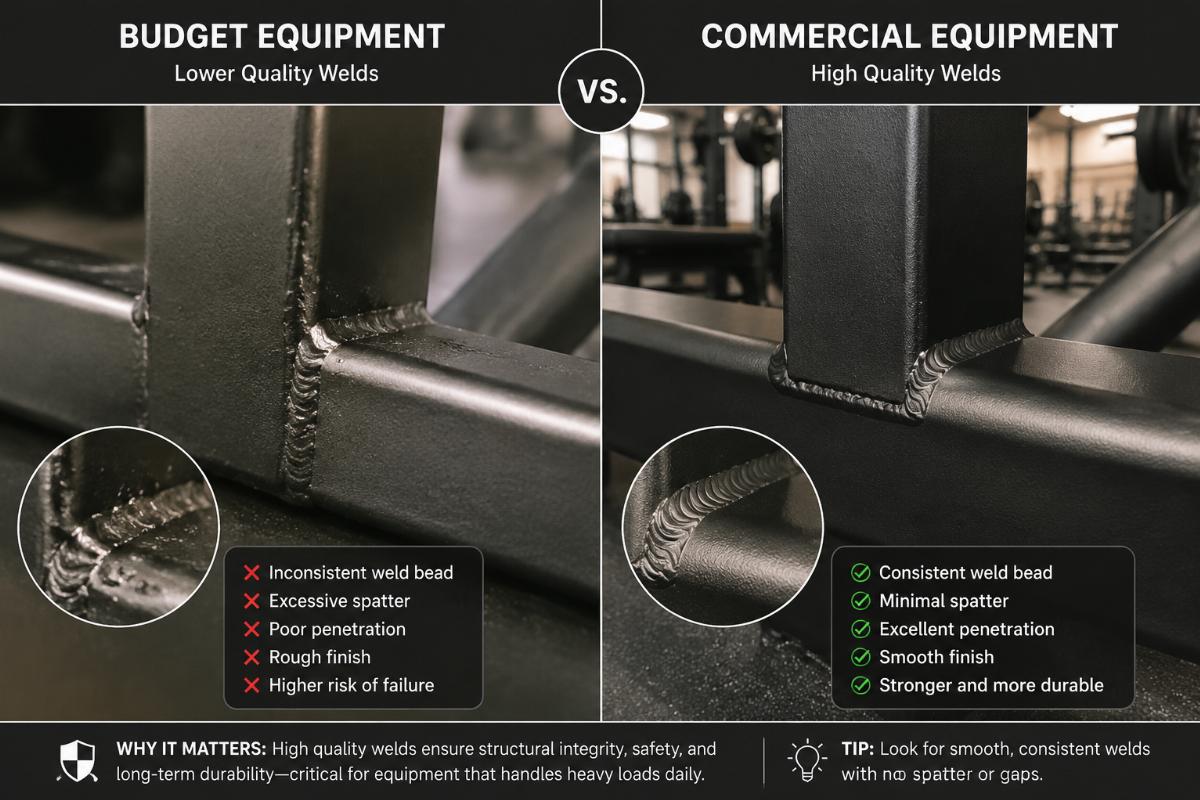
Most buyers assume branded Smith machines use thicker steel. The real difference lies in rail wall thickness and weld penetration — and factory-direct units can match commercial-grade specs at a fraction of the price.
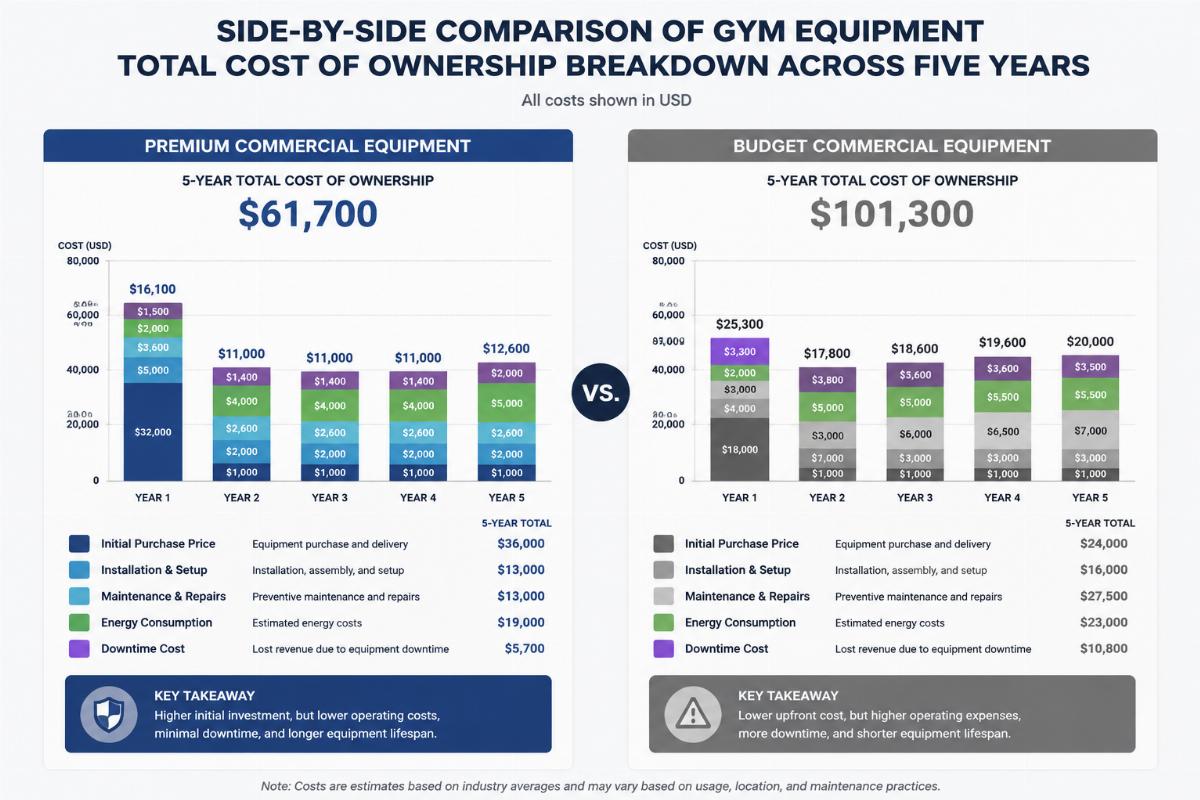
PowerLine branded Smith machines offer established distribution channels and brand recognition, while a China factory-direct Smith machine supplier delivers equivalent commercial-grade construction with 40-50% cost savings. The trade-off: buyers must independently verify certification compliance and quality control systems when sourcing direct.
I still remember that shipment to Jakarta — two containers of commercial Smith machines and cable crossovers, sitting at Tanjung Priok port for weeks. The customer was racing to open their gym. The problem wasn’t the equipment itself. It was the SNI certification. We had submitted steel parameters based on CE testing, but the Indonesian lab ran their own measurements and the data didn’t align. Certification rejected outright. That was the moment I understood: what a factory considers "compliant" doesn’t automatically pass at the buyer’s port. Now, whenever I talk to gym owners in Southeast Asia about sourcing, I walk through the certification and customs process before we even discuss pricing. [NEED_CITE: country-specific fitness equipment certification requirements and testing laboratory recognition]

Let’s break down what actually separates these two sourcing paths.
What Are the Real Specification Differences Between PowerLine and Factory-Direct Smith Machines?
The core structural components — linear bearing rails, frame steel, and pulley assemblies — can reach identical commercial-grade performance from both sources. The visible gap is branding and documentation, not engineering.
When gym owners first compare a PowerLine unit against a direct factory alternative, they often focus on外观 finish and logo placement. But the load-bearing anatomy tells a different story. Here is what matters in a side-by-side evaluation:
| Specification Factor | PowerLine Branded Unit | China Factory-Direct Smith Machine Supplier Unit |
|---|---|---|
| Linear rail wall thickness | Commercial standard | Commercial standard, verifiable by caliper |
| Frame steel grade | Standard carbon steel | Standard carbon steel, same grade available |
| Weld penetration quality | Factory QC controlled | Requires buyer-requested ultrasonic spot check |
| Pulley bearing smoothness | Pre-assembled and tested | Assembled per order, testable before shipment |
| Certification documentation | CE pre-certified for target markets | CE available, but target-country lab validation needed |
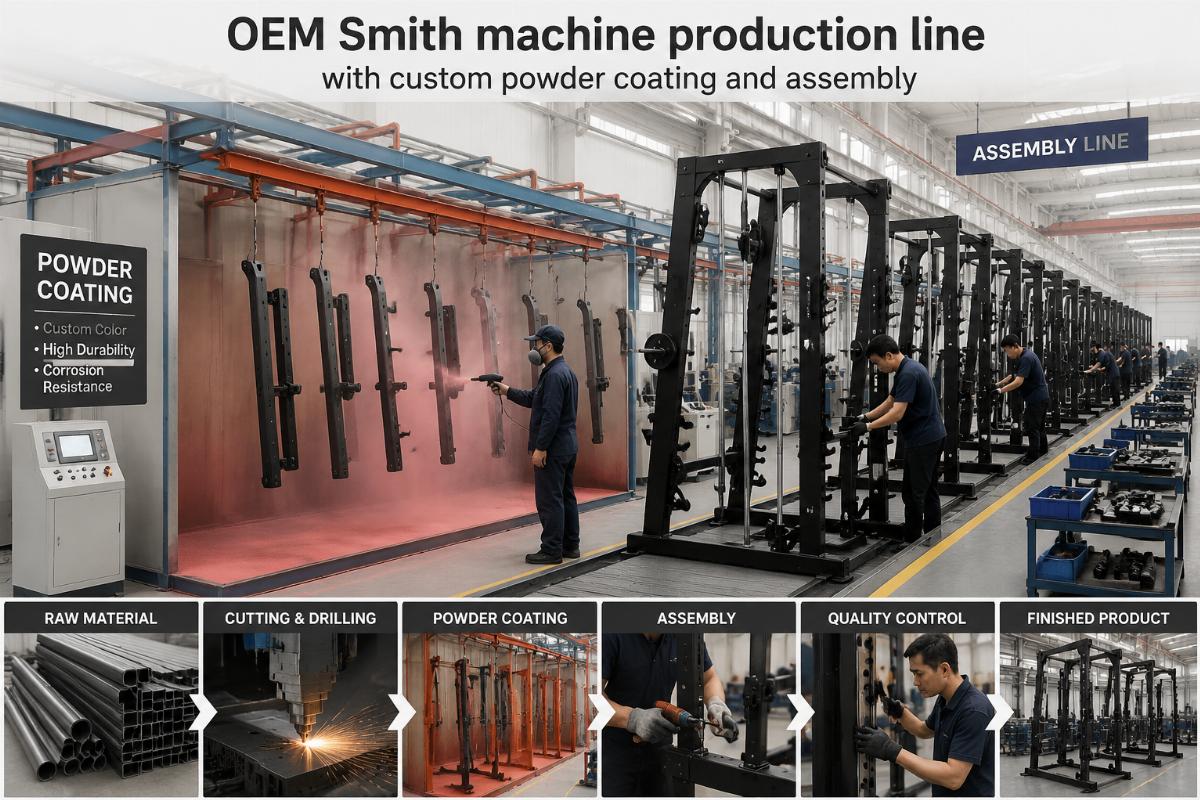
| Surface treatment | Powder coat, brand-spec | Powder coat, same process, color customizable |
The rail wall thickness is where misconceptions run deepest. Many buyers believe branded machines automatically use heavier-gauge steel. In reality, the critical dimension is the linear guide rail wall — and a China factory-direct Smith machine supplier can source the same rail profiles used by established brands. What differs is the verification process. A branded unit ships with batch documentation already in place. A factory-direct unit requires the buyer to request mill certificates and conduct independent thickness measurements upon arrival. [NEED_CITE: linear guide rail wall thickness standards for commercial strength equipment]
A gym chain owner in the Middle East once compared a PowerLine Smith machine against our direct-supplied unit. He brought his own caliper to the loading bay. The rail wall measurements were functionally identical. What he couldn’t measure on the spot was the weld penetration depth — and that’s where factory-direct sourcing demands more buyer diligence. Requesting ultrasonic weld inspection reports before shipment closes this gap entirely.

How Do Buyers Avoid Certification and Customs Traps When Ordering Direct?
CE marking does not guarantee global port acceptance. Each destination country may require separate laboratory validation of steel composition and load-test data.
This is the single most expensive mistake first-time direct buyers make. They see "CE certified" on a product sheet and assume smooth customs clearance worldwide. That assumption fails repeatedly.
The certification landscape works like this: a CE certificate issued by a European notified body confirms compliance with EN standards for the European market. But when that same machine arrives at a Southeast Asian port, local authorities may demand testing under a different national standard — Indonesia’s SNI, for instance, or Saudi Arabia’s SASO. The steel chemistry that passed European lab analysis may yield different readings when retested by a local accredited facility, even if the material itself hasn’t changed. Testing methodology differences create the discrepancy. [NEED_CITE: fitness equipment certification recognition differences between CE and destination-country standards]
A practical risk mitigation checklist for buyers working with a China factory-direct Smith machine supplier:
- Confirm which national standard applies at the destination port before placing the order
- Request that the factory submit material samples to the destination-country accredited lab — not just the CE-issuing lab
- Obtain mill-test certificates for every batch of frame steel and rail stock
- Build certification lead time into the production schedule — retesting can add weeks
- Keep a buffer container or delay non-critical equipment in the same shipment until certification clears
A fitness equipment distributor in Southeast Asia learned this the hard way. Their first direct order arrived at port without destination-country lab validation. The shipment sat in customs for weeks, incurring storage fees that nearly erased the cost savings from buying direct. On their second order, they asked the factory to arrange pre-shipment testing at a locally recognized lab. The second container cleared within days.

What Should Buyers Expect on MOQ Flexibility and Lead Times for OEM Orders?
A China factory-direct Smith machine supplier typically accommodates MOQ from single units to full container loads, with lead time driven by customization depth rather than order volume alone.
This is where direct sourcing reveals its structural advantage over branded distribution. PowerLine operates through established dealer networks with fixed configurations and set minimum orders. A factory-direct relationship offers a fundamentally different commercial model.
For gym owners outfitting a single facility, the MOQ conversation is simple: one unit is workable. The factory produces to order, and a single Smith machine can be built, finished, and shipped without requiring a multi-unit commitment. For distributors building regional inventory, the conversation shifts to container-load optimization — combining Smith machines with power racks, cable crossovers, and plate-loaded equipment into a single consolidated shipment. [NEED_CITE: container load consolidation practices for commercial fitness equipment export]
Lead time depends on three variables:
- Configuration depth — A standard black powder-coat Smith machine with default rail length ships faster than a unit requiring custom frame color, branded weight horn inserts, and non-standard plate loading sleeve dimensions.
- Certification requirements — If the buyer needs destination-country lab testing completed before shipment, add weeks to the timeline.
- Production queue — High-season ordering periods extend lead times across all Chinese fitness equipment manufacturing facilities.
A hotel project developer in the Gulf region needed a complete strength equipment package for a resort fitness center — Smith machines, functional trainers, and a full free-weight zone. They wanted their own branding on every piece. The factory produced sample units for approval, then ran the full order in a single production batch. The entire package shipped in one consolidated container, with spare parts included for each machine type.
The OEM process itself follows a clear sequence: technical drawing confirmation, sample production and approval, bulk production with in-line quality checks, pre-shipment inspection, and container loading. Buyers who engage early in the drawing stage — specifying exact rail travel distance, J-cup positioning, and safety stop configurations — eliminate revision cycles that delay production.
How Does After-Sales Parts Supply Work for Overseas Buyers?
A reliable China factory-direct Smith machine supplier provides spare parts packages and remote technical guidance, reducing overseas maintenance costs without requiring on-site service visits.
This is the concern that keeps buyers choosing branded equipment over direct sourcing — and it’s a legitimate one. When a PowerLine machine needs a replacement linear bearing or a new pulley cable, the buyer contacts a local dealer who holds regional inventory. With factory-direct sourcing, that local dealer layer doesn’t exist.
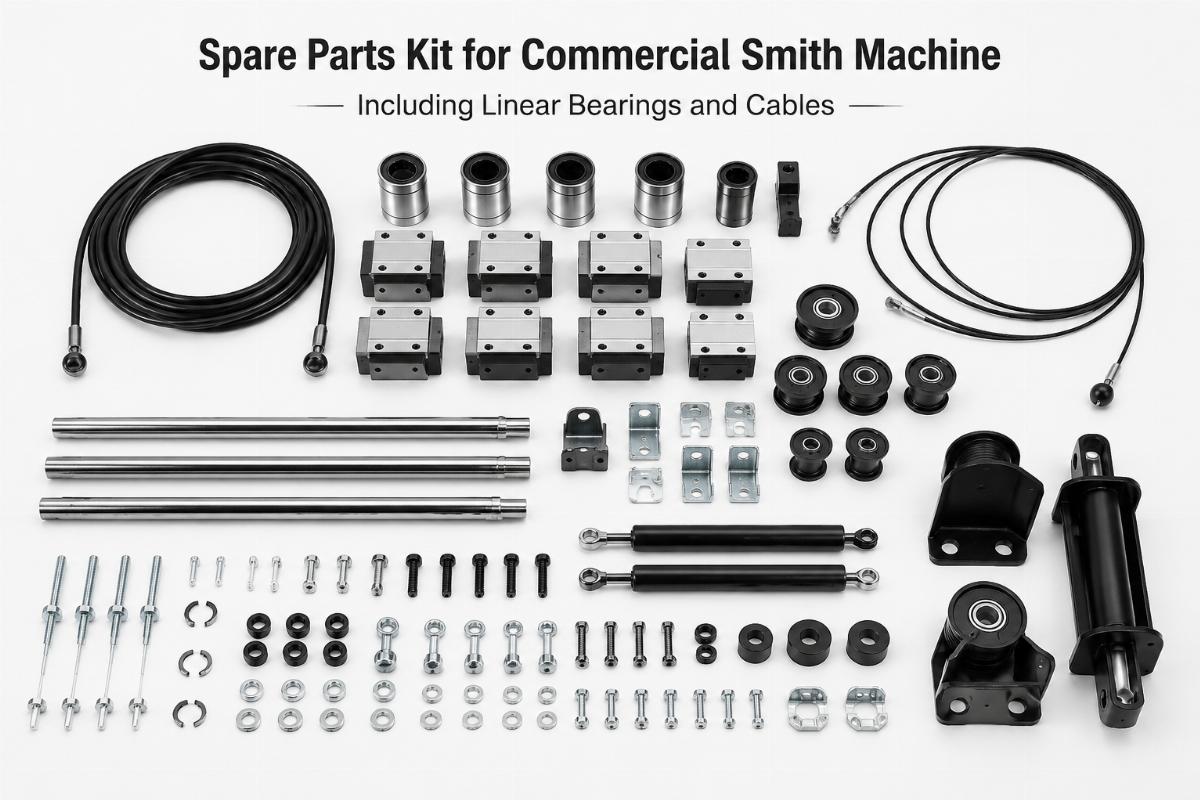
The solution that experienced factories offer is a proactive spare parts strategy. Rather than waiting for a breakdown, the factory includes a wearable-parts kit with every shipment: extra linear bearings, replacement cables, spare J-cup springs, and additional safety stop components. These parts are inexpensive to produce and ship alongside the main equipment, but they eliminate the most common downtime scenario — waiting weeks for a single replacement component to arrive from overseas.
Remote technical support closes the remaining gap. When a gym technician encounters an alignment issue or needs to replace a linear bearing assembly, the factory can provide video-guided troubleshooting sessions. This approach has proven effective across multiple regions — gym maintenance staff in the Middle East, Southeast Asia, and Latin America have all resolved field issues through real-time video guidance from the factory’s technical team. [NEED_CITE: remote technical support effectiveness for overseas fitness equipment maintenance]
The key is selecting a factory that treats after-sales support as a standard service, not an afterthought. Ask specific questions before ordering: Does the factory include a spare parts list with each shipment? Can they provide assembly and maintenance video documentation? Is there a designated contact for technical inquiries after delivery?
A commercial gym owner in Latin America reported a linear bearing wear issue on a Smith machine roughly a year after installation. Instead of waiting for a replacement shipment, the factory walked the gym’s maintenance technician through a bearing replacement via video call. The machine was back in service within a single day. The spare parts kit that had shipped with the original order contained the exact bearing needed.
Conclusion
PowerLine and factory-direct Smith machines share the same commercial-grade engineering foundation — the real differences are in certification pathway, OEM flexibility, and after-sales structure.
A China factory-direct Smith machine supplier delivers comparable build quality at substantially lower cost, provided the buyer takes ownership of destination-country certification validation, specifies OEM requirements early in the production cycle, and secures a spare parts supply arrangement before shipment. The savings are real, but so is the responsibility that comes with bypassing the branded distribution layer.