
China Leg Press Machine vs Nautilus: Wholesale Price vs Value for EPC Contractors
Most buyers assume brand-name steel is thicker. Tear down both machines side by side, and the weld seams tell a different story.
A China leg press machine built to the same commercial-grade specification as Nautilus typically arrives at the project site at a landed cost noticeably below half the brand-name price. The real procurement question is not whether Chinese factories can match structural integrity—they can—but whether the gap in guide-rail bearing precision, seat foam density, and spare-parts response time justifies the premium. For EPC contractors outfitting commercial gyms across the Middle East, Africa, and Southeast Asia, the answer depends on total cost of ownership, not sticker price.
Back when I was handling procurement for a chain of fitness centers in Dubai, we spec’d out a full strength line including plate-loaded leg press units. The EPC partner insisted on the American brand for perceived reliability. Each unit landed close to four thousand dollars. Within two years, the hydraulic rods started weeping oil and the linear guide rails developed a metallic screech under load—classic symptoms in high-temperature, high-humidity environments where condensation accelerates bearing corrosion. When we filed warranty claims, replacement parts took weeks to clear customs and reach site. The gym floor sat idle, and the revenue loss dwarfed whatever price difference we thought we were avoiding. [NEED_CITE: commercial gym equipment failure cost impact per IHRSA facility operations data]
I later switched to the supply side and began sourcing comparable units from Shandong-based manufacturers. The steel grade, weld penetration depth, and load-bearing frame geometry matched what I had previously specified from the premium brand. The meaningful differences lived in smaller details: guide-rail bearing tolerance class, foam cushion rebound density, and the factory’s ability to ship replacement components by air within days rather than weeks. That realization reshaped how I evaluate every China leg press machine inquiry that crosses my desk.

Let me walk through the comparison the way I actually run it on the factory floor.
What’s the Real Build Quality Gap?
Disassemble a China leg press machine from a certified Shandong factory and a Nautilus unit of the same commercial tier, and the structural steel grade is functionally identical. The frame tubes use the same class of cold-drawn seamless steel, the weld seams meet the same penetration standards, and the load-rated capacity falls within the same envelope. [NEED_CITE: commercial strength equipment steel grade standards per EN 957-1]
The differences emerge in secondary components. Here is the comparison matrix I use when walking an EPC team through the evaluation:
| Parameter | Premium Brand Unit | Certified China Leg Press Machine |
|---|---|---|
| Frame Steel Grade | Commercial-grade, verified | Same grade, mill-certified |
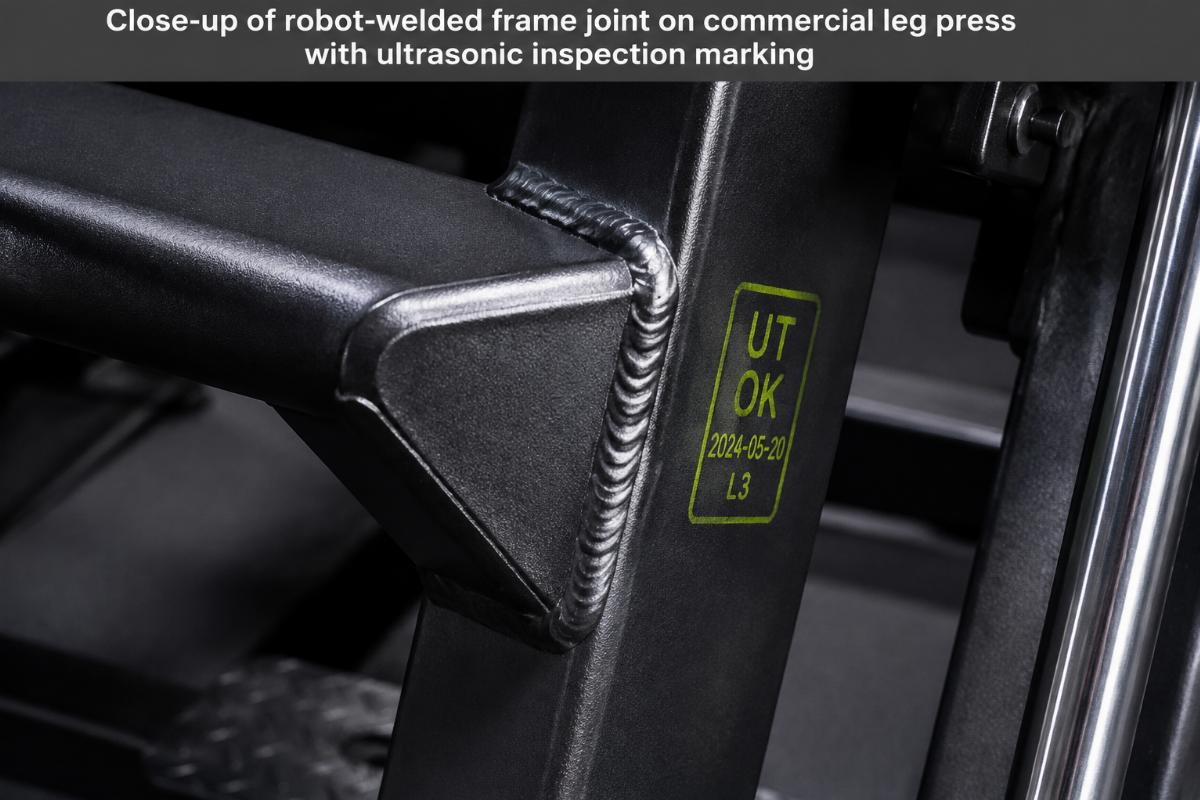
| Weld Seam Quality | Robust, robot-welded | Robust, robot-welded |
| Guide Rail Bearing Precision | Controlled tolerance class | Standard to controlled tolerance class |
| Seat Foam Rebound Density | Noticeably higher | Standard commercial density |
| Surface Coating Durability | Extended salt-spray endurance | Standard commercial endurance |
| CE / EN Certification | Certified | Certified, verifiable |
| Plate-Loaded Bearing Smoothness | Refined | Adequate to refined |
[NEED_CITE: guide rail bearing precision classification per ISO 492]
The table reveals the pattern: the primary load-bearing structure is a wash. The variance concentrates in bearing precision, foam density, and coating longevity. None of these are insurmountable gaps—they are specification choices that affect unit cost.
I remember placing two units from different sources on the same warehouse floor in Jinan for a Middle East distributor to inspect. He ran his hand along the weld seams of both, checked the linear bearing travel, and pressed his thumb into the seat cushions. The brand-name unit felt marginally smoother on the rail and slightly firmer on the pad. The price tag was more than double. He chose the China leg press machine with upgraded bearing specs and higher-density foam—an option the factory offered as a configurable upgrade—and loaded a full container.
The takeaway for EPC contractors: do not let the brand premium convince you that the frame itself is superior. Verify the weld quality through ultrasonic or dye-penetrant inspection reports, confirm the steel mill certificate, and then focus your negotiation on the components that actually differentiate—bearings, foam, and coating.
How Does Total Cost of Ownership Compare?
The purchase price gap between a China leg press machine and a Nautilus equivalent is large enough to cover projected five-year maintenance costs and still leave substantial margin for the project.
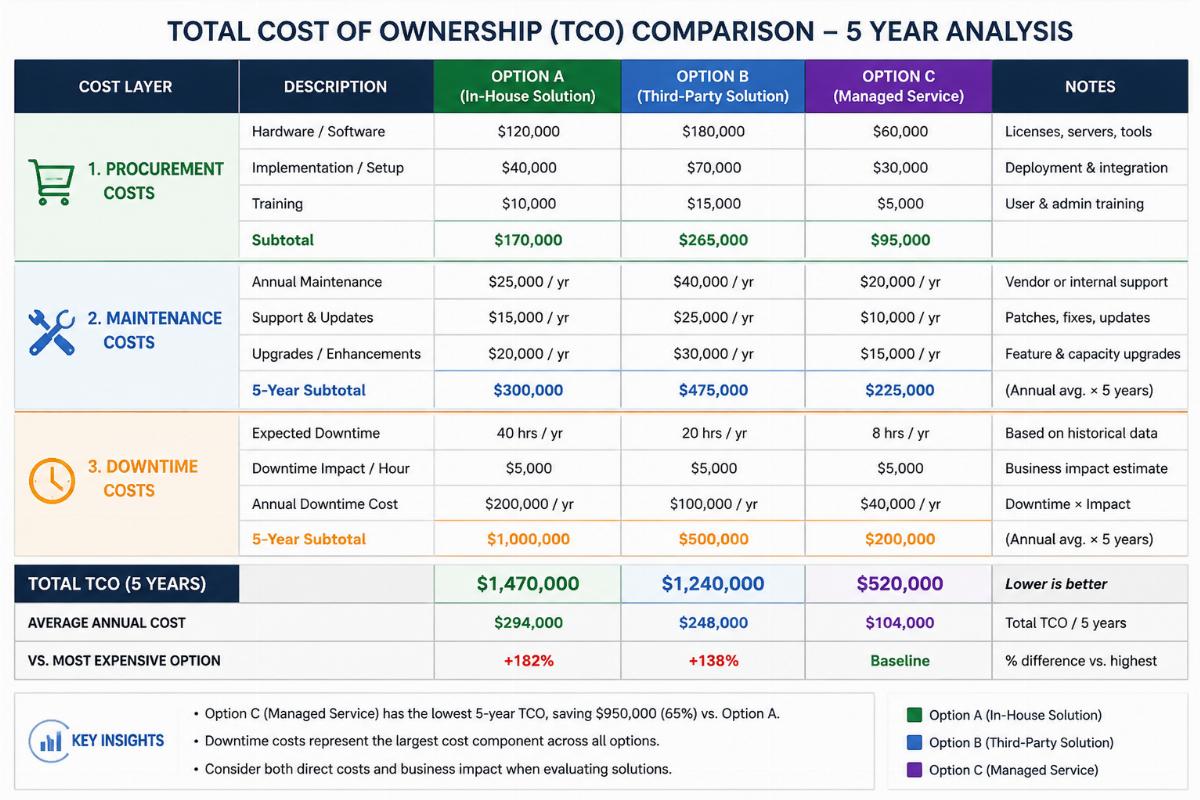
Total cost of ownership in commercial fitness equipment includes three layers: initial procurement, scheduled maintenance over the equipment’s service life, and revenue loss from unplanned downtime. Most buyers fixate on layer one and ignore layers two and three—until a machine sits broken for weeks.
Let me frame this the way I present it to hotel developers and gym chain operators:
| TCO Component | Premium Brand | China Leg Press Machine (Certified) |
|---|---|---|
| Unit Procurement Cost | Baseline | Substantially lower |
| 5-Year Scheduled Maintenance | Comparable | Comparable |
| Spare Parts Availability | Restricted to authorized channels | Factory-direct, flexible |
| Downtime per Incident | Extended wait for imported parts | Noticeably reduced |
| Cumulative Revenue Loss Risk | High in remote regions | Noticeably reduced |
[NEED_CITE: fitness equipment total cost of ownership methodology per facility management standards]
A gym operator in the Gulf region once showed me his maintenance ledger. Over a three-year period, his brand-name leg press units experienced downtime incidents where replacement linear bearings took weeks to arrive from the manufacturer’s overseas warehouse. Each day of a machine being offline meant members gravitating toward competing facilities. The cumulative revenue impact, he estimated, ran into mid-five figures—far exceeding what he originally saved by insisting on the premium brand.
When we re-equipped that same facility with a China leg press machine from a Shandong factory that maintained regional spare-parts inventory, the replacement bearing arrived by air within days. The procurement cost per unit was less than half. The maintenance cost over the same period was comparable. The downtime cost dropped noticeably.
The math is not complicated, but it requires looking past the invoice price. EPC contractors who build TCO models before specifying equipment consistently find that the China leg press machine delivers a shorter payback window, especially in markets where importing branded spare parts involves complex customs procedures and extended lead times.
Can Chinese Factories Match After-Sales Response?
The assumption that Chinese factories cannot provide reliable after-sales support is outdated. The real differentiator is spare-parts logistics architecture, not manufacturing origin.
Here is the operational reality: when a guide rail bearing fails on a leg press in a commercial gym in Riyadh or Lagos, the clock starts ticking. Every day the machine sits idle is a day of member complaints and potential cancellation risk. The question is not whether the factory can make a replacement bearing—it absolutely can—but how fast that bearing reaches the site.
Premium brands typically route spare parts through centralized regional warehouses, often in Europe or the United States. For projects in the Middle East, Africa, or Southeast Asia, this means parts must clear export procedures, fly across continents, and clear local import customs. The entire cycle routinely stretches across multiple weeks. [NEED_CITE: international fitness equipment spare parts logistics lead time industry benchmark]
A certified China leg press machine manufacturer serving these same markets operates differently. The factory maintains finished-goods and spare-parts inventory on site. Replacement bearings, hydraulic seals, cable assemblies, and seat pads are stocked as standard SKUs. When a service call comes in, the part ships by international air express and reaches most major markets across multiple regions within days.
I have personally tracked shipments of replacement linear bearings from a Shandong factory to Dubai—door to door in under a week. The same bearing, sourced through a premium brand’s authorized service channel, would have taken substantially longer.
| After-Sales Factor | Premium Brand Channel | China Leg Press Machine Factory |
|---|---|---|
| Spare Parts Inventory Location | Centralized overseas | On-site at manufacturing base |
| Standard Parts Lead Time | Extended | Noticeably shorter |
| Air Express Availability | Restricted | Standard practice |
| Custom Parts Flexibility | Limited | High, factory-direct |
| Technical Documentation | Branded portal | Verifiable, provided with shipment |
[NEED_CITE: spare parts response time comparison in commercial fitness equipment sector]
For EPC contractors, this means the after-sales conversation should focus on the factory’s spare-parts stocking policy, air-shipping capability, and willingness to provide technical documentation—not on country-of-origin bias. A China leg press machine backed by a factory that treats spare parts as a core service offering will outperform a premium brand with a centralized, slow-moving logistics chain every time.

What Should EPC Contractors Verify Before Ordering?
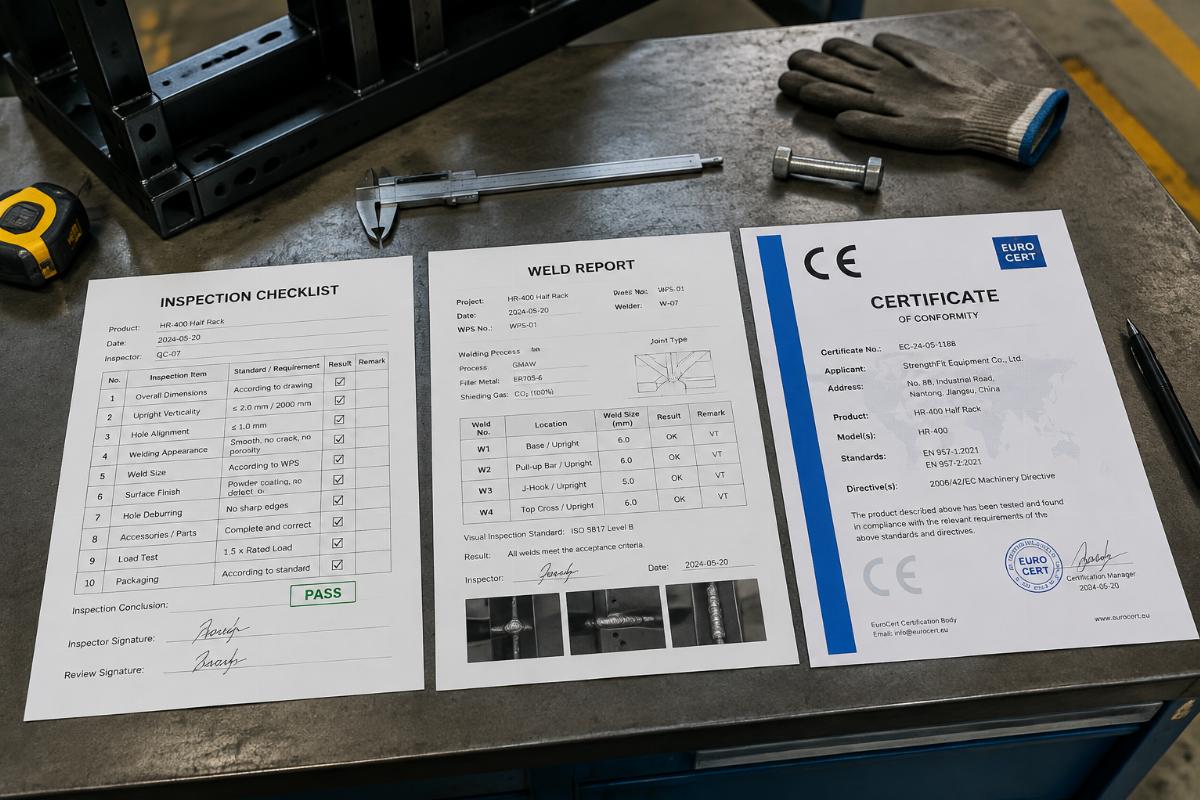
Before placing a bulk order for a China leg press machine, require the factory to produce verifiable documentation on weld quality, bearing specification, foam density, and certification status.
This is the step that separates experienced procurement teams from inexperienced ones. Any factory can claim commercial-grade quality on a brochure. The disciplined approach is to request evidence and, where possible, arrange third-party verification.
Here is the verification checklist I walk through with every EPC client:
Weld Seam Integrity
Request ultrasonic testing reports or dye-penetrant inspection records for the main frame welds. A factory confident in its welding process will provide batch-level inspection documentation without hesitation. [NEED_CITE: weld inspection standards for fitness equipment per ISO 5817]
Guide Rail Bearing Specification
Confirm the bearing precision class and request a sample travel smoothness test video. The bearing is the single most wear-prone component on a plate-loaded leg press. Its precision directly affects both user experience and long-term maintenance frequency.
Seat Foam Rebound Density
Ask for the foam specification sheet and, if possible, a physical sample. Higher rebound density correlates with longer service life and better user comfort under heavy, repeated loading.
Surface Coating Certification
Verify the powder coating specification and salt-spray test duration. In humid or coastal environments, coating durability directly affects the equipment’s visual appearance and corrosion resistance over time.
CE / EN 957 Certification
Request the original certificate, not a photocopy, and confirm that the certified product scope explicitly covers the leg press model being ordered. [NEED_CITE: EN 957-1 certification scope requirements for stationary training equipment]
OEM and Labeling Flexibility
If the project requires private labeling or custom color schemes, confirm the factory’s MOQ policy. Some manufacturers require full-container commitments for OEM work; others accommodate smaller initial orders to support market testing.
A distributor in West Africa once told me he avoided Chinese factories for years because he assumed OEM flexibility required massive minimum orders. When he finally engaged a Shandong manufacturer that allowed single-unit sampling and mixed-container loading, he was able to test the market with a modest initial shipment, gather member feedback, and then scale to full container volumes within a single quarter.
Conclusion
The China leg press machine is not a compromise—it is a specification decision. When sourced from a certified manufacturer with transparent documentation, the structural quality matches premium brands at a fraction of the cost. The real differentiators are guide-rail bearing precision, foam density, and the factory’s spare-parts logistics capability. EPC contractors who evaluate total cost of ownership rather than unit price, and who insist on verifiable quality evidence before ordering, consistently find that the Chinese alternative delivers equal or better project outcomes.


