Commercial Adjustable Bench Alternatives to Titan Fitness for Chain Gym Owners | OEM Supplier
A 500-pound load rating means nothing if the adjustment pin wobbles after three months of daily use.
Titan Fitness adjustable benches are engineered for home-garage frequency, not the 40-plus daily adjustments a commercial chain gym demands. For multi-site outfitting, chain owners need commercial-grade FID benches built with tighter pin tolerances, heavier-gauge steel frames, and reinforced adjustment mechanisms that survive high-cycle fatigue. The right Adjustable Bench Alternatives to Titan Fitness must pass industrial fatigue testing, offer verifiable weld certifications, and come with spare parts availability for long-term fleet maintenance.
I still remember the batch we shipped to a Southeast Asian gym chain a few years back. They sent us a Titan Fitness sample as their benchmark spec sheet, and we matched every dimension they asked for. Within a single quarter, complaints rolled in from over a dozen locations — backrest adjustment pins going loose, seat rails developing play, welds cracking near the gusset plates. When we tore one apart at their regional warehouse, the root cause was staring us back: the pin-and-hole clearance was designed for a home user adjusting angles twice a session, not a commercial floor where trainers crank it between every client. That project reshaped how I evaluate every OEM inquiry. Before I look at pricing, I ask about daily adjustment frequency and maintenance intervals. [NEED_CITE: failure mode distribution in commercial adjustable benches per ASTM F2216 field reports]

If you are sourcing Adjustable Bench Alternatives to Titan Fitness for a chain rollout, the conversation has to move past static load numbers and into adjustment cycle endurance. Let me walk you through what actually separates a bench that survives a commercial floor from one that becomes a liability.
Why Titan Fitness Benches Fall Short for Commercial Gym Chains?
Titan Fitness designs for the home garage, where a bench might see two to four adjustments per workout session. A commercial chain gym bench gets adjusted dozens of times per day, every single day.
The fundamental mismatch lies in design intent. Titan Fitness benches are popular in the home gym market for good reason — they offer solid value, decent build quality for personal use, and a wide ecosystem of compatible attachments. But their engineering assumptions break down under commercial traffic patterns.
Consider the adjustment mechanism. Home-grade benches typically use a simple pin-and-hole system with relatively loose clearance tolerances. This works fine when a single user adjusts the backrest a handful of times per session. In a chain gym environment, that same mechanism endures continuous insert-remove cycles across multiple users, multiple trainers, and multiple shifts. The pin holes elongate. The pins develop play. Within months, you get the wobbling backrests that drive members away and create safety concerns during heavy pressing movements. [NEED_CITE: commercial gym equipment maintenance frequency benchmarks per IHRSA operational guidelines]
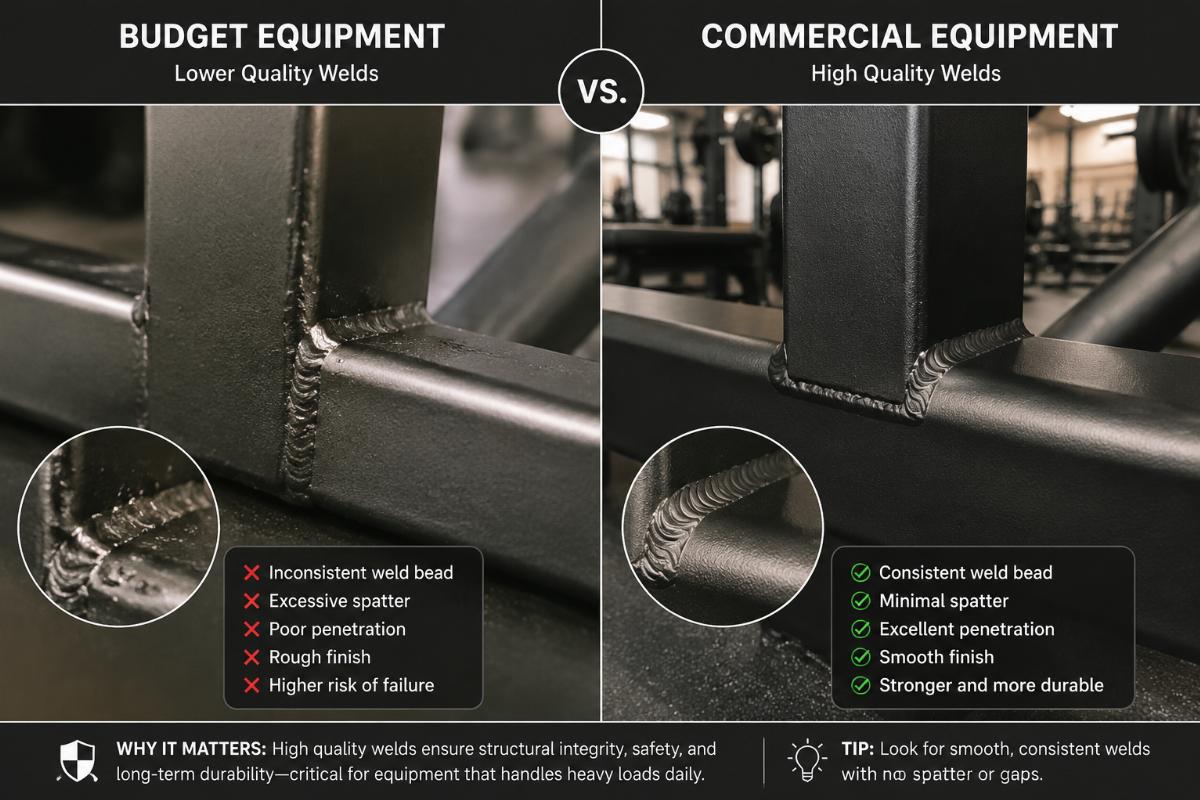
I have seen this pattern repeat across multiple regions. A Middle East hotel fitness project compared home-grade and commercial-grade FID benches side by side. The home-grade unit looked adequate on paper — the tube dimensions were similar, the stated load capacity was competitive. But when we measured the actual wall thickness and examined the weld penetration on the adjustment bracket, the commercial unit showed substantially thicker gauge steel and full-penetration welds at every stress junction. The home-grade unit used thinner material with visible porosity at the gusset joints. Under sustained commercial loading, those differences compound rapidly.
The warranty structure tells its own story. Titan Fitness offers limited warranties designed around residential usage patterns. For a chain owner operating multiple locations, a warranty that excludes commercial use or caps claim frequency per household is essentially meaningless. You need a supplier who stands behind the product in a fleet deployment context, with spare parts availability and replacement component logistics built into the agreement.
If your procurement checklist still starts and ends with "load capacity," you are evaluating benches for the wrong environment. The Adjustable Bench Alternatives to Titan Fitness that actually serve chain gyms are built around a completely different set of engineering priorities.
Commercial vs. Home Adjustable Bench: What Specs Actually Matter?
Load capacity is the most misunderstood specification in the adjustable bench market. The real durability determinants are pin tolerance fit, frame steel gauge, and weld quality at the adjustment mechanism.
Most buyers fixate on the static load rating — 500 pounds, 800 pounds, 1,000 pounds. These numbers describe how much weight the bench can hold without structural collapse in a stationary position. They tell you almost nothing about how the bench will perform after thousands of adjustment cycles under dynamic loading.
Here is what actually matters for commercial deployment:
Pin Tolerance and Hole Wear Resistance. The adjustment pin must fit the receiver hole with minimal clearance. Loose clearance means the pin shifts un* Over time, the hole elongates into an oval, and the backrest develops lateral play. Commercial-grade benches use tighter tolerance machining on both the pin diameter and the receiver plate, often with hardened pin material to resist deformation. [NEED_CITE: pin-and-hole clearance tolerance standards for adjustable fitness benches per EN 957-1]
Frame Steel Gauge and Tube Dimensions. The main frame tubes carry all the dynamic forces from pressing, rowing, and adjustment impacts. Commercial benches use heavier-gauge steel — the wall thickness difference between a home-grade and commercial-grade frame is often substantial when measured with calipers. Thicker walls resist denting, bending, and fatigue cracking at weld joints.
Weld Quality at Stress Junctions. The adjustment bracket, the seat-to-frame joint, and the base stabilizer connections are the highest-stress points on any FID bench. Commercial-grade manufacturing uses full-penetration welds with post-weld inspection. Home-grade production often relies on fillet welds with visible porosity or incomplete fusion at critical joints. Under repeated commercial loading, these weld defects become crack initiation points.
Adjustment Mechanism Fatigue Endurance. The latch, lever, or gas-spring system that locks the backrest at various angles must survive tens of thousands of actuation cycles without failure. Commercial benches undergo fatigue testing that simulates extended use — the mechanism is cycled repeatedly under load to verify long-term reliability. [NEED_CITE: adjustable bench adjustment mechanism fatigue test protocols per ASTM F2216]
Here is a comparison framework I use when evaluating Adjustable Bench Alternatives to Titan Fitness for commercial buyers:
| Specification Dimension | Home-Grade Bench | Commercial-Grade Bench |
|---|---|---|
| Pin Tolerance Fit | Standard clearance, prone to elongation | Tight tolerance, hardened pin material |
| Frame Wall Thickness | Lighter gauge, vulnerable to denting | Heavier gauge, dent and fatigue resistant |
| Weld Quality at Joints | Fillet welds, potential porosity | Full-penetration welds, inspected |
| Adjustment Cycle Endurance | Designed for low-frequency home use | Fatigue-tested for high-cycle commercial use |
| Spare Parts Availability | Limited or unavailable | Verifiable spare parts supply chain |
| Warranty Scope | Residential use only | Commercial fleet deployment covered |

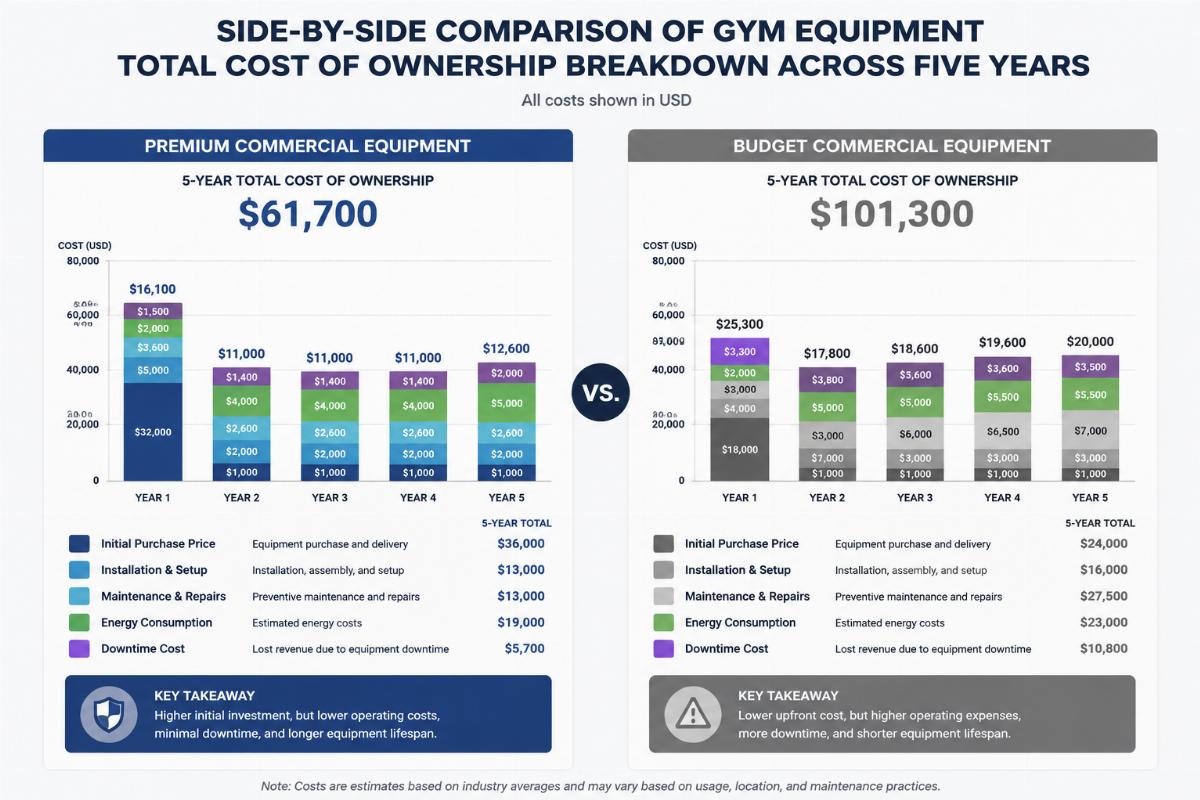
When I walk a chain owner through this matrix, the conversation shifts quickly from sticker price to total cost of ownership. A bench that fails after a few months of commercial use does not just cost the replacement unit — it costs the downtime, the member complaints, the technician dispatch, and the reputational damage across multiple locations.
Side-by-Side Spec Matrix: Titan Fitness vs. Commercial Alternatives
A direct specification comparison reveals where Titan Fitness benches are engineered for home use and where commercial alternatives are built for fleet deployment.
Let me lay out the key differences in a format that procurement managers can use directly in their vendor evaluation process. This is not about dismissing Titan Fitness as a brand — they serve their target market well. It is about recognizing that their product engineering assumptions do not align with commercial chain gym requirements.
| Specification | Titan Fitness (Home-Grade) | Commercial Alternative (Fleet-Grade) |
|---|---|---|
| Intended Use Environment | Residential home gym | Commercial fitness facility |
| Adjustment Mechanism Type | Basic pin-and-hole | Reinforced latch with hardened components |
| Pin Tolerance Grade | Standard clearance | Tight tolerance, wear-resistant |
| Frame Steel Gauge | Lighter wall thickness | Heavy-gauge commercial steel |
| Weld Inspection Standard | Visual inspection | Full-penetration with batch-level verification |
| Adjustment Cycle Testing | Not rated for commercial frequency | Fatigue-tested per commercial standards |
| Spare Parts Program | Not provided | Full spare parts catalog available |
| Warranty Terms | Residential limited warranty | Commercial fleet warranty with parts supply |
| Minimum Order Flexibility | Single unit retail | Flexible from single unit to full container |
| OEM Branding Option | Not available | Full OEM/ODM customization |
[NEED_CITE: commercial fitness equipment procurement specification standards per ISO 20957-1]
The spare parts row deserves special attention. In my experience working with chain gym operators across multiple regions, the availability of replacement pins, latch mechanisms, and adjustment brackets is the single most important factor in long-term fleet maintenance. When a pin wears out on a home bench, the owner buys a new bench. When a pin wears out on a commercial bench in a twelve-location chain, you need that part shipped to the specific facility within days, not weeks.
A distributor in Africa once placed a full container order of adjustable benches. The initial purchase price was competitive. But within the first year, the spare parts request rate became a major operational burden because the original supplier had no structured parts program. Every worn pin, every cracked latch, every broken adjustment lever required custom sourcing or entire unit replacement. The total maintenance cost ended up dwarfing the initial purchase savings.

This is why I always advise chain owners to evaluate Adjustable Bench Alternatives to Titan Fitness not just on the bench itself, but on the entire supply ecosystem behind it — spare parts logistics, warranty enforcement, and the manufacturer’s willingness to support fleet deployments over multi-year horizons.
How to Verify a Supplier’s Adjustable Bench Before Bulk Ordering
Never place a bulk order for adjustable benches without requesting fatigue test reports, conducting a sample teardown inspection, and confirming spare parts availability in writing.
The adjustable bench looks deceptively simple. Two frames, a few adjustment points, some padding. But the engineering details hidden inside the adjustment mechanism and at the weld joints determine whether the bench survives a commercial floor or becomes a maintenance nightmare. Here is the verification process I recommend for any chain owner evaluating Adjustable Bench Alternatives to Titan Fitness.
Step One: Request Independent Fatigue Test Reports. Ask the supplier for test documentation from an accredited third-party laboratory. The report should cover adjustment mechanism cycle testing — the backrest and seat adjustment systems cycled repeatedly under load to simulate extended commercial use. If the supplier cannot produce this documentation, or if they only offer in-house test summaries without lab accreditation, treat that as a significant red flag. [NEED_CITE: third-party fatigue testing accreditation requirements for fitness equipment per ISO 17025]
Step Two: Conduct a Physical Sample Teardown. Before committing to a full order, obtain a sample unit and disassemble it. Examine the pin-and-hole fit — there should be minimal play when the pin is inserted. Check the weld quality at every joint, particularly the adjustment bracket connections and the base stabilizer welds. Look for porosity, incomplete fusion, or cracks. Measure the frame tube wall thickness with calipers and compare it against the supplier’s stated specifications. I have seen discrepancies between quoted specifications and actual measured dimensions on multiple occasions.
Step Three: Verify Spare Parts Catalog and Lead Times. Request the complete spare parts list with part numbers, pricing, and standard lead times for replacement shipment. Confirm in writing which components are stocked and which are made-to-order. A supplier who cannot provide a detailed spare parts catalog is not prepared to support a commercial fleet deployment.
Step Four: Review Warranty Terms for Commercial Use. Read the warranty document carefully. Many manufacturers include exclusions for commercial use or cap the number of claims allowed. For a chain gym operation, you need a warranty that explicitly covers commercial deployment, with clear terms on replacement part shipment and technical support response times.
Step Five: Evaluate the Manufacturer’s OEM Capability. If you plan to brand the benches under your chain’s name, verify the manufacturer’s OEM production capabilities — custom color matching, logo application, packaging design, and the ability to maintain consistent quality across production batches. [NEED_CITE: OEM fitness equipment quality consistency standards per industry best practices]

I once worked with a Southeast Asian chain that skipped the teardown step to save time. They placed a bulk order based on catalog specifications and supplier promises. When the first shipment arrived, the pin fit was noticeably looser than the sample they had approved months earlier. The supplier had changed the production tooling without notification. The entire batch had to be re-negotiated, delaying the gym opening by months. The lesson was expensive but clear: physical verification is non-negotiable.
Turnkey FID Bench Solutions for Multi-Site Gym Outfitting
Chain gym owners need more than just benches — they need a complete procurement partner who understands fleet deployment, spare parts logistics, and multi-site coordination.
When you are outfitting multiple gym locations simultaneously, the complexity of procurement multiplies quickly. Each site may have slightly different layout requirements. Shipping logistics need to be coordinated so that equipment arrives in the right sequence for installation. Spare parts must be pre-positioned or rapidly accessible for each location. And if you want consistent branding across all sites, the manufacturer must be capable of OEM production at scale.
This is where the right Adjustable Bench Alternatives to Titan Fitness become part of a broader turnkey solution. A manufacturer experienced in commercial fleet deployment does not just ship benches — they provide a coordinated package that includes:
Commercial-Grade FID Bench Production. Benches engineered specifically for high-frequency commercial use, with the tight pin tolerances, heavy-gauge frames, and fatigue-tested adjustment mechanisms that chain gyms require. Every production batch undergoes quality inspection against commercial standards before shipment.
OEM Branding and Customization. Full OEM and ODM capabilities allow chain owners to brand the benches with their own logos, color schemes, and packaging. This creates a consistent member experience across all locations and strengthens brand identity.
Container-Load Consolidation and Pricing. For multi-site deployments, the ability to consolidate benches along with other gym equipment into full container shipments dramatically reduces per-unit logistics costs. Factory-direct pricing structures offer substantial savings compared to retail or distribution channel markups.
Spare Parts Supply and Technical Support. A structured spare parts program ensures that replacement pins, latches, adjustment brackets, and padding covers are available when needed. Technical support from the manufacturer helps gym maintenance teams handle routine adjustments and minor repairs without waiting for external service calls.
Flexible Minimum Order Quantities. Whether you need a single bench for a pilot location or enough units to outfit an entire chain simultaneously, the manufacturer should accommodate your deployment timeline and budget constraints.

I have seen the difference this approach makes. A hotel group developing fitness centers across multiple properties needed benches that could withstand heavy guest usage while maintaining a premium appearance. By working directly with a commercial-grade manufacturer offering turnkey solutions, they received branded benches with coordinated delivery schedules, pre-positioned spare parts at each property, and a warranty structure designed for commercial hospitality environments. The result was consistent quality across all locations with minimal ongoing maintenance burden.
For chain gym owners evaluating Adjustable Bench Alternatives to Titan Fitness, the decision extends far beyond the bench itself. It is about choosing a manufacturing partner who understands the demands of commercial fleet deployment and has the infrastructure to support your operation over the long term.
Conclusion
Commercial gym chains cannot afford to evaluate adjustable benches using home-gym assumptions. The adjustment cycle endurance, pin tolerance precision, frame steel gauge, and spare parts infrastructure that define a true commercial-grade FID bench are fundamentally different from what residential-oriented brands engineer for. When sourcing Adjustable Bench Alternatives to Titan Fitness for multi-site deployment, prioritize fatigue-tested mechanisms, verifiable weld quality, and a supplier capable of supporting your fleet with OEM branding, container-load logistics, and long-term spare parts availability.