
Commercial Gym Equipment Indonesia | Bulk OEM Manufacturer
Most buyers assume premium European or American brands guarantee durability in tropical climates, but the real determinant of equipment lifespan is steel gauge, welding integrity, and motor protection ratings—not the logo on the shroud.
For Indonesia’s commercial gym market, sourcing Best Commercial Gym Equipment for Indonesia Market requires balancing three factors: tropical humidity resistance for electronics and frames, container-load consolidation to minimize per-unit freight, and a balanced equipment ratio of cardio, strength, and free weights tailored to local member demographics. Direct procurement from Shandong-based manufacturers delivers comparable commercial-grade quality to Western brands at substantially lower landed costs, provided buyers verify material specs and demand IP-rated components for high-moisture environments.
I still remember a shipment of selectorized machines bound for a fitness chain in Southeast Asia. The containers arrived, the equipment was unloaded, and within weeks the client reported cable fraying and pulley misalignment. The root cause wasn’t shipping damage—it was that the guide rods had been finished with a standard chrome coating unsuitable for coastal humidity. We had to air-freight replacement parts at a cost that wiped out the margin on the entire order. That mistake reshaped how I approach every Indonesia-bound container. [NEED_CITE: tropical climate impact on fitness equipment component degradation patterns]

The lessons from that failure now inform every specification sheet I review. Let me walk you through what actually matters when outfitting a commercial facility in this market.
What Equipment Types Are Essential for Indonesia Commercial Gyms?
A commercially viable gym in Indonesia requires a balanced mix of cardio machines, plate-loaded and selectorized strength equipment, and free weight stations—typically distributed across three functional zones that serve distinct member segments.
The Indonesian fitness market has distinct usage patterns compared to Western or East Asian markets. Commercial gym operators in Jakarta and Surabaya report that member traffic peaks during early morning and late evening hours, with a strong preference for functional training and free weights among younger demographics, while cardio equipment sees consistent utilization throughout operating hours. [NEED_CITE: Indonesia fitness industry membership demographics and equipment utilization trends]
When planning a full commercial facility, the equipment allocation generally follows this framework:
| Equipment Category | Typical Allocation | Key Considerations for Indonesia |
|---|---|---|
| Cardio Equipment | Substantial portion | Heat dissipation critical; motor enclosure rating essential |
| Selectorized Strength | Significant portion | Humidity-resistant guide rods; padded upholstery with antimicrobial treatment |
| Plate-Loaded Strength | Moderate portion | Heavier gauge steel for high-repetition use; corrosion-resistant finish |
| Free Weights & Benches | Significant portion | Rubber-coated dumbbells resist chipping; Olympic bars need robust chrome or cerakote |
| Functional Training | Growing segment | Cable crossover versatility; anchor point integrity under tropical humidity |
A gym owner in Jakarta recently configured a mid-scale commercial facility. The initial plan over-indexed on cardio machines, leaving insufficient floor space for the free weight area that local members actually prioritized. After revising the layout to increase the functional training zone and add a dedicated plate-loaded strength section, member retention improved noticeably. The lesson: equipment selection must reflect actual member behavior, not catalog appeal.
For Best Commercial Gym Equipment for Indonesia Market planning, operators should also consider that hotel and resort fitness centers face different constraints. Space is premium, and equipment must serve diverse guest populations with minimal maintenance intervention. Compact, multi-adjustable machines and dual-purpose cable systems become essential in these environments. [NEED_CITE: hotel fitness center equipment selection criteria for tropical resort markets]
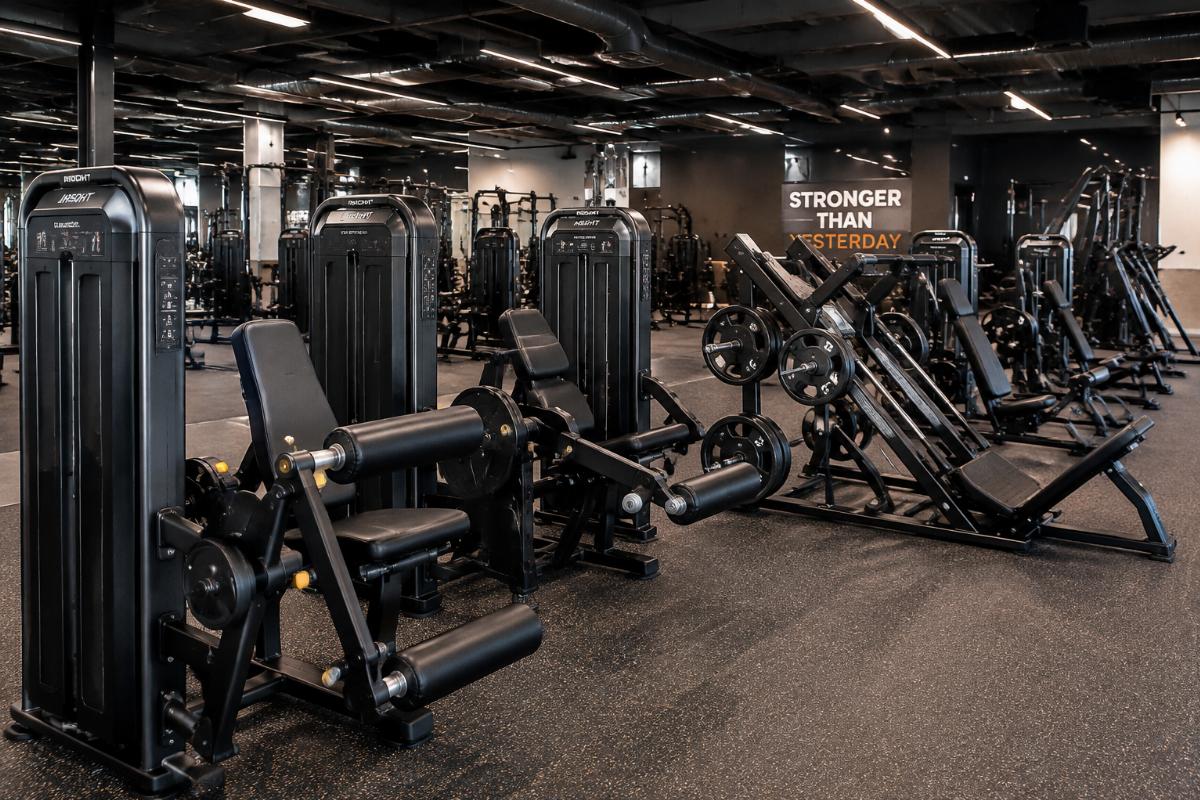
Distributors entering the Indonesian market often start with a mixed-container approach—loading a single container with representative SKUs across multiple categories to test demand before committing to larger orders. This strategy reduces upfront risk and provides real-world data on which equipment types generate the fastest turnover in a given territory.
How to Choose Durable Equipment for Indonesia’s Tropical Climate?
Standard indoor-rated fitness equipment fails prematurely in Indonesia’s high-humidity environment; buyers must specify enhanced corrosion protection, elevated IP ratings for electronic components, and heat-resistant belt materials to achieve acceptable service life.
Indonesia’s equatorial climate presents challenges that temperate-region equipment specifications simply do not address. Relative humidity consistently remains elevated, coastal cities experience salt-laden air, and ambient temperatures push motor cooling systems beyond their design assumptions. [NEED_CITE: Southeast Asian tropical climate parameters and their effect on electronic and mechanical component longevity]
The critical vulnerability points in commercial gym equipment under tropical conditions include:
- Treadmill motors and drive boards: Standard open-frame motors ingest humid air, leading to winding insulation breakdown. Enclosed motors with higher ingress protection ratings resist moisture penetration substantially better.
- Console circuit boards: Conformal coating on PCBs is non-negotiable. Uncoated boards develop corrosion traces on solder joints within months, causing erratic display behavior and communication failures.
- Selectorized guide rods: Standard chrome plating develops pitting in humid environments. Enhanced coating processes or stainless-steel alternatives dramatically extend smooth-operation lifespan.
- Cable and pulley systems: Nylon-coated cables resist moisture absorption better than bare steel wire. Pulley bearings must be sealed to prevent internal corrosion.
- Upholstery and padding: Vinyl with antimicrobial treatment prevents mold colonization. Open-cell foam absorbs moisture and deteriorates rapidly.
| Component | Standard Specification | Tropical-Climate Specification |
|---|---|---|
| Treadmill Motor Enclosure | Basic ventilation | Enhanced ingress protection rating |
| Console PCB Treatment | None or minimal | Full conformal coating |
| Guide Rod Finish | Standard chrome | Enhanced corrosion-resistant coating or stainless |
| Cable Material | Bare steel wire | Nylon-jacketed steel core |
| Bearing Seals | Open or basic shield | Sealed precision bearings |
| Upholstery Foam | Standard open-cell | Closed-cell with antimicrobial treatment |
A distributor in Surabaya received a batch of commercial treadmills that performed flawlessly during initial testing. Six months later, drive board failures began appearing at an alarming rate. Investigation revealed that the motor enclosure design allowed humid air circulation directly over the drive board, and the boards lacked adequate conformal coating. The replacement program cost the distributor significantly in logistics and reputation. [NEED_CITE: fitness equipment failure mode analysis in high-humidity tropical environments]
When evaluating Best Commercial Gym Equipment for Indonesia Market options, always request documentation confirming tropical-environment adaptations. Reputable manufacturers will provide details on motor enclosure ratings, PCB coating processes, and guide rod finish specifications. If a supplier cannot articulate these details, the equipment was likely designed for temperate climates and will underperform in Indonesian conditions.

What Are the Key Specs to Compare Between Chinese and Western Brands?
The performance gap between reputable Chinese-manufactured commercial equipment and premium Western brands has narrowed to the point where specification-level comparison reveals comparable structural integrity, with the primary differentiator being frame steel gauge, welding methodology, and motor continuous duty rating rather than brand origin.
The commercial fitness equipment manufacturing base in Shandong Province has developed substantial technical capability over the past decades. Modern production facilities employ automated laser cutting, robotic welding cells, and computer-controlled forming equipment that produce frames meeting or exceeding the structural standards of equipment carrying Western brand labels. [NEED_CITE: Chinese commercial fitness equipment manufacturing capability and quality standards evolution]
The specifications that genuinely differentiate equipment longevity and performance include:
| Specification Parameter | Budget Tier | Commercial Grade | Premium Commercial |
|---|---|---|---|
| Frame Steel Gauge | Thin gauge | Substantial gauge | Heavy-duty gauge |
| Welding Method | Manual spot | Automated MIG/MAG | Robotic continuous weld |
| Treadmill Motor Rating | Peak horsepower only | Continuous duty rated | Continuous duty with thermal protection |
| Weight Stack Cable | Standard diameter | Enhanced diameter | Multi-strand aircraft-grade |
| Bearing Quality | Basic | Sealed precision | High-load sealed precision |
| Finish Process | Paint only | Powder coat | Dual-stage powder coat with primer |
A gym chain operator in the Middle East once compared identical-category equipment from a premium Western brand and a Shandong-manufactured alternative. The frame steel on the Western-branded unit measured noticeably thinner than the Chinese-manufactured counterpart. The Western brand’s premium pricing reflected distribution margins, marketing expenditure, and brand positioning—not superior structural engineering. [NEED_CITE: commercial fitness equipment frame construction quality comparison methodology]
For Best Commercial Gym Equipment for Indonesia Market procurement, the treadmill motor specification deserves particular scrutiny. Manufacturers often advertise peak horsepower figures that bear little relation to actual continuous running performance. The meaningful specification is continuous duty horsepower—the rating at which the motor can operate indefinitely without thermal overload. A motor rated for continuous duty at a moderate horsepower will outlast a motor advertised at higher peak horsepower but lacking thermal management engineering.
Upholstery quality is another frequently overlooked differentiator. Commercial-grade vinyl must withstand thousands of contact cycles, resist UV degradation if positioned near windows, and maintain structural integrity under high-humidity conditions. The foam core density determines how quickly the padding compresses permanently under repeated use.

The critical insight: do not conflate price with quality in this industry. A substantial portion of premium brand pricing reflects import duties, distribution markups, and brand equity—not engineering superiority. Verify specifications independently, request material certificates, and compare like-for-like construction details.
How to Optimize Container Loading and Reduce Import Costs?
Multi-category container consolidation dramatically reduces per-unit landed cost compared to single-category shipments, and professional load planning maximizes container volume utilization while protecting equipment during ocean transit.
Shipping fitness equipment from China to Indonesia involves significant freight expenditure. A common misconception among first-time importers is that loading a container with a single equipment type—say, only treadmills or only weight plates—represents the most efficient approach. In reality, mixed-category loading leverages the complementary volumetric characteristics of different equipment types to fill container space more completely, reducing the per-unit freight allocation across the entire order. [NEED_CITE: container load optimization methodology for mixed fitness equipment shipments]
The volumetric logic is straightforward: heavy, compact items like weight plates and dumbbells reach weight limits before filling volume. Light, bulky items like treadmill frames and cable crossover structures fill volume before reaching weight limits. Combining both categories in a single container balances weight and volume utilization, ensuring the container carries maximum value per shipment.
Container loading sequence matters for equipment protection:
- Bottom layer: Heaviest, most structurally robust items—weight trees, plate-loaded frames, rack systems
- Middle layer: Medium-weight equipment with protective packaging—benches, smith machines, cable units
- Top layer: Lightest and most surface-sensitive items—cardio shrouds, console components, accessory boxes
- Interstitial filling: Smaller items—dumbbells, kettlebells, resistance bands—fill gaps between larger pieces to prevent shifting during transit
A distributor in the Philippines initially ordered equipment in single-category containers. The weight plate container reached maximum weight at roughly half the volumetric capacity, meaning the distributor paid to ship empty air. The treadmill container approached volumetric capacity well below the weight limit. After switching to consolidated loading, the distributor’s per-unit freight cost dropped substantially, and the improved cash flow from ordering complete gym packages rather than fragmented categories simplified inventory management.
| Loading Strategy | Volume Utilization | Weight Utilization | Per-Unit Freight Impact |
|---|---|---|---|
| Single-category heavy items | Noticeably underutilized | Maximum reached | Elevated per-unit cost |
| Single-category bulky items | Maximum reached | Noticeably underutilized | Elevated per-unit cost |
| Mixed-category consolidated | Substantially optimized | Balanced | Noticeably reduced per-unit cost |
For Best Commercial Gym Equipment for Indonesia Market buyers planning full gym fit-outs, consolidated container loading enables ordering complete facility packages—cardio, strength, free weights, flooring, and accessories—in coordinated shipments. This approach ensures equipment arrives together, simplifies customs clearance, and allows the facility to open on schedule rather than waiting for staggered deliveries.
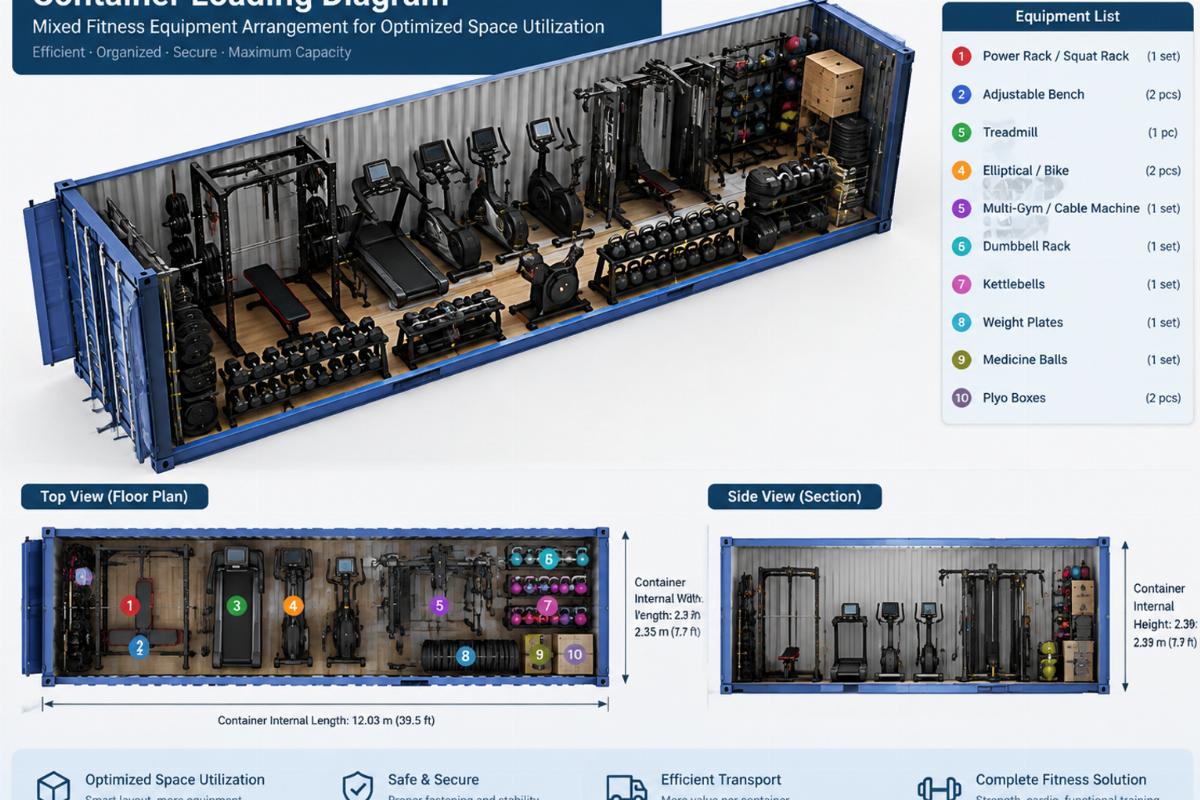
Professional manufacturers provide detailed loading plans and three-dimensional packing diagrams before container sealing. These plans account for equipment dimensions, protective wrapping requirements, weight distribution, and access sequencing for unloading. Requesting and reviewing the loading plan before shipment prevents surprises at destination and ensures fragile components receive appropriate positioning.
What After-Sales Support Should You Expect from Chinese Suppliers?
Reliable after-sales support from Chinese fitness equipment manufacturers rests on three pillars: accessible spare parts inventory, remote technical guidance capability, and willingness to cooperate with local service partners—buyers should verify all three before committing to large orders.
The geographic distance between Chinese manufacturing facilities and Indonesian end users creates legitimate concerns about after-sales responsiveness. However, the nature of commercial fitness equipment means that the majority of service requirements involve component replacement rather than complex system-level repairs. A supplier maintaining comprehensive spare parts inventory and capable of providing clear technical guidance remotely can resolve most field issues without dispatching factory technicians. [NEED_CITE: commercial fitness equipment after-sales support framework for international buyers]
Essential after-sales support elements include:
- Spare parts availability: Wear components—cables, pulleys, belts, bearings, upholstery—should be available for immediate dispatch. Structural components should be orderable with clear lead-time communication.
- Technical documentation: Exploded-view diagrams, wiring schematics, and troubleshooting guides enable local technicians to diagnose and resolve issues independently.
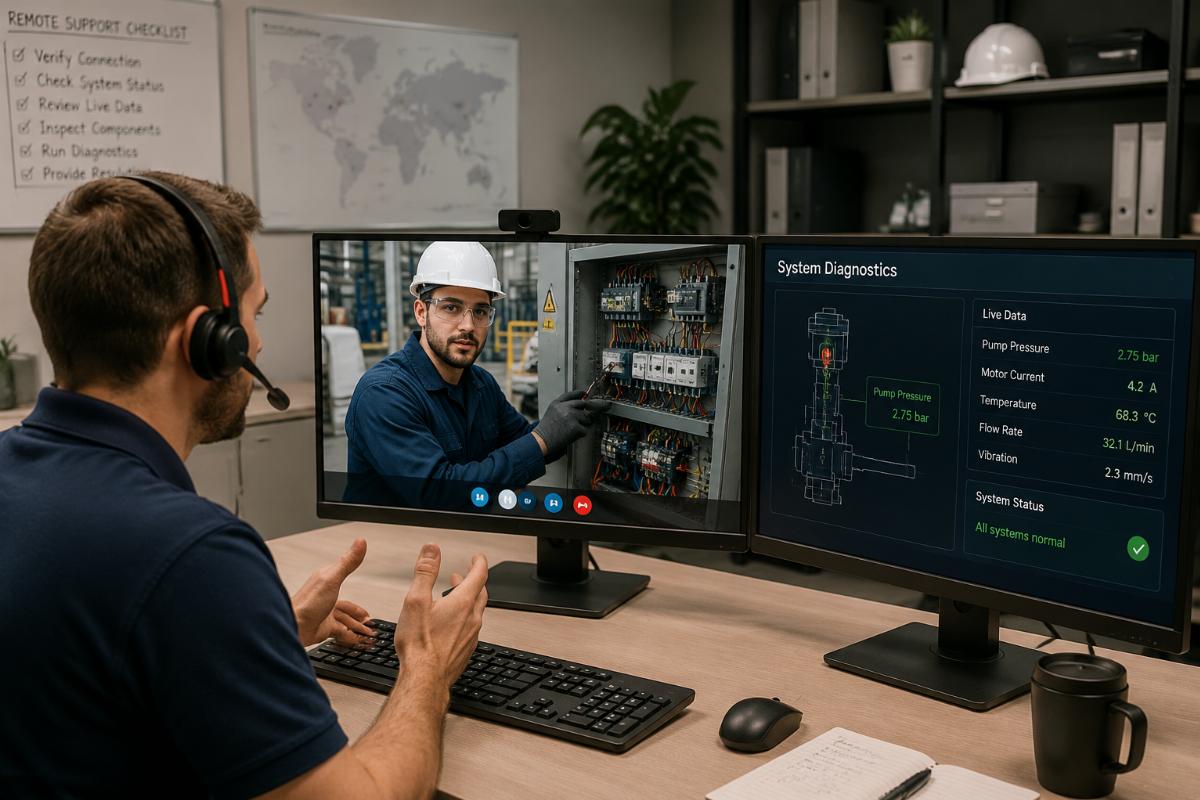
- Remote consultation access: Video-call-capable technical support allows factory engineers to guide local mechanics through complex diagnostics in real time.
- Local partner cooperation: Willingness to train and support independent local service providers extends support reach without requiring the manufacturer to maintain overseas technician teams.
A hotel resort group in Bali experienced a cluster of elliptical trainer resistance system failures during peak tourist season. The manufacturer’s remote technical team conducted video diagnostics, identified a batch-specific issue with resistance motor controllers, and air-shipped replacement units within days. The rapid response prevented extended equipment downtime during the resort’s highest-revenue period. [NEED_CITE: fitness equipment after-sales response time impact on commercial facility operational continuity]
| Support Element | Minimum Expectation | Best-Practice Standard |
|---|---|---|
| Spare Parts Dispatch | Available upon request | Proactive inventory recommendation |
| Technical Documentation | Basic manuals provided | Comprehensive digital library accessible |
| Remote Diagnostics | Email response | Real-time video consultation available |
| Local Partner Network | None required | Active training and certification program |
When evaluating Best Commercial Gym Equipment for Indonesia Market suppliers, ask specifically about spare parts lead times, technical documentation language availability, and willingness to support local service infrastructure. Suppliers who treat after-sales support as an ongoing relationship rather than a post-sale obligation deliver substantially better long-term value.
Conclusion
Indonesia’s commercial gym equipment market demands tropical-adapted specifications, specification-based rather than brand-based procurement, and logistics-optimized ordering strategies. Successful buyers focus on steel gauge, motor ratings, and corrosion protection as primary selection criteria, consolidate container loads across equipment categories to minimize freight costs, and verify after-sales support infrastructure before placing orders. The manufacturing capability available from Shandong-based producers delivers commercial-grade quality at accessible price points for operators building fitness facilities across the Indonesian archipelago.


