
Commercial Gym Equipment Supplier for Vietnam: China Factory Direct OEM Wholesale
European-spec parameters do not equal tropical durability.
The most reliable gym equipment supplier for Vietnam must engineer for sustained high humidity and ambient heat, not replicate spec sheets designed for temperate climates. Factory-direct sourcing from China works only when the manufacturer validates motor torque margins, steel corrosion grades, and belt adhesion under Southeast Asian operating conditions.
I spent years on the buyer side in Hanoi, sourcing for fitness chains across northern Vietnam, before switching to the factory side managing exports. Early on, I supplied a commercial treadmill batch and a set of Smith machines to a new gym in Ho Chi Minh City. The client had forwarded a European brand’s spec sheet and demanded we match the pricing. I quoted against that exact configuration. Within a few months, treadmill belts started slipping under load, and weld points on the Smith machines showed surface rust despite indoor installation. The client withheld final payment and demanded replacements. The root cause was not poor workmanship—it was that the motor power margin and steel thickness were calibrated for a dry, cool environment, not a city where relative humidity routinely stays above eighty percent year-round. Since then, I never quote without visiting the site and auditing the actual operating conditions first. [NEED_CITE: tropical climate impact on electric motor insulation class and thermal degradation]
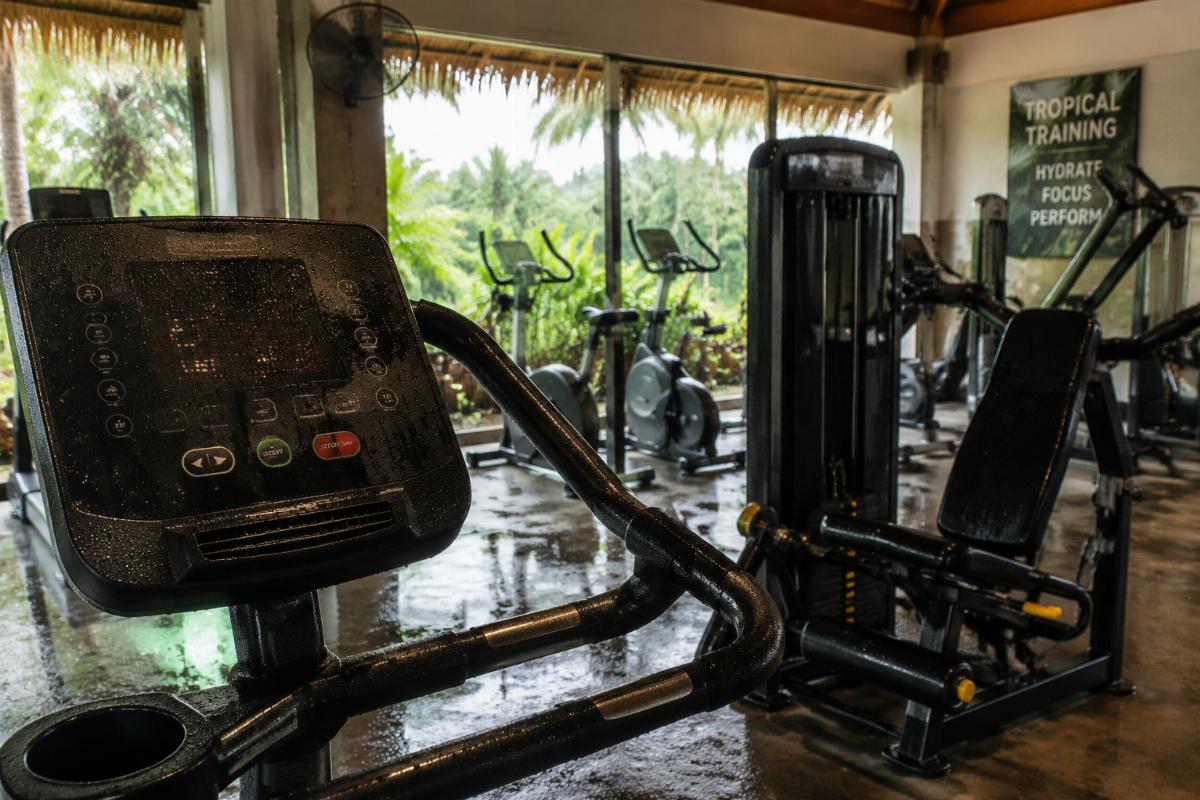
Let me walk you through what actually matters when you evaluate a gym equipment supplier for Vietnam, and why the usual procurement shortcuts fail.
Why Does Vietnam’s Climate Force a Rethink of Gym Equipment Specs?
Standard cardio and strength equipment built for European or North American gyms often underperforms in Vietnam because heat and humidity accelerate motor insulation breakdown, belt delamination, and steel corrosion at weld joints.
The Mekong Delta and coastal cities like Da Nang and Ho Chi Minh City maintain high absolute humidity for most of the year. Northern Vietnam, including Hanoi, experiences a distinct hot season where indoor temperatures in non-climate-controlled gym floors can exceed typical equipment rating thresholds. This creates three recurring failure patterns that a competent gym equipment supplier for Vietnam must address at the design stage:
| Parameter | Standard Temperate Spec | Tropical-Adapted Spec |
|---|---|---|
| Motor thermal class | Class B insulation | Class F or higher insulation |
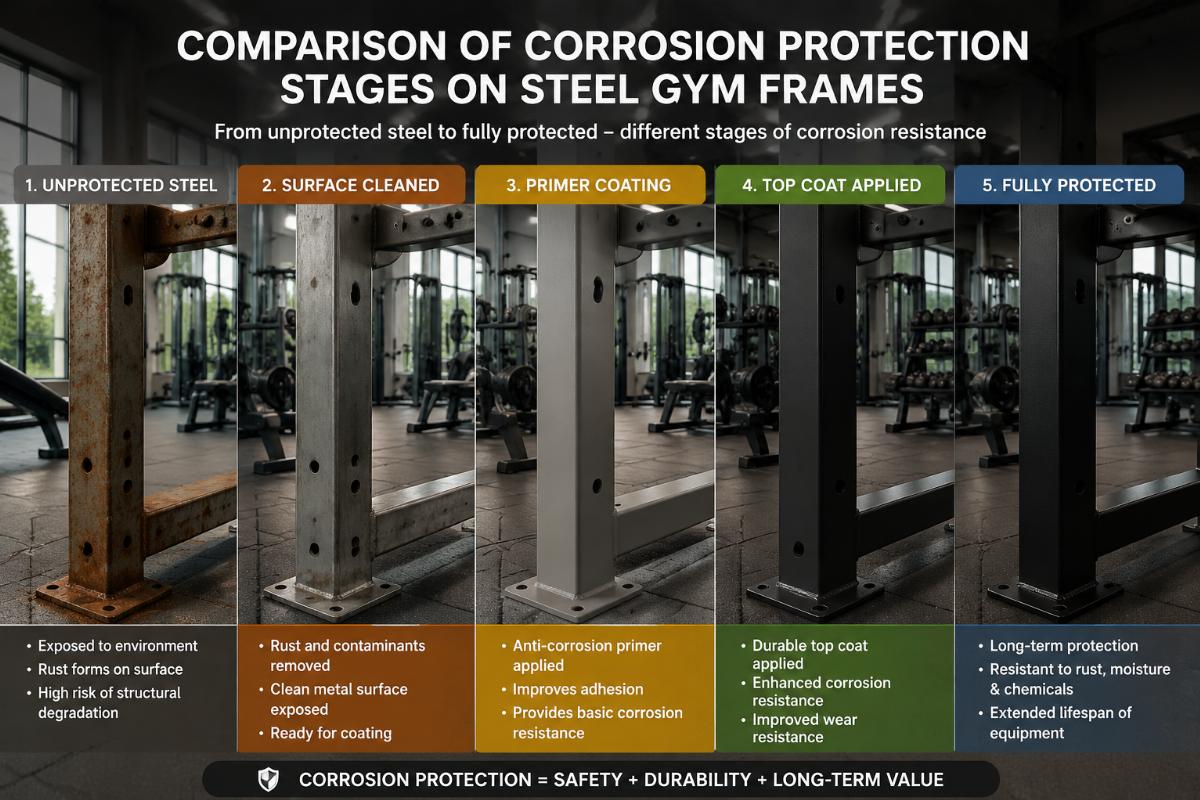
| Steel frame corrosion protection | Basic powder coat | Multi-stage pretreatment with C4-grade coating |
| Running belt adhesion | Standard industrial glue | Heat-resistant adhesive with extended open-time |
| Bearing seal rating | Basic dust seal | Enhanced moisture ingress protection |
| Electronics conformal coating | Optional | Mandatory for control boards |
[NEED_CITE: ISO 12944 corrosion protection categories for steel structures in tropical environments]
A hotel developer in central Vietnam once received a container of ellipticals from a generic overseas source. The units looked identical to catalog photos. Within an extended period, the console boards failed in clusters because the conformal coating had been omitted as a cost-saving measure. Salt-laden coastal air had penetrated the enclosures. Replacing the boards cost several times what proper coating would have added at the factory.
A gym equipment supplier for Vietnam that simply copies a temperate-market catalog is selling you a time bomb. The spec sheet may read beautifully, but the materials and process choices underneath determine whether the equipment survives its first monsoon season.
China Factory Direct vs. European Brands: What the Spec Sheet Hides
The visible parameter gap between Chinese factory-direct equipment and premium European brands is narrowing, but the hidden gap lies in climate adaptation, warranty enforceability, and spare parts logistics.
Many Vietnamese gym owners assume European brand parameters automatically equal higher quality. In reality, those parameters were engineered for different operating conditions. A treadmill motor rated for continuous duty in a twenty-degree Celsius environment will thermal-derate noticeably in a thirty-degree, high-humidity gym floor without upgraded insulation and enhanced cooling.
Here is how a serious gym equipment supplier for Vietnam stacks up against a European brand on dimensions that actually affect uptime:
| Dimension | European Premium Brand | China Factory Direct (Tropical-Adapted) |
|---|---|---|
| Motor power margin for tropical derating | Often not disclosed | Explicitly engineered with extended thermal headroom |
| Frame steel thickness tolerance | Tight, verifiable | Must be audited per batch via mill certificates |
| Salt-spray endurance rating | Substantially extended | Noticeably extended when C4 coating is specified |
| Spare parts lead time to Vietnam | Lengthy, via regional depot | Noticeably shorter via direct factory shipment |
| Custom OEM branding flexibility | Restricted | Noticeably flexible, including full color and logo customization |
| Warranty claim resolution | Complex, via distributor | Direct factory communication, faster turnaround |
[NEED_CITE: comparative total cost of ownership for commercial gym equipment across climate zones]
I worked with a boutique CrossFit studio in Ho Chi Minh City that initially wanted to import a well-known European brand for the prestige. The landed cost, including distributor margin and import duties, would have consumed most of their fit-out budget. They pivoted to a China factory direct package covering the functional training zone, free weights, and rig systems. The factory adjusted the rig upright thickness and added enhanced powder coating after reviewing the studio’s floor plan and local humidity data. The final package delivered comparable structural integrity at a fraction of the landed cost, and the freed-up budget allowed them to add a dedicated recovery zone that became a strong membership differentiator.
The lesson is not that European brands are bad. The lesson is that a gym equipment supplier for Vietnam must justify every parameter choice against local conditions, not against a brochure designed for a different continent.

Procurement Verification Checklist: Avoiding the "Good Spec, Bad Reality" Trap
A three-step verification process—site survey, duty-cycle calculation, and document audit—separates a reliable gym equipment supplier for Vietnam from one that merely quotes attractively.
After the Ho Chi Minh City treadmill failure, I developed a verification routine that I now apply to every project, regardless of size. Skipping any step invites the same expensive lesson.
Step One: On-Site Environmental Survey
Measure or obtain historical data on ambient temperature peaks, relative humidity ranges, and proximity to coastal salt air. A gym located within a few kilometers of the coast in Da Nang or Nha Trang requires a meaningfully higher corrosion protection specification than an inland facility in Hanoi. Verify whether the gym floor has dedicated climate control or relies on natural ventilation and fans. This single factor determines motor insulation class and electronics protection requirements. [NEED_CITE: environmental classification standards for indoor fitness facilities in Southeast Asia]
Step Two: Duty-Cycle and Usage Calculation
Estimate daily peak operating hours, expected user throughput per machine, and whether the equipment will run in continuous commercial shifts or intermittent boutique sessions. A hotel gym with moderate daily traffic has a different duty profile than a twenty-four-hour commercial chain gym. The gym equipment supplier for Vietnam must map motor thermal curves and belt wear expectations to your specific usage model, not to a generic catalog rating.
Step Three: Document and Certification Audit
Request verifiable copies of CE certification, steel mill test certificates for frame materials, and salt-spray test reports from an accredited third-party lab. A trustworthy gym equipment supplier for Vietnam will provide these without hesitation. If the supplier offers only self-declared compliance or refuses to share mill certificates, treat it as a red flag. Also verify that the electrical components carry recognized safety marks appropriate for the Vietnamese market voltage and frequency.
A distributor in Southeast Asia once received a container of plate-loaded machines where the seat adjustment pins were manufactured from a lower-grade steel than specified. The pins bent under normal user loads within months. The supplier’s initial response was to blame "improper use." Only after the distributor insisted on seeing the original mill certificates did the supplier acknowledge the material substitution. This kind of discrepancy is exactly what the document audit step is designed to catch before the container leaves the factory.

From Single Purchases to Turnkey Gym Packages: Why Integration Matters
A turnkey gym package from a single gym equipment supplier for Vietnam eliminates compatibility gaps, reduces shipping costs through container consolidation, and ensures coherent space planning.
When you source cardio from one vendor, strength from another, and free weights from a third, you inherit multiple problems: mismatched aesthetic finishes, fragmented warranty claims, duplicated shipping fees, and no single party responsible for the overall floor plan flow. A turnkey approach consolidates all of this under one gym equipment supplier for Vietnam who coordinates equipment selection, layout optimization, and delivery sequencing.
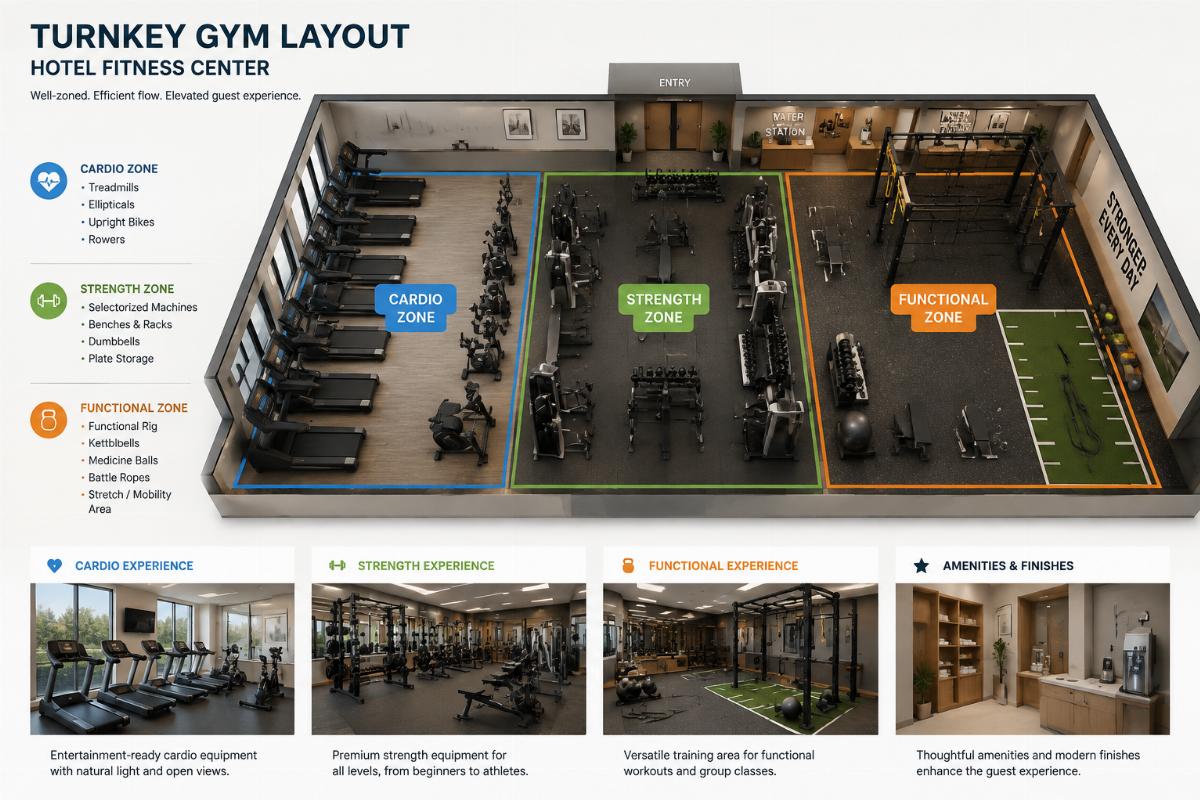
The value becomes most visible in mid-size projects—hotel fitness centers, apartment complex gyms, and multi-studio commercial chains. A hotel developer in southern Vietnam needed to equip fitness rooms across several properties with varying floor areas. Sourcing piece-by-piece would have meant managing multiple freight forwarders, reconciling different lead times, and accepting aesthetic mismatches across properties. By working with a single turnkey-oriented gym equipment supplier for Vietnam, the developer received tailored equipment lists for each property, optimized for the specific square footage and expected guest profile. The cardio selection emphasized compact commercial treadmills and ellipticals for smaller hotel rooms, while the flagship property received a full strength and functional zone. Container consolidation reduced freight costs noticeably, and the unified finish across all properties reinforced brand consistency.
[NEED_CITE: space efficiency benchmarks for commercial gym layout planning in hospitality settings]
The turnkey model also simplifies future expansion. When the same gym equipment supplier for Vietnam supplied additional equipment for a property extension, the new units matched the original batch in finish, control interface logic, and spare parts compatibility. This continuity is nearly impossible to achieve when sourcing from multiple vendors over time.
After-Sales Support: The Hidden Advantage of Direct Factory Sourcing
A gym equipment supplier for Vietnam that maintains direct communication channels, spare parts inventory, and remote technical support capability reduces equipment downtime far more effectively than a distant brand with a local distributor layer.
The common objection to factory-direct sourcing is the perceived lack of after-sales support. This objection was valid a decade ago. Today, a serious gym equipment supplier for Vietnam typically maintains dedicated export service teams fluent in English and Vietnamese, spare parts warehouses with fast-dispatch capability, and remote diagnostic support for electronic console issues.
Consider the difference in a failure scenario. A control board fails on a commercial treadmill in a Hanoi gym chain. If the equipment was sourced through a European brand’s regional distributor, the claim may pass through the distributor, the brand’s regional office, and finally the factory. Lead times stretch. If the equipment was sourced directly from a responsive gym equipment supplier for Vietnam, the gym manager sends a photo and error code to the factory’s support team, receives a diagnosis within a short timeframe, and a replacement board ships on the next available flight or express freight. The gym is back online in days, not weeks.
[NEED_CITE: best practices for commercial gym equipment maintenance and spare parts logistics in emerging markets]
A fitness chain operating across multiple Vietnamese cities standardized its equipment sourcing with one gym equipment supplier for Vietnam partly for this reason. When a batch of selectorized machines needed cable replacements after extended heavy use, the factory shipped the correct gauge cables with installation guides. The chain’s in-house maintenance team handled the replacements without waiting for a visiting technician. This self-sufficiency model works only when the gym equipment supplier for Vietnam invests in clear documentation, video guides, and responsive technical communication.
The after-sales relationship also feeds back into product improvement. When Vietnamese gym operators report recurring wear patterns on specific components, a direct-supply factory can iterate the design for the next production batch. This feedback loop is slower and more filtered when multiple intermediary layers exist between the end user and the engineering team.

Conclusion
Sourcing gym equipment for Vietnam is an exercise in climate-matched engineering, not spec-sheet comparison. A dependable gym equipment supplier for Vietnam validates motor thermal margins, steel corrosion protection, and electronics sealing against local humidity and heat before quoting. Factory-direct procurement from China delivers cost and customization advantages, but only when paired with rigorous site surveys, duty-cycle analysis, and document verification. Turnkey packages and direct after-sales support further reduce lifetime ownership risk, turning a one-time purchase into a long-term operational partnership.


