01 / Scenario
STUDIO
P
High-End Pilates Studios
Premium aesthetics meet quiet operation for boutique studio environments.
ISO
9001
CE
Certified
OEM
Available
10YR
Warranty
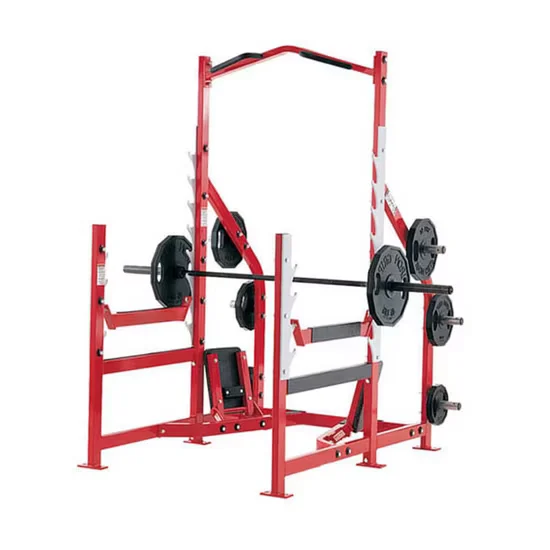
Power Rack Pull Up Machine, 1830×1200×1876mm Frame, 98kg Net Weight — engineered with industrial-grade steel tubing and robotic MIG continuous welding for high-traffic commercial environments, featuring an integrated pull-up station with reinforced connection nodes for multi-grip training versatility. Each unit undergoes individual load testing before shipment, backed by a 10-year frame warranty and complimentary floor planning support for optimal spacing and safety clearances.
// Spec Highlights
• Direct from Manufacturer · No Middlemen · Worldwide Shipping
01
// Material
Imported Solid Wood
Premium hardwood frames sourced for density and visual warmth.
02
// Hardware
Medical-Grade Silent
Whisper-quiet pulleys and springs for clinical environments.
03
// Customization
Appearance OEM
Color, upholstery, and branding tailored to your studio.
04
// Service
Layout Design
Free venue planning for studios and rehab institutions.
Every component is selected for longevity, performance, and aesthetic harmony - from imported hardwood frames to silent medical-grade accessories.
// Features
11-Gauge Frame with Traceable Steel — Each commercial power rack with pull up station is built from mill-certified Q235/Q345 industrial steel, coil-level traceability verified before cutting begins.
| Parameter | Value |
|---|---|
| Product Type | Power Rack |
| Frame Tube Size | 3×3 inch, 11-gauge |
| Steel Grade | Q235 / Q345 industrial steel, mill-certified |
| Welding Type | Robotic MIG continuous weld |
| Product Dimensions | 1830×1200×1876mm |
| Net Weight | 98kg |
| Powder Coating | 200μm scratch-resistant industrial finish |
| Assembly State | Fully assembled |
| Power Source | Manual |
| Exercise Part | Leg, Waist, Arm |
| Certification | ISO 9001:2015, CE |
| OEM/ODM | Available |
| Transport Package | Plywood Case |
| Facility Type | Typical Use |
|---|---|
| Commercial gym strength floor | Primary squat and overhead pressing station with integrated pull-up bar |
| CrossFit box functional zone | High-rep barbell cycling and bodyweight gymnastics anchor point |
| University strength and conditioning room | Team-based compound lifting with pull-up progressions |
| Hotel and resort fitness center | Space-efficient dual-purpose station for limited-footprint layouts |
| Professional athletic performance center | Loaded squat and chin-up combination for sport-specific power development |
Many suppliers label frames "commercial grade" without disclosing tube gauge or steel grade, leaving buyers unable to verify load-bearing capacity. Under repeated heavy squatting, spot-welded joints develop micro-cracks at stress concentration points — failures invisible during visual QC but catastrophic under eccentric loading.
The commercial power rack with pull up station from BICKFIT eliminates this risk through robotic MIG continuous welding and 11-gauge frame steel with mill-certified material traceability. [NEED_CITE: weld classification and fatigue performance in structural steel]
Spot welds pass initial inspection but fail cyclically; continuous welds distribute stress along the entire joint length. The pull-up station integration point receives reinforced gusseting at the top crossmember, ensuring the vertical load path from chin-ups transfers directly into the main frame without creating a secondary failure node.
This commercial power rack with pull up station occupies the core compound-lifting zone, serving as the primary anchor for barbell back squats, front squats, overhead presses, and weighted pull-ups. It pairs with plate-loaded lateral machines and functional rig systems to create a complete free-weight circuit. The 1830×1200mm footprint accommodates users across a wide stature range, while the 1876mm total height provides adequate clearance for overhead pressing and hanging movements. High-traffic facilities benefit from the dual-function design, reducing equipment count without sacrificing exercise variety.
Commercial environments subject frames to static loads during heavy squats, impact loads during barbell re-racking, and eccentric loading during pull-ups with kipping variations. The robotic MIG continuous weld eliminates cold joints and spot-weld weak points, distributing cyclic stress across the full joint length rather than concentrating it at discrete nodes. [NEED_CITE: structural fatigue behavior of welded steel joints under cyclic loading] The 200μm powder coating resists chipping at barbell contact points and withstands daily exposure to sweat and alkaline cleaning agents. Grip surfaces and J-cup contact areas experience the highest wear frequency; these components are designed for field replacement without frame modification.
The 3×3 inch, 11-gauge frame tube provides a section modulus that resists lateral deflection during asymmetric loading — such as uneven barbell placement or single-arm pull-up variations. Thinner-wall tubes of identical outer dimension will buckle at lower thresholds, even if the steel grade matches. Robotic MIG welding with continuous bead deposition ensures uniform throat thickness along the entire seam, eliminating the variability inherent in manual spot welding. The pull-up bar mounting nodes are reinforced with additional gusset plates, transferring hanging loads into the uprights without creating stress risers. The 200μm powder coating, applied after sandblast surface preparation, provides impact resistance at barbell catch points and corrosion protection in humid training environments.
Switching to thin-wall tubing reduces material cost per unit but introduces permanent frame deformation under repeated loads exceeding the reduced yield threshold — a failure that compromises barbell path alignment and creates safety hazards. Replacing spot-welded frames after joint cracking incurs full unit replacement cost plus liability exposure. Non-sealed bearing systems in any integrated cable or attachment points develop play within months, requiring frequent adjustment or replacement. Low-density upholstery and grip covers compress permanently under daily use, demanding replacement cycles measured in months rather than years. Inadequate powder coating thickness exposes bare steel at contact points within the first year, initiating corrosion that spreads beneath the coating film.
Every commercial power rack with pull up station undergoes individual load testing before shipment — not batch sampling — verifying structural integrity at rated capacity. The 11-gauge frame steel is traceable to the original coil via mill certification, providing auditable material provenance. Robotic MIG continuous welding ensures every joint meets the same deposition standard. The 200μm industrial powder coating provides long-term surface protection in high-traffic environments. A 10-year frame warranty backs the structural investment. 2D-3D CAD layout support ensures this commercial power rack with pull up station is positioned with correct spacing for safe barbell path clearance and user circulation. OEM private label and custom color options are available for brand-aligned deployments.
Provide your strength floor area dimensions and target equipment list to receive a 2D-3D CAD layout showing optimal commercial power rack with pull up station placement and safety clearances. Specify your average daily user volume so the structural grade recommendation matches actual usage intensity. Indicate the user stature range to confirm J-cup height adjustment and pull-up bar clearance meet your population’s needs. Custom frame colors, facility logo placement, and upholstery material selections can be confirmed during the specification review.
Q: How can I verify that a power rack frame meets true commercial-grade structural requirements?
A: Request the mill-certified steel grade report traceable to the original coil number, and confirm the frame uses 11-gauge steel in a 3×3 inch tube profile. Verify that welding is robotic MIG continuous bead rather than manual spot weld, and that each unit receives individual load testing before shipment with a documented test record. These four criteria distinguish structurally verified commercial equipment from products that only carry a commercial label.
Q: What is the relationship between frame tube wall thickness and maximum safe load capacity?
A: The outer dimension of the tube determines the section modulus, but the wall gauge determines whether that section can resist buckling under compressive and eccentric loads. An 11-gauge wall in a 3×3 inch tube provides a significantly higher deformation threshold than a thinner-wall tube of identical outer size. Under repeated heavy squatting loads, thin-wall frames develop permanent lateral deflection that compromises barbell path alignment and structural safety over time.
Q: What structural considerations apply to the integrated pull-up station on this rack?
A: The pull-up bar mounting nodes must transfer hanging and dynamic loads — including kipping variations — directly into the main uprights without creating stress concentration points. BICKFIT reinforces these connection points with additional gusset plates welded via robotic MIG continuous process, ensuring the load path remains within the primary frame structure. The top crossmember receives specific attention during the individual load test to verify pull-up station integrity matches the main frame rating.
Q: How should I plan safety clearance and spacing when installing this power rack in my facility?
A: The 1830×1200mm footprint requires a minimum 900mm clearance on all sides to accommodate barbell path during squats and presses, plus user circulation for loading plates and performing pull-ups. When arranging multiple units in a row, maintain adequate lateral spacing so that users at adjacent stations do not interfere with each other’s barbell trajectory. BICKFIT provides 2D-3D CAD layout support to optimize your specific floor plan for safety and training density.
Q: What maintenance items should I expect for long-term commercial operation of this rack?
A: Quarterly inspection of robotic MIG weld seams at high-stress nodes — particularly the pull-up station gussets — ensures early detection of any surface irregularities. J-cup contact padding and grip surfaces should be checked monthly and replaced before wear exposes bare metal. The 200μm powder coating requires cleaning with pH-neutral agents to preserve the film integrity. Annual re-torque of pull-up bar mounting bolts maintains connection rigidity under cyclic loading conditions.
Premium aesthetics meet quiet operation for boutique studio environments.
Medical-grade silence and precision for sports & postpartum recovery.
Furniture-grade craftsmanship for premium residential installations.
Compact premium setups for one-on-one and small-group training.
Aesthetic Pilates integration for hybrid wellness studio programming.
Multi-unit deployment with instructor-grade reliability for certification programs.
Tell us about your project. Our team will respond within 24 hours with pricing, customization options, and shipping details.
// Sales Director
William
+86 132 2531 1800
// Export Manager
Bella
+86 198 5412 8032
william@bickfit.com