01 / Scenario
STUDIO
P
High-End Pilates Studios
Premium aesthetics meet quiet operation for boutique studio environments.

ISO
9001
CE
Certified
OEM
Available
10YR
Warranty
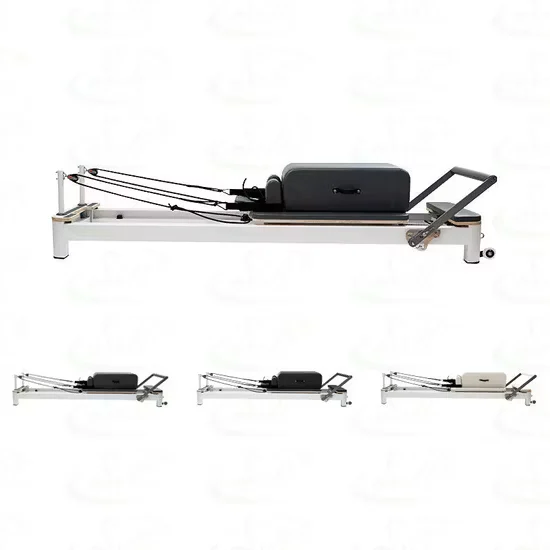
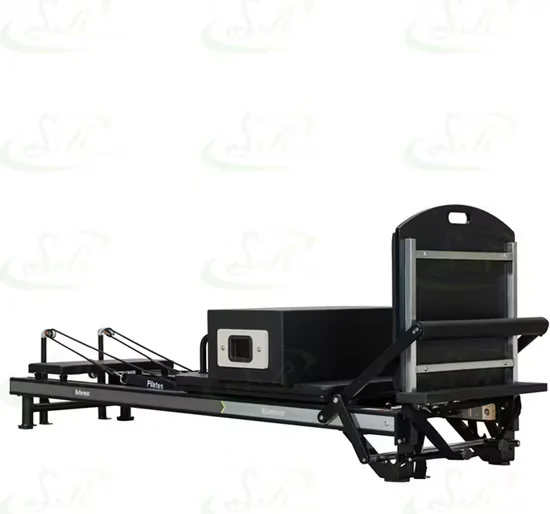
Aluminium Pilates Reformer, 2570×730×890mm, 90kgs Net Weight — engineered with an aluminium alloy frame for high-rigidity carriage glide and reduced structural flex under repetitive spring tension. Includes modular Long Box, Jump Board, and Platform attachments for multi-discipline studio programming. Backed by a 3-year warranty and full OEM customization from a manufacturer with 17 years of commercial fitness equipment production.
// Spec Highlights
• Direct from Manufacturer · No Middlemen · Worldwide Shipping
01
// Material
Imported Solid Wood
Premium hardwood frames sourced for density and visual warmth.
02
// Hardware
Medical-Grade Silent
Whisper-quiet pulleys and springs for clinical environments.
03
// Customization
Appearance OEM
Color, upholstery, and branding tailored to your studio.
04
// Service
Layout Design
Free venue planning for studios and rehab institutions.
Every component is selected for longevity, performance, and aesthetic harmony - from imported hardwood frames to silent medical-grade accessories.
// Features
Every Unit Load-Tested Before Shipment — each commercial aluminium pilates reformer undergoes full-travel load cycling to verify carriage glide, spring tension consistency, and frame deflection limits prior to leaving the factory.
| Parameter | Value |
|---|---|
| Product Type | Pilates Reformer |
| Frame Material | Aluminium Alloy |
| Specification | 2570 × 730 × 890 mm |
| Net Weight | 90 kgs |
| Accessory Options | Long Box / Jump Board / Platform |
| Color Options | Black (customization available) |
| Logo | Customized Is Allowed |
| Warranty | 3 Years |
| Production Capacity | 80 Pieces / Month |
| Facility Type | Typical Use |
|---|---|
| Pilates studio | Classical and contemporary reformer classes, group sessions |
| Yoga and mind-body studio | Flexibility, alignment, and breath-focused conditioning |
| Rehabilitation and conditioning center | Post-injury mobility recovery, corrective movement |
| Boutique fitness facility | Small-group reformer classes, semi-private training |
| Private training studio | One-on-one sessions, personalized programming |
An aluminium frame either holds plane tolerance over thousands of carriage cycles or it does not — there is no middle ground in daily studio use.
Walk into most studios that bought reformers on price alone and you will find the same complaints: carriage wobble developing within the first year, spring anchor points shifting under repeated jump board impacts, and soft bolsters losing their shape by month four. These are not maintenance issues. They are structural specification failures that appear when aluminium wall thickness, weld node geometry, and guide rail flatness are left unverified at purchase. For studio operators running back-to-back classes six days a week, the commercial aluminium pilates reformer must be evaluated as a load-bearing machine first and a fitness accessory second. [NEED_CITE: EN 957 structural requirements for stationary training equipment]
A reformer occupies a distinct zone on the studio floor — it is a long-axis, linear-motion machine that demands clear travel space at both head and foot ends. In a mixed-modality studio, it pairs naturally with Cadillac units and Wunda chairs to cover the full Pilates apparatus curriculum, while mat zones handle overflow. The commercial aluminium pilates reformer suits facilities running anywhere from eight to sixteen group-class hours per day, accommodating adult practitioners across a broad height and weight range thanks to its 2570 mm bed length and modular accessory configuration.
A reformer endures cyclical eccentric loading every time a practitioner presses into the foot bar against spring resistance, then returns under controlled deceleration. In a studio running six classes daily, that translates to hundreds of full-travel cycles per day across the guide rail and carriage interface. The aluminium alloy frame absorbs spring recoil forces at every anchor point, while the carriage rollers transmit lateral shear into the rail walls. Upholstery contact zones — the headrest, shoulder blocks, and foot bar padding — endure compression and friction simultaneously, and the powder-coated or anodized surface must resist saline sweat and cleaning chemicals applied between every session. [NEED_CITE: fatigue cycling standards for fitness equipment structural components]
The aluminium alloy construction matters less than the wall thickness and extrusion profile of the guide rail itself. A wider rail cross-section resists torsional deflection when a practitioner applies off-center force during single-leg work, keeping the carriage tracking straight rather than binding at the rail edges. Spring systems define the resistance curve — whether springs are rated for progressive or linear tension directly shapes how the reformer feels during footwork versus arm series. The inclusion of a Long Box, Jump Board, and Platform as standard accessory options means the unit supports classical repertoire, plyometric conditioning, and standing balance work without requiring separate purchases or third-party adapters.
Operators who select reformers based on showroom appearance often discover the real expense arrives in year two. Thin-walled aluminium rails develop measurable play at the carriage interface, requiring roller replacements that cascade into full rail realignment. Non-standard spring fittings mean replacement springs are unavailable from alternate suppliers, locking the studio into a single vendor. Low-density foam in the shoulder blocks and headrest compresses permanently, forcing full reupholstery far earlier than expected. Coating that chips at the foot bar and spring contact points exposes bare aluminium to oxidation, degrading appearance and inviting member complaints in a premium studio environment. [NEED_CITE: maintenance cost analysis of commercial fitness equipment over three-year ownership]
The aluminium alloy frame is sourced and fabricated within the same production chain, meaning material certificates are traceable back to the extrusion batch. Robotic MIG welding ensures continuous weld lines at every frame node rather than spot welds that pass visual inspection but fail under repeated jump board impacts. Every unit undergoes load testing before crating — not sample-based QC, but individual verification of carriage travel, spring tension, and frame rigidity. The 200μm industrial powder coating protects high-contact zones from sweat corrosion and cleaning agents. A 3-year warranty backs the structural package, and OEM customization — logo, color, accessory bundles — is handled in-house rather than outsourced to third-party finishers.
Share your studio floor dimensions and class schedule volume to receive a 2D layout showing reformer spacing, instructor circulation paths, and accessory storage zones. Specify daily user volume and class format — classical repertoire, group reformer, or rehab-focused sessions — so accessory configuration and spring resistance grades are matched to actual programming. Indicate any branding, color, or upholstery customization requirements at the inquiry stage to confirm lead times.
Q: How does an aluminium alloy frame compare to wood or steel for daily studio use?
A: Aluminium offers a weight advantage for studio rearrangement while maintaining structural rigidity when the extrusion profile and wall thickness are specified correctly. Wood frames absorb moisture and can warp in humid studio environments, requiring periodic realignment. Steel frames are heavier and may corrode if powder coating chips at high-contact points. Aluminium resists oxidation naturally and is easier to maintain cosmetically over years of commercial scheduling.
Q: What should I check to confirm the guide rail will stay precise?
A: Request the rail flatness tolerance from the manufacturer and verify that carriage rollers make full-surface contact along the rail channel without lateral play. Run the carriage through its complete travel range under load and observe whether it tracks straight or drifts to one side. Ask for the roller bearing specification — sealed units prevent dust and chalk ingress that accelerates wear in busy studio floors.
Q: How do spring resistance grades affect class programming?
A: Most reformers ship with a set of color-coded springs at varying tension ratings, allowing instructors to scale resistance for footwork, arm series, and rehabilitation protocols. Progressive-rate springs provide lighter initial tension that increases through the range of motion, while linear springs maintain consistent resistance. Confirm that replacement springs in each grade are available as individual spare parts rather than full-set purchases only.
Q: How often does the upholstery need replacing in a commercial setting?
A: This depends on foam density and fabric abrasion rating. High-density foam in shoulder blocks and headrests retains shape through thousands of compression cycles, while low-density foam flattens within months of heavy use. Vinyl or synthetic leather covers rated for commercial abrasion standards withstand daily cleaning without cracking. Specify that replacement bolster covers and foam inserts are available as separate spare parts from the manufacturer.
Q: Are the Long Box, Jump Board, and Platform interchangeable with other reformer brands?
A: Accessory compatibility depends on the mounting interface dimensions and carriage width. This reformer includes all three accessories configured for its own carriage and frame geometry, ensuring secure attachment without adapters. If you operate mixed-brand reformer floors, verify interface specifications before assuming cross-compatibility, as rail width and mounting hole patterns vary between manufacturers.
Premium aesthetics meet quiet operation for boutique studio environments.
Medical-grade silence and precision for sports & postpartum recovery.
Furniture-grade craftsmanship for premium residential installations.
Compact premium setups for one-on-one and small-group training.
Aesthetic Pilates integration for hybrid wellness studio programming.
Multi-unit deployment with instructor-grade reliability for certification programs.
Tell us about your project. Our team will respond within 24 hours with pricing, customization options, and shipping details.
// Sales Director
William
+86 132 2531 1800
// Export Manager
Bella
+86 198 5412 8032
william@bickfit.com