01 / Scenario
STUDIO
P
High-End Pilates Studios
Premium aesthetics meet quiet operation for boutique studio environments.
ISO
9001
CE
Certified
OEM
Available
10YR
Warranty
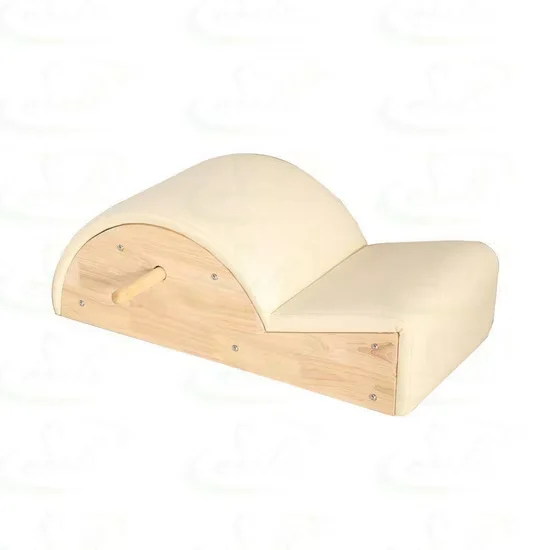
Commercial Pilates Spine Corrector, Solid Wood Construction, 960×470×360mm — engineered with solid wood frame and reinforced joinery for structural stability under repetitive studio use, 20kg net weight ensures non-slip performance without floor anchoring. Available in customized logo and solid color finishes to match studio interiors. Direct from our 15,000㎡ vertically integrated facility with three-stage inspection and load testing on every unit before shipment.
// Spec Highlights
• Direct from Manufacturer · No Middlemen · Worldwide Shipping
01
// Material
Imported Solid Wood
Premium hardwood frames sourced for density and visual warmth.
02
// Hardware
Medical-Grade Silent
Whisper-quiet pulleys and springs for clinical environments.
03
// Customization
Appearance OEM
Color, upholstery, and branding tailored to your studio.
04
// Service
Layout Design
Free venue planning for studios and rehab institutions.
Every component is selected for longevity, performance, and aesthetic harmony - from imported hardwood frames to silent medical-grade accessories.
// Features
Solid Wood Core — Kiln-dried hardwood joinery verified for continuous studio use, avoiding the warping and delamination common in veneer or particle board alternatives.
| Parameter | Value |
|---|---|
| Product Type | Pilates Spine Corrector |
| Material | Solid Wood |
| Product Dimensions | 960×470×360mm |
| Net Weight | 20kgs |
| Color | Solid Color (customizable) |
| Logo | Customized Is Allowed |
| Target User | Adult, Unisex |
| Warranty | 3 Years |
| Production Capacity | 80 Pieces/Month |
| Facility Type | Typical Use |
|---|---|
| Pilates studio | Spinal articulation and core stabilization exercises in group or private sessions |
| Rehabilitation and physical therapy center | Postural correction and thoracic mobility work under clinical supervision |
| Boutique fitness studio | Recovery and flexibility programming in small-group functional zones |
| Commercial gym functional and recovery zone | Dedicated mobility station between strength training sessions |
Solid hardwood resists the warping and delamination that engineered alternatives develop within months of commercial cycling.
Many spine correctors on the market use particle board cores with thin veneer skins. Under the repetitive loading of daily studio classes — users mounting, dismounting, and shifting across the curved surface — these laminated panels absorb moisture from sweat and cleaning solutions, causing the substrate to swell and the veneer to peel at the edges [NEED_CITE: material durability standards for commercial fitness and studio equipment]. The result is equipment pulled from rotation not because of structural failure, but because surface degradation makes it unsuitable for client-facing environments. A commercial Pilates spine corrector built from solid hardwood avoids this failure mode entirely. The grain runs continuously through the full thickness of the component, so there is no laminate interface to separate, and the surface can be sanded and refinished rather than replaced.
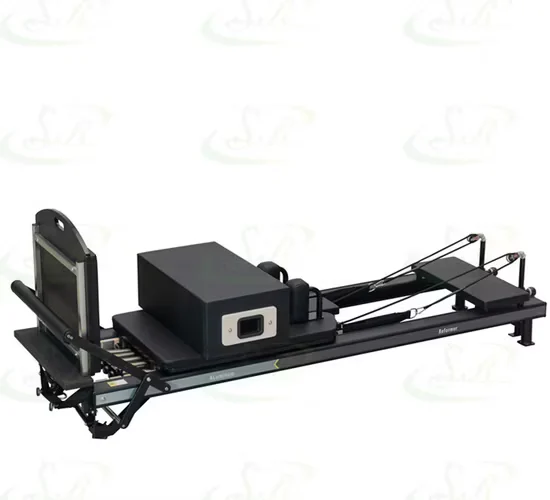
The Pilates spine corrector occupies a dedicated mobility and articulation station, complementing reformers, CADILLACs, and mat work zones. It addresses thoracic extension, lateral flexion, and rotational movement patterns that are difficult to isolate on spring-based apparatus. In a commercial studio layout, it requires minimal floor space relative to its programming value, fitting into recovery corners or transitional areas between larger equipment. The 960×470mm footprint accommodates users across a broad height range without requiring repositioning or adjustment between sessions.
The curved arc of the spine corrector concentrates load at the apex, where user body weight transfers through a relatively small contact area. Every session subjects this region to static loading during sustained holds and dynamic impact as users mount and shift positions. The joinery at the base-to-arc transition experiences cyclical tensile and shear stress as the unit flexes under off-center loading [NEED_CITE: stress distribution in curved wooden fitness structures]. Surface finish must withstand sweat exposure, frequent wiping with disinfectants, and friction from clothing and mat contact. Solid wood with a sealed commercial finish maintains dimensional stability through these cycles, whereas particle board absorbs moisture at exposed edges and fastener holes, progressively losing compressive strength over time.
The 960×470×360mm dimension set establishes the curvature radius that determines spinal articulation range. A shorter or flatter arc limits thoracic extension depth; a taller arc may exceed comfortable range for users with limited mobility. At 20kg net weight, the unit remains stable during use without floor anchoring — a function of both mass distribution and base geometry. Solid wood construction allows joinery methods such as dowel-reinforced or mortise-and-tenon connections at high-stress transitions, distributing load across a larger glue surface area compared to butt joints with mechanical fasteners. The sealed finish protects against moisture ingress while maintaining the tactile surface quality expected in a client-facing studio environment.
A veneer-wrapped spine corrector may pass visual inspection at delivery, but the underlying particle board or MDF core has no structural redundancy once the surface seal is breached. Moisture from a single spilled cleaning solution can initiate swelling that propagates along the substrate. In a commercial environment where equipment is cleaned between every session, this degradation timeline accelerates. Studio owners then face the choice of pulling the unit from service or attempting cosmetic repairs that do not restore structural integrity. Solid wood units can be sanded and refinished in place, extending service life without returning equipment to the manufacturer [NEED_CITE: comparative lifecycle costs of solid wood versus engineered wood in commercial furniture].
Our 11-gauge steel frame expertise extends to how we evaluate structural integrity across all materials. For the Pilates spine corrector, we apply the same verification discipline: material traceability to the lumber source, dimensional accuracy checked against the 960×470×360mm specification on every production run, and load testing that simulates years of studio cycling. The 200μm industrial coating discipline we apply to steel translates to sealed commercial wood finishes calibrated for high-frequency disinfectant exposure. Custom logo application and solid color matching are handled in-house, ensuring branding consistency across multi-unit studio orders. Our 2D-3D floor planning support accounts for the spine corrector’s footprint and required clearance within your studio layout. The 3-year warranty reflects confidence in material selection and joinery methods under continuous commercial demand.
Provide your studio floor plan to receive a 2D-3D layout showing the spine corrector integrated with existing apparatus and required clearance zones. Specify daily session volume and user demographics to confirm the solid wood specification matches your operational demand. Indicate color and logo customization requirements for brand alignment across your studio environment. Multi-unit orders for franchise or chain locations can be coordinated with consistent finish and branding across all deliveries.
Q: How do I distinguish a commercial-grade Pilates spine corrector from a home-use version?
A: Commercial units use solid hardwood construction with reinforced joinery at stress transitions, verified dimensional accuracy, and finishes rated for repeated disinfectant exposure. Home-use versions often employ particle board cores with veneer surfaces that degrade under high-frequency cleaning cycles. Check for stated weight ratings, material traceability, and warranty terms that reflect continuous studio-level demand rather than occasional personal use.
Q: What are the durability differences between solid wood and engineered wood in spine correctors?
A: Solid wood maintains structural integrity through moisture exposure and surface wear because the grain runs continuously through the full component thickness. Engineered wood cores absorb moisture at exposed edges and fastener points, leading to swelling and loss of compressive strength. When solid wood surfaces show wear, they can be sanded and refinished; engineered wood requires full panel replacement once the laminate surface is compromised.
Q: What dimensions and curvature are optimal for spinal articulation support?
A: The 960×470×360mm specification establishes a curvature radius that accommodates thoracic extension across a broad user height range without exceeding comfortable mobility limits. A flatter arc reduces articulation depth, while a steeper profile may limit accessibility for users with restricted range of motion. Verify that stated dimensions match the actual product to ensure consistent programming across multiple units in a studio environment.
Q: What customization options are available for studio branding?
A: Logo application and solid color finishes can be specified to match your studio interior design and brand identity. Customization is handled during production rather than applied post-manufacture, ensuring finish durability under commercial cleaning protocols. Provide color codes and logo artwork files with your order to maintain consistency across multi-unit deployments in franchise or chain studio locations.
Q: What does the warranty cover for high-traffic commercial environments?
A: The 3-year warranty covers structural defects in solid wood components and joinery under normal commercial use conditions. It does not cover surface finish wear from cleaning protocols or damage from misuse. Replacement parts and refinishing guidance are available through the manufacturer to extend equipment service life without requiring full unit replacement in active studio environments.
Premium aesthetics meet quiet operation for boutique studio environments.
Medical-grade silence and precision for sports & postpartum recovery.
Furniture-grade craftsmanship for premium residential installations.
Compact premium setups for one-on-one and small-group training.
Aesthetic Pilates integration for hybrid wellness studio programming.
Multi-unit deployment with instructor-grade reliability for certification programs.
Tell us about your project. Our team will respond within 24 hours with pricing, customization options, and shipping details.
// Sales Director
William
+86 132 2531 1800
// Export Manager
Bella
+86 198 5412 8032
william@bickfit.com