01 / Scenario
STUDIO
P
High-End Pilates Studios
Premium aesthetics meet quiet operation for boutique studio environments.

ISO
9001
CE
Certified
OEM
Available
10YR
Warranty
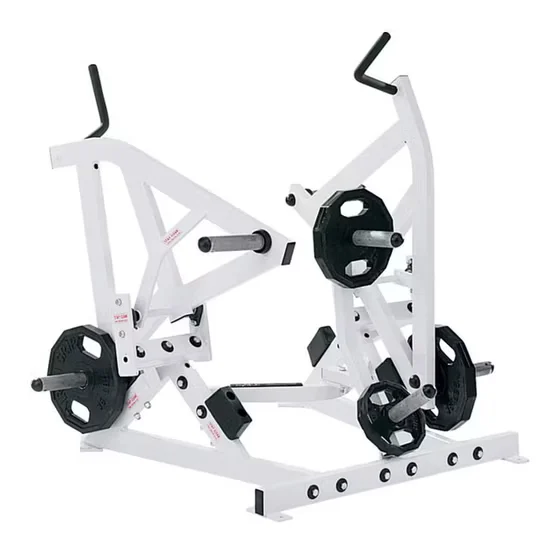
Plate Loaded 4 Way Neck Machine, 900×1400×1600mm, 130kg Net Weight — built with steel frame construction and plate loaded resistance for neck flexion, extension, and lateral training in commercial environments. ISO9001 and CE certified for high-traffic gym applications. Every unit undergoes load testing before shipment, backed by 10-year frame warranty and floor planning support.
// Spec Highlights
• Direct from Manufacturer · No Middlemen · Worldwide Shipping
01
// Material
Imported Solid Wood
Premium hardwood frames sourced for density and visual warmth.
02
// Hardware
Medical-Grade Silent
Whisper-quiet pulleys and springs for clinical environments.
03
// Customization
Appearance OEM
Color, upholstery, and branding tailored to your studio.
04
// Service
Layout Design
Free venue planning for studios and rehab institutions.
Every component is selected for longevity, performance, and aesthetic harmony - from imported hardwood frames to silent medical-grade accessories.
// Features
Factory-Verified Load Capacity — every unit undergoes full load testing before leaving the production line, with inspection records traceable to the assembly station.
| Parameter | Value |
|---|---|
| Product Type | Plate Loaded Neck Machine |
| Frame Material | Steel |
| Frame Construction | Continuous robotic MIG weld |
| Loading Type | Plate loaded |
| Product Dimensions | 900×1400×1600mm |
| Net Weight | 130kg |
| Powder Coating | 200μm scratch-resistant finish |
| Assembly State | Unfolded |
| Power Source | Manual |
| Exercise Part | Neck |
| Target Users | Adult, Unisex |
| Certification | ISO9001, CE |
| Warranty | 10-year frame coverage |
| Facility Type | Typical Use |
|---|---|
| Commercial gym strength floor | Dedicated neck and upper trapezius station within the free weight zone |
| University strength and conditioning room | Athlete neck training for contact sports programs |
| Rehabilitation and performance center | Supervised neck flexion and extension during return-to-play protocols |
| Hotel fitness center | Low-profile neck training option for compact strength areas |
The frame either handles repetitive off-axis loading or it develops play at every pivot within the first year.
When a commercial plate loaded 4 way neck machine uses vague "commercial grade" tube specifications, gym owners have no way to verify whether the steel can withstand daily eccentric loading from hundreds of users. Headrest brackets joined by spot welds tend to crack under repeated high-frequency use, and unsealed guide rods allow dust accumulation that eventually causes binding under off-center plate loading. [NEED_CITE: EN 957 structural requirements for stationary training equipment] The difference between a unit that runs tight for years and one that develops wobble within months comes down to traceable steel specs and continuous weld lines.
This commercial plate loaded 4 way neck machine addresses the sagittal and frontal planes through four distinct movement directions: flexion, extension, and bilateral lateral flexion. In a strength floor configuration, it complements the trap bar station and shrug rack by isolating cervical musculature that compound lifts only engage indirectly. The footprint of 900×1400mm fits within a standard equipment bay, making it practical for facilities running moderate to high traffic density. The plate loaded design accommodates users of varying neck strength levels, from general fitness members adding minimal load to athletes stacking plates for sport-specific conditioning.
The headrest pivot on a commercial plate loaded 4 way neck machine endures a specific fatigue profile. Each repetition applies lateral or anterior-posterior force through a short lever arm, concentrating stress at the weld junction where the headrest bracket meets the main upright. In a busy facility, this junction cycles hundreds of times daily, and the cumulative load path reveals any weakness in weld penetration or joint geometry. [NEED_CITE: weld classification and fatigue performance in structural steel] Sweat and cleaning chemicals attack the coating at contact points where the forehead and neck press against the upholstery, making powder coating thickness and surface preparation directly relevant to long-term appearance and corrosion resistance.
Frame tube gauge determines the deformation threshold when users load the headrest asymmetrically or push through end-range motion with momentum. An 11-gauge steel frame resists flexing at the upright where the pivot mechanism mounts, keeping the movement path stable rather than introducing lateral wobble that degrades the user experience. Continuous robotic MIG welding eliminates the cold joints and incomplete penetration that spot welding leaves at high-stress intersections. Sealed pivot bearings prevent gym dust and chalk residue from migrating into the bearing race, which is the primary cause of play development in high-traffic environments. The 200μm powder coating, applied over sandblasted steel, maintains adhesion at the contact zones where sweat and cleaning agents concentrate.
Thin-wall tubing on neck machines may pass a static visual inspection but begins to flex noticeably once users load multiple plates, and that flex introduces oscillation that accelerates fatigue at every welded joint. Spot-welded headrest brackets can separate under the specific torsional load pattern that lateral neck flexion creates, turning a maintenance issue into a liability question. Unsealed bearings develop play within months in environments where chalk dust and humidity combine, and replacing them requires taking the unit offline. Low-density upholstery compresses and splits along the forehead contact zone, creating a replacement cycle that adds up across a facility running multiple stations. [NEED_CITE: commercial upholstery compression and replacement intervals in high-traffic gym environments]
The 11-gauge frame steel comes with mill certification traceable to the coil, so the material specification is documented rather than claimed. Robotic MIG welding produces continuous weld beads at the headrest bracket and pivot mounting points, eliminating the spot welds that crack under repetitive neck training loads. Every unit is load tested before shipment with records tied to its serial number, not sampled from a batch. The 200μm industrial powder coating is applied after sandblasting, which is why it holds up at the sweat and cleaning contact points. The 900×1400mm footprint allows 600mm clearance on each side for safe loading and unloading, and this spacing is accounted for in the 2D-3D CAD layout support provided with each project. [NEED_CITE: equipment clearance and safety spacing standards for commercial gym floors] OEM private labeling is available for facilities running branded strength floors.
Provide the total strength floor area and your planned equipment list to receive a 2D-3D layout that positions the neck machine with correct safety clearances and user flow. Specify expected daily traffic volume so the structural grade and maintenance intervals match your operating conditions. Share the target user population’s body size range to confirm the headrest adjustment positions cover your membership. Detail any custom requirements including frame color, logo placement, or upholstery material to ensure these are built into the production specification rather than added after delivery.
Q: How do I verify whether a neck machine is genuinely commercial grade versus light commercial?
A: Request the mill certificate for the frame steel, which should specify the gauge, grade, and coil traceability. Ask for the welding method documentation — continuous MIG welds indicate commercial construction while spot welds suggest lighter duty. Load test records for individual units, not just sample testing, confirm the manufacturer validates each piece. Check whether the warranty explicitly covers commercial use at your expected traffic volume.
Q: What clearance space does this machine need on a commercial gym floor?
A: The machine footprint is 900×1400mm, and you need additional clearance on all sides for users to load and unload plates safely and for staff to perform maintenance. A minimum of 600mm on each side is standard practice. When planning multiple units or adjacent equipment, factor in the swing path of loaded plates and ensure no obstruction exists in the user entry and exit zones.
Q: Plate loaded versus selectorized — which loading system suits neck training better?
A: Plate loaded systems offer incremental loading flexibility, allowing small jumps that match the sensitivity of neck musculature. Selectorized pin systems provide faster weight changes between users, which benefits high-turnover environments. The choice depends on your membership profile: athlete-focused facilities often prefer plate loaded precision, while general commercial gyms may prioritize the speed and ease of selectorized stacks.
Q: What maintenance schedule should I expect for the pivot bearings?
A: Sealed bearings in the pivot mechanism require periodic inspection rather than regular lubrication. Check quarterly for smooth rotation and absence of lateral play. In high-humidity environments or facilities with heavy chalk use, shorten the inspection interval. If play develops, the sealed bearing cartridge is replaced rather than serviced, which is faster and restores original tolerances without specialist tools.
Premium aesthetics meet quiet operation for boutique studio environments.
Medical-grade silence and precision for sports & postpartum recovery.
Furniture-grade craftsmanship for premium residential installations.
Compact premium setups for one-on-one and small-group training.
Aesthetic Pilates integration for hybrid wellness studio programming.
Multi-unit deployment with instructor-grade reliability for certification programs.
Tell us about your project. Our team will respond within 24 hours with pricing, customization options, and shipping details.
// Sales Director
William
+86 132 2531 1800
// Export Manager
Bella
+86 198 5412 8032
william@bickfit.com