01 / Scenario
STUDIO
P
High-End Pilates Studios
Premium aesthetics meet quiet operation for boutique studio environments.

ISO
9001
CE
Certified
OEM
Available
10YR
Warranty
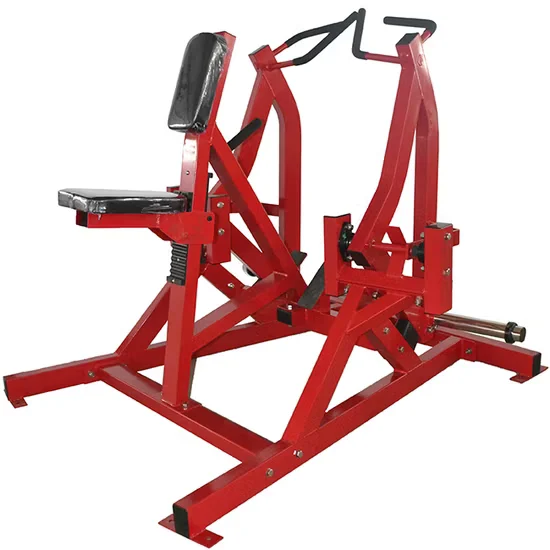
Plate Loaded Incline Pec Fly Machine, 1300×1150×1750mm, 141kg Net Weight — engineered with 11-gauge steel frame and robotic MIG continuous welding to eliminate spot-weld fatigue under heavy commercial use. Plate loaded mechanism with precision guide rods prevents binding during off-center loading cycles. Every unit undergoes individual load testing before shipment, backed by a 10-year frame warranty for high-traffic strength zones.
// Spec Highlights
• Direct from Manufacturer · No Middlemen · Worldwide Shipping
01
// Material
Imported Solid Wood
Premium hardwood frames sourced for density and visual warmth.
02
// Hardware
Medical-Grade Silent
Whisper-quiet pulleys and springs for clinical environments.
03
// Customization
Appearance OEM
Color, upholstery, and branding tailored to your studio.
04
// Service
Layout Design
Free venue planning for studios and rehab institutions.
Every component is selected for longevity, performance, and aesthetic harmony - from imported hardwood frames to silent medical-grade accessories.
// Features
Traceable Mill Steel — Every coil of 11-gauge Q235 and Q345 steel used in this plate loaded incline pec fly machine carries a mill certificate traceable to its origin, so gym owners know exactly what is holding up under daily heavy loading.
| Parameter | Value |
|---|---|
| Product Type | Plate Loaded Chest Machine |
| Frame Steel Gauge | 11-gauge |
| Frame Tube Size | 3×3 inch |
| Steel Grade | Q235 and Q345 industrial steel, mill-certified |
| Welding Type | Robotic MIG, continuous weld lines |
| Loading Type | Plate loaded |
| Bearing Type | Sealed industrial bearings |
| Powder Coating | 200μm scratch-resistant, sandblasted prep |
| Product Dimensions | 1300×1150×1750mm |
| Net Weight | 141kg |
| Certification | ISO 9001, CE |
| Warranty | 10-year frame |
| Facility Type | Typical Use |
|---|---|
| Commercial gym strength floor | Primary chest isolation station in the plate loaded section |
| Hotel fitness center | Upper body development for guests seeking controlled movement paths |
| University strength and conditioning room | Targeted pectoral work for athletic programs |
| CrossFit box functional zone | Accessory hypertrophy station complementing barbell programming |
Continuous robotic MIG welding eliminates the failure points that plague spot-welded frames under repeated heavy loading.
I have seen gym owners replace chest machines within eighteen months because the frame joints started cracking. The root cause is almost always spot welding — small welds that pass a quick visual check in the showroom but fracture under the cyclic stress of daily commercial use. When a member loads plates and presses through an incline arc, the force vectors shift constantly, and spot welds at those transition zones develop micro-cracks that spread fast. [NEED_CITE: weld classification and fatigue performance in structural steel] The plate loaded incline pec fly machine uses robotic MIG welding with continuous weld lines along every joint, distributing stress across a much longer seam instead of concentrating it at discrete points.
This machine targets the pectoralis major through a converging incline arc, emphasizing the clavicular head while the sealed bearings maintain a consistent resistance curve throughout the range. On a commercial strength floor, it pairs naturally with flat and decline plate loaded presses to give members complete chest coverage across three angles. The footprint fits standard commercial spacing grids, and the plate loaded incline pec fly machine suits facilities running moderate to high member traffic where equipment uptime directly affects member retention.
The incline press motion generates both static load at the bottom position and dynamic impulse at the top of each rep, creating fatigue cycles that compound across hundreds of daily sets. The continuous weld seams along the main frame resist crack propagation far better than spot welds at these stress concentration zones. Sealed bearings at the pivot points prevent sweat and chalk dust from penetrating the race, which is where unsealed units develop play and start rattling within the first year. [NEED_CITE: EN 957 structural requirements for stationary training equipment] The 200μm powder coating withstands daily contact with plates, cleaning chemicals, and member sweat without chipping down to bare steel.
The 11-gauge, 3×3 inch tube specification determines how much the frame deflects when a member loads heavy plates on the horns. Thinner tubes flex visibly under load, and that flex transfers to the pivot bearings, accelerating wear. The robotic MIG process produces continuous bead profiles that maintain consistent penetration depth, unlike manual welding where operator fatigue introduces cold joints and incomplete fusion. Sandblasting before powder coating removes mill scale and creates a mechanical anchor profile, which is why the 200μm coating stays bonded at high-contact zones like the plate horns and seat frame junctions. Sealed bearings at every pivot point eliminate the need for scheduled lubrication, cutting maintenance visits.
Thinner frame tubes deform permanently under heavy incline loads, and once a tube bends, no amount of straightening restores its original yield threshold. Spot-welded joints that crack mid-cycle create liability exposure for gym operators when a member is mid-set. Unsealed bearings require quarterly teardowns and re-greasing, and when that maintenance gets skipped, the pivot develops lateral play that changes the movement path. Low-density upholstery compresses flat within months under commercial use, forcing replacements that take the machine offline. [NEED_CITE: commercial fitness equipment maintenance cost analysis] Thin powder coating chips at plate contact points, exposing bare steel to sweat corrosion that spreads under the remaining finish.
The 11-gauge Q235 and Q345 steel is sourced with mill certificates, so every frame tube is traceable back to the coil. Robotic MIG welding produces continuous seams with no cold joints, verified through three-stage QC inspection before any unit leaves the Ningjin facility. Every plate loaded incline pec fly machine undergoes load testing at the factory — not sample-based testing, but every single unit. The 200μm industrial powder coating is applied over sandblasted surfaces for long-term adhesion in humid gym environments. The 10-year frame warranty reflects confidence in the structural specification. Floor planning CAD support ensures this machine fits with proper clearance zones around the plate horns and seat entry.
Share your strength floor square footage and target equipment list to receive 2D and 3D layout drawings that position this machine with proper safety clearances around the plate horns. Specify your expected daily member volume so the structural grade matches your traffic pattern. Provide the body size range of your primary user population to confirm the seat and back pad geometry fits without modification. Communicate any custom color, logo, or upholstery requirements early in the ordering process.
Q: How do I verify the steel gauge claims on a plate loaded chest machine before purchasing?
A: Request mill certificates that trace the steel coil to its origin, not just a generic material safety data sheet. Verify the tube wall thickness with calipers at an exposed cross-section if possible. Look for manufacturers who specify gauge and tube dimensions explicitly rather than using vague commercial grade language. [NEED_CITE: steel grade verification methods for fitness equipment] A reputable factory provides documentation linking each production batch to certified material.
Q: What is the relationship between frame tube size and actual load capacity on plate loaded equipment?
A: Larger tube cross-sections and thicker walls increase the moment of inertia, which directly reduces deflection under load. An 11-gauge wall in a 3×3 inch tube handles significantly more cyclic stress than thinner alternatives before reaching its fatigue threshold. The welding method also matters — continuous welds distribute force along the entire joint, while spot welds create stress concentrations that fail first under repeated heavy loading.
Q: Why choose plate loaded over selectorized machines for a high-traffic commercial gym?
A: Plate loaded machines have fewer moving parts, meaning less that can break under constant use. There are no weight stack guide rods to bind, no cable systems to fray, and no selector pins to lose. Members who train heavy often prefer the incremental loading flexibility of plates. The trade-off is floor space for plate storage, but the reduced maintenance burden makes plate loaded units favorable for facilities with dedicated strength zones.
Q: How should I plan spacing between plate loaded machines on a commercial gym floor?
A: Account for the full range of plate horn protrusion when loaded, plus member passage behind the machine. Typical safe clearance requires enough room for a member to load and unload plates without stepping into the travel path of adjacent equipment. Providing your floor dimensions allows for CAD layouts that optimize machine density while maintaining code-compliant egress routes between stations.
Premium aesthetics meet quiet operation for boutique studio environments.
Medical-grade silence and precision for sports & postpartum recovery.
Furniture-grade craftsmanship for premium residential installations.
Compact premium setups for one-on-one and small-group training.
Aesthetic Pilates integration for hybrid wellness studio programming.
Multi-unit deployment with instructor-grade reliability for certification programs.
Tell us about your project. Our team will respond within 24 hours with pricing, customization options, and shipping details.
// Sales Director
William
+86 132 2531 1800
// Export Manager
Bella
+86 198 5412 8032
william@bickfit.com