
China Hack Squat Machine vs Rep Fitness Durability | OEM Manufacturer
"Commercial-grade" stamped on a spec sheet means nothing if the guide rails melt in a Riyadh warehouse.
Chinese-manufactured hack squat machines can match or exceed Rep Fitness durability when buyers independently verify steel gauge, bearing specs, and coating processes — and this verification becomes non-negotiable for high-heat commercial environments like the Middle East.
I was crouching on a dusty floor in a Riyadh warehouse, sliding a feeler gauge into the guide rail gap of a freshly arrived hack squat. The welds had looked clean when I inspected them at the Shandong factory months earlier. But after sitting in a forty-plus-degree storage unit for two months, the rail coating had turned tacky. When the buyer tried a test rep, the carriage seized at the bottom of the track. That single shipment cost us the return freight and on-site replacement parts — and it pushed me off the quality floor and into the sales line. Since then, I have walked through hotel fitness rooms in Doha, commercial gyms in Jeddah, and distributor warehouses in Dubai. The lesson that stuck: steel thickness, rail coating chemistry, and bearing selection — not the "commercial" label — determine whether a hack squat survives three years of heavy use in desert climates. [NEED_CITE: failure mode distribution in commercial strength equipment under thermal stress]

Let me walk you through what actually separates a machine that lasts from one that becomes a warranty nightmare.
What Materials Determine Hack Squat Machine Durability?
Steel grade, wall thickness, and bearing specification are the three non-negotiable pillars of long-term structural integrity.
Most buyers skim the spec sheet, see "commercial-grade steel," and move on. That phrase carries no standardized definition across the industry. What matters is the actual steel grade designation — typically Q235 versus Q345 in Chinese manufacturing, with Q345 offering substantially higher yield strength — and the measured wall thickness of the main frame tubes. A thicker wall resists deflection under repeated loading, and deflection is what eventually causes weld fatigue and frame distortion. [NEED_CITE: structural deflection thresholds in plate-loaded strength equipment per EN ISO 20957]
The bearing system is equally critical. Hack squat machines use linear motion along guide rails, and the bearing type determines how smoothly that motion holds up over thousands of cycles. Sealed ball bearings rated for heavy radial loads will outperform bushings in high-frequency commercial settings. The bearing’s L10 life rating — the number of operating hours at which ninety percent of a bearing population still functions — should be requested from the supplier, not assumed. [NEED_CITE: L10 bearing life calculation methodology per ISO 281]
| Durability Factor | What to Request | Why It Matters |
|---|---|---|
| Frame Steel Grade | Certified material test report (Q345 or equivalent) | Higher yield strength resists permanent deformation under load |
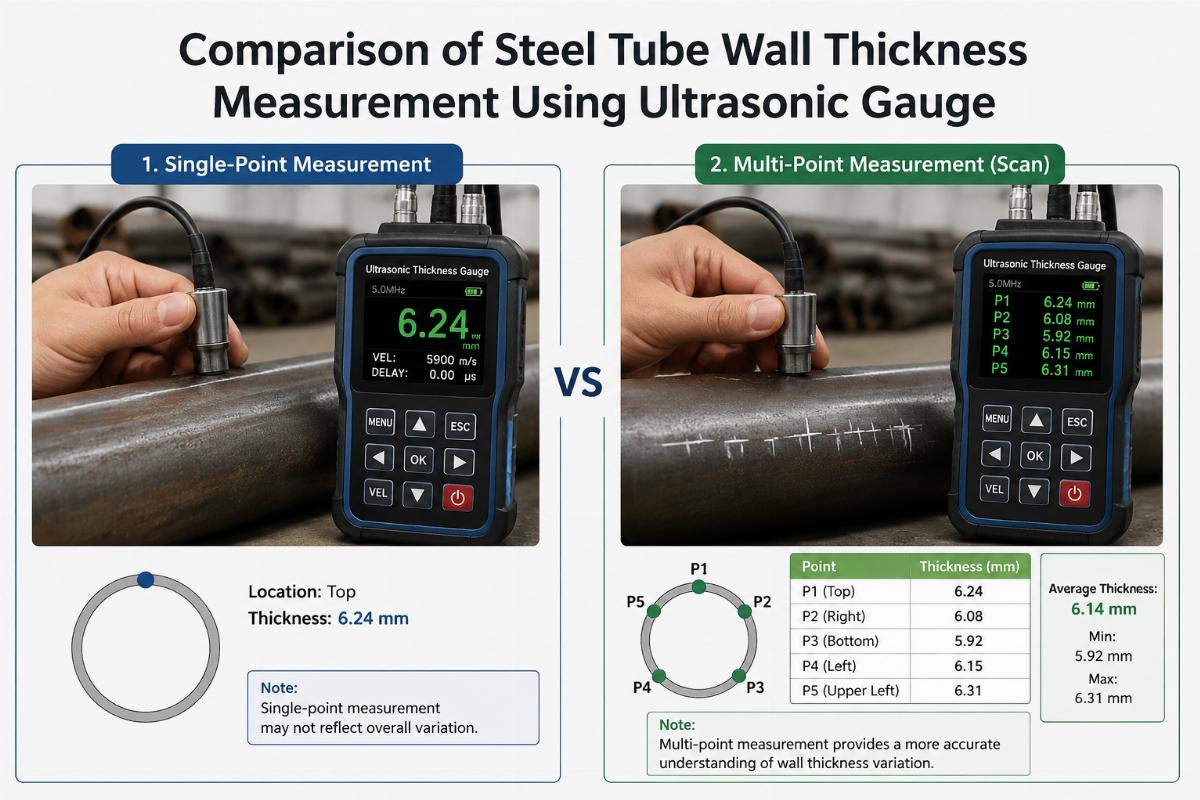
| Tube Wall Thickness | Ultrasonic thickness measurement report | Thicker walls reduce flex and weld fatigue over time |
| Bearing Type and Rating | Bearing model number and L10 life specification | Determines smoothness retention under repeated cycling |
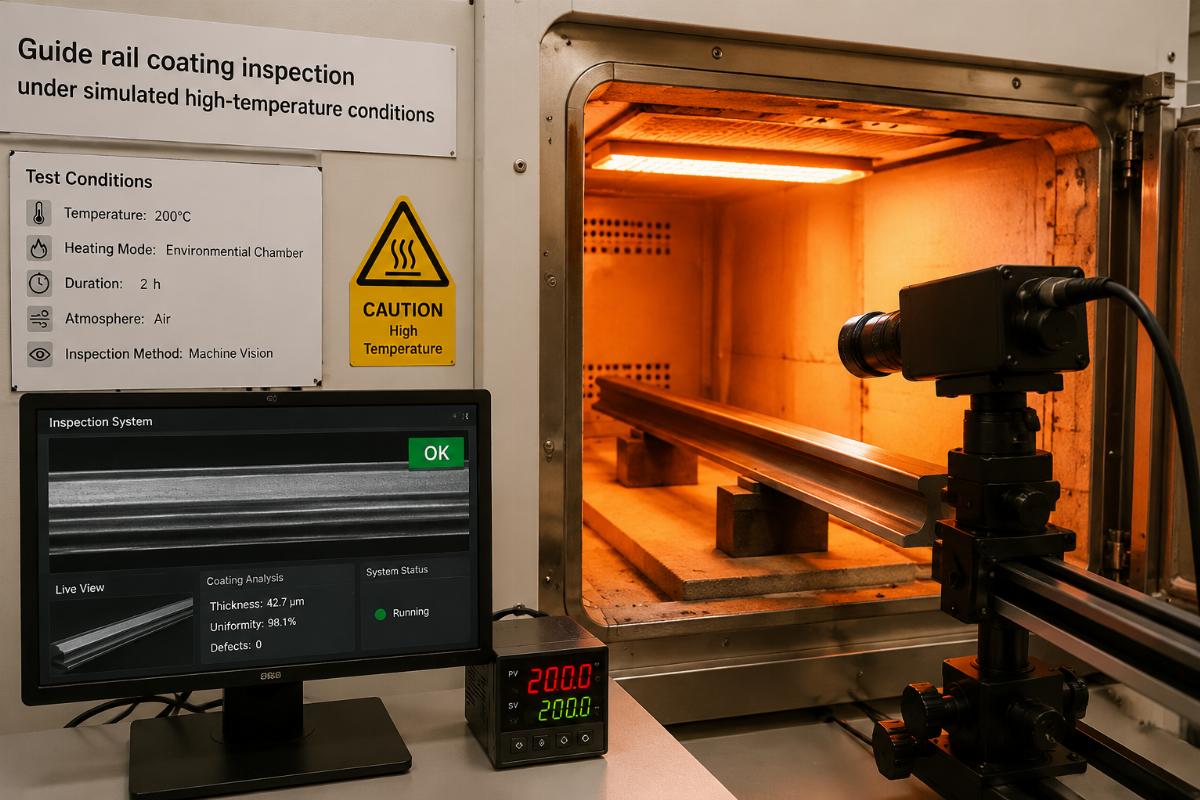
| Guide Rail Coating | Coating type and temperature resistance rating | Prevents tackiness and seizure in high-heat environments |
| Weld Quality | Magnetic particle or penetrant inspection report | Detects subsurface cracks invisible to the naked eye |
A distributor in the Gulf region once ordered a batch of hack squats based solely on a catalog photo and a "heavy-duty" claim. Within months, the frames showed visible bowing under standard plate loads. The root cause was wall thickness that fell below what the application demanded. [NEED_CITE: minimum wall thickness recommendations for commercial strength equipment frames]
The takeaway is straightforward: treat every material claim as unverified until you hold a third-party test report in your hand.
How Do Chinese Manufacturers Compare on Build Quality?
Top-tier Chinese factories produce hack squat machines that reach the same durability tier as Rep Fitness — at a cost structure that is substantially lower — but only when buyers enforce transparent quality documentation.
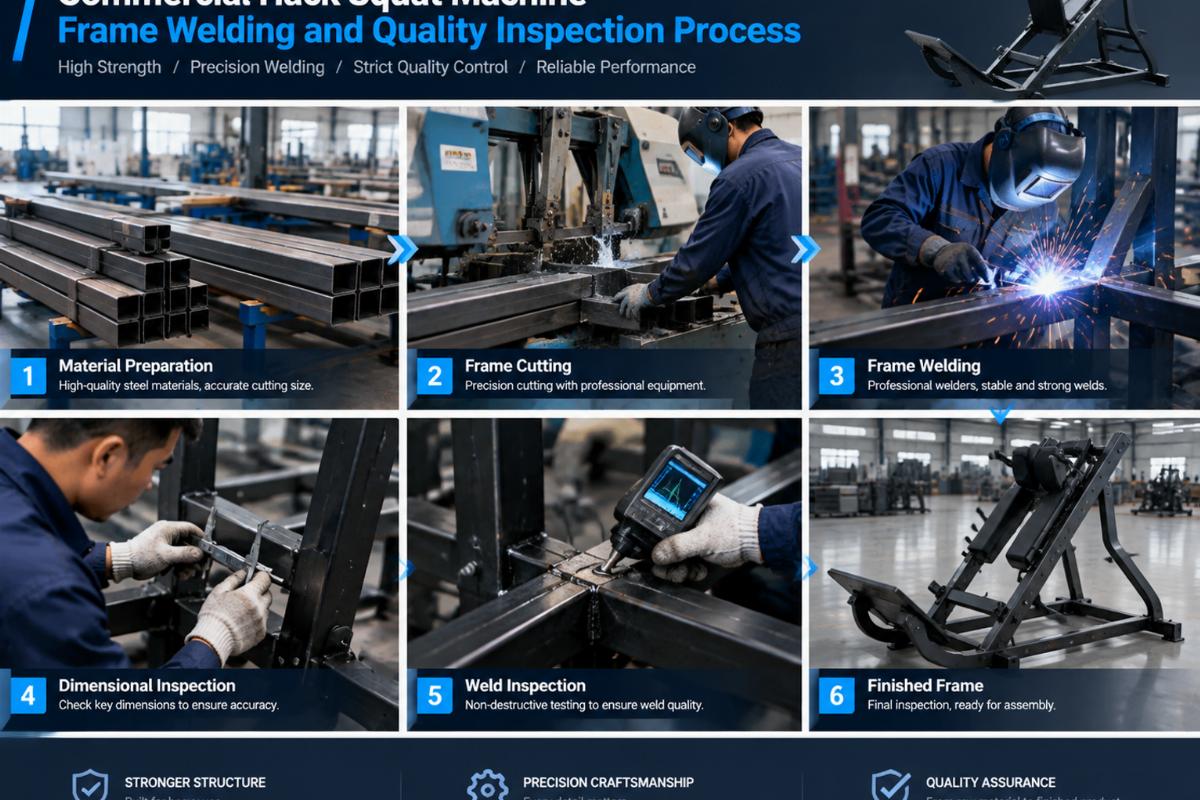
The misconception that "Chinese-made" automatically means lower quality ignores the reality of manufacturing capability. Shandong Province, where our production facilities are located, hosts some of the most experienced strength equipment manufacturing clusters in the world. The difference between a machine that performs for a decade and one that fails in two is not geography — it is whether the factory operates with controlled material sourcing, documented welding procedures, and batch-level inspection rather than spot-checks. [NEED_CITE: regional manufacturing capability assessment in commercial fitness equipment supply chains]
Here is where the comparison gets nuanced. Rep Fitness has built a strong reputation in the North American market, and their machines reflect consistent quality control. Chinese manufacturers operating at the highest tier can match that consistency — but the market also contains factories cutting corners on coating thickness, bearing grade, and weld inspection to hit lower price points. The buyer’s job is to separate the two.
| Quality Dimension | Verified Chinese OEM | Unverified Low-Cost Source |
|---|---|---|
| Material Certification | Full batch-level traceability | Self-reported or not provided |
| Weld Inspection | Controlled with non-destructive testing | Visual inspection only |
| Coating Process | Multi-stage with adhesion testing | Single-layer, adhesion unverified |
| Bearing Specification | Named brand, rated for commercial load | Generic, rating unspecified |
| Frame Rigidity | Designed for repeated heavy loading | Adequate for light use only |
I worked with a hotel fitness developer in Southeast Asia who needed hack squats for a chain of properties. They initially compared a well-known American brand against our offering. When we provided full material certificates, bearing specifications, and coating test reports, their engineering team confirmed the build quality was equivalent. The cost difference allowed them to equip every property in the chain rather than just the flagship. [NEED_CITE: OEM quality parity assessment in commercial fitness equipment manufacturing]
The honest truth: a verified Chinese OEM delivers durability on par with established American brands for the core structural components. The gap, when it exists, is in the documentation and verification process — not necessarily in the machine itself.
What Climate Factors Affect Long-Term Performance?
High temperature and humidity accelerate coating degradation and bearing wear — making material verification even more critical for installations in the Middle East and similar climates.
A hack squat machine sitting in an air-conditioned gym in London faces a completely different stress profile than one in a Dubai hotel fitness center where ambient temperatures regularly exceed forty degrees and humidity climbs. The guide rail coating, which performs perfectly in temperate conditions, can soften and become adhesive in sustained heat. This is exactly what happened in the Riyadh warehouse case I mentioned earlier. The coating was not formulated for prolonged thermal exposure, and it failed before the machine even reached the gym floor. [NEED_CITE: coating adhesion failure mechanisms under elevated temperature per ASTM D3359]
Bearing performance is equally climate-sensitive. Standard grease formulations can thin out at high temperatures, reducing lubrication effectiveness and accelerating wear. In humid environments, condensation inside bearing seals can introduce corrosion if the seals are not rated for the conditions. The solution is specifying bearings with high-temperature grease fills and enhanced sealing — and then verifying that the supplier actually installed them rather than substituted generic components.
| Climate Stress Factor | Failure Mode | Verification Method |
|---|---|---|
| Sustained high temperature | Rail coating softening and tackiness | Coating temperature resistance rating request |
| High humidity | Bearing seal corrosion and grease contamination | Seal type and IP rating confirmation |
| Temperature cycling | Coating micro-cracking and flaking | Thermal cycling test data or equivalent standard reference |
| Dust and sand ingress | Rail surface abrasion and bearing contamination | Seal effectiveness and rail cover design review |
A commercial gym owner in Qatar told me he replaced guide rail coatings on his hack squats every year — a maintenance cost that completely erased the savings from buying a cheaper machine. Once he switched to a supplier providing rails with verified high-temperature coating specifications, the replacement cycle extended substantially. [NEED_CITE: guide rail coating lifespan comparison under thermal stress conditions]
The lesson is specific: if your installation environment is hot, humid, or dusty, the standard coating and bearing package is not enough. You need to ask for the temperature rating, the seal specification, and the coating adhesion test standard — and you need those answers in writing before production begins.
How to Verify Durability Before Ordering?
Request material certificates, third-party test reports, and pre-shipment samples — and treat any supplier reluctance as a red flag that should end the conversation.
Verification is not a luxury — it is the only reliable way to confirm that the machine you are about to pay for matches the claims in the catalog. The process is straightforward, but it requires discipline and a willingness to walk away if the supplier cannot or will not provide documentation.
Start with the frame. Ask for a material test report certifying the steel grade and a wall thickness measurement report — ideally from an ultrasonic thickness gauge, which provides non-destructive, accurate readings across multiple points on the frame tubes. [NEED_CITE: ultrasonic thickness testing methodology for steel structural tubes]
Move to the welds. Request magnetic particle inspection or penetrant testing reports for critical structural welds. These non-destructive methods reveal subsurface cracks and incomplete fusion that visual inspection cannot detect. A factory confident in its welding process will provide these reports without hesitation.
For the guide rail system, ask for the coating specification — including the coating type, application process, and adhesion test standard. If the machine will operate in a high-temperature environment, request the coating’s temperature resistance rating. [NEED_CITE: coating adhesion testing standards for industrial equipment surfaces]
For the bearings, request the specific bearing model number and the manufacturer’s L10 life rating at the expected load. This is a standard specification that any reputable bearing manufacturer publishes, and there is no reason a machine supplier should be unable to provide it.
| Verification Step | Document to Request | Red Flag if Missing |
|---|---|---|
| Frame material | Certified steel grade test report | Supplier says "trust us" or provides only a catalog spec |
| Wall thickness | Ultrasonic measurement report | Report covers only one measurement point |
| Weld quality | Non-destructive testing report | Visual inspection is the only method cited |
| Rail coating | Coating specification and adhesion test | Temperature rating not provided for heat-zone installations |
| Bearing spec | Bearing model and L10 life rating | Generic description without a specific model number |
A buyer in West Africa once shared that he requested full documentation from three different suppliers for the same hack squat specification. Two provided incomplete or self-generated reports. One provided certified third-party test reports for every item on the list. He placed his order with the third — and three years later, those machines are still running without structural issues while his competitors are replacing frames. [NEED_CITE: documentation completeness correlation with field failure rates in imported fitness equipment]
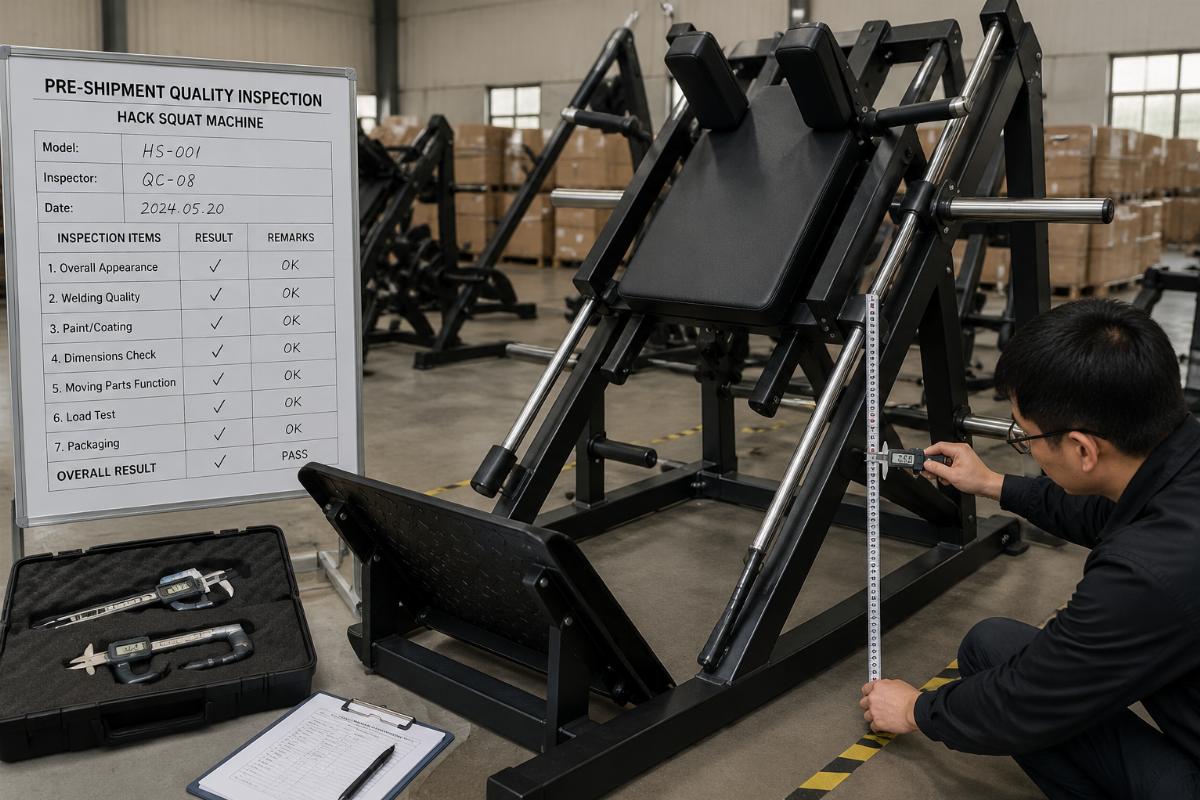
The verification process takes time and may feel burdensome. But the cost of a failed machine in the field — return freight, replacement parts, lost client trust — dwarfs the effort of asking for documents before production.
Conclusion
Durability is a function of verified material specifications and manufacturing discipline, not brand origin or catalog labels.
Whether you are comparing a China hack squat machine against Rep Fitness or evaluating any commercial strength equipment supplier, the framework remains the same: confirm the steel grade, measure the wall thickness, specify the bearing rating, and validate the coating process — especially if your installation environment pushes thermal and humidity boundaries. The suppliers who welcome that scrutiny are the ones whose machines will still be running years from now.


