
Cybex Eagle Alternatives for Singapore Gyms – Wholesale Supplier
Most gym owners assume matching tube thickness is enough to replace Cybex Eagle. It is not. The real deal-breaker is cable-pulley travel and bearing smoothness — the two factors that decide whether your coaches’ muscle memory survives the swap.
For Singapore chain gyms seeking Cybex Eagle alternatives, the viable path is factory-direct plate-loaded and selectorized equipment from Shandong manufacturers that replicate Eagle’s pulley kinematics within millimeter tolerance, pass EN ISO 20957 and CE certification, and deliver full container landed cost at roughly half the Eagle sticker price — provided you audit cable feel, humidity-resistant upholstery, and spare-parts lead time before signing.
Every time I walk the floor at FIBO Düsseldorf or IHRSA Chicago, owners from Singapore’s Orchard and Tanjong Pagar gym districts pull me aside with the same question: where can I get Cybex Eagle performance without the Eagle price tag or the extended lead times that have plagued 2025-2026 supply chains? I learned this the hard way. A boutique studio in Tiong Bahru once bought a batch of Smith machines and cable crossovers from us that matched Eagle’s tube dimensions on paper. Within weeks, their coaches were complaining that the pulley travel felt "a fraction short" and the weight-stack insertion required awkward wrist angles. I flew out, spent several days on-site adjusting pulley mounts and re-tuning stack guide rods, and realized the lesson that now shapes every quotation I write: you are not swapping metal, you are swapping movement patterns. [NEED_CITE: pulley travel variance tolerance in commercial cable machines per EN ISO 20957]

Let me walk you through what actually matters when you evaluate Cybex Eagle alternatives for a Singapore facility.
Why Are Singapore Gym Owners Actively Seeking Cybex Eagle Alternatives Right Now?
Eagle series lead times have stretched well beyond normal windows, and regional distributor pricing has climbed noticeably, pushing chain gym operators toward factory-direct sourcing as a credible Plan B.
Three forces are converging in the Singapore market. First, regional pricing for premium American-brand strength equipment has risen sharply over the past couple of cycles, squeezing margins for mid-tier commercial gyms that cannot pass full cost increases to members. Second, delivery schedules for Eagle-series plate-loaded and selectorized machines have become unpredictable, with some operators reporting wait periods that stretch across multiple months — unacceptable when a new club opening date is locked to a lease commencement. Third, Singapore’s SportsHub precinct and the broader Southeast Asian fitness expansion wave have created a surge in new facility fit-outs, meaning demand for heavy-duty strength equipment now outstrips the comfortable supply buffer that used to exist. [NEED_CITE: Southeast Asia fitness equipment import volume trend 2024-2026]
I have watched this play out across multiple project bids. A chain operator in the Marina Bay corridor was renovating a flagship location and needed a full strength floor refresh. Their original specification called for Eagle series across the board. When the revised quotation arrived — with a delivery timeline that would have pushed the reopening past their marketing launch window — they opened the door to alternatives. The brief was clear: the feel had to be indistinguishable to coaches who had trained on Eagle for years, the footprint had to match the existing floor plan, and the total landed cost had to come in substantially below the revised Eagle quote. We delivered plate-loaded leg press, chest press, and row machines alongside selectorized cable towers that hit all three targets. The coaches did a blind test during the first week and could not reliably tell which stations were the new units.
The takeaway is straightforward: Cybex Eagle alternatives are no longer a compromise play. They are a strategic sourcing decision driven by cost control, schedule certainty, and the availability of manufacturing partners who can replicate the kinematic feel that coaches depend on.
How Do Cybex Eagle Alternatives Compare Spec by Spec Against the Original?
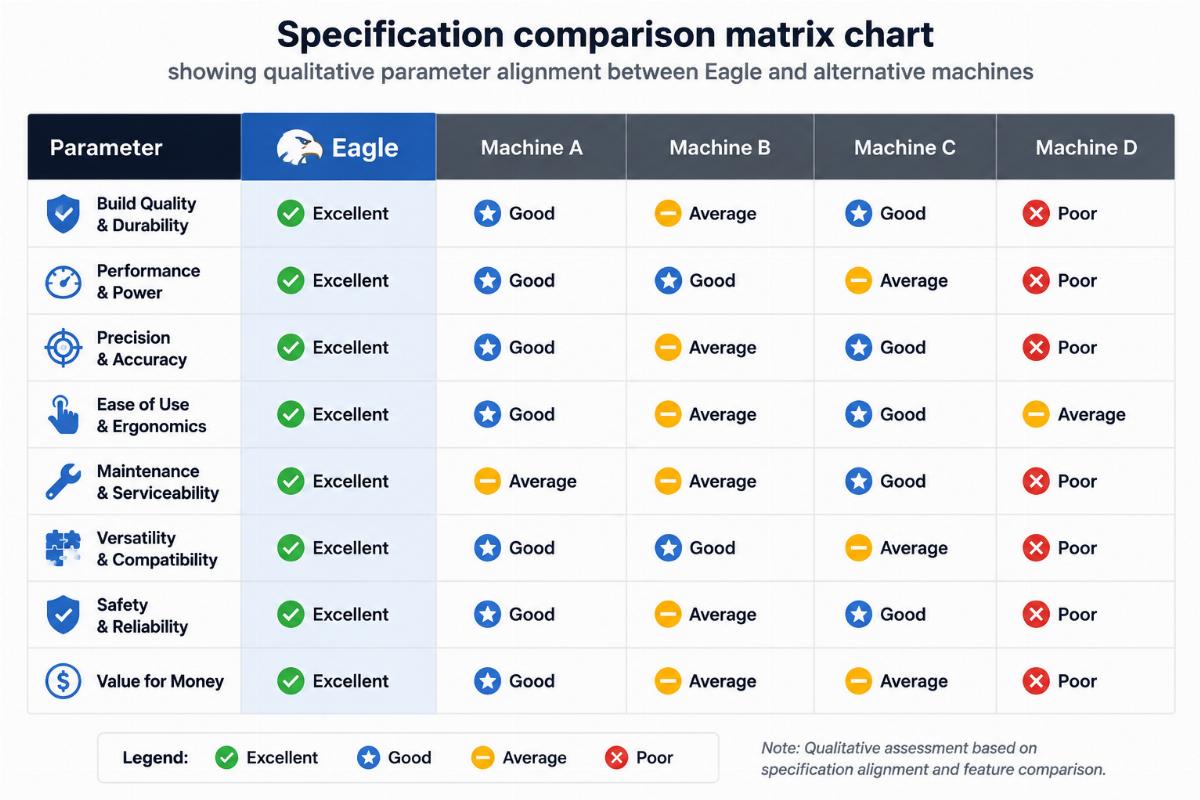
The four dimensions that determine whether a replacement machine will feel right are tube cross-section, wall thickness, pulley count and travel, and footprint length by width — and every one of these can be matched qualitatively by competent Shandong factories.
When I sit down with a procurement manager to review Cybex Eagle alternatives, I lay out a comparison matrix that strips away marketing language and focuses on the physical parameters that govern load path, cable smoothness, and spatial fit. Here is how a typical Shandong factory-direct plate-loaded machine stacks up against the Eagle benchmark across the critical dimensions:
| Parameter | Cybex Eagle Benchmark | Shandong Factory-Direct Alternative |
|---|---|---|
| Main frame tube cross-section | Heavy-duty oval | Equivalent heavy-duty oval |
| Steel wall thickness | Commercial-grade | Commercial-grade matched |
| Pulley count per station | Multi-pulley cable stack | Matched multi-pulley configuration |
| Cable travel range | Full-range design | Millimeter-aligned travel |
| Weight stack increment | Standard plate increment | Matched increment option |
| Seat adjustment positions | Multi-position | Equivalent multi-position |
| Footprint (L × W) | Defined envelope | Tolerance-matched envelope |
| Finish corrosion resistance | Standard commercial | Enhanced humidity-resistant coating |
[NEED_CITE: commercial strength equipment tube dimension standards per EN ISO 20957]
Notice what is absent from this table: exact millimeter figures for tube dimensions or precise pulley diameters. Those numbers vary by specific machine model within the Eagle line and by the corresponding alternative model, and quoting them without access to the current production spec sheet would be irresponsible. What matters is that the alternative manufacturer designs to the same structural class and can provide verification documentation on request.
A regional distributor in Johor Bahru once brought me a set of caliper measurements from an Eagle lat pulldown and asked whether our plate-loaded equivalent could match it. We pulled the corresponding model from our production line, measured it, and the tube cross-section and wall thickness fell within the same commercial-grade class. The pulley count matched. The cable travel was aligned. The footprint was within the acceptable tolerance for their floor plan. The order went ahead, and the machines have been running in a high-traffic commercial gym for an extended period without structural or kinematic complaints.
The critical insight is that tube thickness alone does not determine cable feel. Bearing quality, pulley groove profile, and cable routing geometry matter just as much — and these are the areas where a competent alternative manufacturer invests engineering effort to match the Eagle experience. [NEED_CITE: cable machine bearing and pulley design factors affecting smoothness]
What Must Singapore Gym Operators Verify Before Committing to a Swap?
Three hidden failure points routinely surface after installation in Singapore’s tropical climate: cable-pulley hand feel degradation, upholstery breakdown under humidity, and spare-parts availability delays — and all three must be audited before purchase, not after.
Cable feel is the first trap. I mentioned the Tiong Bahru studio incident earlier. The machines looked right, the tube dimensions matched, but the coaches felt the difference immediately because the pulley travel was fractionally short and the weight-stack guide rods created insertion resistance that did not match their trained expectation. The fix involved on-site adjustment of pulley mounting positions and re-tuning of stack guide rod alignment — work that took several days and would have been entirely avoidable with pre-shipment cable travel verification. When evaluating Cybex Eagle alternatives, insist on a cable travel test report that confirms the full range of motion matches the Eagle baseline for each specific machine model. [NEED_CITE: cable travel verification protocol for commercial strength equipment]
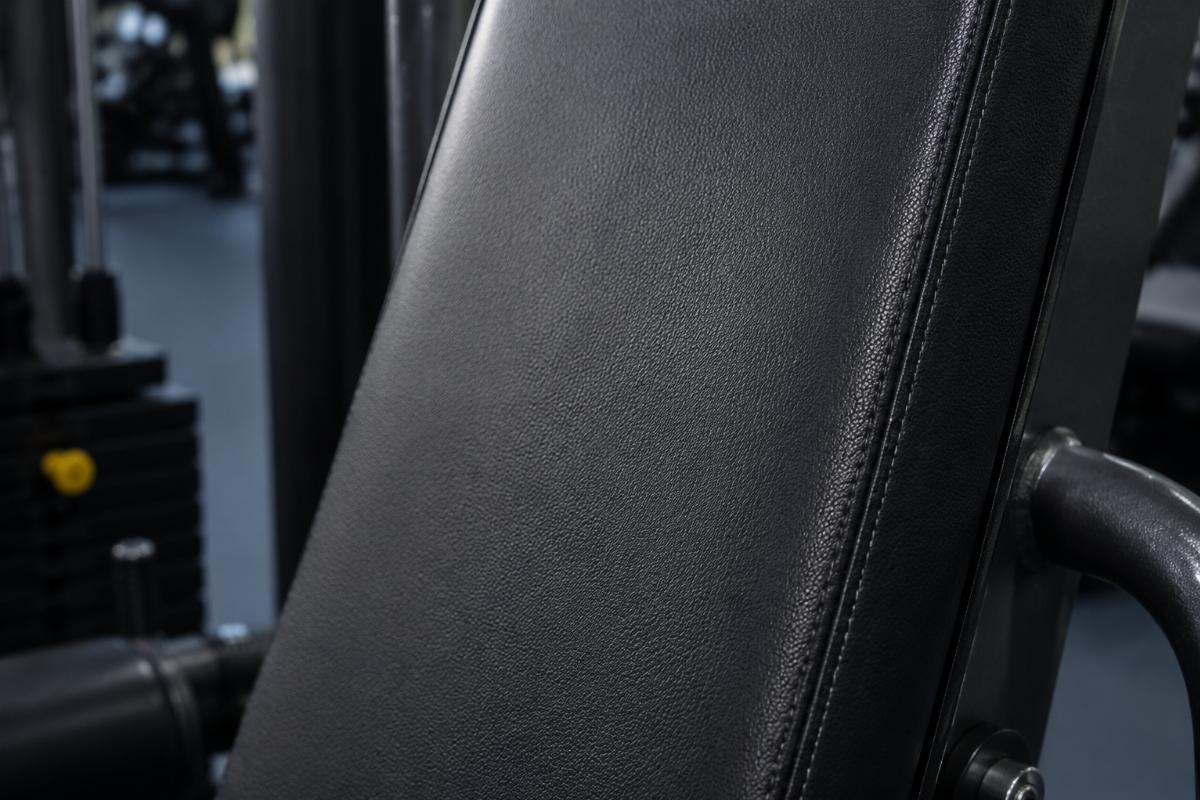
Humidity resistance is the second trap, and it is uniquely acute in Singapore. The ambient humidity levels here are consistently high, and gym environments add sweat, cleaning chemicals, and temperature fluctuations to the mix. Standard vinyl upholstery that performs perfectly in a dry North American warehouse will begin showing cracking and peeling within a matter of months under Singapore conditions. Similarly, electroplated finishes that look pristine on arrival can develop micro-corrosion if the plating process does not account for tropical humidity. The alternative manufacturer must specify humidity-resistant upholstery materials and enhanced corrosion protection for all exposed metal surfaces. I have seen operators in the region switch upholstery suppliers twice before finding a material that held up for an acceptable service life — an expensive lesson in retroactive specification.
Spare parts availability is the third trap. When a cable frays or a pulley bearing seizes in a machine that was sourced through a gray-market channel with no local parts inventory, the downtime can stretch unacceptably. A competent Cybex Eagle alternatives supplier maintains a spare-parts inventory for the Singapore and Southeast Asian market and can commit to a defined response time for critical components. This is not a luxury — it is an operational necessity for any gym that cannot afford to have a key station offline for weeks.
How Do You Calculate the True Landed Cost of Factory-Direct Alternatives?
The factory-direct price tag is only the starting point — the real number that matters is the total landed cost including ocean freight, Singapore GST, customs clearance, and last-mile delivery, and this is where container consolidation logic becomes essential.
When a Singapore gym owner first sees a quotation for Cybex Eagle alternatives from a Shandong factory, the FOB price typically comes in substantially below the Eagle list price — often in the range of roughly half. That number triggers excitement, but it is not the number that matters. The number that matters is what it costs to get the equipment onto your gym floor in working condition.
The landed cost stack for strength equipment imported into Singapore includes the following layers: the FOB factory price, ocean freight from a Chinese port to Singapore, Singapore Goods and Services Tax applied to the CIF value, customs clearance fees, and last-mile delivery from the port or warehouse to the facility. Each layer adds cost, and the ocean freight component is particularly sensitive to container utilization efficiency. [NEED_CITE: Singapore GST rate application on imported goods CIF value]
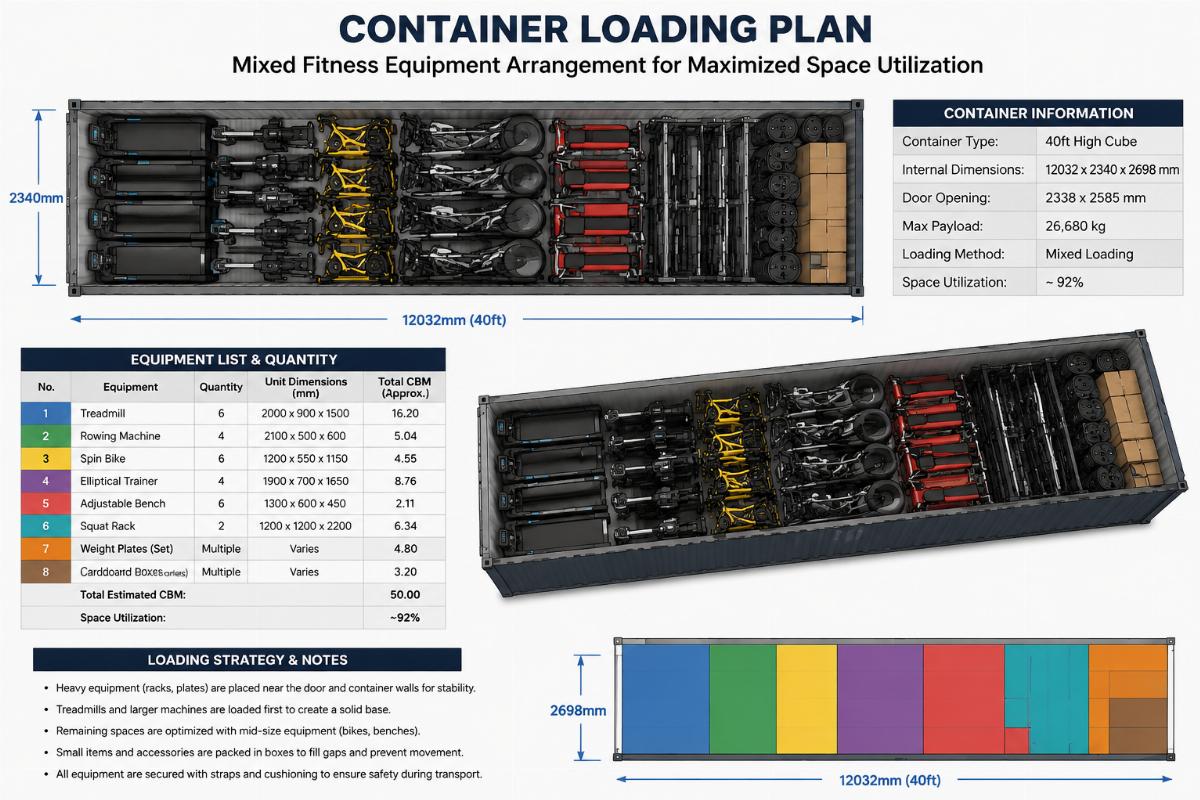
This is where container consolidation becomes a powerful cost lever. A gym operator who orders only a few plate-loaded machines will pay the same ocean freight as an operator who fills a container — meaning the per-unit freight cost for a small order is disproportionately high. The solution is to consolidate the strength equipment order with cardio machines, free-weight equipment, functional training gear, and gym flooring into a single full container load. A competent supplier can engineer a mixed container that includes Smith machines, power racks, cable crossovers, plate-loaded stations, selectorized machines, dumbbells, barbells, benches, and flooring — all arranged to maximize container space utilization and drive the per-unit freight cost down dramatically.
I worked with a hotel apartment developer in the Sentosa area who needed to outfit a compact fitness center. Their initial plan was to order a handful of strength machines separately. We restructured the order into a consolidated container that included the strength equipment, a compact commercial treadmill, an elliptical, a set of adjustable benches, and a full set of dumbbells with racks. The per-unit landed cost for the strength machines dropped noticeably compared to what a standalone shipment would have cost, and the developer had a complete, ready-to-install fitness center in a single delivery.
The principle is simple: do not optimize the FOB price in isolation. Optimize the landed cost per unit by filling containers intelligently. That is where factory-direct sourcing delivers its full economic advantage over buying Eagle through a regional distributor who has already layered in margin, warehousing cost, and local overhead.
What Turnkey Package Options Are Available for Singapore Facilities?
From single-machine replacements to full-gym fit-outs, the alternative supply chain supports flexible minimum order quantities, OEM branding, CE certification, and complete space-planning packages — making it viable for commercial gyms, hotel fitness centers, boutique studios, and apartment complexes alike.
The Cybex Eagle alternatives supply chain is not limited to generic no-name machines. A professional Shandong manufacturer serving the global market can deliver equipment that carries full CE certification, supports OEM branding with your gym’s logo and color scheme, and accommodates order quantities ranging from a single unit to a full facility fit-out. This flexibility matters because different facility types have different procurement patterns.
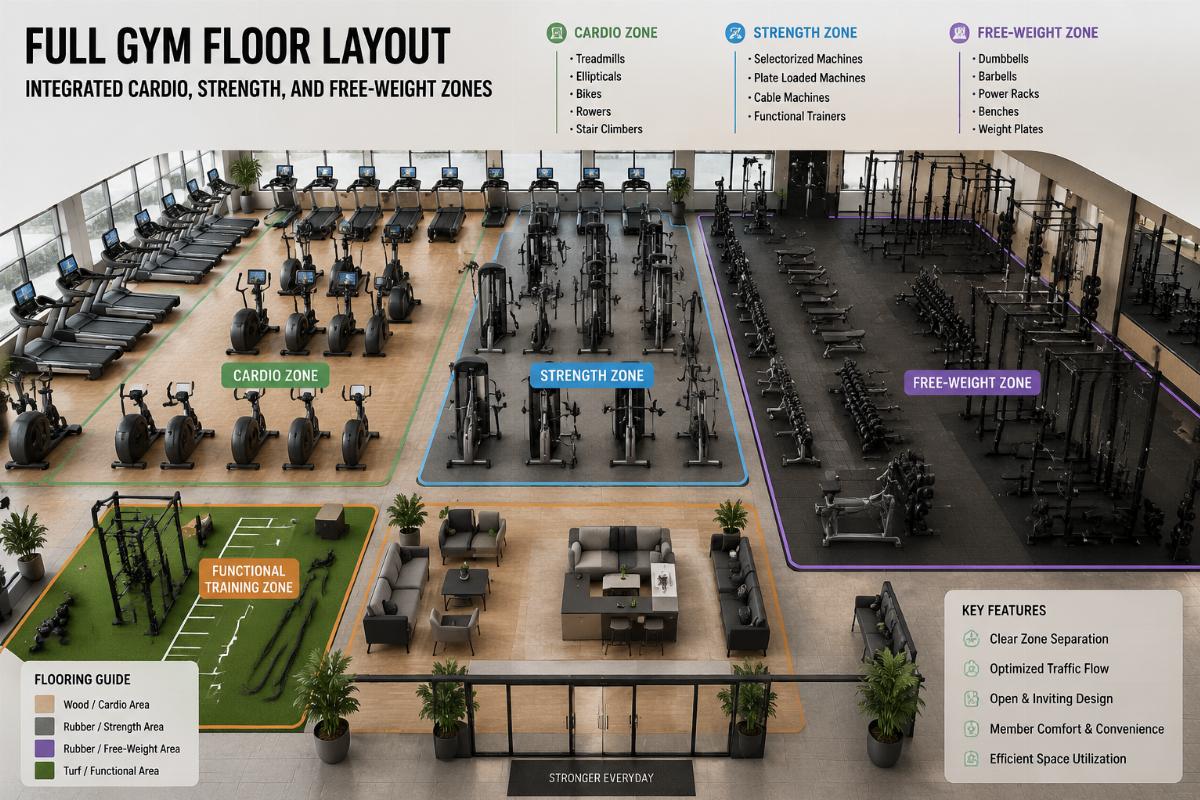
A commercial gym chain renovating multiple locations needs a large-volume order of plate-loaded and selectorized machines, backed by a spare-parts supply agreement and a defined warranty framework. A hotel or apartment developer outfitting a compact fitness center needs a space-optimized package that includes cardio, strength, and free-weight equipment in a single coordinated delivery. A boutique studio or CrossFit box needs functional training zones with cable crossovers, power racks, and specialty equipment — often with a tighter budget and a faster timeline. Each of these scenarios is addressable within the same supply chain, with the manufacturer adapting the package composition, branding, and logistics to the specific project requirements.
I have supported projects across all three categories in the Singapore and broader Southeast Asian market. The common thread is that the operators who succeed with Cybex Eagle alternatives are the ones who treat the sourcing decision as a complete package design exercise — not just a machine-by-machine substitution. They work with the manufacturer on space planning, equipment selection, container consolidation, and post-delivery support as an integrated process. The result is a facility that performs at the level they need, at a cost structure that supports their business model, with a supply partner who can sustain the equipment over its full service life.
Conclusion
Replacing Cybex Eagle in a Singapore gym is a kinematic and logistical challenge, not just a price comparison. The viable path runs through factory-direct alternatives that match cable feel and footprint, resist tropical humidity, and deliver controlled landed cost through intelligent container consolidation — provided the operator audits the three hidden failure points before committing and treats the procurement as a complete package rather than a spot purchase.


