
Rubber Coated Dumbbell Set Life Fitness Signature vs China Wholesale Supplier
The gap between Life Fitness Signature and factory-direct rubber coated dumbbells has nothing to do with the cast iron core — it comes down to vulcanization cycle control, knurling depth consistency, and whether the factory runs full-batch inspection or spot-checks.
For gym owners and distributors evaluating a rubber coated dumbbell set from a China wholesale supplier against branded alternatives, the honest answer is this: commercial-grade factory output can match Life Fitness Signature in rubber hardness, knurling grip, and weight tolerance — provided you know which documents to request, which physical tests to run on arrival, and which production details to audit before signing the purchase order.
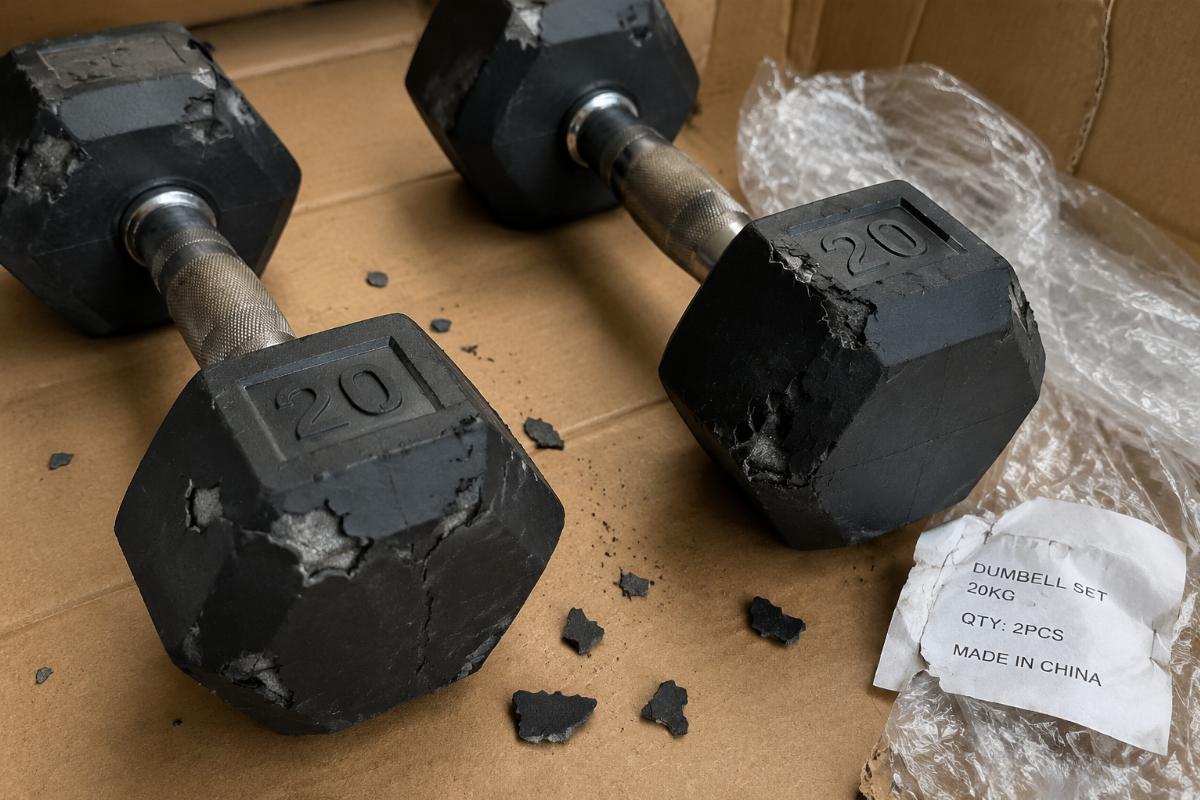
I remember unloading a full container of rubber coated dumbbells at a port in southern Chile a few years back. The buyer, a gym chain owner, had ordered what he believed was a commercial-grade rubber coated dumbbell set matching the spec sheet of a well-known American brand. When his trainer opened the first box, the rubber smell hit so hard that three staff members had to step outside. The weights were off by several hundred grams per piece on the heavier end. The container sat at the port for weeks while he argued with the supplier over who would pay for re-inspection and return freight. That situation did not happen because the iron was bad — it happened because the factory skipped controlled vulcanization, used recycled rubber filler, and ran a five-percent spot check instead of full-batch weighing. [NEED_CITE: common failure modes in imported rubber coated fitness equipment per third-party inspection reports]

Most buyers assume the price gap between a branded rubber coated dumbbell set and a China wholesale supplier quote is pure brand markup. In reality, the cost difference sits in three places most buyers never inspect: the vulcanization temperature curve, the knurling cutter replacement schedule, and the ratio of units weighed and measured before packing.
What Really Separates Life Fitness Signature from Factory Alternatives?
The core difference is not the iron — it is how the rubber is bonded to the iron, how deep the knurling is cut, and how many units are checked before they leave the factory.
When you hold a Life Fitness Signature dumbbell next to a well-made commercial-grade rubber coated dumbbell set from a China wholesale supplier, the cast iron cores feel nearly identical. Both use grey iron or ductile iron for the core. Both have a rubber outer layer. The divergence begins the moment the rubber meets the iron.
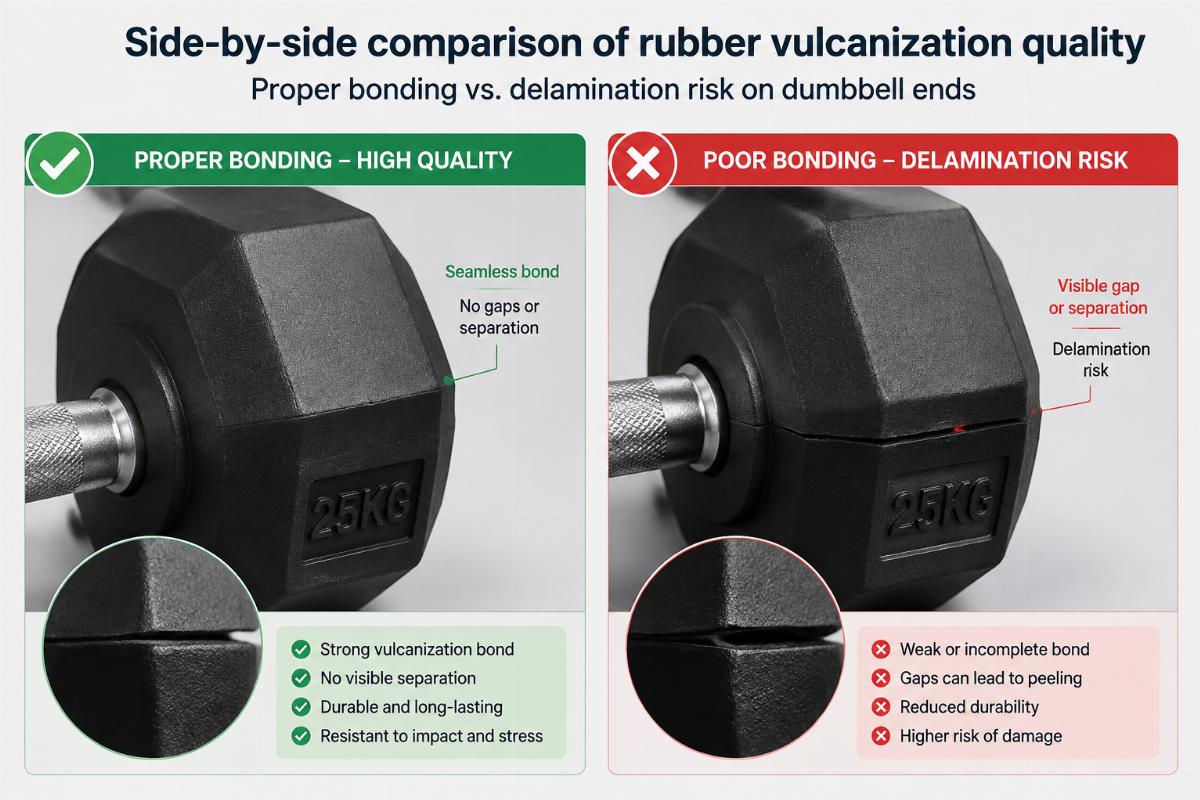
Vulcanization is the process where raw rubber is heated under pressure to form cross-linked polymer chains. If the temperature is too low or the cycle too short, the rubber stays soft, deforms under repeated drops, and develops a persistent chemical odor. If the temperature is too high or the cycle too long, the rubber becomes brittle and chips off the iron core within months of commercial use. [NEED_CITE: rubber vulcanization temperature and time effects on physical properties per polymer engineering references] The difference between a rubber coated dumbbell set that lasts five years in a busy gym and one that falls apart in one year is measured in minutes of curing time and degrees of temperature control — not in the iron itself.
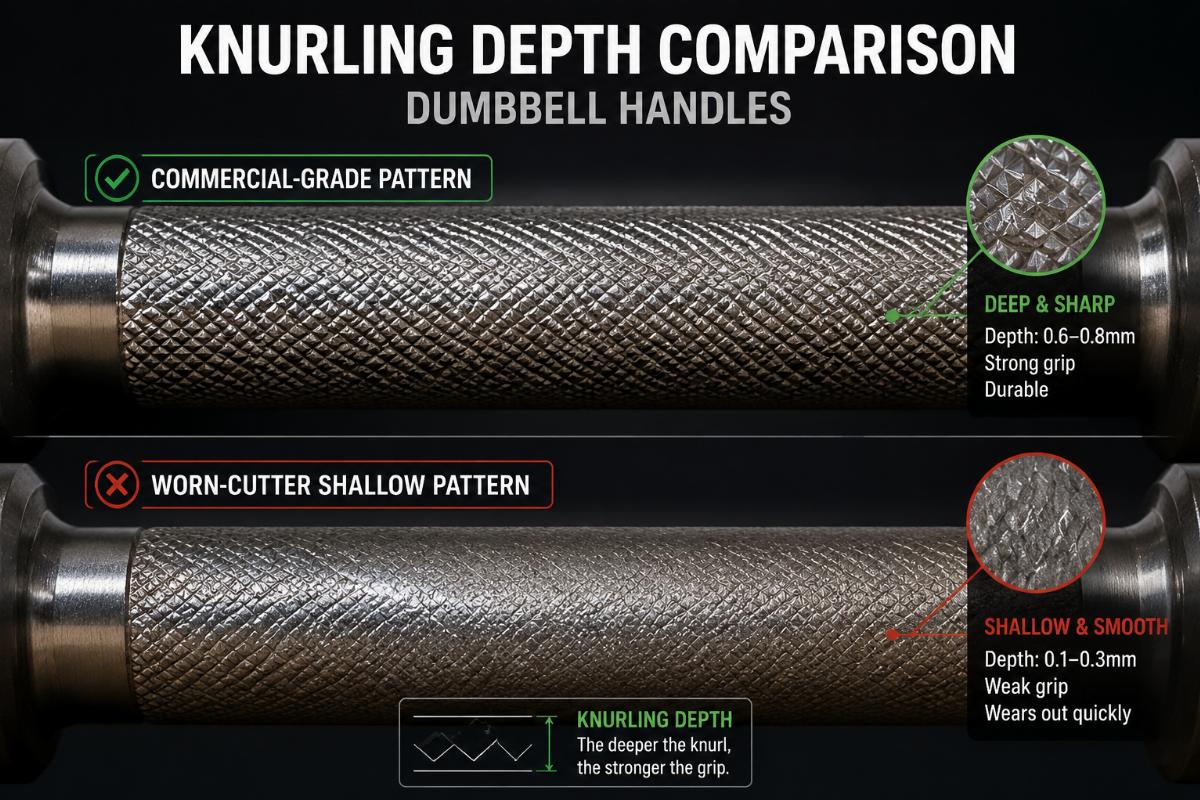
Knurling is the second divider. The grip pattern on the handle must be deep enough to hold chalk and sweat, but not so aggressive that it tears gym gloves or causes callus injuries. Commercial-grade knurling on a rubber coated dumbbell set typically falls within a specific depth range, with consistent spacing across every handle in the set. Lower-tier factories use worn knurling cutters to save tooling costs, producing shallow, uneven patterns that feel smooth on day one and useless by month three.
The third divider is inspection. A branded rubber coated dumbbell set leaves the factory after every single unit is weighed, measured for rubber thickness, and visually checked for surface defects. Many China wholesale suppliers run spot checks — pulling a few pieces from each batch. The result is that a buyer receives a mixed lot where some dumbbells are within tolerance and others are noticeably off.
Side-by-Side Spec Matrix: Rubber Hardness, Knurling, Weight Tolerance
A proper comparison of any rubber coated dumbbell set must look at verifiable parameters — not marketing claims.
The table below shows what buyers should expect when comparing a branded commercial rubber coated dumbbell set against a properly audited China wholesale supplier running commercial-grade production.
| Parameter | Branded Commercial Grade | Verified Commercial-Grade Factory | Low-Tier Factory Output |
|---|---|---|---|
| Rubber Hardness (Shore A) | Controlled mid-range range | Same controlled range | Inconsistent, often too soft |
| Knurling Depth | Consistent across all handles | Consistent with proper cutter maintenance | Shallow, uneven, worn-tool marks visible |
| Weight Tolerance per Unit | Tight commercial tolerance | Same tight tolerance when full inspection is enforced | Wide variance, spot-check only |
| Rubber-to-Iron Bonding | No separation under drop testing | No separation when vulcanization is controlled | Chipping and peeling within months |
| Odor After Opening | Minimal, dissipates quickly | Minimal with proper curing and post-cure airing | Strong chemical smell lasting weeks |
| Inspection Before Packing | Full batch-level weighing and visual check | Full batch-level when buyer requires it | Sample-level or none |
[NEED_CITE: Shore A hardness ranges for commercial gym rubber equipment per material testing standards]
A distributor in the Middle East ordered a rubber coated dumbbell set from a China wholesale supplier and received samples from two different factories. The first factory’s samples had knurling that felt acceptable to the hand but measured significantly shallower than the branded reference. After three months of gym use, the knurling was nearly smooth. The second factory’s samples matched the branded depth and held up through extended high-frequency use testing. The price difference between the two factories was small — the difference in tooling maintenance discipline was enormous.
How to Verify Quality Before Placing a Container Order
Any buyer can verify whether a rubber coated dumbbell set from a China wholesale supplier meets commercial standards — if they ask for the right documents and run the right tests before committing to a full container.
Start with documentation. Request the factory’s material test reports for both the iron core and the rubber compound. A credible factory will provide third-party lab reports showing rubber hardness in the correct Shore A range, tensile strength, and elongation at break. [NEED_CITE: third-party testing certification types for fitness equipment rubber components] If the factory cannot produce these reports or offers only in-house certificates, treat that as a red flag.
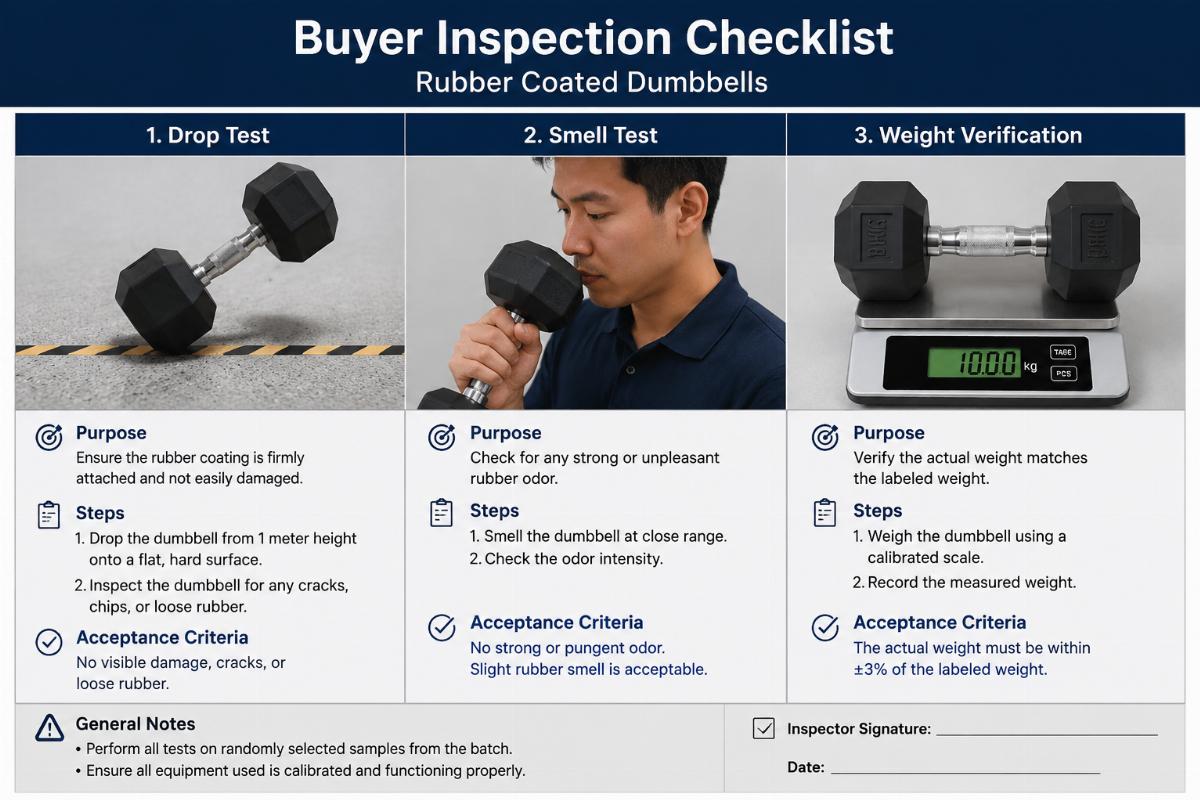
Next, request pre-production samples — not the polished "golden samples" factories keep for show, but pieces pulled from a current production run. Test these samples with three physical checks.
First, the drop test. Drop each sample dumbbell from waist height onto a rubber mat at least twenty times. Inspect the rubber-to-iron interface for any cracking, lifting, or white stress marks. A properly vulcanized rubber coated dumbbell set will show no separation.
Second, the smell test. Seal a sample dumbbell in a plastic bag for forty-eight hours, then open and smell. A strong chemical odor indicates incomplete curing or the use of recycled rubber with high volatile content. A commercial-grade rubber coated dumbbell set should have little to no detectable odor after this test.
Third, the weight check. Weigh every sample piece on a calibrated scale. Compare the readings against the stated weight. Commercial tolerance is tight — any piece outside that range signals loose production control.
A European boutique studio owner followed this process before ordering a rubber coated dumbbell set from a China wholesale supplier. She requested third-party rubber compound reports, ran drop tests on six samples, and weighed every piece. Two samples failed the drop test with minor rubber lifting. She sent the results back to the factory, which adjusted the vulcanization cycle and sent replacement samples that passed cleanly. Her full order arrived with zero quality complaints.
Real Buyer Scenarios: When "Cheaper" Became Costly
Three anonymized cases show how small shortcuts in a rubber coated dumbbell set turn into large losses for buyers who skip verification.
A Latin American gym chain received a full container of rubber coated dumbbells from a low-tier China wholesale supplier. On arrival, the port authority ran a random weight check and found multiple pieces outside acceptable tolerance. The entire container was held. The buyer paid for re-inspection, re-sorting, and partial return freight. The total cost of the delay and rework was several times the original savings compared to buying from a verified commercial-grade source. The root cause was simple: the factory had weighed only a small sample of each batch, not every unit. [NEED_CITE: import inspection hold procedures and cost implications for fitness equipment shipments]
A Middle East distributor running a private-label project compared branded samples against factory samples for a rubber coated dumbbell set. The branded samples showed consistent knurling wear resistance after simulated high-frequency use. The factory samples, from the first supplier he contacted, showed noticeable knurling flattening within a fraction of that usage period. He switched to a factory that maintained knurling cutters on a regular replacement schedule. The slightly higher unit price was irrelevant compared to the warranty claims he avoided.
A European wellness studio ordered a rubber coated dumbbell set from a supplier that used low-cost recycled rubber. The dumbbells arrived with an overpowering chemical smell. The studio could not use them in a ventilated space, let alone a small enclosed training room. The supplier refused a full return. The studio wrote off the entire order and sourced a replacement rubber coated dumbbell set from a factory that uses virgin rubber compound with proper post-cure off-gassing before packing.
How to Source Commercial-Grade Rubber Dumbbells at Substantially Less
Buyers who want a rubber coated dumbbell set at commercial grade without branded pricing can get there — but only by sourcing directly from a factory that treats commercial standards as non-negotiable.
The path starts with factory selection. Not every China wholesale supplier operates at the same level. Look for a factory that holds recognized quality certifications for the markets you sell into, runs full-batch inspection as standard practice, and can provide material traceability from rubber compound to finished dumbbell. [NEED_CITE: quality certification requirements for commercial fitness equipment exports]
Bick, based in Shandong Province, is one such factory. The facility produces a full range of commercial and home fitness equipment, including free weights like the rubber coated dumbbell set that gym owners and distributors need. Bick holds CE certification, runs OEM and ODM programs for private-label buyers, and offers flexible order quantities — from single units for boutique studios up to full container loads for gym chains and regional distributors. The factory’s pricing sits substantially below branded alternatives while maintaining the commercial-grade vulcanization, knurling, and inspection standards outlined in this article.
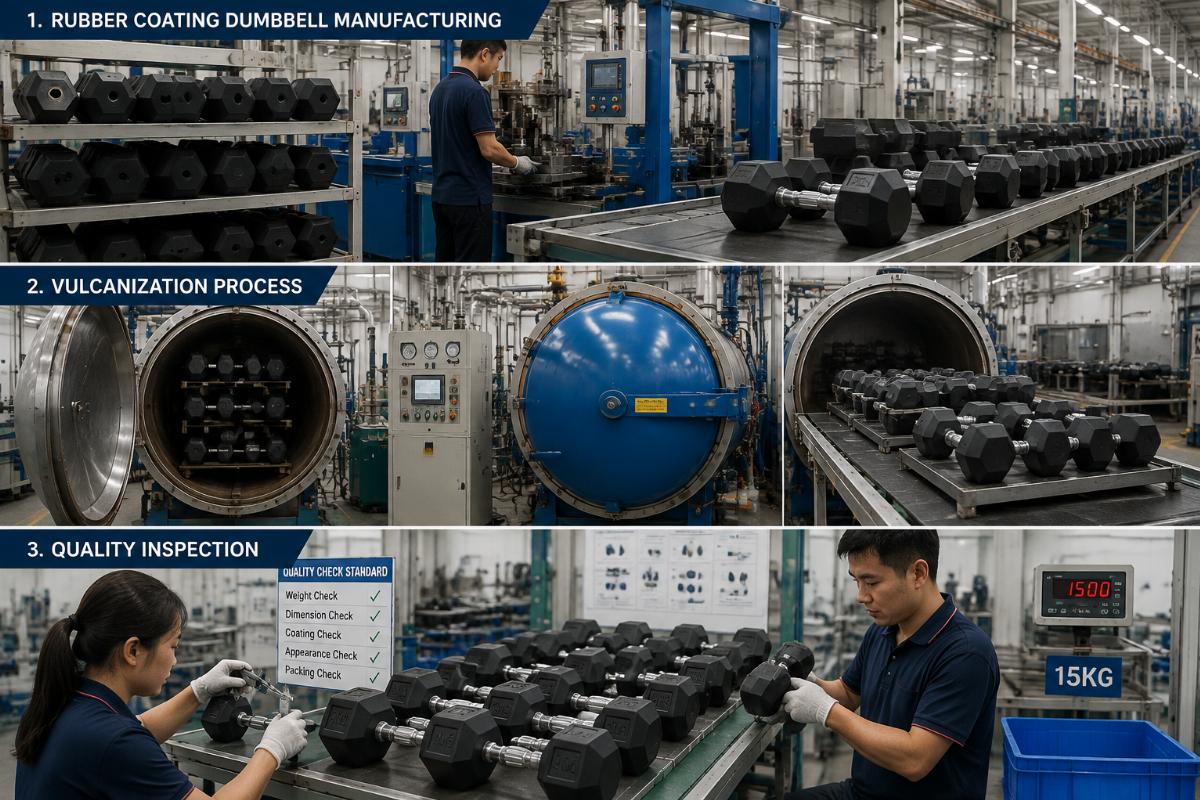
For buyers consolidating a full gym setup, Bick supports container-load mixing — combining a rubber coated dumbbell set with cardio machines, strength equipment, functional training gear, and flooring in a single shipment. This consolidation reduces per-unit freight cost and simplifies customs clearance. The factory also provides spare parts supply and technical support after delivery, which matters when a rubber coated dumbbell set is part of a larger equipment package serving hundreds of daily users.
The key is to treat the rubber coated dumbbell set as a precision product, not a commodity. The iron core is straightforward. The rubber compound, the vulcanization process, the knurling tooling, and the inspection protocol — these are where commercial quality is won or lost. A buyer who verifies these four elements before ordering will receive a rubber coated dumbbell set that performs identically to branded options at a fraction of the cost.
Conclusion
The real difference between a branded rubber coated dumbbell set and a China wholesale supplier’s output lies in vulcanization control, knurling maintenance, and inspection discipline — not in the iron core or the brand name on the handle. Buyers who request third-party material reports, run physical sample tests, and choose a factory that enforces full-batch inspection will receive commercial-grade quality at substantially lower cost, without the port holds, warranty claims, and member complaints that come from cutting corners on invisible production details.


