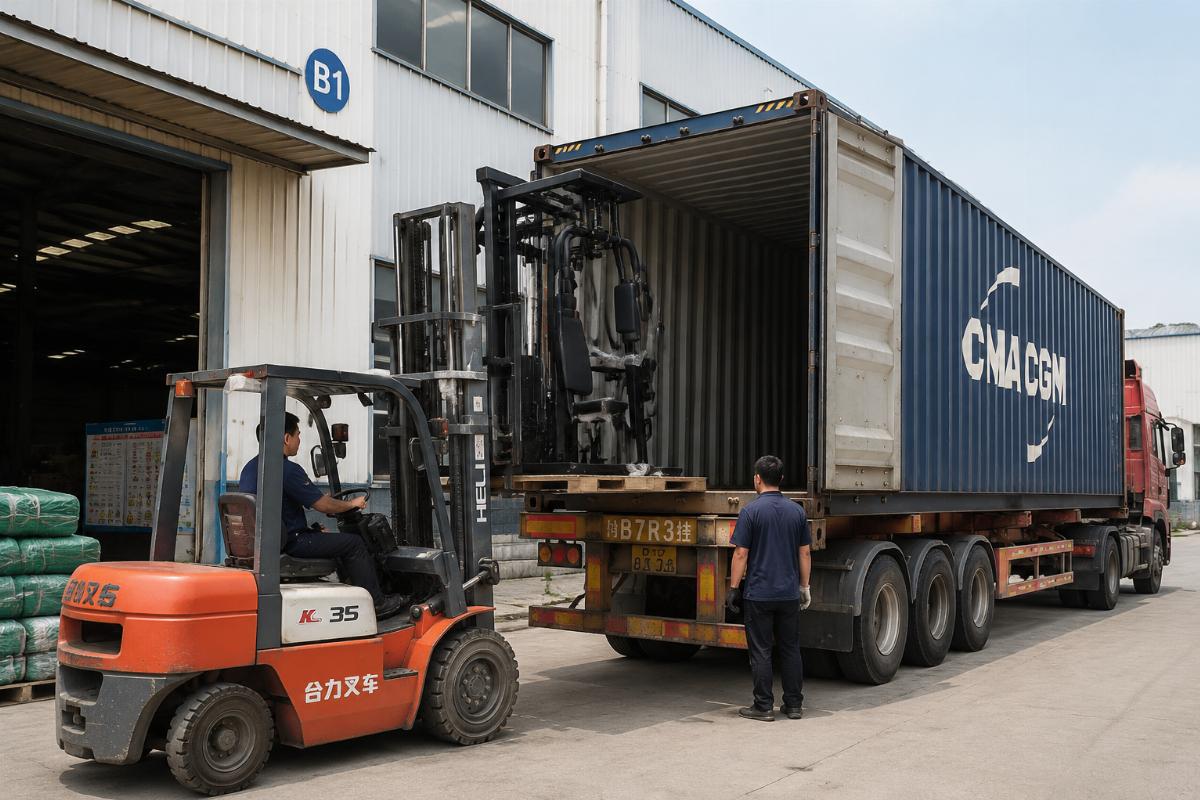
Hack Squat Machine Import in Colombia – Bonded Warehouse Wholesale Supplier
Most importers assume a bonded warehouse automatically slashes landed costs. In reality, if your hack squat shipment is a high-value full container with a single HS code, direct clearance often costs less than bonded storage plus piecemeal withdrawal fees.
Colombian gym importers can legally defer import duties and VAT on hack squat machines by routing containers through a Zona Franca or Depósito Franco facility, but the real savings depend entirely on whether you are running a full container load or a mixed less-than-container-load consolidation. Get the HS code grouping or declaration entity wrong inside a consolidated container, and demurrage charges will wipe out any tax-deferral benefit.
I have spent years moving commercial strength equipment from Chinese factories into Latin America, and Colombia is one of the trickier ports for first-time importers. A few cycles ago, I helped a South American gym chain bring in a shipment of Smith machines and hack squat frames. The buyer chose a consolidated container to save on ocean freight, but nobody checked whether the rack frames and the selectorized weight stacks shared the same declaration entity at the destination. The result was a customs hold that lasted weeks, and the storage bill ended up costing several times what the original tax deferral would have saved. That kind of pain is avoidable, but only if you understand how Colombian bonded logistics actually work before the container leaves the loading port.
Before we break down the mechanics, it helps to understand why this topic keeps surfacing among procurement teams sourcing a bonded warehouse hack squat machine import solution: Colombian import duties on strength-training equipment are not trivial, and cash flow pressure during the first year of a gym buildout is real. Deferring that duty payment by even a few months can free up working capital for flooring, mirrors, or additional cardio units. But the mechanism only works if the paperwork, the consolidation logic, and the warehouse operator are all aligned before the vessel arrives in Buenaventura or Cartagena.
What Is a Bonded Warehouse and How Does It Apply to Hack Squat Imports in Colombia?
A bonded warehouse in Colombia is a customs-supervised storage facility where imported goods can remain without triggering duty or VAT payment until the goods are formally withdrawn for domestic distribution.
The legal framework governing these facilities comes from Colombian customs regulations administered by DIAN, the national tax and customs authority [NEED_CITE: Colombian customs legislation governing Zona Franca and Depósito Franco regimes]. There are two main types of bonded storage relevant to fitness equipment importers:
- Zona Franca Permanente: A permanent free-trade zone where goods can be stored, assembled, or even lightly processed without entering the national customs territory. Operators inside the zone enjoy suspended duty and VAT treatment for the entire duration of the stay.
- Depósito Franco: A private bonded warehouse licensed by DIAN, typically used for shorter-term storage and piecemeal withdrawal. Goods here are still technically under customs control, but the facility is usually closer to the port or the buyer’s distribution center.
For a bonded warehouse hack squat machine import, the practical workflow looks like this: the container arrives at the Colombian port, is transferred under customs bond to the warehouse facility, and sits there duty-free. When the importer is ready—perhaps after a new gym location has finished its build-out—they file a formal import declaration for a partial quantity, pay the applicable duty and VAT on that batch only, and take delivery. The remaining units stay in bond.
This structure is extremely attractive for distributors who supply multiple gym chains across Bogotá, Medellín, and Cali, because it turns a single large duty payment into a series of smaller, cash-flow-friendly withdrawals. However, the warehouse charges a monthly storage fee per cubic meter or per pallet position, and those fees accumulate. If your hack squat units are going to sit in the warehouse for an extended period without moving, the storage cost can quietly erase the benefit of tax deferral.
A gym chain buyer in the Andean region once told me they chose bonded storage for a mixed container of plate-loaded machines and hack squat frames. The plan was to withdraw units as new club locations opened. But two of the locations were delayed by construction permits, and the hack squat frames sat in the warehouse for an extended stretch. By the time the last units cleared, the accumulated storage fees represented a noticeable portion of the original duty savings. The lesson: bonded storage is a cash-flow tool, not a permanent parking solution. DIAN regulations do impose statutory storage limits, and exceeding them can trigger forced auction or re-export procedures [NEED_CITE: DIAN regulations on maximum bonded storage duration and consequences of overstay].
What Are the Key HS Code and Declaration Pitfalls for Hack Squat Machines in Colombian Customs?
The single biggest clearance risk for a hack squat shipment is that the frame, the weight plates, and the accessory attachments often fall under different HS codes, and Colombian customs requires the declaration entity to be consistent within a single container.
Here is the core problem. A hack squat machine is not a single SKU in the eyes of customs. The main frame and sled carriage typically classify under one heading for strength-training apparatus. The Olympic bar and weight plates that ship alongside it classify under a separate heading for free-weight equipment. The seat pads, safety straps, and adjustment pins may fall under yet another heading for parts or accessories.
When you ship a full container of hack squat frames only, the HS code is straightforward, and direct clearance is clean. But when you consolidate hack squat frames with weight plates, benches, and cable attachments into one less-than-container-load, you are mixing multiple HS codes inside a single container. Colombian customs regulations require that all items within a consolidated shipment be declared under a single, consistent import entity with matching tax identification [NEED_CITE: Colombian customs rules on mixed-HS-code consolidated container declarations].
If the declaration entity for the hack squat frames does not match the entity listed for the weight plates in the same container, customs will flag the shipment for inspection. That inspection stops the entire container from clearing. Every day the container sits at the port, demurrage and storage charges accrue—and those charges are calculated on the full container, not just on the mismatched items.
I have seen this happen more than once. A buyer in Bogotá consolidated a hack squat machine with a batch of dumbbells and rubber flooring tiles. The hack squat and dumbbells were declared under the buyer’s import company, but the flooring was declared under a separate affiliated entity. The mismatch triggered a full container hold. The delay lasted long enough that the port storage fees became a mid-five-figure sum in local currency, far exceeding any freight savings from consolidation.
To avoid this, the declaration logic must be locked down before the container is sealed at the origin warehouse. The practical checklist includes:
- Confirm the HS code for the hack squat frame, the sled, and any integrated accessories with a licensed Colombian customs broker.
- Ensure every item in the consolidated container is declared under the same NIT (tax identification number).
- Prepare a detailed packing list that maps each physical item to its corresponding HS code and declaration line.
- Verify that the commercial invoice matches the packing list exactly, including unit counts and values per HS line.
Getting this alignment right is not optional. It is the difference between a smooth release and a port-side financial bleed.
When Does a Bonded Warehouse Save Money vs. Direct Clearance for Gym Equipment?
High-value, single-HS-code full container loads of hack squat machines usually clear more cheaply through direct import, while lower-value consolidated containers benefit from bonded storage and piecemeal withdrawal.
This is the part that catches many importers off guard. The intuitive assumption is that bonded storage always saves money because you defer duty. But the total cost equation includes warehouse rental, handling fees for each withdrawal, customs broker fees for each partial declaration, and the opportunity cost of capital tied up in stored inventory.
For a full container of hack squat machines—say, a container loaded entirely with hack squat frames and sleds under one HS code—the duty and VAT are calculated once, paid once, and the container is released. There is no ongoing storage fee, no repeated broker fee, and no risk of partial-withdrawal paperwork errors. The cash outflow is larger on day one, but the total landed cost is lower.
For a consolidated container mixing hack squat frames with benches, cable crossover components, and free-weight accessories, the picture changes. The buyer may not need all the equipment immediately. Some of the benches might be destined for a gym opening several months later. In that case, withdrawing the hack squat units first, paying duty only on those units, and leaving the rest in bond makes financial sense. The deferred duty on the remaining items stays in the buyer’s bank account, earning interest or funding other operations, until those items are actually needed.
The comparison can be summarized qualitatively:
| Scenario | Duty Payment Timing | Storage Cost | Broker Fees | Best Fit |
|---|---|---|---|---|
| Full container, single HS code | Upfront, one-time | None | One declaration | Direct clearance |
| Consolidated container, multiple HS codes | Deferred per withdrawal | Monthly per cubic meter | Per withdrawal | Bonded warehouse |
| High-value hack squat only | Upfront | None | One declaration | Direct clearance |
| Mixed gym package, phased rollout | Deferred | Moderate | Multiple declarations | Bonded warehouse |
A distributor supplying boutique studios across Colombia once ran both scenarios side by side. For their hack squat-only containers, they switched to direct clearance and noticed the total landed cost dropped noticeably compared to the bonded route. For their mixed gym-package containers, they kept the bonded warehouse and withdrew equipment in line with studio opening schedules. The hybrid approach worked because they understood which product mix suited which clearance method.
The key takeaway is that the bonded warehouse hack squat machine import decision is not a blanket policy. It is a per-shipment calculation based on container composition, expected withdrawal timeline, and the buyer’s cash-flow position.
What Documents and Lead Times Are Required to Use a Bonded Warehouse in Colombia?
Importing through a Colombian bonded warehouse requires DIAN registration, a consistent tax identification across all consolidated items, and a longer lead time than direct clearance—plan for additional operational cycles before the container arrives.
The document stack for a bonded warehouse import is heavier than for direct clearance. At a minimum, the importer must have:
- A valid NIT registration with DIAN, active for import operations.
- A signed warehousing agreement with a licensed Depósito Franco or Zona Franca operator, confirming available space and handling capacity.
- A commercial invoice and packing list that clearly separate items by HS code, even if they are physically consolidated in one container.
- A bill of lading showing the bonded warehouse as the consignee or notify party, depending on the warehouse operator’s requirements.
- A customs declaration form prepared by a licensed Colombian customs broker, specifying the bonded regime code.
The lead time implication is significant. Setting up the warehousing agreement, confirming HS code classifications with the broker, and ensuring the declaration documents are error-free typically requires coordination well before the vessel departs the origin port. If the documents arrive at the destination with inconsistencies—say, the packing list shows a different unit count than the commercial invoice—customs will hold the container for correction, and the bonded warehouse cannot accept the cargo until the hold is resolved.
I have watched shipments get delayed because the warehouse operator’s system expected a specific format for the notify party field on the bill of lading, and the origin forwarder used a slightly different format. The cargo sat at the port for days while the paperwork was amended. That kind of delay is entirely preventable with pre-shipment document review.
For importers working with a Chinese manufacturer on a bonded warehouse hack squat machine import, the most effective approach is to share the draft packing list and commercial invoice with the Colombian broker and warehouse operator before the container is loaded. That way, any mismatch is caught at the factory, not at the port.
How to Avoid the Number One Cost Trap: LCL Mis-Clearance and Port Demurrage?
The single most expensive mistake in a consolidated hack squat shipment is a declaration entity mismatch between items in the same container, and it is entirely preventable with pre-shipment HS code alignment.
Let me be direct about this, because I have seen it destroy the economics of an otherwise well-planned import. When a buyer consolidates hack squat machines with other gym equipment into a less-than-container-load, every item in that container must be declared under the same import entity. If the hack squat frames are declared under Importer A’s NIT, but the weight plates in the same container are declared under Importer B’s NIT—even if A and B are affiliated companies—Colombian customs will treat this as an irregularity.
The consequence is not a small fine. The consequence is that the entire container is held for inspection. The inspection process takes time. During that time, the container occupies a slot at the port terminal. Port terminals charge demurrage for every day a container remains beyond the free-period allowance. Those daily charges are not small. After a certain number of days, the accumulated demurrage can represent a substantial portion of the original cargo value.
The root cause is almost always the same: the consolidation was planned around freight cost savings, without verifying that the destination customs declaration logic could support a mixed-entity container.
To prevent this, the following steps must be completed before the container is sealed:
- The Colombian customs broker reviews the complete packing list and confirms the HS code for every item.
- The broker confirms that all items can be declared under a single NIT, or advises which items must be split into separate containers.
- The commercial invoice is revised to match the broker’s declaration structure exactly.
- The origin loading team verifies that the physical loading matches the revised packing list—no last-minute substitutions or additions.
This process adds a small amount of coordination time at the origin, but it eliminates the risk of a port-side hold. For importers sourcing a bonded warehouse hack squat machine import through a consolidated container, this pre-shipment alignment is the single highest-leverage step in the entire process.
A buyer in the Caribbean coast of Colombia once consolidated a hack squat machine with a set of adjustable benches and a batch of rubber flooring. The flooring was sourced from a different supplier and was initially listed under a different entity on the commercial invoice. The Colombian broker caught the mismatch during the pre-shipment document review and flagged it before the container was loaded. The invoice was corrected, the entity was aligned, and the container cleared without issue. That pre-shipment check took a single day of coordination and likely prevented a multi-week port hold.
Conclusion
Bonded warehouse storage is a powerful cash-flow tool for Colombian gym equipment importers, but it is not a universal cost saver. The decision to use a bonded warehouse hack squat machine import route depends on container composition, HS code consistency, and the buyer’s withdrawal timeline. Full containers of hack squat machines under a single HS code typically clear more cheaply through direct import. Consolidated containers with mixed equipment benefit from bonded storage, but only if the declaration entity and HS code alignment are locked down before the container leaves the origin. The most expensive mistake—mixed-entity consolidation triggering port demurrage—is entirely preventable with disciplined pre-shipment document review.