
Nautilus Olympic Flat Bench OEM Equivalent Wholesale Supplier
Most buyers assume thicker steel automatically means a better bench. In reality, welding geometry and load-path design determine service life far more than wall thickness alone.
A Nautilus Olympic Flat Bench equivalent from a China OEM manufacturer can match the original in structural integrity and commercial durability, provided buyers verify frame specifications, request third-party load testing documentation, and align customs paperwork before shipment. Factory-direct sourcing typically reduces total procurement expenditure by a substantial margin compared to branded imports, while offering full private-label branding and flexible minimum order quantities.
I still remember a container of commercial flat benches we shipped to a gym chain in the Middle East. The buyer had originally specified the thickest wall tube available, convinced that brute thickness equaled brute strength. When the first production samples arrived at our facility in Shandong, we ran a static load test and watched the weld joints near the end caps deflect noticeably under repeated cycling. The tube itself never bent. The problem was not the steel—it was the welding sequence and the gusset placement. We redesigned the joint geometry, added internal gussets, and re-ran the test. The revised frame held without measurable deflection. That is the kind of detail that separates a viable Nautilus Olympic Flat Bench OEM equivalent from a bench that looks right on paper but fails on the gym floor [NEED_CITE: welding joint design impact on structural fatigue life per ISO 20957].
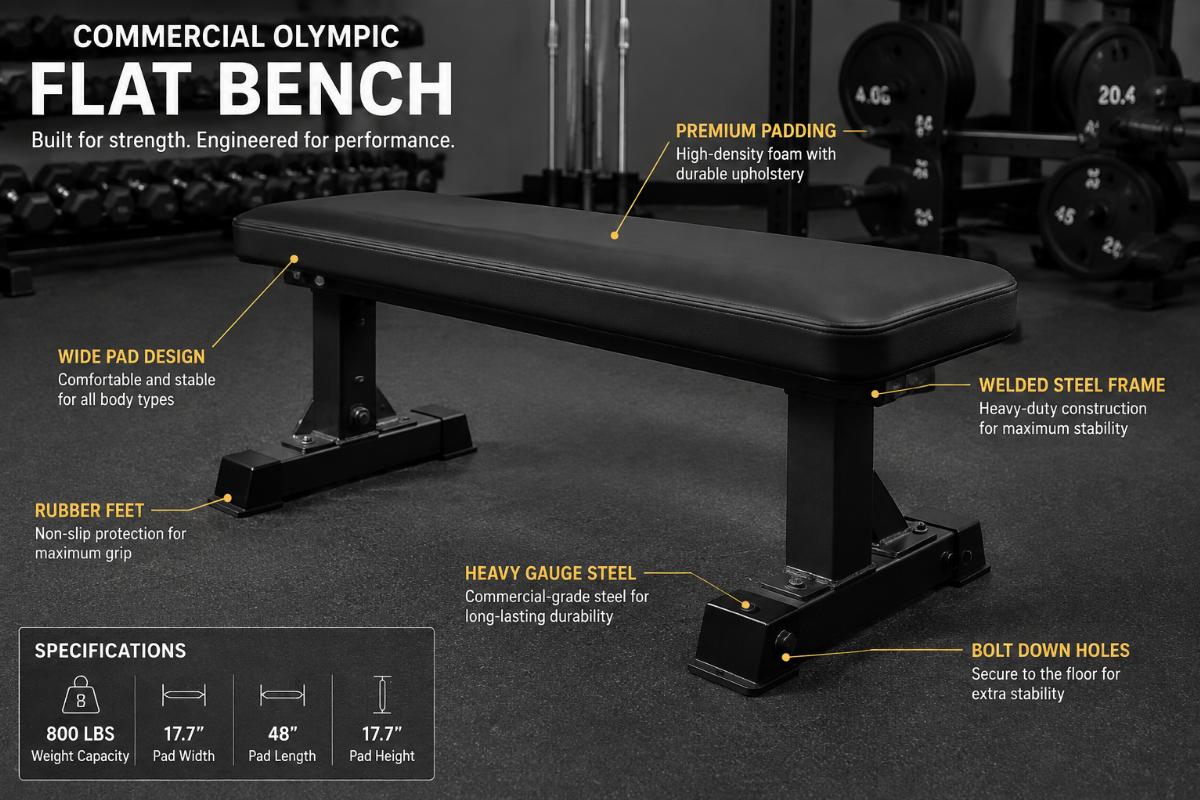
Let me walk you through what actually matters when sourcing a Nautilus Olympic Flat Bench OEM equivalent, and how to avoid the mistakes that cost buyers time and money.
How Does a China OEM Flat Bench Compare to Nautilus in Key Specifications?
A properly engineered Nautilus Olympic Flat Bench OEM equivalent matches or exceeds the original across frame material, load capacity, padding density, and finish durability when verified against recognized test standards.
The table below compares the critical specification dimensions that determine whether an OEM bench can genuinely replace a branded unit in a high-traffic commercial environment.
| Specification Dimension | Branded Import Bench | Verified Nautilus Olympic Flat Bench OEM Equivalent | Unverified Low-Cost Bench |
|---|---|---|---|
| Frame Steel Grade | Certified commercial grade | Q235 or A36 equivalent, verifiable | Uncontrolled / Not provided |
| Tube Wall Thickness | Standard commercial range | Controlled to spec with tolerance documentation | Self-reported / Not verifiable |
| Welding Process | Full penetration, robotic | MIG with internal gussets, manual QC | Spot-welded / Vulnerable |
| Static Load Rating | Tested per ISO 20957 | Third-party tested, documented | Sample-level only / Not provided |
| Padding Foam Density | High-density commercial | High-density, tear-resistant | Basic foam / Noticeably reduced |
| Upholstery Material | Commercial-grade vinyl | PU or PVC, abrasion-resistant | Thin vinyl / Vulnerable |
| Surface Finish | Powder-coated, salt-spray tested | Electrostatic powder coat, extended salt-spray endurance | Spray paint / Not resistant |
| Warranty Structure | Multi-year frame warranty | Multi-year frame and weld warranty | Limited or none |
| OEM Branding | Not available | Full private-label, logo, color match | Not available |
[NEED_CITE: ISO 20957 stationary training equipment safety requirements and test methods]
A distributor in West Africa once ordered a full container of flat benches from a supplier who quoted the lowest unit price in the market. The benches arrived with frames that looked solid. But within months, the welds at the foot plate brackets started cracking under normal commercial use. The root cause was not the steel—it was the lack of internal gussets and the use of intermittent rather than continuous welds. The distributor ended paying substantially more in replacement costs and lost credibility with their gym clients. When we re-engineered the same bench profile with proper gusseting and full-penetration welding, the failure rate dropped to near zero over an extended service period.

The takeaway is straightforward: a Nautilus Olympic Flat Bench OEM equivalent is viable, but only when the manufacturer can demonstrate structural parity through documentation, not just visual similarity.
What Quality Verification Steps Should Buyers Require Before Placing a Bulk Order?
Request third-party test reports, physical sample load testing, and detailed welding inspection photos before committing to a full container order.
Verification is the single most important step in sourcing a Nautilus Olympic Flat Bench OEM equivalent. Without it, you are buying on faith, and faith does not survive a container of defective product arriving at your warehouse.
Here is the verification sequence I recommend based on repeated experience with commercial gym buyers:
-
Request the manufacturer’s ISO 20957 test report from an accredited third-party lab. The report must cover static load testing of the frame, dynamic load cycling, and padding compression resistance. Self-reported data from the factory is not sufficient [NEED_CITE: third-party testing requirements for commercial fitness equipment per EN 957].
-
Order a pre-production sample and conduct your own load test. Place calibrated weight plates on the bench surface and cycle the load repeatedly. Measure deflection at the center of the frame and at all weld joints. Any visible deflection or audible cracking is a rejection trigger.
-
Request close-up photographs of internal weld joints before the frame is powder-coated. The photos should show full-penetration welds at all structural joints, internal gusset placement, and the absence of porosity or undercut. A manufacturer unwilling to provide these photos is hiding something.
-
Verify foam density and upholstery abrasion resistance. Ask for the foam density specification in kilograms per cubic meter and the upholstery material’s abrasion resistance rating. Commercial-grade padding should resist permanent compression after extended use.
-
Confirm the powder coating process and salt-spray test results. Electrostatic powder coating with proper pre-treatment should deliver extended salt-spray endurance. Ask for the test duration and the standard referenced.
A hotel developer in Southeast Asia was outfitting fitness centers across multiple properties and needed a Nautilus Olympic Flat Bench OEM equivalent that would withstand heavy daily use. They requested a pre-production sample, ran their own load test, and asked for weld joint photos. The initial sample showed inadequate gusseting at the foot plate. The manufacturer revised the design, sent a second sample, and the revised frame passed all tests. The final order was a full order of benches across multiple properties, and the client reported zero structural failures over an extended service period.
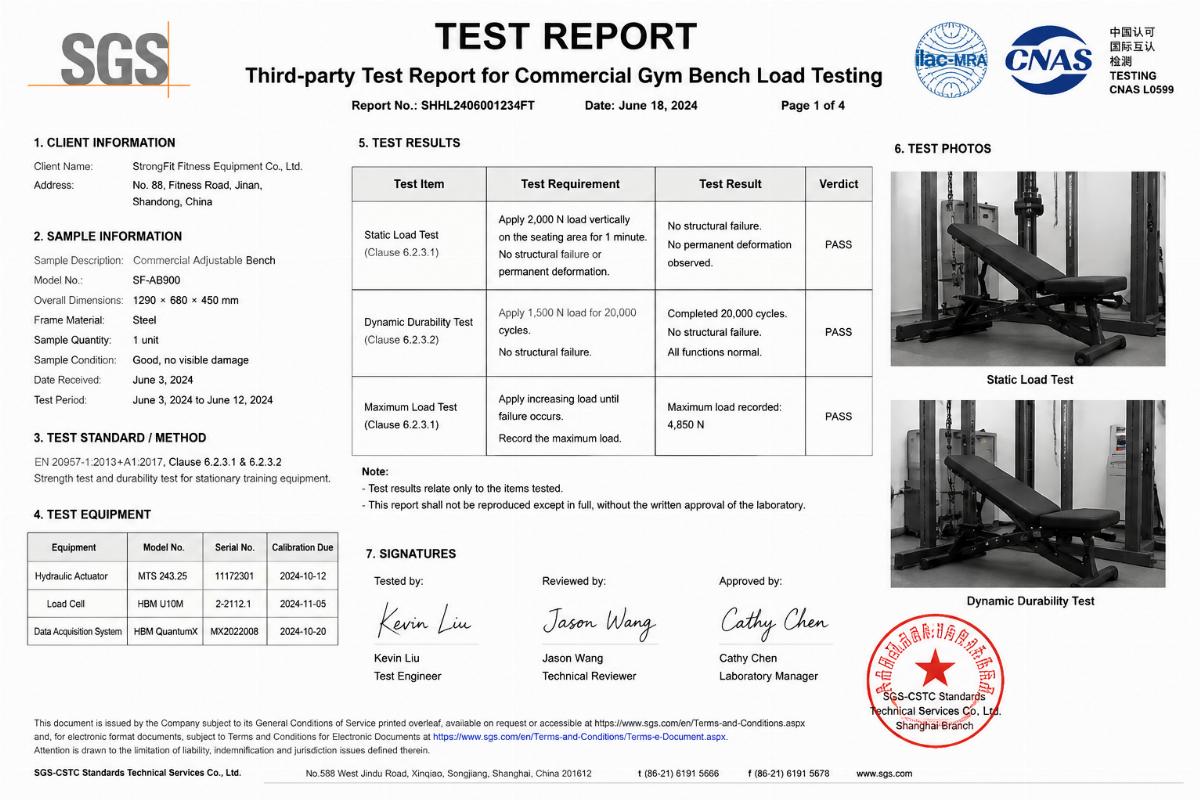
Skipping verification to save a small amount on sample costs is one of the most expensive mistakes buyers make. The cost of a sample is trivial compared to the cost of a rejected container or a failed gym installation.
How Do OEM Branding and Customs Documentation Prevent Port Delays?
Align brand authorization letters, certificates of origin, and HS code classifications before shipment to avoid customs holds that delay delivery and trigger payment disputes.
This is where many Nautilus Olympic Flat Bench OEM equivalent deals fall apart, not because of product quality, but because of paperwork failures. I have seen containers sit at port for extended periods because the brand authorization letter did not match the name on the commercial invoice, or because the HS code on the packing list did not align with the code declared by the customs broker at the destination port.
A buyer in the Middle East once received a container of flat benches that was held at the destination port because the certificate of origin listed the manufacturer’s English name, but the brand authorization letter used a slightly different transliteration. The customs authority flagged the discrepancy, and the container sat for days. The buyer’s gym opening was delayed, and the tail payment was held for months as a result. The root cause was a single inconsistency in the documentation.
Here is the documentation checklist for a Nautilus Olympic Flat Bench OEM equivalent shipment:
- Brand authorization letter: Must exactly match the brand name and logo to be applied to the product and packaging. The letter must be signed and stamped by the brand owner.
- Certificate of origin: Must list the manufacturer’s name consistently with all other documents. The format must comply with the destination country’s requirements (e.g., Form A for GSP beneficiaries, or a chamber of commerce certificate).
- Commercial invoice and packing list: HS codes must be consistent across all documents and must match the code used by the destination customs broker. The product description must be identical across all documents.
- CE certificate and test reports: Required for European markets and many other regions. The certificate must cover the specific product model being shipped.
- Bill of lading: Must match the shipper and consignee information on all other documents.
[NEED_CITE: customs documentation requirements for fitness equipment exports including HS code classification and certificate of origin]
The lesson is simple: treat documentation with the same rigor as product quality. A Nautilus Olympic Flat Bench OEM equivalent that clears customs smoothly is worth far more than a slightly cheaper unit that gets stuck at port.

What Is the True Cost Comparison Between Factory-Direct OEM and Branded Imports?
When total procurement cost is calculated including unit price, freight, customs duties, and long-term replacement costs, factory-direct Nautilus Olympic Flat Bench OEM equivalent sourcing delivers substantial savings over branded imports.
Many buyers focus only on the per-unit price and miss the full picture. The real cost comparison must include the following elements:
-
Unit price: A Nautilus Olympic Flat Bench OEM equivalent from a verified China manufacturer typically costs substantially less per unit than the branded import. The exact savings depend on order volume and specification requirements.
-
Freight and logistics: Factory-direct sourcing allows full container load optimization. A well-designed bench profile can maximize the number of units per container, reducing the per-unit freight cost. Container-load consolidation services further reduce logistics complexity and cost.
-
Customs duties: OEM products classified under the correct HS code may benefit from lower duty rates in certain markets, particularly where trade agreements apply.
-
Replacement and warranty costs: A verified Nautilus Olympic Flat Bench OEM equivalent with proper structural design and welding quality will have a failure rate comparable to the branded product. Unverified low-cost alternatives may have significantly higher failure rates, driving up replacement costs and damaging the buyer’s reputation.
-
Branding and market positioning: OEM branding allows distributors and gym chains to build their own brand identity rather than reselling a competitor’s branded product. This can command higher margins and stronger customer loyalty.
A commercial gym chain in Latin America was evaluating whether to continue purchasing branded flat benches or switch to a Nautilus Olympic Flat Bench OEM equivalent. They calculated the total cost of ownership over an extended service period, including unit price, freight, duties, and projected replacement costs. The OEM option delivered substantial savings on total procurement expenditure while maintaining the same structural performance and commercial durability. The chain also gained the ability to brand the benches with their own logo, strengthening their market position.
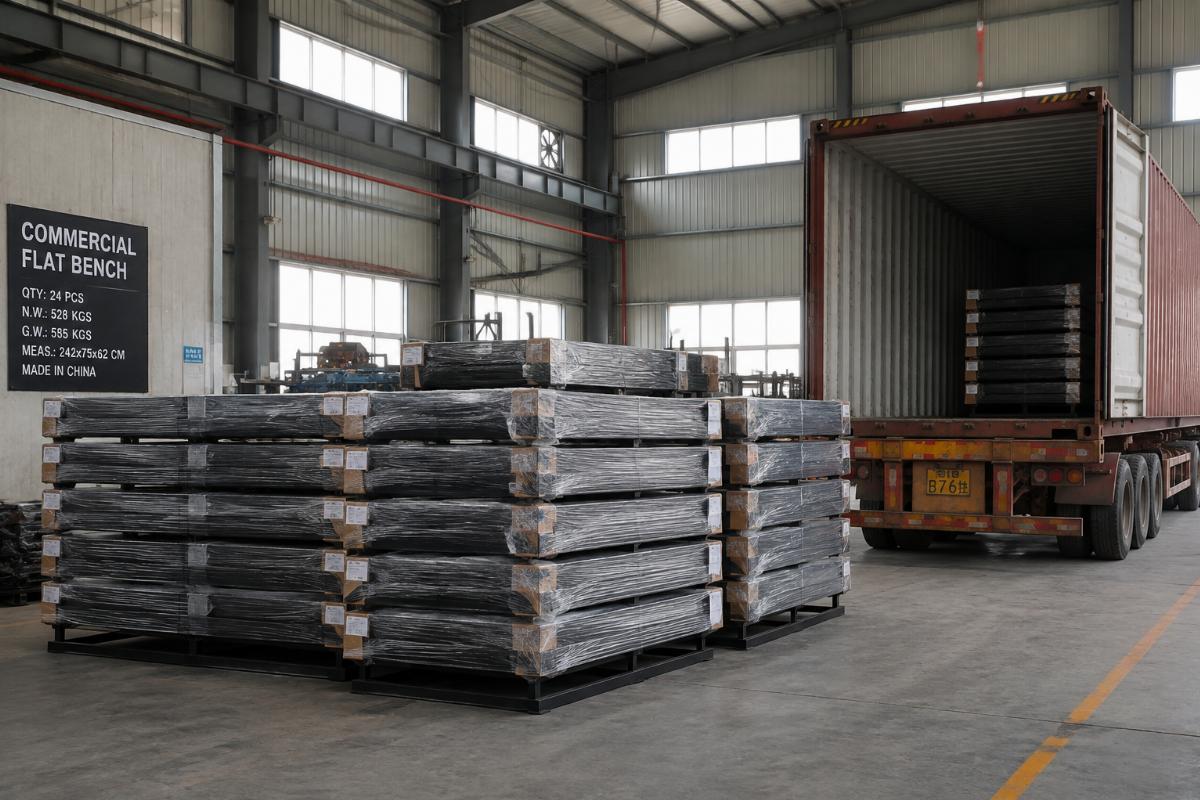
The bottom line: the per-unit price is only the starting point. Total cost of ownership, including freight, duties, replacement costs, and branding value, is what determines whether a Nautilus Olympic Flat Bench OEM equivalent is truly cost-effective.
Conclusion
A Nautilus Olympic Flat Bench OEM equivalent is a viable, cost-effective alternative to branded imports when buyers verify structural specifications, require third-party testing, align customs documentation, and calculate total cost of ownership rather than unit price alone. Structural integrity depends on welding geometry and gusset design, not just steel thickness. Documentation consistency prevents port delays that derail project timelines. And factory-direct sourcing delivers substantial savings when the full procurement picture is considered.


