01 / Scenario
STUDIO
P
High-End Pilates Studios
Premium aesthetics meet quiet operation for boutique studio environments.
ISO
9001
CE
Certified
OEM
Available
10YR
Warranty
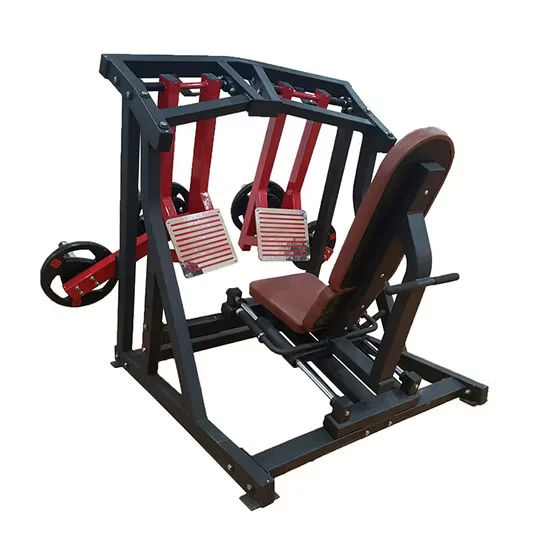
Commercial ISO-Lateral Leg Press, 3×3 inch 11-Gauge Steel Frame, 148kg Net Weight — robotic MIG welding delivers continuous weld lines with no cold joints, while sealed industrial bearings ensure smooth plate-loaded operation under repeated heavy use. 200μm scratch-resistant powder coating with sandblast pre-treatment prevents chip-through at high-contact zones. Every unit undergoes individual load testing before shipment, backed by a 10-year frame warranty and factory-direct floor planning support.
// Spec Highlights
• Direct from Manufacturer · No Middlemen · Worldwide Shipping
01
// Material
Imported Solid Wood
Premium hardwood frames sourced for density and visual warmth.
02
// Hardware
Medical-Grade Silent
Whisper-quiet pulleys and springs for clinical environments.
03
// Customization
Appearance OEM
Color, upholstery, and branding tailored to your studio.
04
// Service
Layout Design
Free venue planning for studios and rehab institutions.
Every component is selected for longevity, performance, and aesthetic harmony - from imported hardwood frames to silent medical-grade accessories.
// Features
Mill-Traceable Frame Steel — Every 3×3 inch tube on this ISO-Lateral Leg Press ships with coil-level certification, so you know exactly what is bearing the load.
| Parameter | Value |
|---|---|
| Product Type | Plate Loaded Leg Press |
| Frame Tube Size | 3×3 inch |
| Frame Steel Gauge | 11-gauge |
| Steel Grade | Q235 |
| Welding Type | Robotic MIG |
| Loading Type | Plate loaded |
| Bearing Type | Sealed industrial bearings |
| Powder Coating | 200μm scratch-resistant |
| Upholstery | Commercial-grade, optional density |
| Product Dimensions | 1989×1771×1545mm |
| Net Weight | 148kg |
| Color Options | Optional |
| Certification | ISO 9001:2015, CE |
| OEM | Available |
| Assembly State | Unfolded |
| Facility Type | Typical Use |
|---|---|
| Commercial gym strength floor | Primary bilateral and unilateral leg pressing station |
| CrossFit box plate-loaded section | Heavy lower-body strength work between metabolic conditioning blocks |
| University strength and conditioning room | Athletic performance lower-body loading for field and court athletes |
| Hotel fitness center | Durable leg press option for high-turnover guest use |
| Rehabilitation and performance center | Controlled closed-chain lower-body loading with iso-lateral capability |
A stamped "commercial grade" label means nothing without verifiable wall thickness and steel origin documentation.
We have seen facilities replace entire leg press stations within eighteen months because the frame tubing was thinner than advertised, and spot welds that looked clean on the showroom floor opened up under repeated eccentric loading. When a gym runs high-traffic programming with athletes dropping loads onto the carriage, the frame absorbs shock cycles that expose every shortcut taken during fabrication. [NEED_CITE: EN 957 structural requirements for stationary training equipment]
This commercial plate loaded leg press targets the sagittal plane, loading quadriceps, gluteals, and hamstrings through a fixed converging arc that allows each limb to work independently. In a strength zone configuration, it pairs naturally with hack squat units, leg curl stations, and free-weight squat racks to cover full lower-body development without redundant movement patterns. It fits high-density commercial floors where multiple users cycle through heavy sets throughout operating hours, and the seat and carriage geometry accommodates a wide range of user heights without requiring tool-based adjustments.
Every plate loaded session generates static compression through the carriage rails and dynamic shock when users decelerate heavy loads near full extension. The junction where the carriage guide meets the main upright absorbs the highest cyclic stress, and this is precisely where spot welds and under-gauge tubing fail first. Sealed bearings at the pivot points resist sweat and chalk ingress that degrades unsealed bushings, while the powder-coated contact surfaces must withstand barbell knurling abrasion and repeated cleaning chemical exposure. [NEED_CITE: weld classification and fatigue performance in structural steel]
The 3×3 inch tube cross-section provides a wider moment of inertia than narrower profiles, meaning the frame resists bending under off-center plate loading. Robotic MIG welding lays continuous bead along each joint rather than intermittent tack points, distributing stress across a longer weld line instead of concentrating it at discrete spots. Sealed industrial bearings at the pivot axis prevent particulate contamination that accelerates wear in bushing-based systems, maintaining smooth carriage travel over extended service intervals. The 200μm powder coating, applied over sandblasted substrate, anchors mechanically into the steel surface profile rather than sitting on top of mill scale that eventually flakes away.
Thin-wall tubing deflects visibly under heavy carriage loads, and that flex transfers into the weld joints where fatigue cracks initiate. Spot welds that pass a visual factory inspection break open once real users introduce lateral imbalance during unilateral pressing. Non-sealed bushings develop play as sweat and chalk penetrate the bearing surface, creating carriage wobble that accelerates guide rail wear. Low-density upholstery compresses permanently under daily commercial use, requiring reupholstery cycles that take the station offline. [NEED_CITE: bearing contamination and maintenance intervals in commercial fitness environments]
The 11-gauge frame steel carries mill certification traceable to the originating coil, providing documentation that generic commercial-grade claims cannot match. Robotic MIG welding on every joint eliminates the cold-start defects common in manual welding, producing consistent penetration depth across the entire frame. Each unit undergoes load testing before crating, not sample-based batch testing that leaves individual units unverified. The 200μm industrial powder coating survives contact with knurled bars and cleaning agents that strip thinner finishes down to bare metal. We provide 2D and 3D CAD floor planning so you can confirm the 1989×1771mm footprint fits your strength zone with adequate safety clearance on all sides, and OEM customization covers color, logo, and upholstery specifications.
Share your strength zone dimensions and existing equipment list so we can generate a 2D or 3D layout confirming clearances and traffic flow around this station. Specify your expected daily user volume so we can confirm the structural grade matches your usage pattern. Indicate your target member demographic to verify the seat and carriage adjustment range covers the expected body type spread. Communicate any branding, color, or upholstery preferences early in the specification process so custom runs align with your delivery timeline.
Q: How do I verify that frame steel is genuinely commercial grade rather than light-commercial tubing?
A: Request the steel mill certificate that traces the frame tubing back to the originating coil, showing gauge, grade, and chemical composition. Light-commercial manufacturers typically cannot provide this documentation because they source from distributors rather than mills directly. Verify the wall thickness with calipers on a sample tube cross-section before accepting a full order.
Q: What is the relationship between tube gauge, cross-section size, and actual load capacity on a plate loaded leg press?
A: Lower gauge numbers indicate thicker wall thickness, and larger cross-section dimensions increase the moment of inertia that resists bending. A 3×3 inch 11-gauge tube handles substantially higher eccentric loads than narrower or thinner profiles. Load capacity depends on the combination of tube specification, weld quality, and bearing rating rather than any single dimension alone.
Q: How should I decide between a plate loaded and a selectorized leg press for a high-traffic commercial facility?
A: Plate loaded stations allow users to incrementally load beyond selectorized stack limits, serving advanced lifters who outgrow fixed weight ranges. Selectorized units offer faster weight changes and reduce plate handling, suiting facilities with higher member turnover and less experienced users. Many commercial strength floors install both formats to cover the full spectrum of user capability.
Q: What floor spacing and safety zone requirements apply to a commercial leg press installation?
A: Allow minimum clearance on all sides for safe plate loading and user entry, plus additional space behind the carriage for full-range travel. Confirm the concrete substrate can handle combined static and dynamic loading. Request a 2D or 3D CAD layout from the manufacturer to verify spacing against your specific floor plan before finalizing equipment placement.
Q: What bearing maintenance intervals should I expect on a plate loaded leg press in daily commercial use?
A: Sealed industrial bearings typically run for extended periods without service because the seal prevents sweat, chalk, and dust from entering the race. Unsealed bushing systems require more frequent inspection and lubrication as contamination accelerates wear. Inspect pivot points quarterly for lateral play or roughness, and replace bearings when carriage travel develops noticeable wobble.
Premium aesthetics meet quiet operation for boutique studio environments.
Medical-grade silence and precision for sports & postpartum recovery.
Furniture-grade craftsmanship for premium residential installations.
Compact premium setups for one-on-one and small-group training.
Aesthetic Pilates integration for hybrid wellness studio programming.
Multi-unit deployment with instructor-grade reliability for certification programs.
Tell us about your project. Our team will respond within 24 hours with pricing, customization options, and shipping details.
// Sales Director
William
+86 132 2531 1800
// Export Manager
Bella
+86 198 5412 8032
william@bickfit.com