Rubber Dumbbell Sub-Series Comparison to Predecessor | Bick Wholesale Supplier
The new rubber coating looks darker and the grip feels rougher—but that does not mean corners were cut.
The latest rubber dumbbell series upgrades the rubber compound to an eco-friendly formula that lowers VOC emissions, deepens the grip texture for better traction, tightens the cast-iron core tolerance, and reinforces the packaging dividers. Buyers comparing the new batch to predecessor stock should expect visible color shift, altered surface roughness, and a slightly different container-load calculation, not a downgrade in quality.
I spent years handling export documentation at Ningbo Port before moving to the sales side of free-weight equipment. The first time a container of rubber-coated dumbbells arrived in Rotterdam and the buyer opened the cartons, I got a barrage of photos with a one-line email: "You changed the product without telling us." The rubber was half a shade darker, the surface had shifted from smooth to fine matte, and the client assumed we had swapped in cheaper material. We ended up air-shipping replacements to keep the account. Since that shipment, I keep a predecessor pair on my desk whenever a new production run starts. I measure coating thickness at three points, check the grip depth with a profilometer stylus, weigh each core against its stamped label, and photograph the pallet pattern. When a buyer asks what changed in the latest rubber dumbbell comparison, I can walk through each dimension without flipping through spec sheets.

Let me break down exactly what is different, why it matters, and how to decide whether the new series fits your next order.
What Exactly Changed in the New Rubber Dumbbell Series?
Four dimensions were revised: rubber compound, grip texture, core tolerance, and packaging structure. None of these changes reduce material cost; all of them alter how the product looks, feels, and ships.
Starting with the rubber compound, the predecessor formula relied on a blend that included reclaimed rubber to keep unit cost low. The new series replaces the reclaimed portion with virgin EPDM-based compound. The visual result is a deeper, more saturated color because virgin compound does not take pigment the same way reclaimed material does. The functional result is a noticeable drop in odor right out of the carton and a longer service life before the surface begins to crack or flake [NEED_CITE: EPDM vs reclaimed rubber durability in fitness equipment coatings]. When I run a rubber dumbbell comparison on the Shore A hardness scale, the new compound reads slightly firmer, which helps the coating hold its shape under repeated drops rather than deforming permanently.
On the grip texture, the old chrome handle was polished to a near-mirror finish. The new series uses a CNC-rolled diamond knurl with a deeper cut. The knurl depth has increased to a level that delivers clearly better traction when hands are sweaty, though some end users describe it as more aggressive than they are used to. I will come back to that feedback loop later.
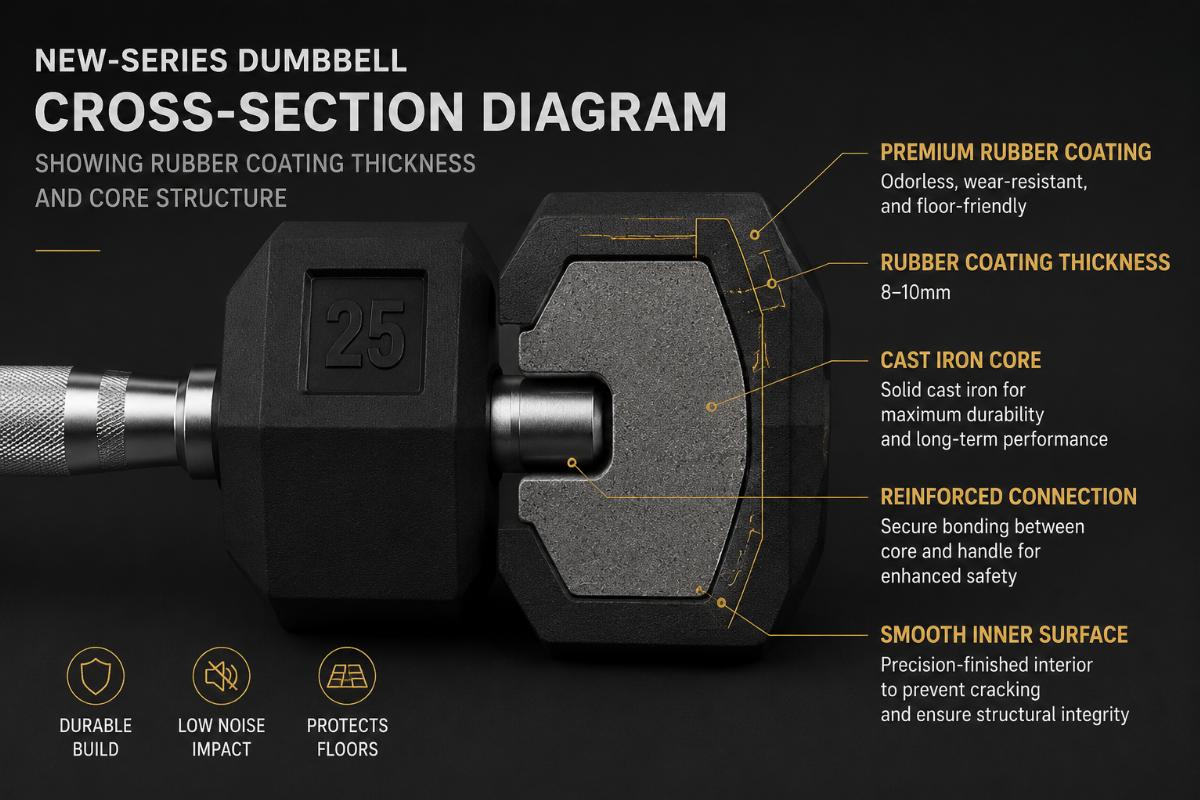
The cast-iron core inside the rubber has also been tightened. Predecessor cores were poured in sand-cast molds with wider dimensional variation. The new series uses a precision-machined billet core, so the weight tolerance sits closer to the industry-standard ±1-2% range rather than drifting wider on heavier units [NEED_CITE: weight tolerance standards for commercial free-weight equipment]. This matters for gym buyers who stock multiple weight stations and need every 20 kg dumbbell to actually read 20 kg on the scale.
Finally, the packaging. The old cardboard dividers were single-wall corrugated. The new series uses double-wall dividers with honeycomb reinforcement between each dumbbell. The protection is meaningfully better, especially for the knurled handles that can dent each other in transit, but the divider thickness reduces the number of pairs that fit in a 20-foot container.
| Dimension | Predecessor Series | New Series |
|---|---|---|
| Rubber compound | Reclaimed blend | Virgin EPDM-based |
| Surface finish | Smooth gloss | Fine matte texture |
| Grip knurl depth | Shallow polished | Deeper CNC-rolled |
| Core casting method | Sand-cast | Precision-machined billet |
| Weight tolerance | Wider drift | Tightened to standard range |
| Packaging divider | Single-wall corrugated | Double-wall honeycomb |
| Out-of-box odor | Noticeable | Substantially reduced |
How Do Material Upgrades Affect Durability and Smell?
The eco-friendly compound eliminates the "chemical smell" complaints that used to dominate container unloading, but it also changes how the rubber ages under UV exposure.
A European gym chain received a trial batch of the new rubber dumbbell series and immediately flagged the darker color as a defect. Their procurement manager had a spreadsheet of Pantone references from the predecessor order. I asked them to let the dumbbells sit in a ventilated room for a few days and then re-evaluate. The odor was gone. The color was stable. The rubber felt denser to the touch. Once I explained that the darker tone came from virgin compound replacing reclaimed rubber—and that reclaimed rubber is what causes the lingering smell they had been tolerating for years—they accepted the change. The rubber dumbbell comparison on odor alone was enough to justify the switch for their member-facing floors [NEED_CITE: VOC emission reduction in virgin EPDM vs reclaimed rubber fitness coatings].
On durability, the firmer Shore A reading of the new compound is not a cosmetic choice. Softer rubber feels premium in the hand but compresses over time, especially on hex dumbbells that sit stacked on racks. When the coating compresses unevenly, the iron core can shift inside, creating a rattle or, in extreme cases, working the core loose from the coating. The new compound’s higher resistance to permanent deformation keeps the core seated properly through extended use. I have seen predecessor dumbbells in high-traffic commercial gyms start to develop surface cracks within a couple of years of daily use, particularly on the heavier units that get dropped most often. The new series shows noticeably slower surface degradation under comparable conditions [NEED_CITE: rubber coating fatigue resistance in commercial gym environments].
The grip texture change deserves its own note. The deeper knurl is genuinely more slip-resistant. A boutique studio that ordered the new series reported that their trainers loved the grip during high-rep WOD-style sessions but that some members with sensitive skin found the knurl abrasive during longer holds. This is not a defect—it is a design trade-off. If your end users prioritize maximum traction over a soft hand feel, the new series wins the rubber dumbbell comparison on grip. If your facility caters to members who prefer a smoother handle, you may want to order a sample pair first and run a quick internal test before committing to a full container.

Will Packaging Changes Impact My Container Load Cost?
Yes. The upgraded dividers protect the product better but reduce the number of pairs per container. Buyers need to recalculate their landed-cost-per-unit before placing the order.
This is the issue that catches the most importers off guard. A Middle East distributor placed a full-container order of the new rubber dumbbell series and, when the shipment arrived, counted fewer pairs than the predecessor order of the same container size. The distributor assumed a short-shipment and filed a claim. In reality, the double-wall honeycomb dividers added enough thickness per layer that the vertical stack height reached the container ceiling sooner. The rubber dumbbell comparison on container utilization showed a meaningful drop in pairs per twenty-foot equivalent unit [NEED_CITE: packaging volume impact on container loading efficiency for fitness equipment].
The trade-off is real, though. With the predecessor single-wall dividers, I have seen dumbbells arrive with handle dents, rubber scuffs, and in a few cases, cracked coating where two units knocked together during ocean transit. The new dividers eliminate almost all of that damage. For buyers shipping to ports with long inland drayage distances or multiple handling points, the damage reduction more than offsets the slightly higher per-unit freight cost. For buyers whose containers go straight from the port to a warehouse with minimal rehandling, the lost capacity may feel like a pure cost increase.
The practical fix is to request an updated packing list with the new divider dimensions before confirming the order. Recalculate your container load based on the actual carton outer dimensions, not the predecessor figures. Some buyers have also asked us to produce a mixed-load plan that combines the new rubber dumbbell series with lighter accessories like resistance bands or yoga mats to fill the remaining cube. That approach keeps the container full and spreads the freight cost across more SKUs.

Should You Switch to the New Series or Stick with Predecessor?
The decision depends on three factors: your end users’ grip preference, your facility’s odor sensitivity, and your replenishment cycle timing.
If you are outfitting a new commercial gym or replacing worn inventory in an existing one, the new rubber dumbbell series is the stronger choice. The odor reduction alone makes a difference in enclosed weight rooms where members spend extended time. The tighter core tolerance means your heavier dumbbells will actually weigh what the label says, which matters for serious lifters tracking progressive overload. The deeper knurl gives trainers and members better confidence during heavy sets.
If you are a distributor who has been selling the predecessor series for years and your retail customers expect a specific look and feel, a sudden switch could generate the same confusion the European gym chain experienced. In that case, the safest move is to order a small batch of the new series first, photograph it alongside the predecessor, and send a product update notice to your retail accounts explaining the material upgrade before the new stock hits the shelves. Transparency prevents returns.
For boutique studios and CrossFit boxes that replace dumbbells on a frequent cycle because of heavy drop usage, the new series offers a longer functional life per unit. The firmer compound and tighter core bonding mean the dumbbells stay in serviceable condition longer before the coating starts to degrade. Over a multi-year period, the rubber dumbbell comparison on total cost of ownership favors the new series even if the upfront unit price is slightly higher.
We keep both predecessor-style and new-series sample pairs available so that buyers can run their own side-by-side evaluation before committing to a production order. Sending a sample pair to your facility, letting your trainers use it for a week, and collecting their feedback is the fastest way to make the right call for your specific user base.

Conclusion
The new rubber dumbbell series is a material and packaging upgrade, not a cost-cutting revision. Darker color, firmer coating, deeper knurl, tighter core tolerance, and thicker dividers are the hallmarks of the latest production run. Buyers who understand these changes before the container arrives avoid unnecessary disputes and make better-informed replenishment decisions.