Rubber Dumbbell Sub-Series Wholesale Supplier & OEM Manufacturer
Normal wear, UV exposure, and chemical cleaner damage are excluded from warranty coverage — a fact most buyers only discover after their first claim is rejected. The RD rubber dumbbell series carries a tiered structural warranty ranging from one to three years depending on usage classification, covering core deformation and rubber-to-metal adhesion failures while explicitly excluding surface abrasion and environmental degradation.
Working through countless container shipments of coated free weights, I’ve seen buyers assume their rubber dumbbell warranty covers every cosmetic imperfection that appears after delivery. The reality is far more structured. Manufacturers classify claims by root cause: structural defects and material failures fall within coverage, while usage-induced wear and improper maintenance sit firmly outside it [NEED_CITE: warranty classification framework per IFI commercial equipment standards]. A Middle East distributor once received a full container of hex dumbbells and immediately flagged surface discoloration as a defect. Lab analysis later confirmed the discoloration resulted from prolonged warehouse exposure to direct sunlight — a textbook exclusion under environmental degradation clauses. Understanding these boundaries before signing purchase agreements prevents disputes and keeps gym floors stocked with usable equipment.

Let’s break down exactly what this warranty framework looks like in practice and how procurement teams can navigate claims efficiently.
What Does the RD Rubber Dumbbell Warranty Actually Cover?
The warranty protects against manufacturing defects in the metal core and rubber bonding process, not against the natural aging that occurs in any high-traffic commercial environment.
Structural coverage focuses on issues traceable to production: core bending under rated loads, rubber coating delamination from the metal insert, and cracking that originates from molding defects rather than impact damage [NEED_CITE: rubber-to-metal adhesion testing methodology per ASTM D429]. The warranty tier you receive depends on the intended usage classification — light commercial, standard commercial, or heavy-duty institutional — with each tier carrying different duration terms and claim thresholds.
A fitness chain operator in Southeast Asia reported handle-area rubber splitting on their thirty-pound dumbbells after roughly eighteen months of peak-hour use. The manufacturer’s technical team reviewed video evidence and determined the cracking pattern matched normal grip-zone abrasion consistent with high-repetition training protocols. Annual wear rates in the range of three to five percent of total inventory are considered normal operational损耗 and fall outside warranty scope. However, the same operator later submitted a claim for rubber separation on fifteen-pound units where the coating peeled cleanly from the core — a clear adhesion failure that qualified for replacement under the structural warranty.
The distinction matters because buyers who conflate cosmetic aging with structural failure waste time pursuing claims that will be denied, while missing legitimate defects that deserve prompt resolution.

How Do You File a Warranty Claim Without Delays?
Standardized evidence submission combined with batch traceability compresses the typical claim resolution cycle to within two weeks when documentation meets verification requirements.
The claim process follows a defined sequence: fault classification, visual evidence capture, batch number verification, and solution matching. Each step has specific requirements that, when met, prevent the back-and-forth that stretches resolution timelines into months [NEED_CITE: commercial fitness equipment warranty claim documentation standards].
First, fault classification determines whether the issue falls under structural defect, material failure, or excluded wear category. Misclassification at this stage is the single largest source of claim delays. Second, evidence capture requires specific angles and conditions: photographs must show the defect at close range with batch numbers visible, video documentation should run long enough to demonstrate the failure mode under normal handling, and affected units must be isolated from the general inventory. Third, batch traceability connects the defective units to production records, enabling the manufacturer to determine whether the issue is isolated or systemic.
A Latin American distributor once submitted a claim for rubber odor complaints across multiple dumbbell batches. They provided video evidence of unopened boxes, batch number photographs from each unit, and a timeline showing when the odor was first noticed relative to delivery. The manufacturer’s quality team cross-referenced batch records with raw material certifications and identified a specific rubber compound lot that failed volatile organic compound thresholds. The entire affected batch was replaced within a few weeks — a straightforward resolution made possible by thorough documentation.
The evidence standards are not arbitrary. They protect both parties: buyers receive legitimate replacements or compensation, while manufacturers can distinguish between production defects and post-delivery damage that occurred during storage, transport, or facility handling.

What Are the Common Warranty Exclusions Buyers Overlook?
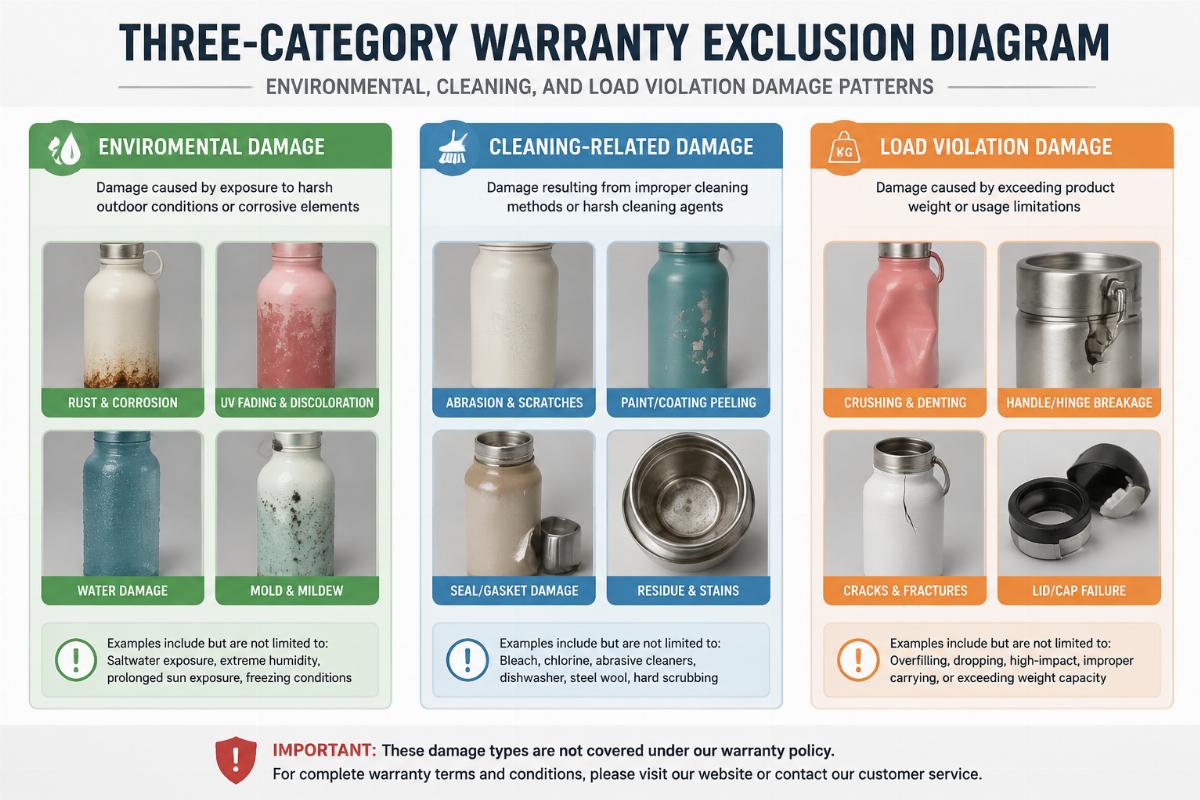
Environmental exposure, improper cleaning protocols, and load capacity violations form the three highest-frequency rejection categories for rubber dumbbell warranty claims.
Environmental factors top the exclusion list because they’re often invisible until damage appears. Prolonged exposure to direct ultraviolet radiation causes rubber compound degradation that manifests as surface cracking and color fading — damage patterns distinctly different from manufacturing defects. Humidity control during ocean transit and warehouse storage also falls under buyer responsibility; metal core corrosion resulting from inadequate packaging or unclimate-controlled storage is classified as transport or facility damage, not product defect [NEED_CITE: rubber material environmental resistance testing per ISO 188].
Cleaning protocol violations generate surprising claim rejection volumes. Commercial gym maintenance staff frequently use industrial disinfectants containing solvents that attack rubber compounds. The resulting surface tackiness, swelling, or premature cracking looks like material failure but traces directly to chemical exposure. Warranty terms specify compatible cleaning agents, and deviation from those recommendations voids coverage for affected units.
Load capacity violations occur when dumbbells are dropped from height onto hard surfaces repeatedly, causing core deformation or rubber impact fractures that exceed the product’s rated impact tolerance. Commercial-grade rubber dumbbells are engineered for controlled placement, not Olympic-style drops. Facilities that permit uncontrolled dropping should specify bumper plate-compatible flooring or accept that impact damage falls outside warranty scope.
An African importer received a shipment where several pallets showed rust staining on metal components visible through packaging. Investigation revealed the container had experienced condensation during transit through high-humidity zones, and the packaging lacked adequate moisture barriers. The rust was classified as transport-related damage rather than product defect, requiring the importer to file against marine insurance rather than product warranty. Understanding these boundaries before shipment prevents costly misallocation of claim responsibility.
How Does After-Sales Support Work Across Different Regions?
Regional spare parts pre-positioning combined with remote technical diagnostics enables response times measured in hours rather than weeks for qualified warranty claims.
The after-sales infrastructure supporting the RD rubber dumbbell series operates through a network of regional spare parts repositories and remote technical support teams. When a claim is validated, replacement units or components dispatch from the nearest pre-positioned inventory point rather than shipping from the manufacturing facility [NEED_CITE: commercial fitness equipment after-sales service framework per ISO 9001 quality management systems].
Standard replacement components for common dumbbell specifications maintain ready stock with dispatch timelines measured in days. Custom specifications or less common weight increments require production scheduling, extending the timeline but still operating within defined service level commitments. The remote diagnostic process begins with fault classification, proceeds through video-based visual confirmation, and concludes with solution matching — whether that means full unit replacement, partial component swap, or discounted compensation for units that remain functional despite cosmetic issues.
Bick’s overseas spare parts deployment strategy positions inventory at multiple regional nodes, reducing the distance between defect identification and replacement delivery. Technical support teams conduct remote assessments via video link, guiding facility maintenance staff through damage evaluation and evidence capture in real time. This approach eliminates the need to ship defective units back to origin for inspection — a process that would add weeks to resolution timelines and generate additional freight costs.
A European hotel fitness center operator reported rubber coating damage on a set of dumbbells used in their poolside gym. Remote video assessment revealed the damage resulted from chlorine exposure rather than manufacturing defect — the facility’s maintenance team had been storing the dumbbells in a high-chlorine environment without adequate ventilation. While the claim fell outside warranty coverage, the remote diagnostic process helped the operator understand the root cause and adjust their storage protocol, preventing future damage across their equipment inventory.

When Should You Consider Extended Warranty Options?
High-frequency commercial environments justify extended warranty investment when the additional coverage cost represents a small fraction of total equipment value while protecting against accelerated wear claims.
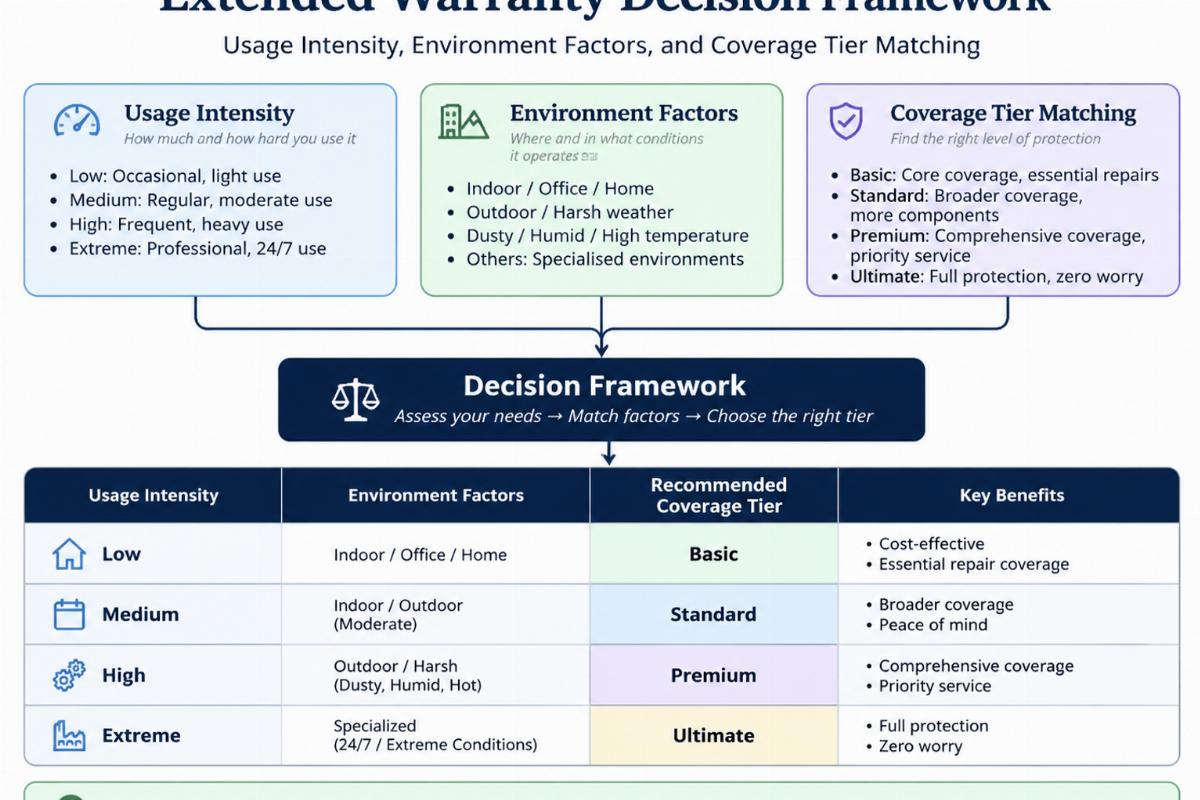
Standard warranty terms for the RD rubber dumbbell series align with typical commercial usage patterns. However, facilities operating extended hours, serving high member volumes, or located in environments that accelerate equipment aging may benefit from extended coverage options. The additional cost for extended warranty typically represents a modest percentage of equipment purchase price, while providing coverage for wear patterns that would otherwise fall outside standard terms [NEED_CITE: extended warranty cost-benefit analysis for commercial fitness equipment].
Extended warranty eligibility depends on facility usage classification and maintenance protocol compliance. Facilities that document regular equipment inspection, use approved cleaning agents, and maintain climate-controlled storage conditions qualify for extended terms. The extended coverage typically includes accelerated wear patterns that standard warranties exclude, providing replacement or compensation for units that degrade faster than normal commercial usage would predict.
A university recreation center operating round-the-clock access requested extended warranty coverage for their free weight area dumbbells. The facility’s usage volume exceeded typical commercial gym patterns, and the administration wanted predictable replacement budgeting rather than unexpected capital expenditure for premature equipment refresh. The extended warranty structure provided coverage for accelerated grip-zone wear and rubber compound aging, with replacement triggered by defined wear thresholds rather than catastrophic failure.
The decision to purchase extended warranty depends on usage intensity, facility environment, and capital planning preferences. Facilities with predictable replacement budgets may prefer standard warranty terms and self-insure against accelerated wear. Operations requiring fixed-cost predictability or facing usage patterns that exceed standard commercial assumptions find extended coverage provides valuable risk transfer.
Conclusion
Understanding warranty boundaries before purchase prevents disputes and keeps commercial gym operations running smoothly. The RD rubber dumbbell series warranty framework covers structural defects and material failures while excluding environmental damage, improper maintenance, and usage violations — clear distinctions that protect both buyers and manufacturers when properly documented and communicated.