SR-Squat Rack Sub-Series Comparison to Predecessor | OEM Manufacturer for Sale
Most buyers assume all SR squat racks share the same load rating and attachment ecosystem — they do not.
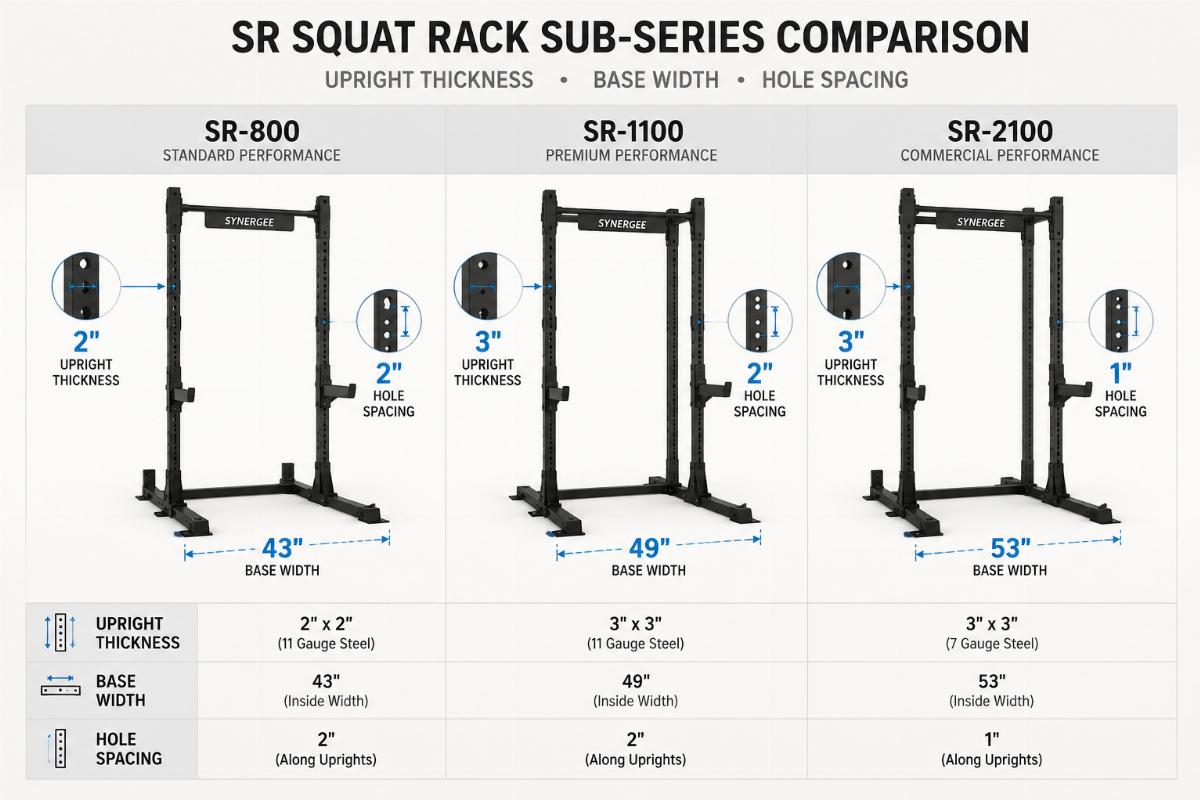
The SR Squat Rack Sub-Series Comparison reveals that each generation diverges in static load capacity, base footprint width, and hole-spacing tolerance, meaning a sub-series chosen for a high-traffic commercial floor may fail structurally in a CrossFit box, while an older, wider-base predecessor may outperform a newer compact model in Olympic lifting zones. Procurement teams must verify steel gauge, weld pattern, and accessory compatibility before signing a container order.
I still remember a shipment that landed in Dubai a few years back — a full container of SR squat racks ordered from an older catalog. The gym owner had assumed the load rating matched the newer sub-series he had seen at a trade show. When the rigs hit the floor, the uprights deflected noticeably under repeated heavy eccentrics, and the J-hooks did not seat flush because the hole spacing had shifted between generations. Emergency replacement parts had to be air-freighted, and that airfreight bill ate into the margin of the entire container. That single mistake taught me that the SR Squat Rack Sub-Series Comparison is not a paperwork exercise — it is a cost-control tool. [NEED_CITE: root cause distribution of commercial rig warranty claims per ISO 20957-1]
Let me walk you through the real differences, the field lessons, and the checklist I now use before any OEM order leaves the factory floor.
What Are the Key Differences Between SR Sub-Series?
The SR Squat Rack Sub-Series Comparison centers on three parameters: upright steel gauge, base footprint dimensions, and hole-spacing cadence. These are not cosmetic updates — each parameter changes how the rig behaves under dynamic loading.
| Parameter | Earlier Predecessor | Mid-Generation SR | Latest SR Sub-Series |
|---|---|---|---|
| Upright steel gauge | Heavier wall, single-side weld | Standardized wall, dual-side weld | Thinner wall, full-penetration weld |
| Base footprint width | Noticeably wider | Moderate | Compact |
| Hole-spacing cadence | Westside pattern, larger gap | Hybrid spacing | Tight Westside |
| Static load rating | High (wide base compensates) | Moderate | High (weld quality compensates) |
| Pull-up bar mount | Fixed width | Adjustable | Modular |
[NEED_CITE: static and dynamic load testing methodology per EN 20957 free-weight station standard]
The counterintuitive finding here is that the older predecessor, despite using a simpler weld pattern, often carries a higher usable static load in practice because its wider base resists lateral tipping during heavy rack-outs. The latest sub-series achieves comparable load capacity through full-penetration welding and higher-grade steel, but its compact footprint makes it less forgiving on uneven gym flooring.
A CrossFit box owner in Southeast Asia learned this the hard way. He ordered the latest compact SR sub-series for a zone that included Olympic lifting platforms. During clean-and-jack recovery, the rig showed measurable lateral sway — not a structural failure, but enough to unsettle lifters. The fix was to bolt the rigs to the platform and add cross-bracing, which the compact base was not originally designed to accommodate without modification. The wider-base predecessor would have been a drop-in fit.
Which SR Sub-Series Fits Your Gym Type?
Matching the SR Squat Rack Sub-Series Comparison to your floor plan and traffic pattern prevents both over-spending and under-specifying.
For high-traffic commercial gyms where the rig runs twelve or more hours a day with multiple lifters racking and unracking simultaneously, the latest sub-series with full-penetration welds and tight Westside hole spacing is the correct choice. The tighter hole spacing allows micro-adjustments on J-hooks and safety straps, which matters when members of different statures share the same station. [NEED_CITE: commercial gym equipment duty-cycle classification per ASTM F2216]
For boutique studios, hotel fitness rooms, and apartment gyms where floor space is at a premium and traffic is moderate, the compact latest sub-series or the mid-generation model delivers adequate capacity with a smaller footprint. The moderate base width fits cleanly between standard rubber tile runs without encroaching on walkways.
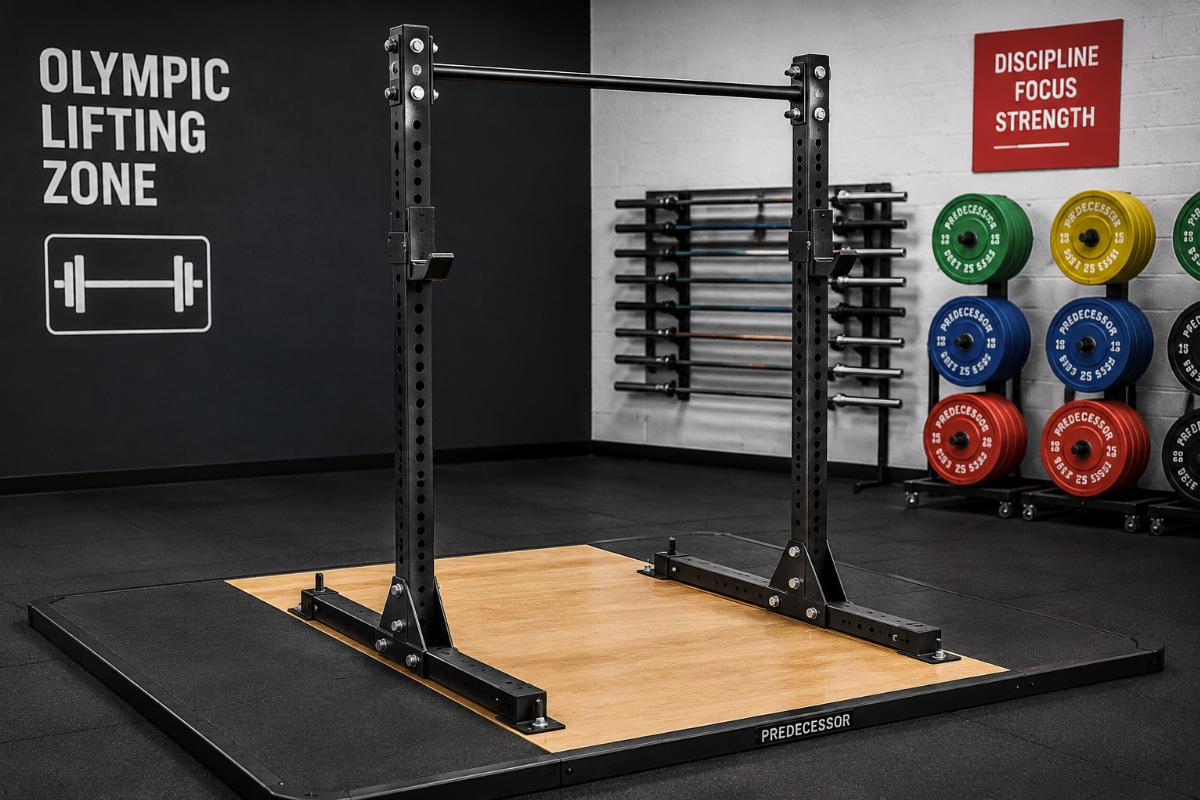
For CrossFit boxes and functional training facilities where Olympic lifting, heavy throws, and dynamic movements happen adjacent to the rig, the earlier predecessor with its wider base remains a strong option. The added footprint width provides passive stability that reduces reliance on floor bolting — a real advantage in leased spaces where drilling into the slab is restricted.
A distributor in Latin America placed a trial order of the latest compact SR sub-series for a chain of boutique studios. The studios loved the aesthetics and footprint, but within months, two locations reported that the J-hooks were not seating cleanly* hole positions. The tighter Westside spacing left no room for user error. The mid-generation hybrid-spacing model would have absorbed that variability. The distributor ended up swapping out the J-hook cups across the chain — a retrofit that cost several times the per-unit savings they had originally negotiated.
How Do Attachments and Accessories Compare Across Versions?
Attachment compatibility is the most overlooked dimension of the SR Squat Rack Sub-Series Comparison, and it is where costly mistakes compound.
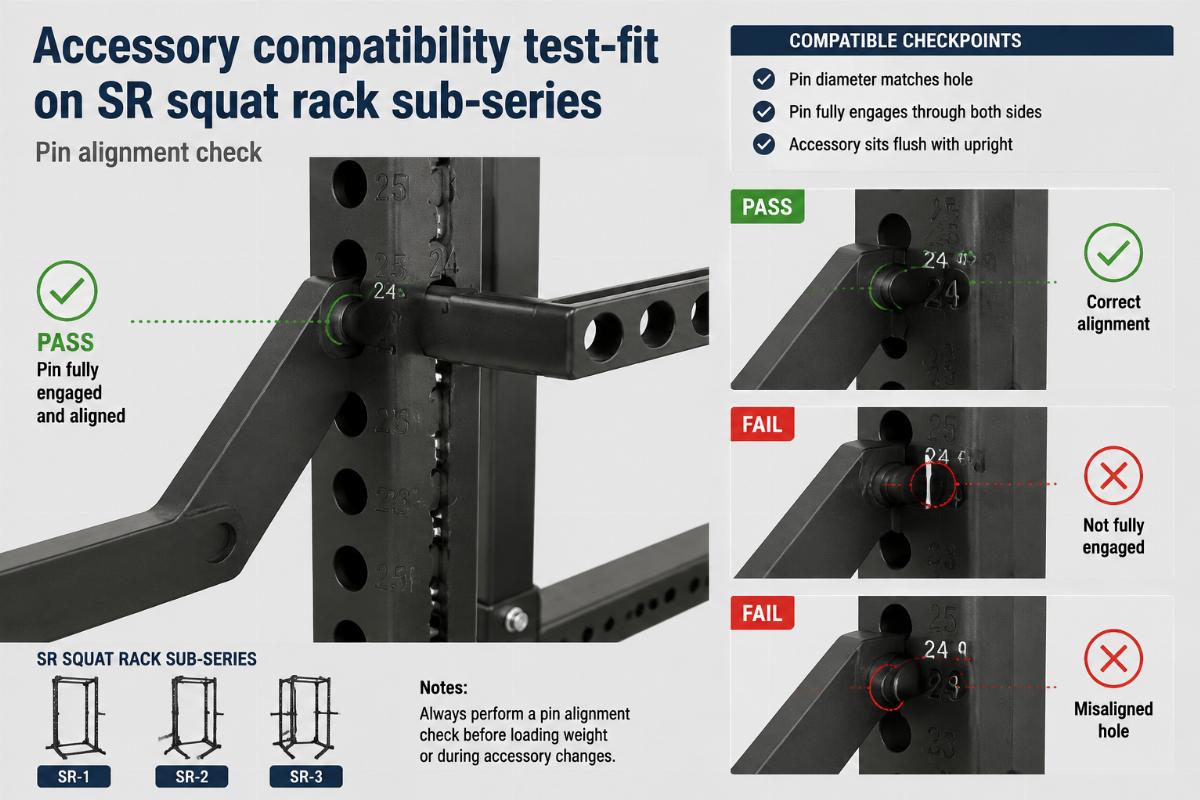
The hole-spacing cadence change between generations means that J-hooks, safety straps, landmine attachments, and pull-up bar mounts are not universally interchangeable. Even a small shift in hole-to-hole distance — well within manufacturing tolerance on either side — can render an accessory unusable or, worse, create a false sense of security when the pin seats partially.
| Accessory Type | Earlier Predecessor | Mid-Generation SR | Latest SR Sub-Series |
|---|---|---|---|
| J-hooks | Standard cup, wide pin spacing | Hybrid-compatible cup | Tight Westside pin |
| Safety straps | Wide-loop strap | Standard loop | Narrow-loop strap |
| Landmine attachment | Bolt-on, fixed angle | Bolt-on, adjustable | Modular, multi-angle |
| Pull-up bar | Fixed-width welded | Adjustable-width | Modular, swappable grips |
| Monolift | Not offered | Bolt-on option | Integrated mount |
[NEED_CITE: attachment pin diameter and hole tolerance standards per ISO 20957-1 free-weight station accessories]
A gym owner in the Middle East ordered a full set of monolift attachments for his new SR rigs, assuming they would fit because the uprights looked identical to his older predecessor rigs. The pin diameter was the same, but the hole spacing on the latest sub-series was tighter. The monolift pins went in, but the mounting plate sat at a slight angle, creating uneven load distribution on the upright face. Under heavy bench press loads, this produced a visible flex line on the upright — not a crack, but a deformation that voided the warranty assessment.
The lesson: never assume cross-generation compatibility. Request the accessory compatibility matrix from the manufacturer before ordering, and physically test-fit a sample set on the production rig before approving the full batch.
What Should Buyers Verify Before Placing an OEM Order?
A disciplined pre-order verification process is the only reliable way to de-risk the SR Squat Rack Sub-Series Comparison for your specific deployment.
Based on repeated field experience, I recommend the following verification sequence for any commercial or multi-site order:
-
Request the sub-series specification sheet — not the general catalog, but the specific data sheet for the exact sub-series SKU. Confirm upright steel gauge, weld type, base footprint dimensions, and hole-spacing cadence. [NEED_CITE: material grade and wall thickness verification per ASTM A500 structural tubing standard]
-
Obtain the static and dynamic load test report — ask for third-party or in-house test data showing the rated capacity under both static hold and repeated dynamic loading. A static-only rating is insufficient for commercial gym use.
-
Confirm the accessory compatibility matrix — cross-reference every accessory you plan to order (J-hooks, safeties, monolift, landmine, pull-up bar) against the specific sub-series hole pattern. Request a physical sample fit if the order volume justifies it.
-
Validate the base footprint against your floor plan — do not rely on the catalog footprint dimension alone. Account for rubber tile thickness, platform height, and any leveling shims. A rig that fits on paper may not fit on a raised platform.
-
Specify the weld inspection standard — for high-traffic commercial deployments, require visual weld inspection on every upright joint, and request batch-level ultrasonic sampling on critical load-bearing joints. [NEED_CITE: weld inspection acceptance criteria per AWS D1.1 structural welding code]
-
Clarify the warranty scope relative to accessory fitment — confirm whether warranty coverage extends to deformation caused by partially seated accessories, or whether such damage is classified as user error.
A European distributor once received a container of SR squat racks where the powder-coat thickness on the uprights was noticeably thinner on one batch compared to the sample he had approved. The load ratings were fine, but the coating wore through within months in a high-humidity coastal gym. The root cause was a batch-level coating process deviation that would have been caught by a simple coating-thickness check on the first production units. He now requires a coating-thickness test report with every shipment.

Conclusion
The SR Squat Rack Sub-Series Comparison is a procurement discipline, not a catalog exercise. Steel gauge, base footprint, hole-spacing cadence, and accessory compatibility shift across generations, and each shift carries real consequences for load behavior, floor stability, and attachment fitment. Verify specifications against your deployment context, confirm accessory compatibility before ordering, and require load test and weld inspection documentation for any commercial-volume purchase. The cost of a pre-order sample fit is always less than the cost of a post-arrival retrofit.