SS-150 Selectorized Chest Sub-Series Container Loading & MOQ Wholesale
Most importers think container loading is just about fitting machines into a steel box. It is actually a weight-distribution and documentation problem that decides whether your cargo clears customs or sits at the port for weeks.
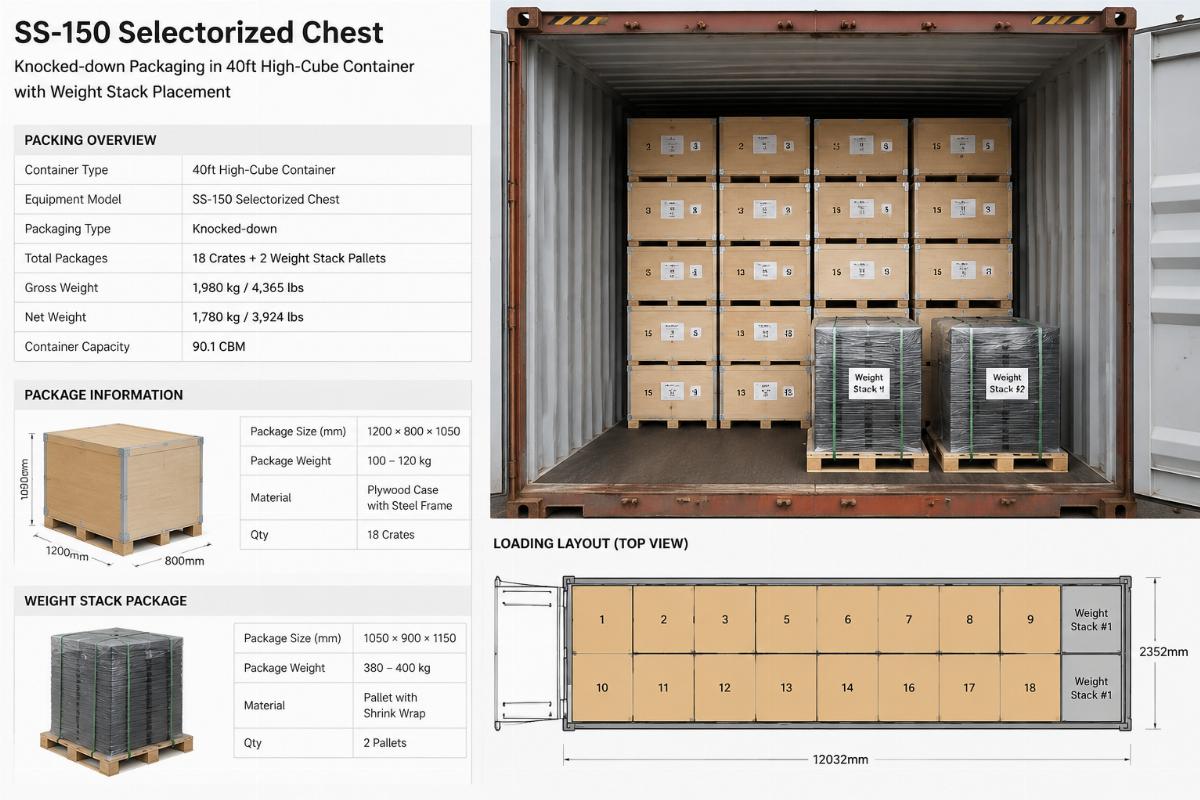
The SS-150 Selectorized Chest series ships knocked-down with the weight stack separated from the frame, allowing a standard 40-foot high-cube container to hold a full mixed order of selectorized strength machines. Minimum order quantity is flexible: buyers can start from a single unit for sample testing or scale to full-gym packages. The key to smooth delivery is matching the product’s knocked-down dimensions and gross weight to the container’s payload limit while keeping the packing list accurate down to the kilogram.
When I first started handling export shipments from Qingdao, I treated the packing list as a formality—just copy the numbers from the proforma invoice and send it off. That mindset changed permanently after a Middle East client ordered a full container of commercial strength equipment bound for Jebel Ali. The gross weight on the packing list was off by less than a couple of hundred kilograms from the actual scale weight at the destination port. Customs held the container for weeks, and the demurrage charges wiped out the entire margin on that shipment. Since then, I verify every gross weight, net weight, HS code, and loading photo myself before the container doors close. [NEED_CITE: Jebel Ali port customs weight tolerance policy for fitness equipment imports]
Getting these details right from day one is what separates a profitable import cycle from a costly lesson. Let me walk you through exactly how the SS-150 selectorized chest press supplier process works from specs to container door.
How Do SS-150 Selectorized Chest Specs Affect Your Container Plan?
The SS-150 series uses a dual weight-stack configuration with a selectorized pin system, and its knocked-down packaging dimensions directly determine how many units fit per container.
The frame and the weight stack are packed separately. The frame goes into a reinforced carton with foam-molded corner protectors, while the weight stack—being the heaviest single component—is wrapped in plywood crate packaging to prevent shifting during ocean transit. This separation is not just for protection; it is a deliberate loading strategy. [NEED_CITE: selectorized strength machine standard knocked-down packaging methodology for ocean freight]
Here is how the packaging parameters compare across typical configurations:
| Parameter | Frame Carton | Weight Stack Crate | Fully Assembled Reference |
|---|---|---|---|
| Packing Form | Knocked-down | Separated | Not shipped this way |
| Stacking Capability | Pallet-stackable | Pallet-stackable | Non-stackable |
| Container Space Efficiency | Noticeably higher | Noticeably higher | Baseline |
| Loading Sequence Priority | Loaded first | Loaded second, centered | N/A |
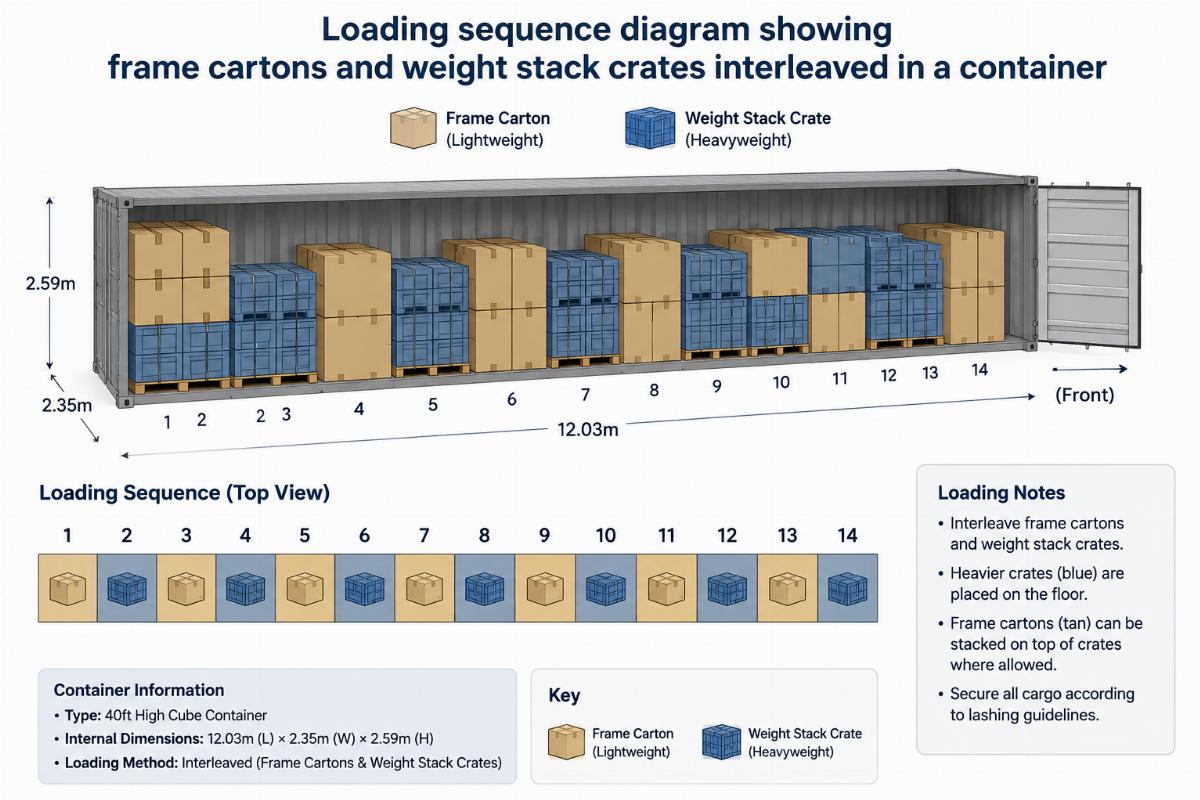
A commercial gym buyer from Southeast Asia once ordered a mixed container: several chest press units alongside lat pulldown and leg press machines from the same selectorized series. Because every unit in the series shares the same knocked-down packaging logic, the loading team could interleave frame cartons and weight stack crates to maximize floor coverage and keep the center of gravity low. The result was a container that arrived with zero damage claims.
The critical point here is that when you request a quotation from a selectorized chest machine wholesale partner, always ask for the knocked-down dimensions and per-carton gross weight. These numbers determine your entire container plan. [NEED_CITE: commercial gym equipment container loading weight distribution best practices]
What MOQ Flexibility Looks Like in Real Orders?
The commercial gym chest equipment MOQ is not a fixed number locked by the factory—it scales with your business stage, from single-unit samples to full-gym turnkey packages.
Many first-time importers assume they must commit to a full container just to get factory pricing. That is not how the process works for the SS-150 series. The MOQ structure operates on tiers that align with buyer maturity:
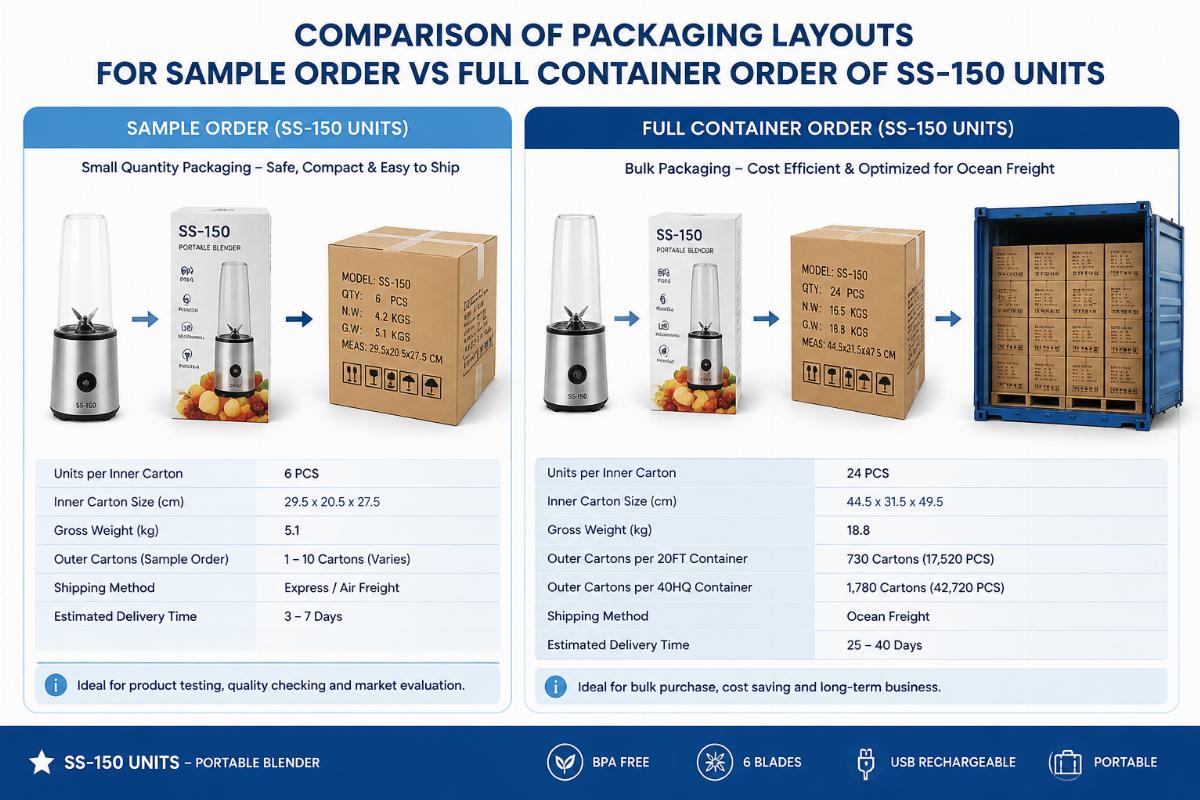
- Sample stage: A single SS-150 unit can be ordered for quality evaluation. This is common among distributors testing a new market or gym owners replacing a specific machine. The unit ships in standard export packaging, and the pricing reflects sample-level logistics rather than volume pricing.
- Pilot order stage: A partial container or shared container with other selectorized machines from the same series. This is where buyers start accessing tiered pricing while keeping capital commitment manageable.
- Full container stage: A dedicated container loaded entirely with SS-150 units or a mixed selectorized series order. This unlocks the most competitive unit pricing and allows full OEM branding customization.
- Turnkey gym package stage: Multiple containers combining cardio, selectorized strength, plate-loaded, free weights, and flooring. The MOQ concept dissolves entirely at this level because the order is structured as a complete facility outfitting project.
A distributor in the MENA region started with a two-unit sample order to test market response. Within several months, they placed a pilot order filling half a container, and by the following year, they were importing full containers quarterly with their own branding on the shrouds and weight stack covers. The MOQ flexibility allowed them to grow without overcommitting capital upfront. [NEED_CITE: fitness equipment import MOQ tier structure for emerging market distributors]
The selectorized strength machine container loading calculation changes at each tier. A single unit may ship via LCL consolidation, while a full container requires detailed loading plans. Always confirm the packaging dimensions at your target order tier before finalizing the purchase.
What Are the Container Loading Rules You Cannot Afford to Ignore?
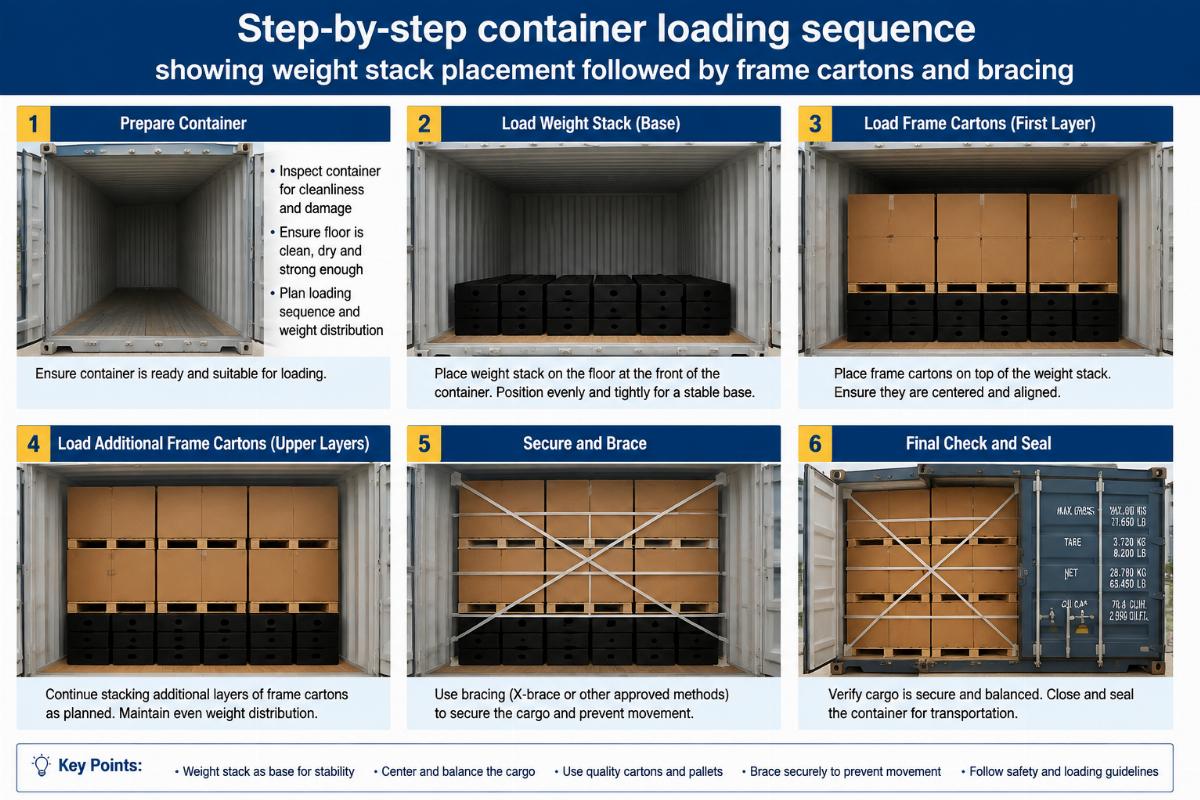
Container loading for selectorized strength machines follows a strict sequence: heavy components centered and low, fragile components secured against sidewalls, and every carton strapped to prevent inland transit shift.
The loading process is not random. It follows a methodology developed through repeated trial and error across thousands of shipments. Here is the sequence our loading teams follow:
- Floor inspection and preparation: The container floor is checked for protruding nails, moisture, and structural damage. A layer of corrugated cardboard or plywood sheeting is laid down to protect carton bottoms from moisture and abrasion. [NEED_CITE: ocean freight container floor preparation standard for heavy equipment]
- First layer—weight stack crates: The heaviest components go in first, placed along the container centerline. This keeps the center of gravity low and centered, reducing the risk of container tipping during crane operations at transit ports.
- Second layer—frame cartons: Frame cartons are stacked on top of and around the weight stack crates, interlocked to prevent lateral movement. Foam spacers fill any gaps larger than a hand’s width.
- Strapping and bracing: Nylon straps are run across the top layer and anchored to the container’s internal lashing rings. Wooden bracing bars are installed across the door end to prevent forward shift when the container is opened at destination.
- Door-end photo documentation: Before the doors close, a full set of photos is taken: front view, side views, and a close-up of the bracing. These photos are sent to the buyer and retained for customs dispute resolution if needed.
A gym chain owner in Latin America once received a container where the weight stacks had shifted forward during ocean transit because the previous supplier skipped the bracing step. Two weight stack crates punctured through their own carton walls, damaging the guide rods. The replacement parts cost several times what proper bracing would have cost in labor. [NEED_CITE: container bracing requirements for heavy fitness equipment per cargo security guidelines]
How Do Documentation Errors Actually Cause Customs Delays?
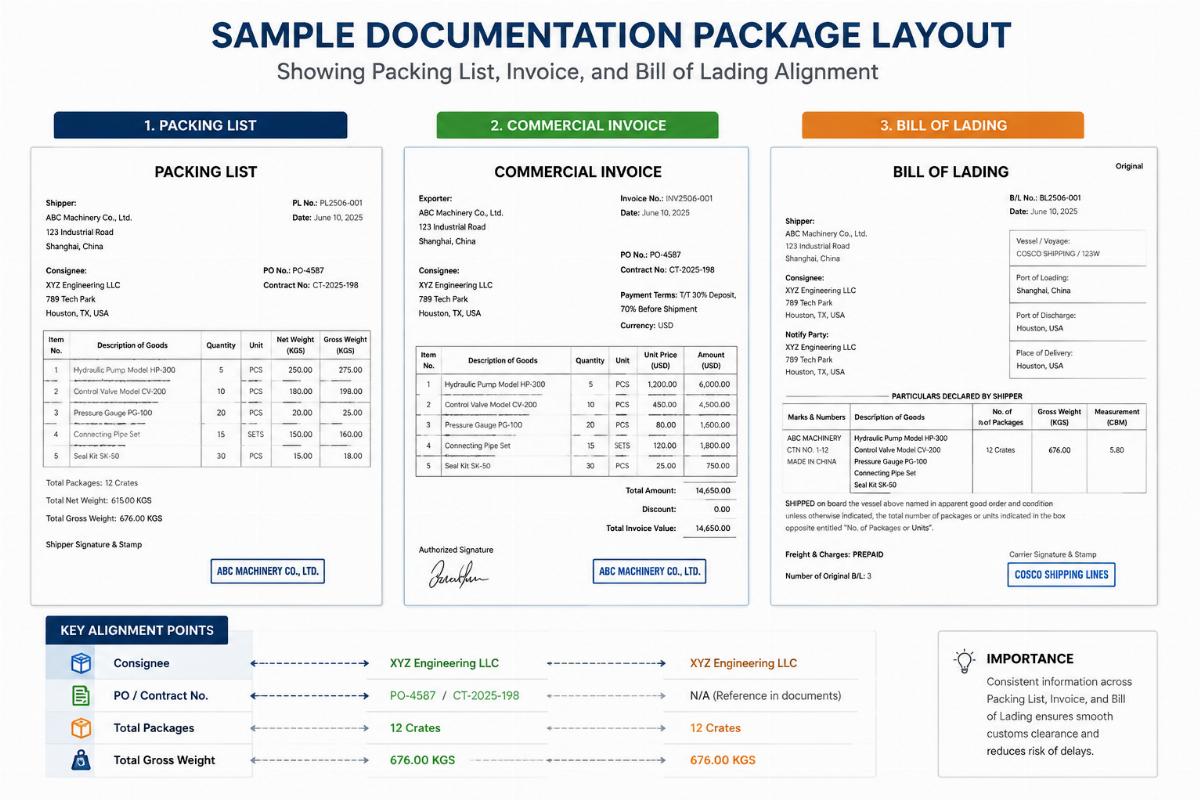
The single most common cause of customs delays for fitness equipment imports is not product non-compliance—it is documentation mismatch between the packing list, commercial invoice, and bill of lading.
Customs authorities at major ports worldwide cross-reference the declared gross weight against the container’s verified weight from the terminal scale. When the discrepancy exceeds the port’s tolerance threshold, the container is flagged for inspection. [NEED_CITE: customs weight verification tolerance threshold for imported commercial equipment at major global ports]
The documentation package for an SS-150 selectorized chest press shipment must include:
- Packing list: Itemized by carton, with per-carton gross weight, net weight, dimensions, and carton count. The total must match the bill of lading exactly.
- Commercial invoice: Unit price, total value, Incoterms, and HS code. The HS code for selectorized strength machines must be consistent across all documents.
- Bill of lading: Shipper, consignee, notify party, container number, seal number, and gross weight.
- Certificate of origin: Required by many importing countries for tariff preference or clearance.
- Loading photos: Not always required by customs, but essential for dispute resolution if damage claims arise.
A buyer in Africa once had their container held because the packing list showed the weight stack and frame as a single line item with a combined weight, while the bill of lading listed them separately. The inconsistency triggered a manual inspection, which confirmed the goods were correct but added weeks of delay and significant storage fees. The lesson was simple: every document must tell the same story, down to the decimal.
When working with a selectorized chest machine wholesale supplier, request a draft documentation package before the container loads. Review it line by line. The cost of a documentation review is negligible compared to the cost of a port hold. [NEED_CITE: fitness equipment export documentation checklist for commercial strength machines]
What Should You Verify Before Confirming an OEM Order?
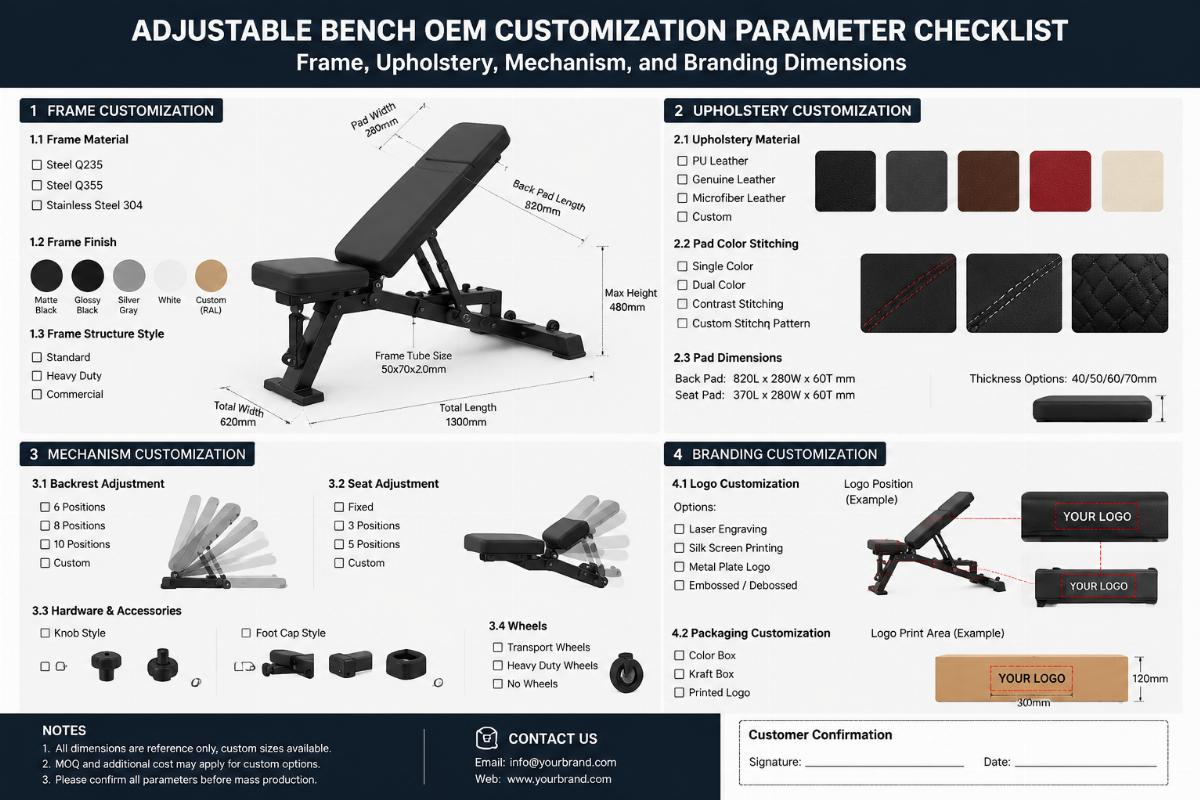
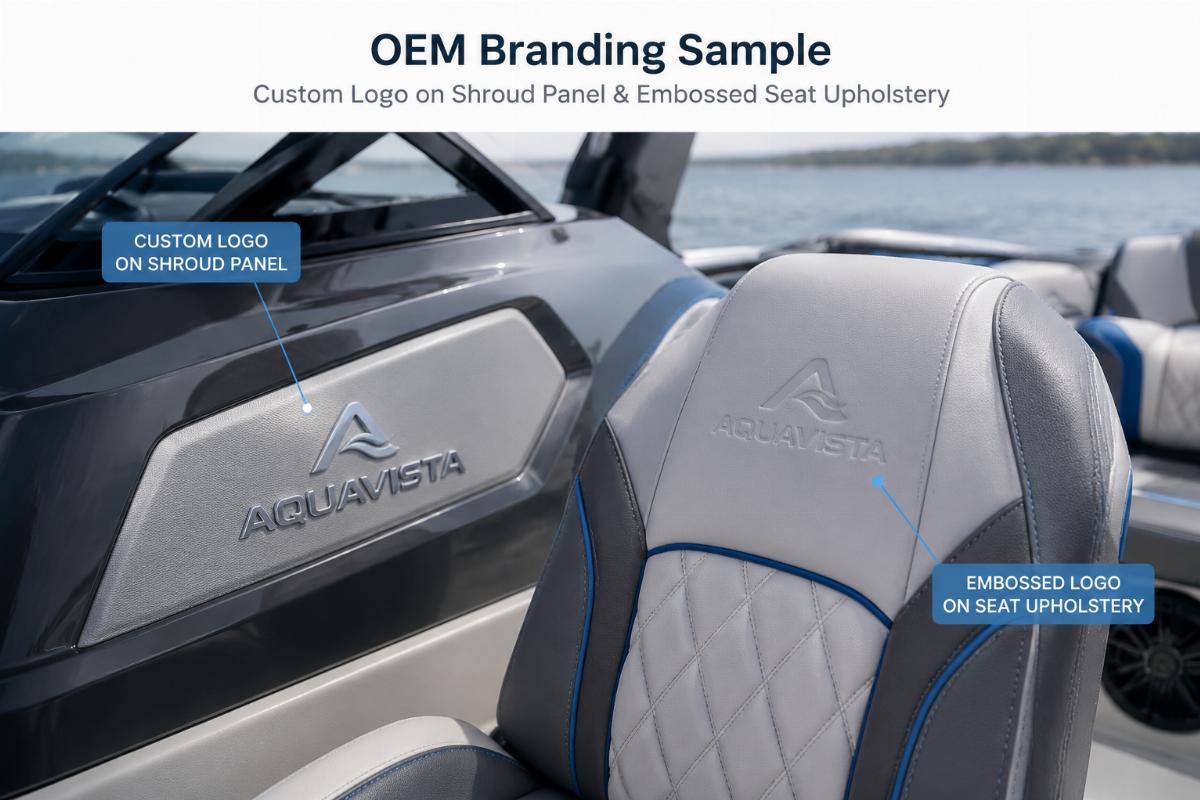
OEM branding on the SS-150 series covers shroud panels, weight stack covers, seat upholstery, and user manual inserts—but each element has a lead-time and tooling implication that must be confirmed before production begins.
Custom branding is one of the strongest advantages of sourcing from a Chinese manufacturer versus buying from a Western brand distributor. However, the process requires precise coordination:
- Shroud and weight stack cover graphics: These require custom screen-printing or vinyl application. The artwork must be provided in vector format, and color matching is done against a Pantone reference. A sample shroud is produced and photographed for approval before the full batch runs.
- Seat upholstery: Embossing or debossing of a logo on the seat vinyl requires a custom mold. The mold cost is typically amortized across the order quantity, so larger orders reduce the per-unit tooling impact.
- User manuals and quick-start guides: These are printed locally at the manufacturer’s facility in the buyer’s specified language. Translation accuracy is the buyer’s responsibility, though the manufacturer can provide a template layout.
- Retail packaging: If the order includes retail-ready packaging for individual units, the carton printing plates represent an additional tooling cost and lead-time addition.
A boutique studio equipment retailer in Europe wanted their logo embossed on every seat and printed on every shroud. The initial order was a partial container, and the tooling costs for the seat mold were significant relative to the unit count. By the third reorder, the tooling cost was fully amortized, and the per-unit branding cost dropped to a negligible level. The key was planning the branding investment across multiple orders from the start. [NEED_CITE: OEM branding tooling and lead-time considerations for commercial fitness equipment]
Always request a pre-production sample with your branding applied before the full batch enters the production line. A photograph is not sufficient—insist on a physical sample or at minimum a video inspection of the branded components on the production floor.
Conclusion
Container loading and MOQ planning for the SS-150 selectorized chest series are interconnected decisions that determine your landed cost, delivery timeline, and customs clearance outcome. The knocked-down packaging design enables efficient container utilization, the tiered MOQ structure supports buyers at every growth stage, and meticulous documentation prevents costly port delays. Verify your packaging specs, align your documents, and confirm your OEM details before production starts—these steps transform a complex import process into a repeatable, profitable operation.