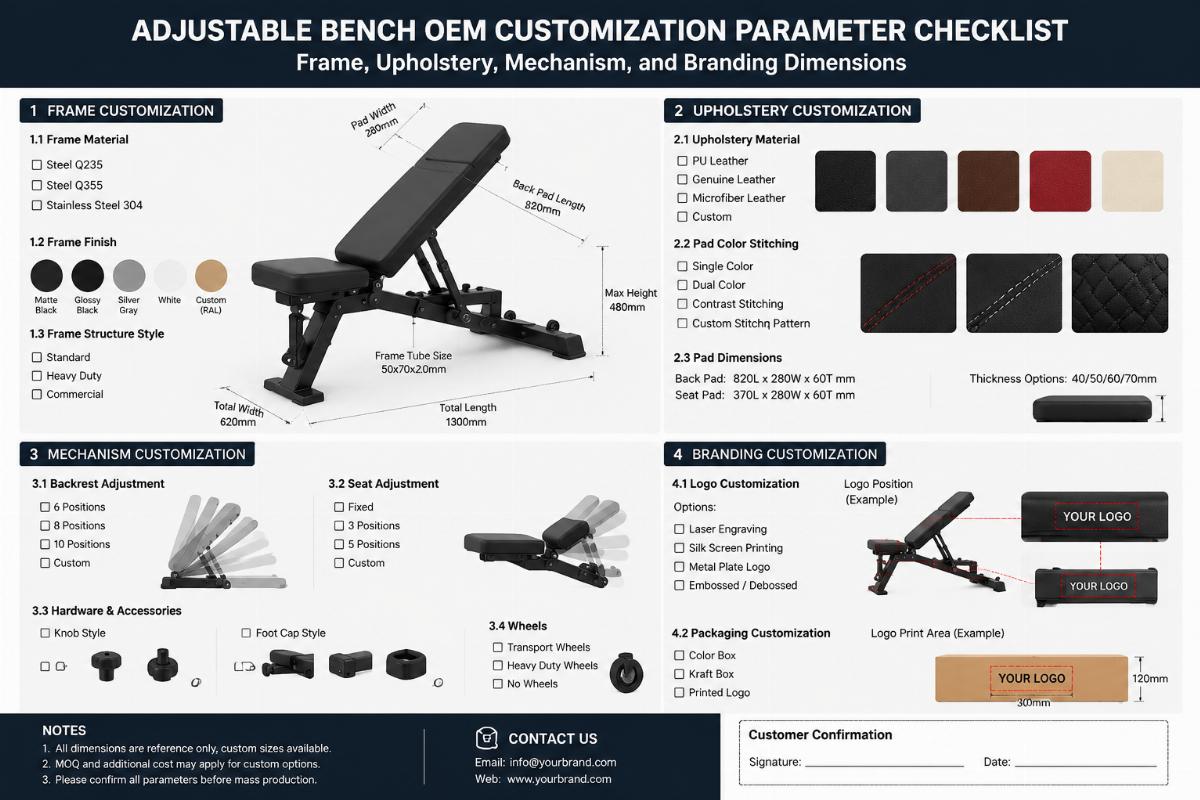
SS-150 Selectorized Chest Sub-Series OEM Customization Options
Most buyers assume heavier weight stacks sell better. In reality, the majority of end users train within a mid-range resistance band, and over-specifying stack weight simply inflates freight costs without adding functional value.
SS-150 Selectorized Chest OEM customization spans weight stack configuration, tube wall thickness, upholstery material, frame finish, branding, and packaging. Buyers who align these variables with their target market’s certification requirements and end-user profiles achieve the optimal balance between cost and quality.
I still remember a full container of selectorized equipment I shipped to Jebel Ali a few years back. The buyer’s clearing agent flagged a mismatch between the CE certificate number and the engraved serial plate on the machines. The cargo sat at the port for weeks, racking up storage fees that ended up costing several times the original savings from choosing a cheaper supplier. I had to pull factory inspection reports, third-party certification records, and production batch logs—dozens of emails back and forth—before the goods finally cleared. Since then, I treat certificate numbers, nameplate data, and packing lists as a single locked set. One character off, and you are paying for air at the dock. [NEED_CITE: customs documentation consistency requirements under EU Machinery Directive 2006/42/EC]
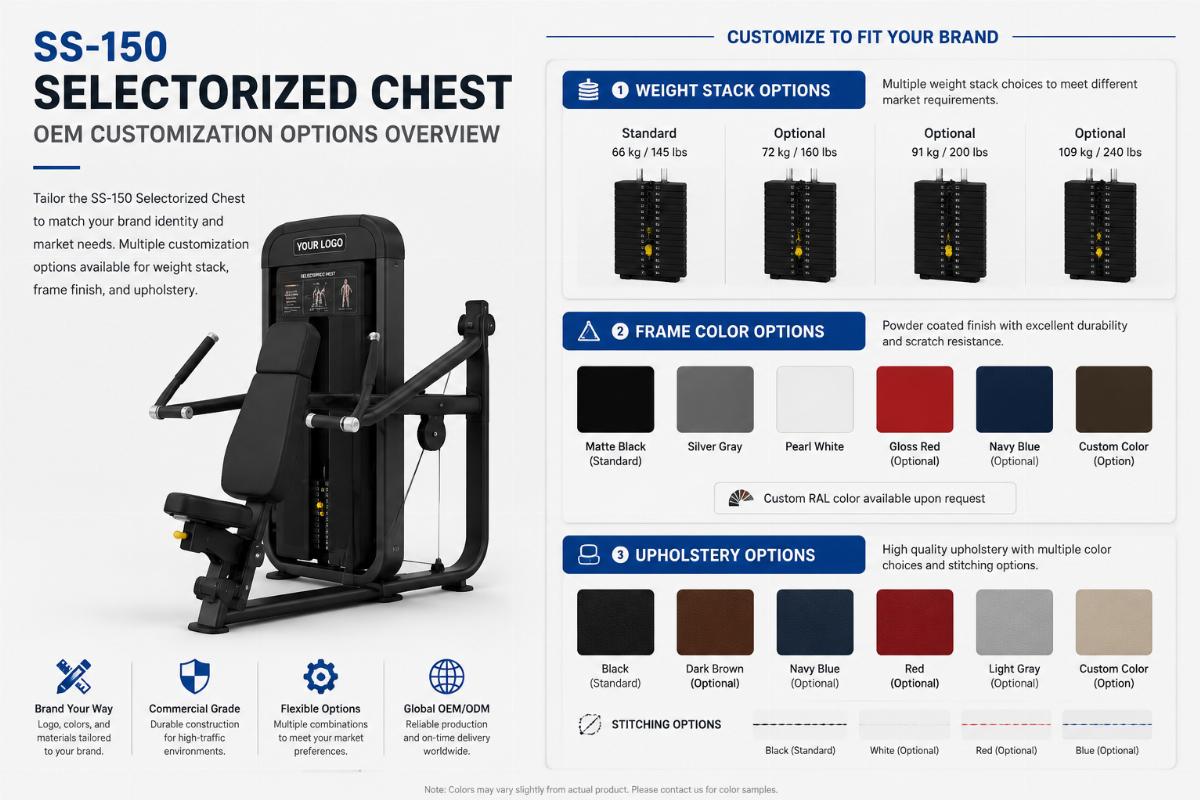
Let me walk you through what actually matters when you spec an SS-150 Selectorized Chest OEM order, based on real shipment experience rather than brochure promises.
What Customization Options Are Available for SS-150 Selectorized Chest?
The SS-150 series supports full-chain customization across six core dimensions: weight stack, frame finish, upholstery, cable routing, branding, and packaging.
When distributors approach us about SS-150 Selectorized Chest OEM projects, the first question is almost always about logo placement. But the variables that actually determine long-term durability and user satisfaction go far deeper. Here is a breakdown of what can be modified and what stays fixed for structural integrity.
| Customization Dimension | Available Options | Structural Constraint |
|---|---|---|
| Weight Stack | Light / Standard / Heavy range tiers | Guide rod diameter and housing height must match |
| Frame Finish | Powder coat color, texture grade | Minimum film thickness per EN ISO 12944 |
| Upholstery | Vinyl grade, stitching color, foam density | Flame retardancy rating per target market |
| Cable & Pulley | Wire rope grade, pulley ratio | Safety factor must meet EN ISO 20957 |
| Branding | Logo placement, nameplate engraving, user manual language | Must match certification documents exactly |
| Packaging | Crated, flat-pack, branded carton | Must survive inland transit to final destination |
[NEED_CITE: EN ISO 20957 stationary training equipment safety requirements and test methods]
A distributor in the Middle East once ordered a full container of the SS-150 series for a gym chain across the Gulf region. They requested a heavier stack tier, red faux-leather upholstery with gold contrast stitching, and a matte black frame. The entire customization cycle took roughly six weeks from design confirmation to container loading. The key lesson: every aesthetic choice must be validated against the structural envelope. You cannot simply add stack plates without adjusting the guide rod length and housing dimensions, because the weight stack must travel smoothly through its full range without binding.
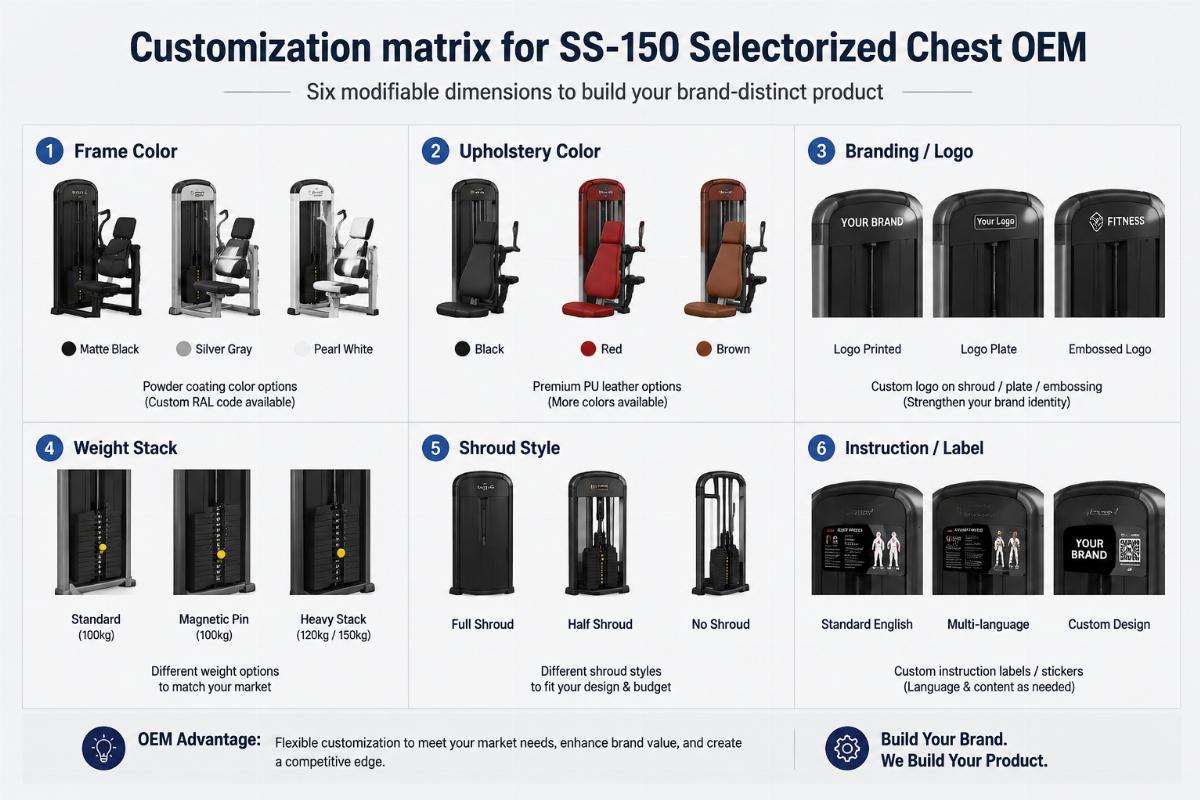
The takeaway here is straightforward. SS-150 Selectorized Chest OEM is not just about swapping a logo. The decisions you make on tube wall thickness, pulley ratio, and cable specification are the ones that determine whether your equipment survives two years of commercial use or starts developing play and noise within months.
How to Choose the Right Weight Stack Configuration for Your Market?
Select weight stack tiers based on your end-user strength profile, not on the assumption that heavier always sells better.
This is one of the most persistent misconceptions in the fitness equipment trade. Buyers from regions where strength training culture is still developing often request the heaviest available stack, reasoning that it signals premium quality. The reality is more nuanced. Industry usage data suggests that the majority of commercial gym users operate within a moderate resistance range during chest pressing movements, and an excessively heavy stack adds dead weight to every shipment without proportional utility. [NEED_CITE: IHRSA global health club equipment usage patterns and member strength distribution]
| Target Market Profile | Recommended Stack Tier | Rationale |
|---|---|---|
| Hotel / apartment gyms | Light tier | Mixed user base, lower average strength, space-constrained |
| Commercial gym (general) | Standard tier | Broad member base, balanced usage across strength levels |
| Bodybuilding-focused gym | Heavy tier | Advanced users, higher average training loads |
| Rehabilitation / wellness center | Light tier with micro-increment | Controlled progression, joint-sensitive users |
A hospitality client in Southeast Asia needed compact chest press machines for a chain of boutique hotels with low ceiling heights. They specified the lightest stack tier available, paired with a reduced overall machine height. The starting resistance was set low enough for untrained guests, while the upper range still challenged regular exercisers. The SS-150 Selectorized Chest OEM configuration for that project kept the frame within a compact footprint without sacrificing the smooth cable travel that users expect from selectorized equipment.
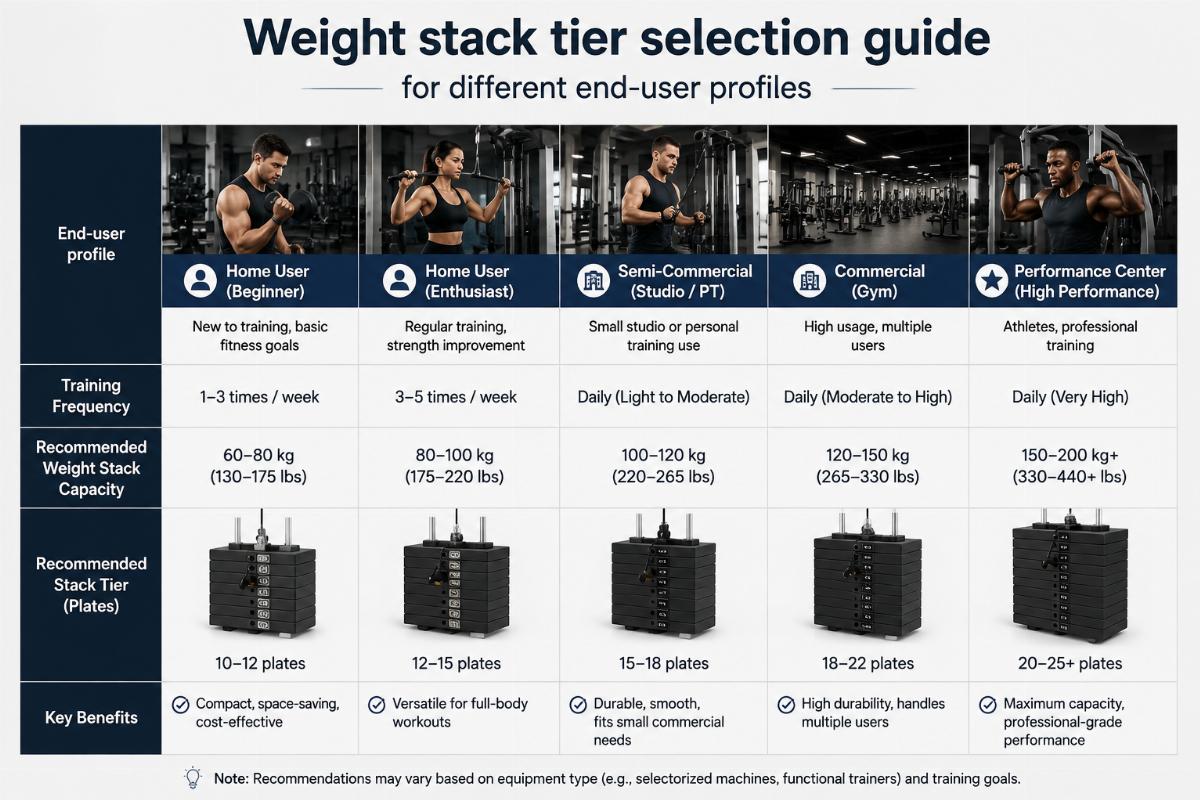
The principle is simple: match the stack to the user, not to the catalog. If you are sourcing SS-150 Selectorized Chest OEM units for a market where the average gym member trains at moderate intensity, a mid-range stack saves you meaningful freight cost per container and reduces the machine’s overall weight, which in turn lowers the load on your shipping calculations.
What Certifications and Documentation Are Required for Import?
CE marking, nameplate data, and packing lists must form a perfectly matched set. Any discrepancy between these three documents will delay customs clearance and generate port storage charges.
This section deserves emphasis because documentation failures are the single most avoidable yet costly mistake in fitness equipment import. I have seen containers held at ports across multiple regions because a certificate number on the CE declaration did not match the engraved serial on the machine’s nameplate, or because the packing list described a different model code than what appeared on the certification. [NEED_CITE: EU Machinery Directive 2006/42/EC technical file and CE marking obligations]
| Document | Critical Check Point | Common Error |
|---|---|---|
| CE Certificate | Certificate number, model designation, manufacturer name | Mismatch with nameplate engraving |
| Nameplate | Model code, serial number, CE mark, manufacturer | Font or spacing differs from certificate |
| Packing List | Model code, quantity, gross/net weight | Weight discrepancy triggers inspection |
A distributor in Africa placed an initial trial order of a small batch to verify that all documentation aligned before committing to a larger order covering the full upper-body series. That trial shipment served as a documentation audit: every nameplate was cross-checked against the CE certificate, and the packing list was reviewed line by line. Once the trial cleared customs without issue, the follow-up container order proceeded smoothly because the documentation template had been validated and locked.
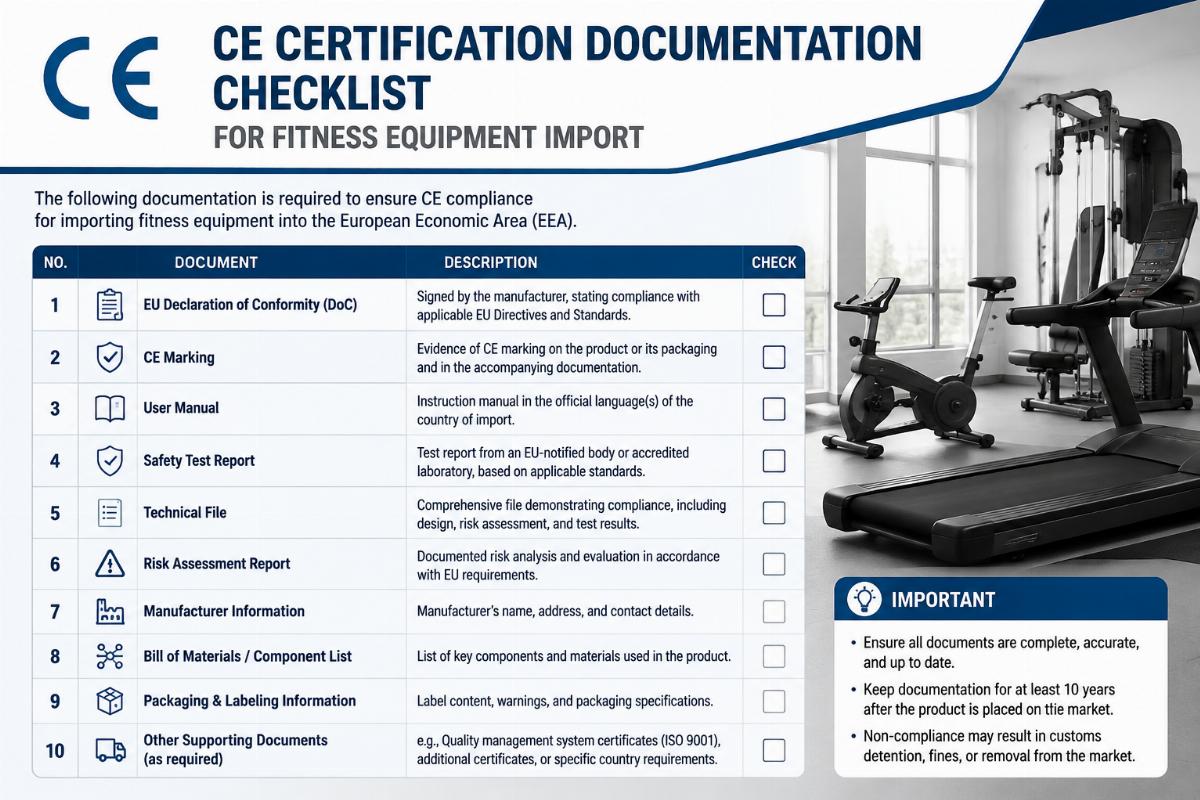
When you place an SS-150 Selectorized Chest OEM order, confirm early in the process that the certification scope covers your specific configuration. If you change the stack weight, frame color, or upholstery material, verify whether those modifications fall within the certified product family or require a supplementary declaration. The cost of a pre-shipment documentation review is negligible compared to the port fees and demurrage charges that accumulate when a container gets flagged.
How Does OEM Pricing Scale with Order Volume?
Unit price drops noticeably as order volume increases from single-unit trials to full container loads, and container consolidation optimization can further reduce per-unit landed cost.
Pricing for SS-150 Selectorized Chest OEM orders follows a volume-tiered structure. A single-unit sample order carries a significantly higher per-unit cost because it absorbs setup charges, small-batch material procurement premiums, and dedicated quality inspection time. As volume moves into multi-unit pallet orders and eventually full container loads, the per-unit price drops substantially. [NEED_CITE: fitness equipment manufacturing cost structure and volume pricing dynamics]
| Order Tier | Typical Composition | Pricing Behavior |
|---|---|---|
| Sample order | Single unit or small batch | Highest per-unit cost, absorbs setup |
| Pallet order | Multiple units, mixed models | Noticeable per-unit reduction |
| Full container | Standard or mixed models, optimized loading | Lowest per-unit cost, freight efficiency |
A distributor in Latin America started with a sample order of two SS-150 units to evaluate build quality, upholstery finish, and cable smoothness before committing to a full container. After approving the samples, they placed a container order mixing the chest press with matching shoulder and lat machines from the same series. The container loading plan was optimized to fit the maximum number of units by nesting the frames and removing detachable components for separate packing. That consolidation approach reduced the per-unit freight share meaningfully compared to shipping each machine type in a separate less-than-container load.
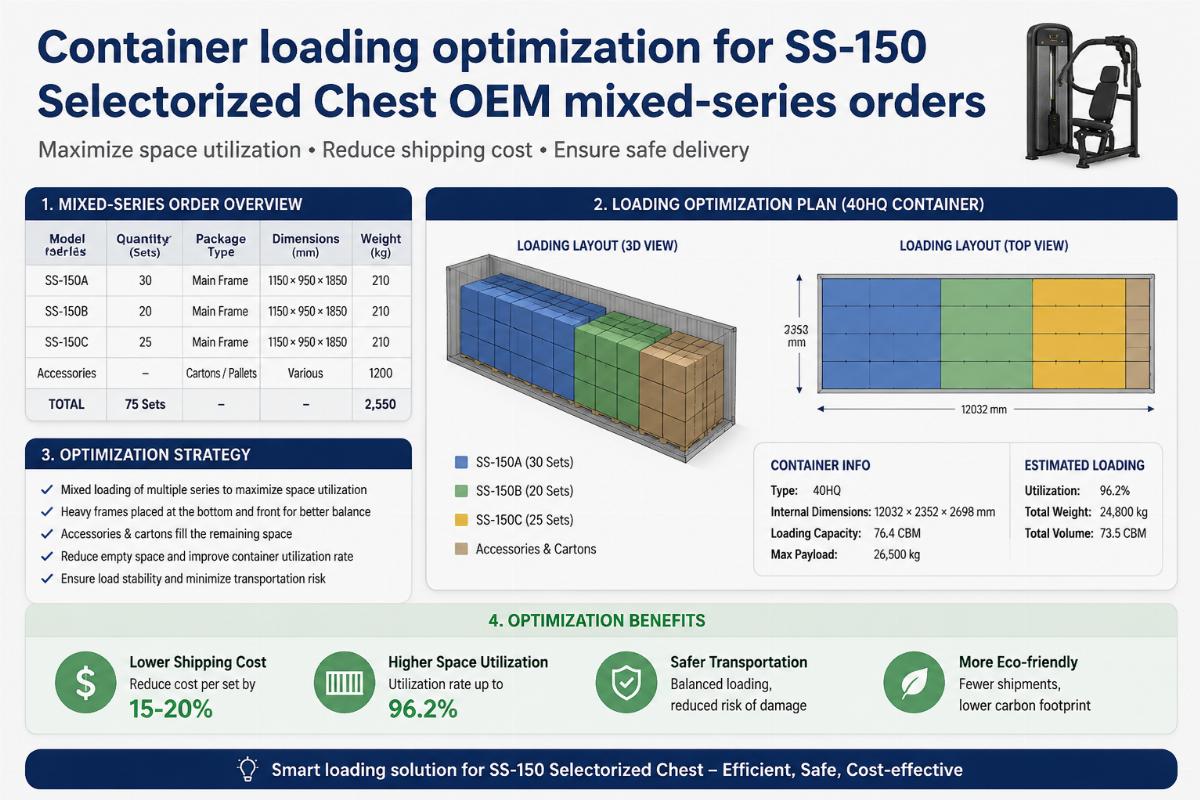
The practical advice: if you are evaluating SS-150 Selectorized Chest OEM pricing, request a tiered quotation upfront. Understand where the price breakpoints fall, and plan your initial order strategy accordingly. A sample order validates quality; a container order validates your market. Both serve different purposes, and the pricing structure should reflect that.
What Lead Time Should You Expect for Custom Orders?
Standard configurations ship within a short production window, while deep customization involving non-standard colors, modified stack weights, and branded packaging requires a substantially longer production cycle.
Lead time is one of the most frequently mismanaged variables in fitness equipment procurement. Buyers who assume all orders take the same amount of time to produce end up with scheduling conflicts, missed gym opening dates, and strained relationships with their own clients. [NEED_CITE: commercial gym equipment procurement lead time benchmarks]
| Order Type | Customization Depth | Typical Lead Time Range |
|---|---|---|
| Standard configuration | Catalog color, standard stack, no branding | Short production window |
| Light customization | Frame color change, logo placement only | Moderately extended |
| Deep customization | Non-standard stack, custom upholstery, branded packaging, special nameplate | Substantially longer cycle |
A Middle Eastern distributor planning a gym chain launch across multiple cities needed the entire SS-150 selectorized series in a custom color scheme that matched their brand identity. The order included modified stack tiers, custom upholstery with contrast stitching, and branded packaging for each machine. The production cycle from final design approval to container loading extended well beyond a standard order because each customization element required separate material sourcing, production line adjustment, and quality verification. The lesson: lock your customization specifications early and build your project timeline around the deep-customization lead time, not the standard-window estimate.
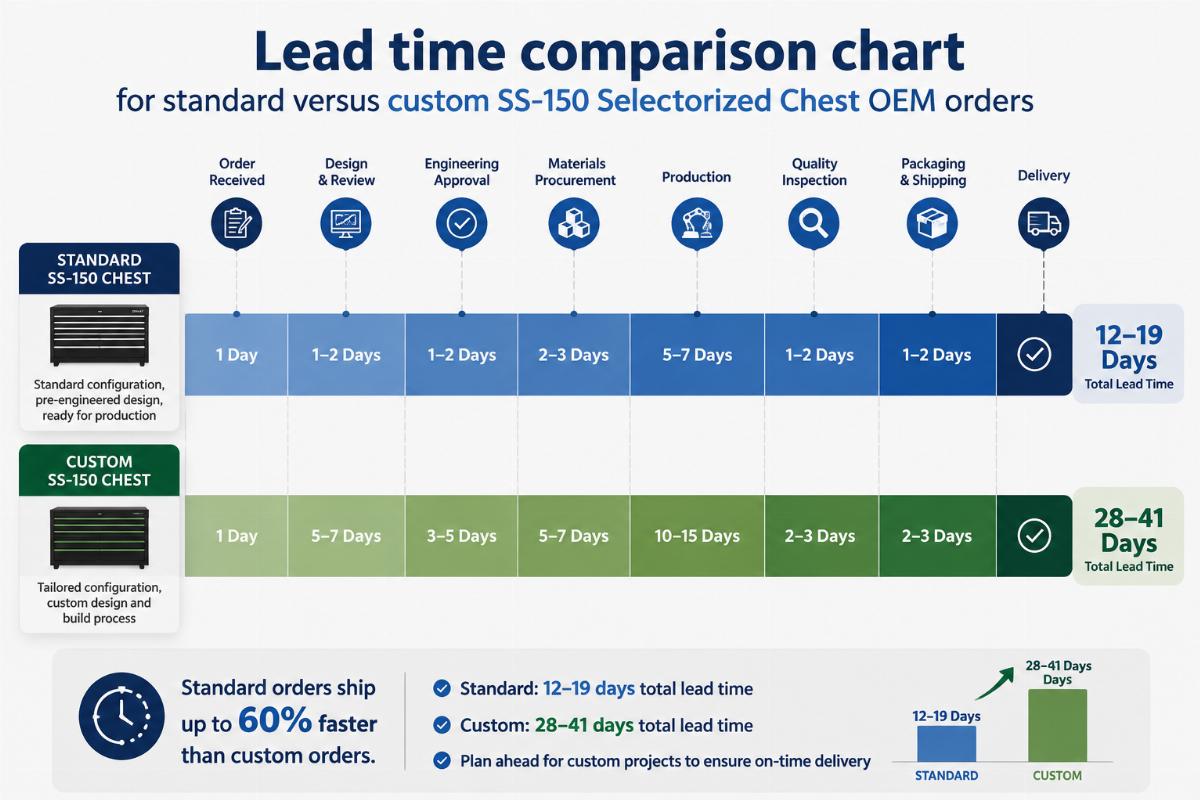
If your project has a fixed opening date, work backward from that date and add buffer for ocean freight, customs clearance, and inland delivery. The production cycle is only one segment of the total timeline, but it is the segment you control least once the order is placed. Confirm your SS-150 Selectorized Chest OEM specifications in detail before production begins, because mid-production changes reset the clock and introduce material waste costs.
Conclusion
SS-150 Selectorized Chest OEM success depends on aligning customization choices with end-user needs, certification requirements, and volume economics—not on maximizing specifications for their own sake. Weight stack tiers should reflect actual training patterns, documentation must be locked as a matched set before shipment, and lead time planning must account for customization depth. Buyers who approach the process with these principles in mind avoid the costly mistakes that turn promising orders into expensive lessons.