Substituting Body-Solid Pro Club Monkey Bar Rig with China OEM Equivalent
Most buyers think replacing a premium monkey bar rig means copying the outer dimensions. The real failure point hides inside the steel tube and at every weld joint.
A China OEM equivalent of the Body-Solid Pro Club monkey bar rig can deliver comparable structural performance at substantially lower cost, provided the buyer verifies steel gauge, wall thickness tolerance, weld procedure qualification, and hole-spacing accuracy — not just visual resemblance.
I still remember a shipment that got rejected at the port. A CrossFit box operator in the Middle East ordered what he believed was a direct substitute for his worn-out rig. The photos looked identical. The catalog specs matched on paper. But when his athletes started doing kipping pull-ups, the top rail flexed noticeably. He measured the tube wall himself and found it thinner than what the original unit carried. That single wall-thickness deviation turned a functional rig into a liability. We reworked the entire batch, and since then I have made it a rule to verify every structural parameter before a single container is loaded. [NEED_CITE: structural failure modes in dynamic-load fitness equipment per ASTM F3527]

The lesson was simple: substitution works, but only when the engineering intent behind the original design is fully replicated — not just the silhouette.
Why Substitute the Body-Solid Pro Club Monkey Bar Rig at All?
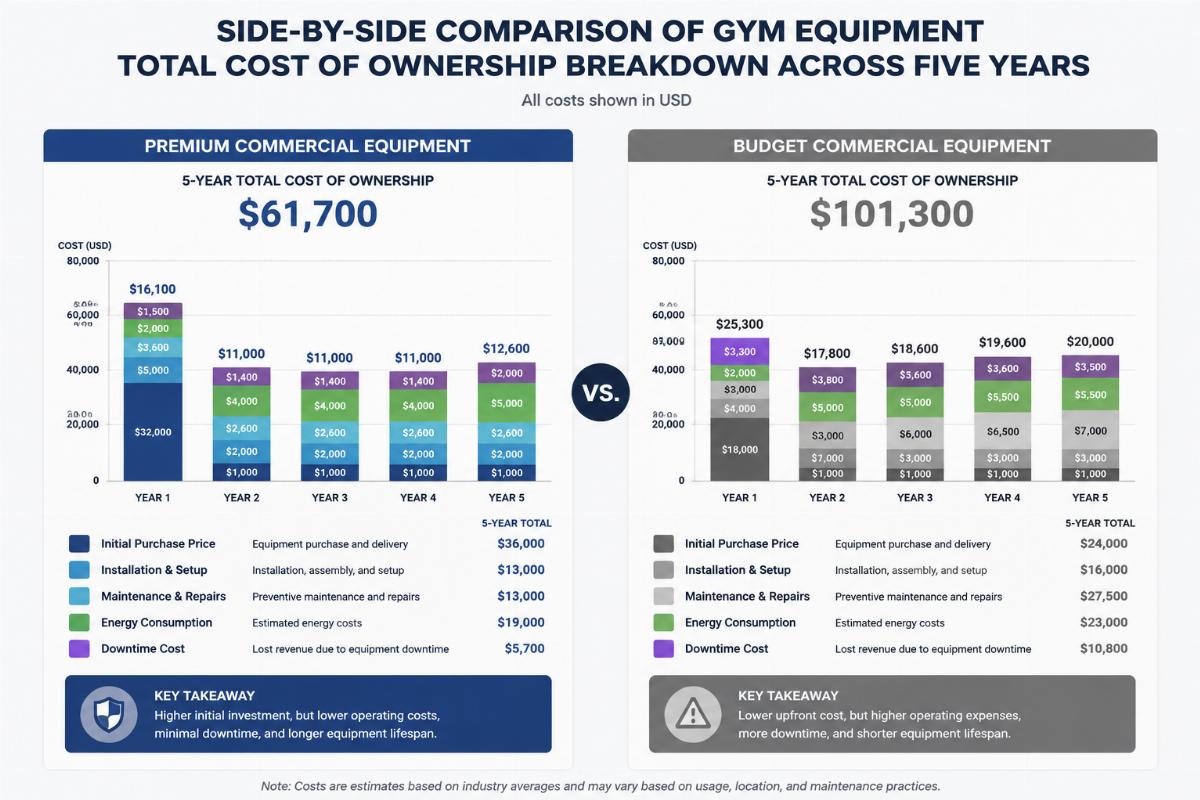
The price gap between a branded commercial rig and a China OEM equivalent is significant enough to justify the sourcing effort — if quality is properly controlled.
Commercial gym operators and CrossFit box owners face a recurring budget dilemma. Premium American-brand functional rigs carry a price tag that reflects decades of brand equity, domestic labor costs, and distribution margins. When outfitting a new facility or replacing aging equipment, the total investment for a full rig setup can consume a disproportionate share of the capital budget.
Sourcing a Body-Solid monkey bar rig OEM alternative from a qualified Chinese manufacturer typically reduces equipment cost by a substantial margin — often enough to redirect funds toward additional flooring, accessories, or a second training zone. [NEED_CITE: commercial fitness equipment import pricing trends from China to North America and MENA regions]
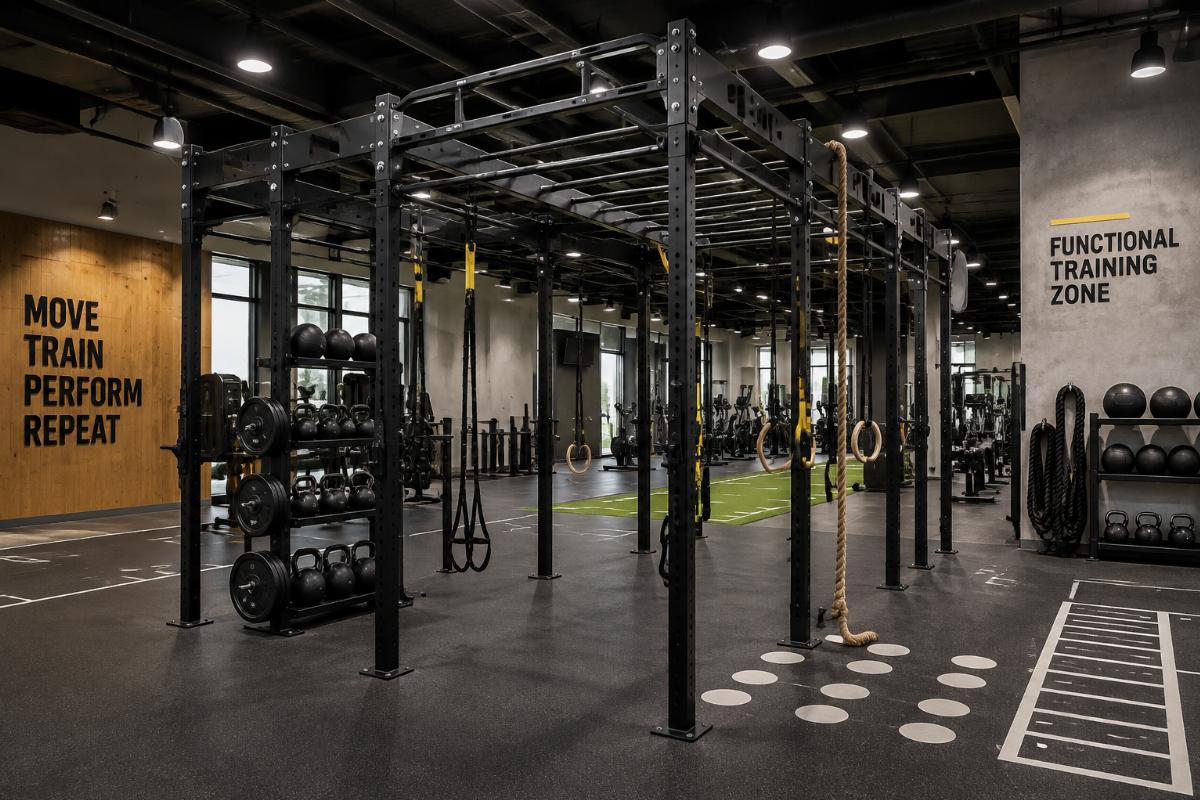
But cost savings come with a caveat. The fitness equipment export market from China is vast, and not every factory understands the difference between a static-load display rack and a dynamic-load training rig. A monkey bar rig endures repeated impact forces from kipping movements, muscle-ups, and hanging exercises. The structural demands are fundamentally different from those of a standard power rack used for controlled barbell work.
A distributor in South America once told me he received complaints within months of deploying rigs sourced from a factory that primarily manufactured warehouse shelving. The frames looked similar. The powder coating looked similar. But the joints were not designed for cyclic lateral loading. Welds cracked. Gussets separated. The entire batch had to be pulled from the gym floor.
The takeaway is straightforward: the Body-Solid monkey bar rig OEM alternative market is real and viable, but the buyer must act as a technical gatekeeper, not just a price comparator.
Critical Specs to Match: Steel Gauge, Wall Thickness, and Yield Strength
The single most common failure in cheap rig substitutions is undersized tube wall thickness — a difference that is invisible to the naked eye but catastrophic under dynamic load.
When evaluating a Body-Solid monkey bar rig OEM substitute, the first specification to verify is the steel tube outer diameter and wall thickness. These two parameters determine the section modulus of the frame, which directly governs rigidity under lateral and torsional forces.
| Parameter | Original Spec Range | Acceptable OEM Tolerance | Unacceptable Deviation |
|---|---|---|---|
| Upright outer dimension | Standard commercial rig profile | Match within standard gauge range | Noticeably thinner frame profile |
| Wall thickness | Heavy-gauge commercial grade | Controlled tolerance per mill cert | Noticeably reduced wall thickness |
| Steel grade | Structural carbon steel | Equivalent yield strength grade | Uncontrolled or unknown grade |
| Tube type | Seamless or ERW commercial | Verified ERW or seamless | Unverified welded strip tube |
[NEED_CITE: steel tube yield strength comparison between standard structural carbon steel grades used in fitness equipment manufacturing]
The wall thickness issue deserves special attention. Even a small reduction in wall thickness disproportionately reduces the moment of inertia of a hollow tube. In practical terms, a tube that looks the same from the outside but has a thinner wall will flex more under the same load. For a monkey bar rig where athletes perform swinging and kipping movements, that flex translates into perceptible wobble — and over time, into weld fatigue at the joints.
I have seen factories quote rigs using the same outer diameter tube but substitute a lighter wall gauge to cut material cost. The visual appearance is identical. The weight difference is only noticeable if you pick up the frame. But under a hundred kilograms of dynamic lateral force repeated thousands of times, the thinner tube becomes the weak link in the entire structure.
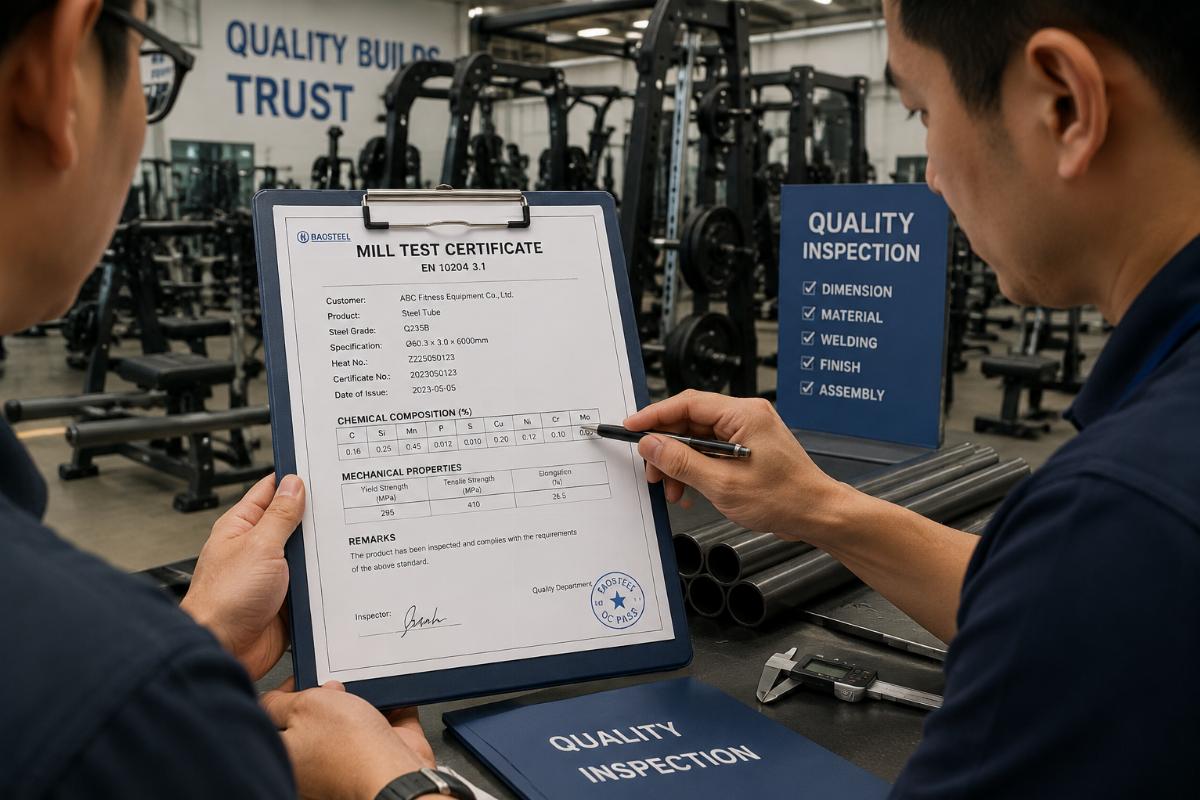
Steel grade matters equally. Standard structural carbon steel with verified yield strength is the baseline. Some OEM suppliers offer upgrades to higher-strength low-alloy grades, which provide additional margin for heavy-use commercial environments. The key is documentation: the supplier must provide mill test certificates traceable to each production batch, not just a generic statement on a catalog page.
Weld Quality: The Hidden Failure Point in OEM Rigs
A rig can use perfect steel and still fail within months if the welding procedure is not qualified for cyclic dynamic loading.
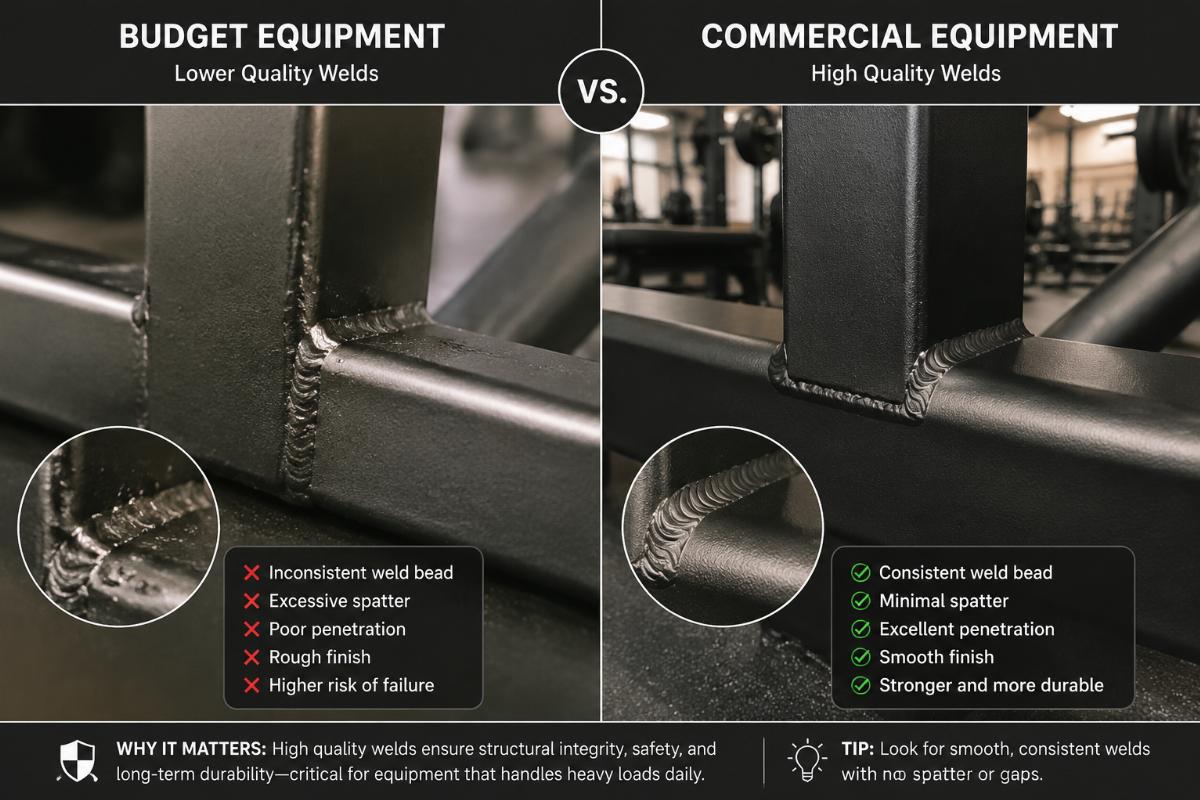
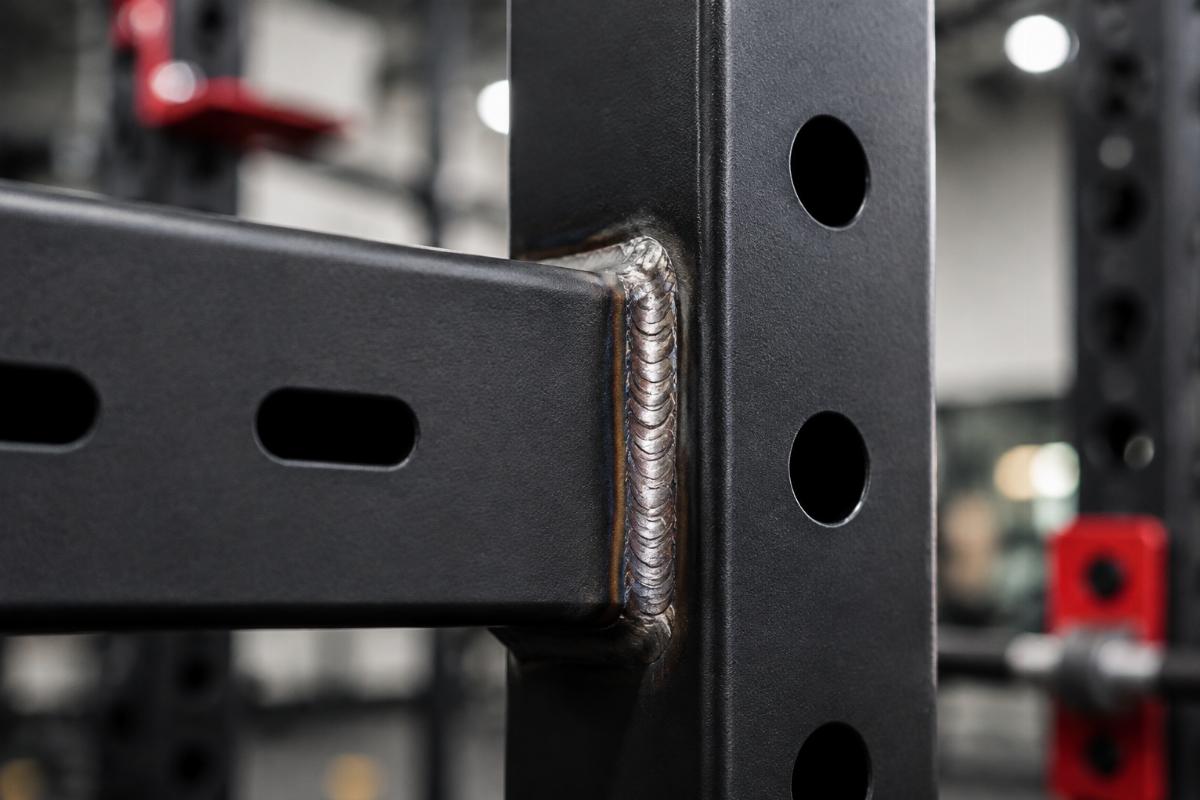
Welding is where many OEM substitutions quietly cut corners — not because the factory lacks capability, but because the buyer rarely specifies the welding standard explicitly. Most rig failures in the field do not happen in the middle of a tube. They happen at the joints: where the horizontal monkey bars meet the uprights, where gusset plates connect to the frame, and where mounting brackets are welded to load-bearing members.
The critical question is whether the welding procedure is qualified to a recognized structural welding standard. In the commercial fitness equipment context, the relevant benchmark is conformance to structural welding codes that govern joint preparation, preheat requirements, interpass temperature, and post-weld inspection. [NEED_CITE: structural welding code requirements for cyclic-load fitness equipment frames]
| Weld Quality Factor | Robust OEM Practice | Basic Factory Practice |
|---|---|---|
| Joint preparation | Full penetration with bevel prep | Partial penetration or no prep |
| Weld procedure qualification | Documented per structural welding code | Self-reported, no third-party audit |
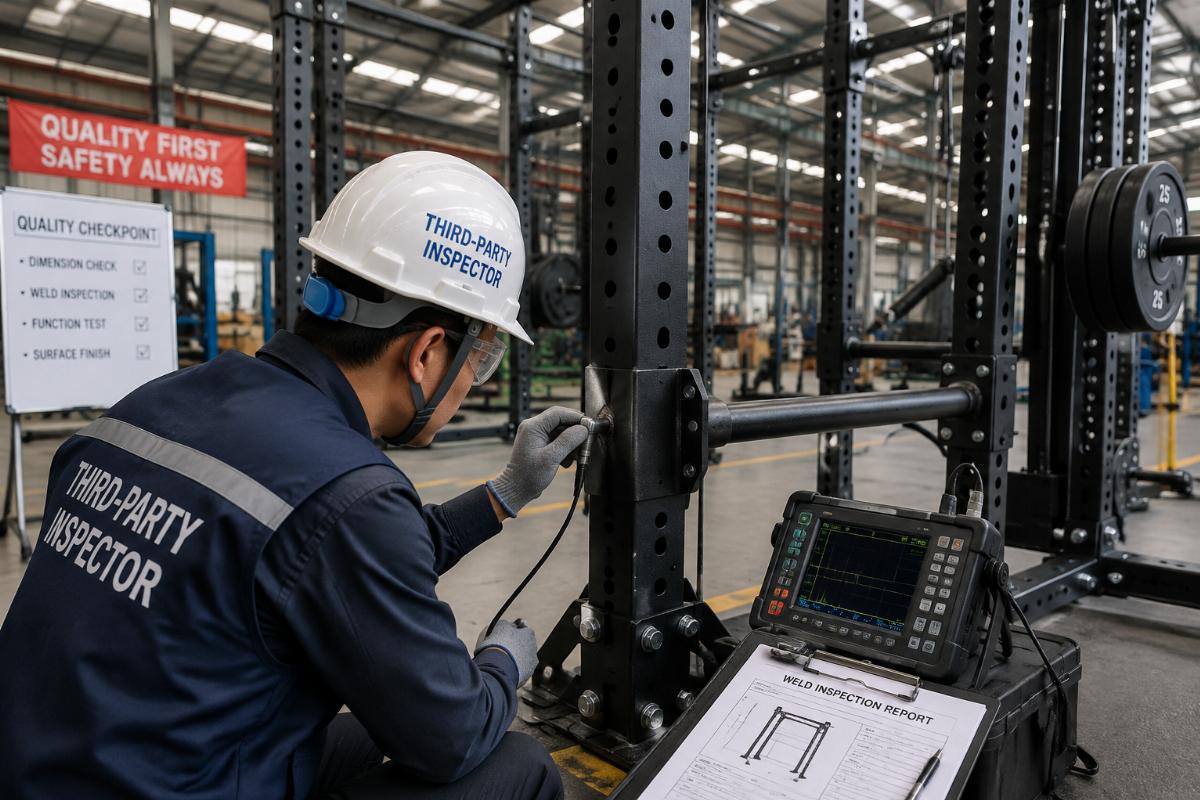
| Inspection method | Batch-level ultrasonic or magnetic particle | Visual-only or none |
| Welder certification | Certified per recognized standard | Unverified operator skill |
| Post-weld treatment | Stress relief or controlled cooling | As-welded, no treatment |
A hotel fitness center project in Southeast Asia illustrated this point clearly. The operator purchased a rig from a supplier who quoted an attractive price and showed glossy product photos. Within a short period, hairline cracks appeared at the weld toes where the monkey bars joined the uprights. The gym was in a high-humidity coastal environment, which accelerated crack propagation, but the root cause was inadequate weld penetration and lack of post-weld stress management.
The fix required pulling the rig offline, grinding out the defective welds, re-welding with proper joint preparation, and reapplying the finish. The downtime cost the hotel far more than the initial savings on the rig.
When sourcing a Body-Solid monkey bar rig OEM alternative, the buyer should explicitly require weld procedure specifications, welder qualification records, and a defined inspection protocol. Factories that cannot provide these documents are signaling that welding is treated as a cosmetic step rather than a structural one.
Spacing and Hole Pattern: Do Not Overlook Functional Dimensions
A rig that is structurally sound but dimensionally wrong will frustrate coaches and disrupt workout programming.
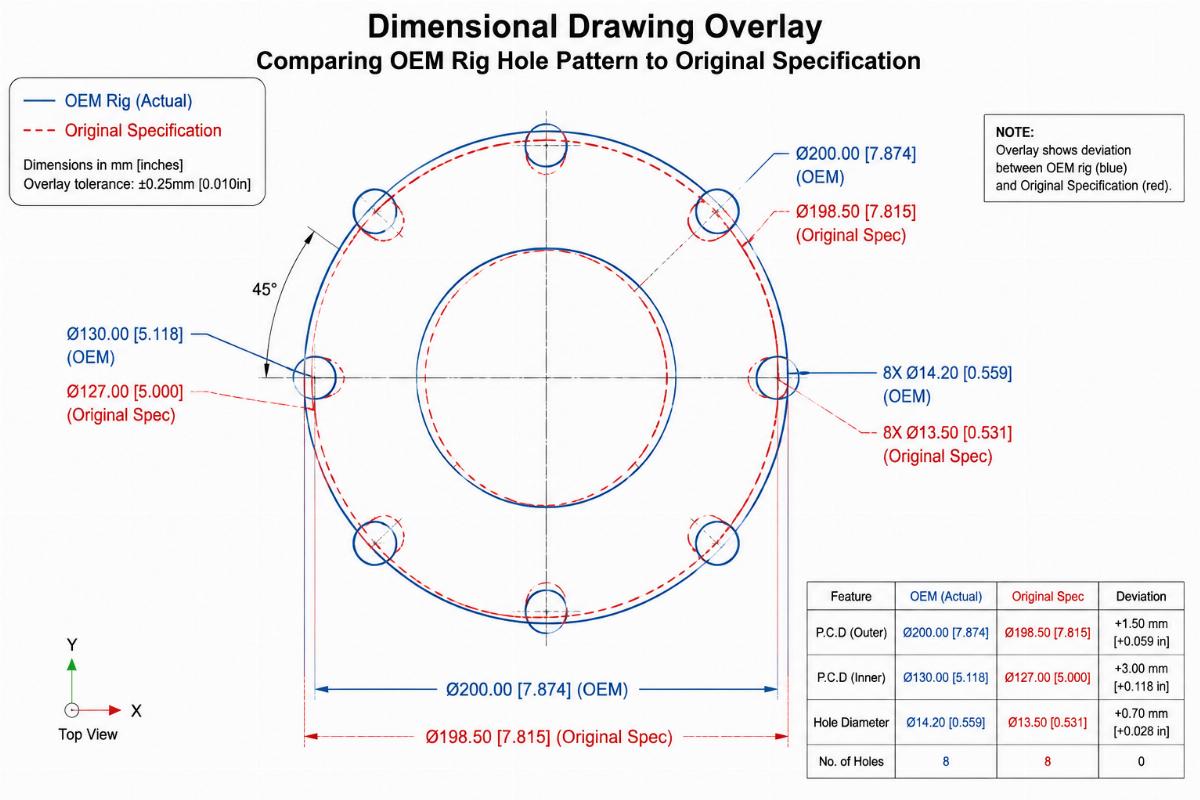
Beyond steel and welds, the functional usability of a monkey bar rig depends on the accuracy of hole spacing, bar spacing, and mounting point positions. These dimensions determine whether the rig can accommodate standard workout programming, attachment compatibility, and multi-user simultaneous training.
The original Pro Club series rigs use specific hole spacing patterns that allow adjustable J-cups, safety straps, and accessory mounts to be positioned at consistent intervals. When an OEM factory replicates the outer dimensions but shifts the hole pattern by even a small amount, the practical consequences are significant:
- Adjustable components from the original brand will not fit
- Workout programming that relies on specific bar heights becomes impossible
- Multi-station rigs lose synchronization between parallel bays
[NEED_CITE: functional training rig hole spacing standards and attachment compatibility requirements]
A CrossFit affiliate in Latin America discovered this problem after receiving a rig order. The uprights were the correct height. The monkey bars were installed. But the hole spacing along the uprights did not align with the spacing on their existing rig bays. When they tried to set up synchronized WODs across multiple stations, the height mismatch forced coaches to redesign every workout that involved rig transitions.
The solution was to request a full dimensional drawing from the OEM supplier before production, verify hole-to-hole distances against the reference rig, and confirm that any attachment points for pull-up bar extensions, gymnastic ring mounts, or rope climb anchors are positioned to match the original layout.
| Dimensional Factor | Verification Method | Risk if Ignored |
|---|---|---|
| Hole spacing along uprights | Full dimensional drawing review | Attachment incompatibility |
| Monkey bar interval | Physical sample measurement | Programming disruption |
| Mounting bracket positions | CAD overlay comparison | Multi-bay misalignment |
| Overall footprint | Site layout verification | Floor plan conflict |
The Body-Solid monkey bar rig OEM sourcing process should always include a dimensional validation step — either through a pre-production sample or through certified dimensional inspection reports accompanying the shipment.
How to Verify Your OEM Supplier Before Ordering
The difference between a successful substitution and a costly mistake is the verification process — not the price quote.
Sourcing a Body-Solid monkey bar rig OEM alternative successfully requires a structured supplier qualification process. The steps below reflect the verification protocol I follow when evaluating factories for commercial rig production.
Step 1: Request complete material documentation.
Ask for mill test certificates for the steel tube, specifying grade, yield strength, and wall thickness. Verify that the certificates correspond to the production batch, not a generic template.
Step 2: Review weld procedure specifications.
The factory should be able to provide weld procedure qualification records showing joint design, filler material, and preheat parameters. [NEED_CITE: weld procedure qualification requirements for structural fitness equipment frames]
Step 3: Require a pre-production sample.
Before committing to a full container order, request a single upright section or a partial rig for dimensional and structural verification. Test the sample under simulated dynamic loading to check for flex, weld integrity, and finish adhesion.
Step 4: Arrange third-party inspection.
Engage an independent inspection service to verify dimensional accuracy, weld quality, and surface treatment before shipment. Batch-level inspection is preferable to sample-only checks.
Step 5: Confirm surface treatment specifications.
Powder coating thickness, adhesion rating, and salt-spray endurance are all verifiable parameters. Commercial gym equipment in high-traffic or humid environments requires robust surface protection. [NEED_CITE: powder coating adhesion and salt-spray test standards for commercial fitness equipment]
| Verification Step | Document Required | Red Flag if Missing |
|---|---|---|
| Material traceability | Mill test certificate per batch | Generic material statement |
| Weld quality | Weld procedure qualification record | No weld documentation |
| Dimensional accuracy | Pre-production sample or certified drawing | Catalog-only confirmation |
| Surface durability | Salt-spray test report | No coating specification |
| Factory capability | Third-party audit or inspection report | Self-declared quality only |
This is where the choice of manufacturing partner becomes critical. A factory that operates under recognized quality management standards, holds product safety certifications for regulated markets, and maintains in-house testing capability for structural and surface performance will provide the documentation and accountability that a commercial buyer needs.
Manufacturers based in China’s major fitness equipment production regions — particularly in Shandong Province — have developed substantial capability in commercial-grade rig fabrication. Factories serving international gym chains and CrossFit affiliates routinely produce rigs that meet or exceed the structural requirements of premium branded equipment, at factory-direct pricing that reflects genuine manufacturing cost advantages rather than quality compromises.
The key is selecting a partner that treats documentation and traceability as standard practice, not as a special request. Single-unit orders, full container loads, and multi-zone gym packages all benefit from the same verification discipline.
Conclusion
Substituting a premium-brand monkey bar rig with a China OEM equivalent is a proven cost-saving strategy — but only when the buyer verifies structural specifications, weld quality, and dimensional accuracy independently.
The Body-Solid monkey bar rig OEM market offers genuine value for commercial gym operators, CrossFit affiliates, and fitness equipment distributors seeking to reduce capital expenditure without accepting structural compromises. Steel gauge, wall thickness tolerance, weld procedure qualification, and hole-pattern accuracy are the four non-negotiable parameters that separate a reliable substitution from a field failure. Factories that provide transparent documentation, pre-production samples, and third-party inspection access are the partners worth building a long-term sourcing relationship with.