01 / Scenario
STUDIO
P
High-End Pilates Studios
Premium aesthetics meet quiet operation for boutique studio environments.

ISO
9001
CE
Certified
OEM
Available
10YR
Warranty
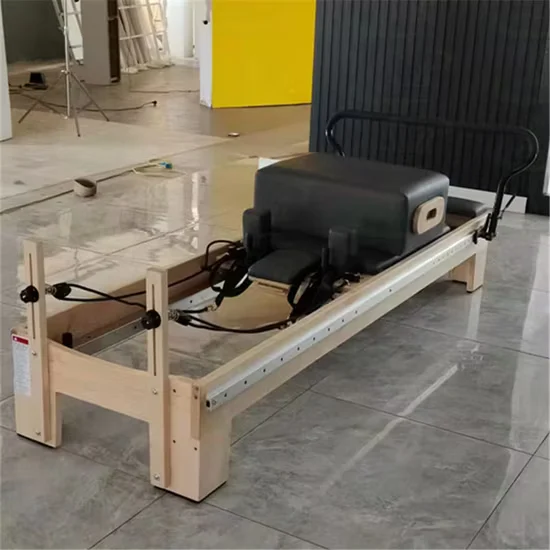
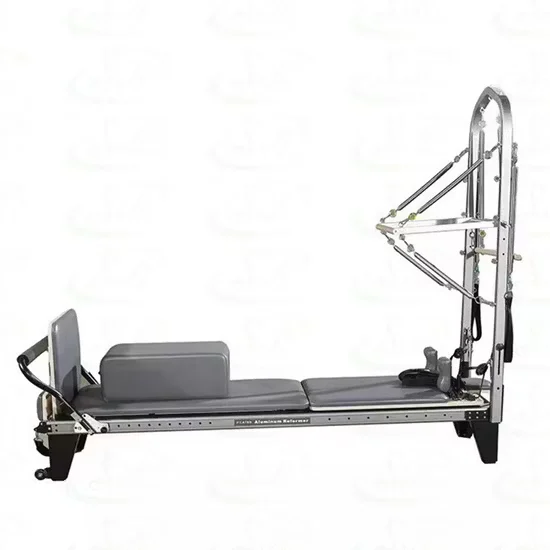
Aluminum Alloy Pilates Reformer, 2570×730mm Rail, 90kg Frame Weight — the aircraft-grade aluminum track eliminates corrosion and dimensional warping common in steel rails, while precision-sealed bearings deliver maintenance-free carriage glide through thousands of daily repetition cycles. Each unit undergoes full static and dynamic load testing before shipment, backed by a 3-year structural warranty.
// Spec Highlights
• Direct from Manufacturer · No Middlemen · Worldwide Shipping
01
// Material
Imported Solid Wood
Premium hardwood frames sourced for density and visual warmth.
02
// Hardware
Medical-Grade Silent
Whisper-quiet pulleys and springs for clinical environments.
03
// Customization
Appearance OEM
Color, upholstery, and branding tailored to your studio.
04
// Service
Layout Design
Free venue planning for studios and rehab institutions.
Every component is selected for longevity, performance, and aesthetic harmony - from imported hardwood frames to silent medical-grade accessories.
// Features
Precision-Sealed Carriage Glide — every Aluminum Alloy Pilates Reformer rolls on sealed bearings verified under continuous studio-use load cycles.
| Parameter | Value |
|---|---|
| Product Type | Pilates Reformer |
| Frame Material | Aluminium Alloy |
| Structural Profile | Aircraft-grade aluminum alloy rail |
| Carriage System | Precision-sealed bearings |
| Spring Resistance | Progressive tension, calibrated coil gauge |
| Upholstery | High-density vinyl with reinforced stitching |
| Product Dimensions | 2570 × 730 × 270 mm |
| Net Weight | 90 kg |
| Accessories Included | Long Box, Jump Board, Platform |
| Color Options | White standard; custom colors available |
| Logo | Customized Is Allowed |
| User Demographics | Adult, Unisex |
| Warranty | 3 Years |
| Customization | Available |
| Facility Type | Typical Use |
|---|---|
| Boutique Pilates Studio | Back-to-back group reformer classes with continuous carriage cycling |
| Rehabilitation and Physiotherapy Center | Controlled spring-resistance progressions for post-injury recovery |
| Hotel and Resort Wellness Facility | Guest-facing premium movement sessions with institutional durability |
| Home Premium Fitness Setup | Private daily practice requiring maintenance-free carriage operation |
Aircraft-grade aluminum alloy rails eliminate the warping and corrosion that plague steel-track reformers under sustained studio use.
Most reformer manufacturers label their equipment "commercial grade" without specifying the track alloy or wall thickness. In humid studio environments, thin-walled steel tracks develop visible deflection within months of daily carriage travel, and corrosion pitting along the rail surface creates audible drag and uneven resistance. Unsealed carriage wheels accumulate chalk dust, sweat residue, and ambient moisture, leading to bearing play that manifests as lateral wobble during footwork sequences [NEED_CITE: material degradation in fitness equipment under high-humidity cycling]. Vinyl upholstery bonded to low-density foam compresses at the carriage contact edges, splitting along stitch lines after repeated friction cycles.
The commercial aluminum alloy Pilates reformer serves as the primary resistance apparatus in studio floors dedicated to controlled-movement training, covering supine, prone, seated, and standing movement planes across full-body musculature. In a multi-apparatus studio configuration, it complements Cadillac and Wunda Chair stations by handling the highest-volume repetition work while those units address isolated loading patterns. Facilities scheduling consecutive group classes benefit from the reformer’s 90 kg monocoque frame, which remains stable without floor anchoring even during jump board sequences. The 2570 mm length accommodates users across a broad height range, and the included long box and platform extend exercise variety without requiring additional floor space.
A reformer in a studio running six to eight classes daily endures hundreds of carriage cycles per day, each producing dynamic eccentric loading through the spring array and impact forces during jump board work. The carriage-to-rail interface concentrates wear along the bearing contact path, where unsealed systems ingest particulate matter that accelerates track scoring. Spring coils undergo thousands of tension-release cycles weekly, and inconsistent coil gauge or inferior alloy produces progressive sag that alters the resistance curve felt by practitioners. Upholstery faces shear stress at every directional transition, particularly where the carriage reverses under loaded spring tension [NEED_CITE: cyclic fatigue in spring-loaded carriage systems]. The aluminum alloy frame resists torsional flex during asymmetric loading, such as single-leg footwork with heavy spring settings.
The aircraft-grade aluminum alloy rail provides dimensional stability that steel cannot match in environments where temperature and humidity fluctuate throughout operating hours. Sealed bearings isolate the carriage glide mechanism from chalk dust, sweat aerosol, and cleaning agents, maintaining consistent lateral tolerances over thousands of cycles without maintenance intervention. Spring tension calibration depends on coil gauge uniformity and material grade, ensuring the resistance curve remains predictable from the first repetition to the last across the spring set’s service life. High-density vinyl upholstery with reinforced stitching at carriage contact points prevents the delamination and edge splitting that plague light-commercial units. The 90 kg net weight reflects structural mass distributed across the monocoque frame, providing inherent stability during dynamic exercises without requiring floor bolts or anchoring hardware. Powder coating applied at industrial thickness protects contact surfaces from sweat-induced corrosion and cleaning chemical exposure [NEED_CITE: powder coating durability standards for commercial fitness surfaces].
Downgrading aluminum wall thickness to reduce unit cost invites rail deflection that manifests as carriage wobble, forcing studios to schedule maintenance downtime or replace the entire track assembly. Open bearing carriage systems demand periodic disassembly, cleaning, and re-greasing, and the labor cost of that recurring service often exceeds the initial savings within the first year. Low-density foam under vinyl upholstery compresses irreversibly under daily use, requiring re-upholstery that removes the reformer from the schedule for days. Non-standard spring sets lack replacement availability from the original supplier, leaving operators sourcing mismatched coils that alter the resistance profile and compromise class consistency. Thin protective coatings on contact surfaces chip under repeated grip and foot placement, exposing bare alloy to sweat corrosion that spreads beneath adjacent coating areas [NEED_CITE: coating failure propagation on fitness equipment contact points].
Every aluminum alloy rail on this reformer traces back to mill-certified material batches, ensuring alloy grade and extrusion tolerances are verifiable rather than assumed. Robotic MIG welding produces continuous weld lines at frame junctions, eliminating the spot-weld weak points that crack under repeated jump board impact. Each commercial aluminum alloy Pilates reformer undergoes load testing before shipment, simulating years of studio carriage cycling in a compressed protocol rather than relying on sample-based quality sampling. Industrial powder coating at 200μm thickness protects the frame from sweat and cleaning agent corrosion across high-contact zones. The 3-year warranty backs structural integrity, and our engineering team provides 2D and 3D CAD layout support to optimize reformer spacing, spring storage placement, and accessory integration within your studio floor plan. OEM customization allows color, logo, and upholstery selection to align with your facility branding.
Provide your studio floor dimensions and target reformer count to receive a 2D or 3D layout integrating carriage clearance, accessory storage, and instructor circulation paths. Specify your expected daily class volume and average practitioner body weight range so we can confirm spring configuration and structural grade alignment. Detail any customization requirements including frame color, logo placement, and upholstery selection to ensure production matches your facility design standards.
Q: How do I distinguish a commercial-grade Pilates reformer from a light-commercial unit?
A: Inspect three specifications: frame material certification with traceable mill reports, sealed bearing carriage systems versus open bushing wheels, and upholstery density with reinforced stitching at stress points. Commercial units specify aluminum alloy grade and wall thickness, provide load test documentation per unit, and offer replacement parts with guaranteed availability. Light-commercial reformers often omit material specifications and rely on visual inspection rather than structural testing.
Q: What advantages does an aluminum alloy rail offer over a steel track?
A: Aluminum alloy rails resist corrosion in humid studio environments where sweat aerosol and cleaning agents accelerate steel oxidation. The alloy maintains dimensional stability across temperature fluctuations, preventing the track warping that causes carriage wobble on steel units. Aluminum also reduces overall reformer weight while preserving structural rigidity, making repositioning during studio reconfigurations manageable without compromising the 90 kg frame stability needed for dynamic exercises.
Q: How should spring tension be selected for different studio applications?
A: Rehabilitation centers benefit from lighter spring sets with fine progression increments, allowing therapists to match resistance precisely to patient recovery stages. Athletic conditioning studios require heavier springs calibrated for explosive jump board work and advanced footwork sequences. Confirm that the spring manufacturer provides coil gauge documentation and fatigue life data, ensuring consistent resistance curves across thousands of cycles regardless of application intensity.
Q: What maintenance schedule keeps a commercial reformer running without class downtime?
A: Sealed bearing carriages require no lubrication, but quarterly inspection for lateral play confirms bearing integrity. Wipe rails daily to prevent particulate buildup in the bearing track. Inspect spring attachment hardware monthly and replace springs showing visible coil spacing changes. Check upholstery stitching at carriage contact points weekly, scheduling re-upholstery before splits propagate into the foam core.
Premium aesthetics meet quiet operation for boutique studio environments.
Medical-grade silence and precision for sports & postpartum recovery.
Furniture-grade craftsmanship for premium residential installations.
Compact premium setups for one-on-one and small-group training.
Aesthetic Pilates integration for hybrid wellness studio programming.
Multi-unit deployment with instructor-grade reliability for certification programs.
Tell us about your project. Our team will respond within 24 hours with pricing, customization options, and shipping details.
// Sales Director
William
+86 132 2531 1800
// Export Manager
Bella
+86 198 5412 8032
william@bickfit.com